Hawaii’s Pheasant Species and Where They Live
It’s a common misconception that Hawaii’s hunting opportunities are solely focused on big game like axis deer or feral pigs. While those hunts are undeniably epic, there's a whole world of challenging and rewarding game bird hunting waiting to be discovered, especially when it comes to pheasants. Many hunters arrive not realizing the distinct pheasant species thriving across our diverse islands, each with their own unique behaviors and preferred homes. This guide will walk you through Hawaii's pheasant species, detailing where you can find them and what makes each hunt a unique experience.
The Kalij Pheasant: Master of the Wet Forest
The Kalij pheasant (Lophura leucomelanos) is arguably the most widespread and recognized pheasant species across Hawaii’s public hunting grounds, particularly on the wetter, more mountainous sides of our islands. Introduced from parts of Asia, these birds have truly made themselves at home, carving out a niche in dense, often high-elevation forests. If you've ever hunted Hawaii's lusher units, you've likely heard their distinctive, somewhat guttural calls echoing through the misty trees.
Kalij's Preferred Habitat: Lush, Steep Terrain
When you think of where Kalij pheasants live, picture verdant, almost jungle-like environments. They thrive in wet, dense forests, often at higher elevations where the trade winds bring consistent moisture. You’ll find them in areas rich with native koa and ʻōhiʻa trees, but they also love the cover provided by invasive species like strawberry guava, ginger, and clidemia. These plants create incredibly thick understories that offer both food and impenetrable cover, making for a challenging hunt. On the Big Island, areas of the Hilo Forest Reserve or the wetter slopes of Mauna Kea and Mauna Loa offer prime Kalij habitat. On Maui, you might encounter them in the upper reaches of Makawao Forest Reserve or the wetter gulches of Haleakalā's slopes.
These birds are exceptionally adapted to navigating steep, broken terrain. They’ll often use dense patches of bamboo or tall ferns as escape routes, disappearing with surprising speed. Hunting them often involves significant uphill climbs and traversing slippery, rooted trails. When you're out there, keep an eye out for their distinctive scratches in the leaf litter, almost like a chicken's, as they forage for insects, seeds, and fallen fruit. Their dark plumage, often with a metallic sheen, helps them blend remarkably well into the deep shadows of the forest floor, making a clear shot a rare and hard-earned prize. To prepare for these environments, it's wise to understand the general challenges of Hunting Hawaii's Volcanic Terrain.
Distinguishing the Kalij from Other Pheasants
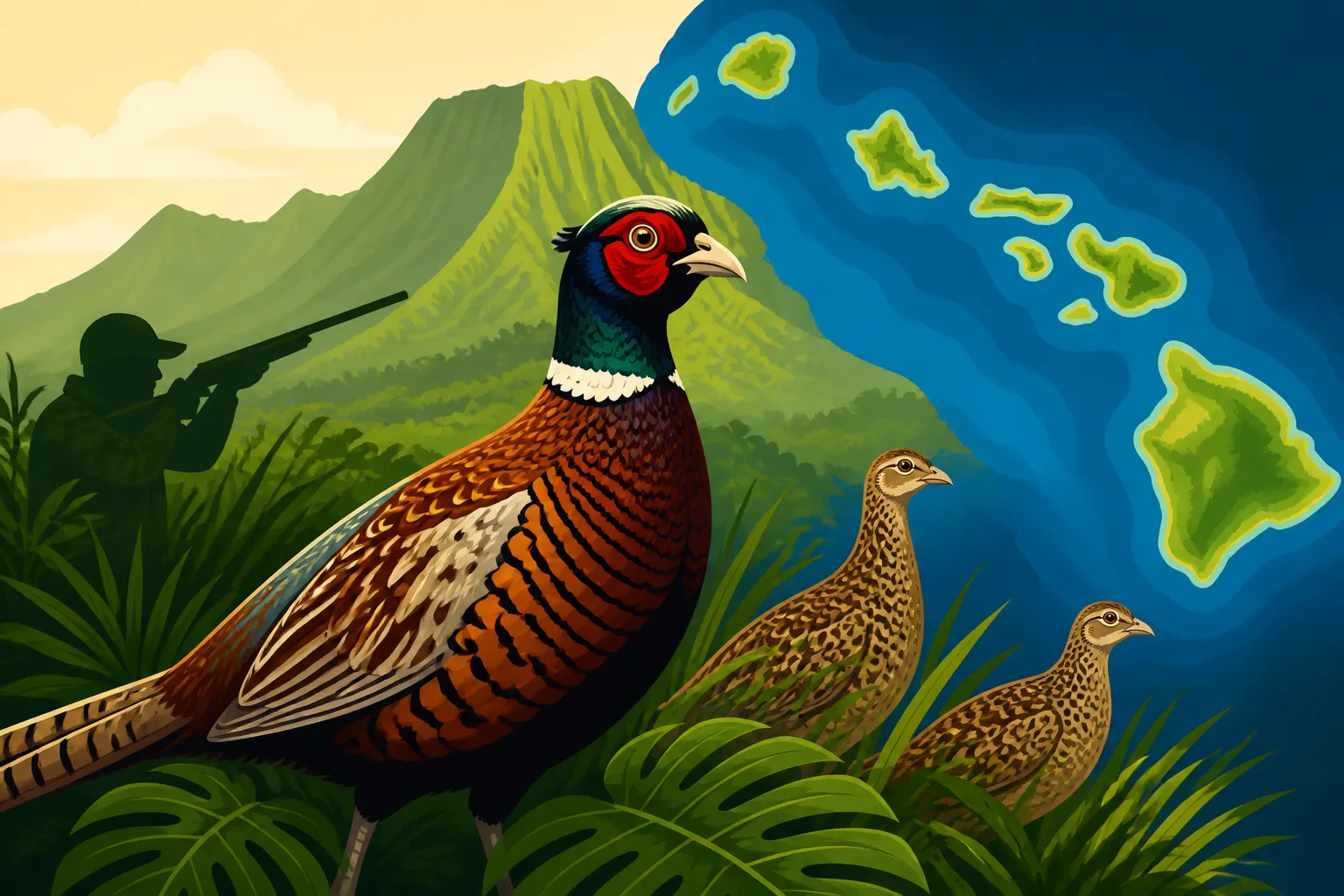
One of the first things you'll notice about a Kalij pheasant is its striking appearance. The males, or cocks, are generally dark-bodied, often appearing black or dark iridescent blue/green, with a prominent white rump patch (though this can vary slightly between subspecies introduced). They have a bare, bright red face patch that becomes even more vibrant during breeding season. The females, or hens, are much drabber, typically a mottled brown and black, designed for camouflage while nesting. They are generally smaller than the classic Ring-necked pheasant.
Unlike the Ring-necked pheasants, which prefer to run or flush with an explosive burst, Kalij pheasants are masters of stealth. They'll often sneak away through the underbrush, relying on their camouflage and the dense cover to avoid detection. When they do flush, it's usually a short, powerful flight through the trees, making snap shooting a necessity. Knowing What Hawaii's Kalij Pheasant Looks Like will definitely give you an edge in the field, helping you quickly identify your target amidst the dense foliage.
The Ring-necked Pheasant: A Spot of Color in the Grasslands
The Ring-necked pheasant (Phasianus colchicus) is probably the most iconic pheasant species globally, and it certainly adds a vibrant splash of color to Hawaii's drier, more open landscapes. These birds bring a taste of classic upland hunting to the islands, preferring agricultural fringes and grassy areas over the dense, wet forests favored by the Kalij. Their presence harks back to intentional introductions for sport hunting, and they continue to provide exciting opportunities, especially on islands like Hawaii and Maui in specific units.
Ring-necked's Preferred Habitat: Pastures and Farm Edges
Forget the rainforests; when hunting Ring-necked pheasants in Hawaii, you'll be looking at entirely different scenery. These birds gravitate towards open grasslands, fallow agricultural fields, old sugar cane lands, and the edges of ranch pastures. They love areas with tall, coarse grasses like guinea grass, which provide excellent cover for roosting and nesting, yet are close to more open ground for feeding. You might find them along old ranch roads or where cattle have kept the undergrowth somewhat sparse, creating ideal foraging conditions.
On the Big Island, the expansive dry grasslands of Parker Ranch lands (where access is sometimes granted through cooperative agreements) or certain units in the Puʻu Anahulu Game Management Area might hold good numbers. On Maui, the drier, upcountry slopes and agricultural belts near Kula or Ulupalakua can be prime spots. These environments contrast sharply with the dark, wet woods, offering wide vistas but also plenty of places for a bird to disappear into the tall growth. Hunting a Hawaii Ranch Pasture Boundary can often put you in excellent Ring-necked territory, especially at dawn or dusk when they move to feed.
Telling a Ring-neck from a Green Pheasant and Other Species
Distinguishing the male Ring-necked pheasant is usually quite straightforward, thanks to its distinctive plumage. The cocks are known for their iridescent green heads, often with a glossy purple or blue sheen, and a prominent white ring around their neck (hence the name). Their bodies are a rich mix of golden-browns, copper, and often have dark barring. The hens are a mottled, drab brown, similar in function to the Kalij hen, providing camouflage for nesting. When considering Telling a Ring-Necked From a Green Pheasant, remember that while the Green Pheasant has similar body coloration, its head often has more green and less blue/purple, and the white neck ring is either absent or much less pronounced.
Ring-necked pheasants typically prefer to run ahead of a hunter, using their powerful legs to escape into dense cover. If pressured, they'll explode into the air with a characteristic cackle and a powerful, rocketing flight that can be quite startling. This explosive flush is what makes them such a popular target for upland hunters and a favorite for those Using a Bird Dog in Hawaii Terrain. They provide challenging wing shooting opportunities, especially in the wind.
The Green Pheasant: Elusive and Localized
The Green pheasant (Phasianus versicolor), often considered the national bird of Japan, has a much more localized and enigmatic presence in Hawaii compared to its more common relatives. While it shares many similarities with the Ring-necked pheasant, its distinct coloration and preferred habitats make it a unique prize for the diligent hunter. Its story in Hawaii is also intertwined with the history of game bird introductions, hinting at efforts to diversify hunting opportunities.
Green Pheasant's Specific Niche: Scattered and Secretive
Unlike the widespread Kalij or the pasture-loving Ring-neck, the Green pheasant in Hawaii tends to be found in more isolated pockets. Their numbers are generally lower, and their range is less extensive. They seem to prefer areas that offer a mix of dense cover, perhaps overgrown old fields, forest edges, and areas with access to water. Their preferred habitat often blends elements of both the Kalij's dense cover and the Ring-neck's open foraging areas, but with a unique preference for certain types of scrub and forest boundaries.
The most common theory is that these birds were introduced primarily to the Big Island, and potentially to parts of Maui, but never established the same broad populations. Where Hawaii's Green Pheasant Came From explains that they were likely released in specific areas, and their current populations reflect which of those initial releases managed to take root. Hunting for them often means covering a lot of ground in mixed habitat, ranging from tangled gulches to the fringes of older, neglected agricultural plots. They are less forgiving of hunting pressure and often require more persistent effort to locate.
Identifying the Green Pheasant in the Field
The male Green pheasant is a truly handsome bird, and its name gives a strong clue to its appearance. While it shares the general body shape and robust build of the Ring-necked, its plumage is dominated by a vibrant, iridescent green, particularly on the breast, back, and often extending up to the head and neck. The white neck ring, so characteristic of the Ring-necked, is either completely absent or, if present, is very broken and faint. This lack of a clear white ring is one of the key indicators when trying to differentiate them. The hens, again, are more subdued in coloration, a mottled brown for camouflage.
Hunting a Green pheasant often feels like searching for a ghost. They are notoriously shy and will often hold tight in cover, letting hunters walk right past them before flushing silently or slipping away. This makes them a true test of a bird dog's nose or a hunter's patience and keen observation skills. If you are lucky enough to encounter one, their striking emerald and bronze plumage against the Hawaiian landscape is an unforgettable sight. Successfully taking a Green pheasant is a badge of honor for any Hawaii game bird hunter, given their elusive nature and limited distribution.
Hunting Pheasants in Hawaii: Tactics and Seasons
Hunting pheasants in Hawaii is a distinct experience, dictated by our unique terrain, climate, and regulations. It’s not just about knowing where they live, but how to approach these birds in their island homes. Whether you're chasing Kalij in the misty mountains or seeking a Ring-neck in the dry lowlands, preparation and respect for the environment are key.
Seasonality and Unit Accessibility
Hawaii's game bird seasons generally run from November through January, but specific dates and open units can vary significantly by island and even by particular hunting unit. It’s absolutely critical to check the current year’s hunting regulations for the island you plan to hunt. You can often find this information through the state's Division of Forestry and Wildlife (DOFAW) website, or by checking the Hawaii Game Bird Seasons and Bag Limits resource. Many units are only open on weekends or specific holidays. For instance, some Big Island units might offer different opportunities than those on Maui. It's not uncommon for hunters to plan their trips around Hunting Hawaii's Game Bird Weekends to maximize their chances.
Access to these hunting units can also be a challenge. Some areas are accessible by paved road, while others require a sturdy 4×4 vehicle, and some still demand a significant walk-in. Knowing what to expect when checking into a unit is important; many areas now utilize platforms like GoHunt Hawaii for check-in and check-out, replacing traditional paper cards. Be sure to understand the specific rules for the unit you choose, including vehicle access, whether dogs are permitted, and any other unique restrictions.
Effective Hunting Strategies and Equipment
For Kalij pheasants in dense wet forests, still-hunting or slow-moving drives are often effective. You'll want to move quietly, pausing frequently to listen for calls or the subtle rustle of birds moving through the undergrowth. A good bird dog with a strong nose and ability to navigate thick cover can be invaluable here. Shotguns in 12 or 20 gauge with moderate to heavy loads (e.g., #4 or #5 shot) are typical, though specific rules on shot size apply, so always check the regulations. Camouflage that blends with deep greens and browns is a good idea. For a truly immersive experience, sometimes even just walking in to a remote Hawaii unit can yield surprising results.
For Ring-necked and Green pheasants in more open, grassy areas, a classic upland hunt with a flushing or pointing dog is often the most productive. These birds will often hold tight, relying on camouflage, and a dog can really help locate them. If hunting without a dog, systematically working through tall grass patches, focusing on edges and transition zones, can flush birds. Lighter shotguns and shot sizes (e.g., #6 shot) can be effective here, depending on the typical flushing distance. Blaze orange is often a requirement for safety, so always wear it and follow Hawaii Blaze Orange and Safety Rules.
| Pheasant Species | Primary Habitat | Distinguishing Male Features | Typical Behavior |
|---|---|---|---|
| Kalij Pheasant | Wet, dense mountain forests, high elevations, thick undergrowth. | Dark iridescent body, white rump patch, red face patch. | Stealthy, runs through cover, short powerful flight when flushed. |
| Ring-necked Pheasant | Open grasslands, agricultural fields, ranch pastures, dry country. | Iridescent green head, distinct white neck ring, golden-brown body. | Runs, explosive cackle and strong flight when flushed. |
| Green Pheasant | Scattered pockets of mixed cover, forest edges, old fields. | Predominantly iridescent green body and head, faint or absent white neck ring. | Very shy, holds tight, elusive, less explosive flush. |
Remember that you'll need a current Hawaii hunting license and a Hawaii Game Bird Stamp to hunt pheasants. These can typically be purchased online through the GoHunt website. Always be aware of the Legal Shooting Hours for Game Birds and respect the specified Pheasant Bag Limits by Species to ensure sustainable hunting practices for these beautiful birds.
The Broader Impact and Conservation of Pheasants in Hawaii
While pheasants are non-native species in Hawaii, they play a unique role in the islands' ecology and hunting culture. Understanding their history and impact helps us appreciate them not just as game animals, but as part of the broader conservation picture here.
Introduced Species and Ecological Niche
All pheasant species in Hawaii are introduced, brought here over decades, primarily for sport hunting. They found suitable niches in Hawaii's incredibly diverse microclimates, from the wet, cool forests to the dry, hot plains. The success of these introductions speaks to the adaptability of these birds and the availability of resources in their new island homes. For more on this, you can explore Why Every Hawaii Game Animal Was Introduced. While some introduced species can become problematic for native ecosystems, game birds like pheasants generally occupy niches that have less direct negative impact on truly native species compared to, say, feral pigs or goats, which can devastate native plant communities.
Their presence provides a valuable recreational opportunity for local and visiting hunters, contributing to the state's wildlife management efforts through license and stamp fees. These funds often go back into habitat management and enforcement. This balance between recreational hunting and ecological considerations is a constant discussion in Hawaii's unique conservation landscape.
Habitat Management and Future Opportunities
Effective game bird management in Hawaii often involves preserving and enhancing the diverse habitats these birds rely on. For Kalij pheasants, this might mean controlling invasive species that create too dense a monoculture, or managing forest health. For Ring-necked pheasants, it involves maintaining a mosaic of grasslands and agricultural buffers. Sometimes, even seemingly mundane landscapes like Hunting a Hawaii Eucalyptus Plantation Edge can offer surprising pheasant habitat.
Hunters themselves play a vital role in this by adhering to regulations, reporting their harvests, and participating in discussions about wildlife management. The health of our pheasant populations is a good indicator of the health of their respective habitats. By continuing to manage these species and their environments thoughtfully, we ensure that future generations of hunters can also experience the unique challenge and reward of pursuing Hawaii's pheasant species.
Disclaimer
This article is for general informational purposes only and does not constitute professional advice. Laws, prices and regulations vary by location and change over time. Consult a qualified professional for guidance on your specific situation.