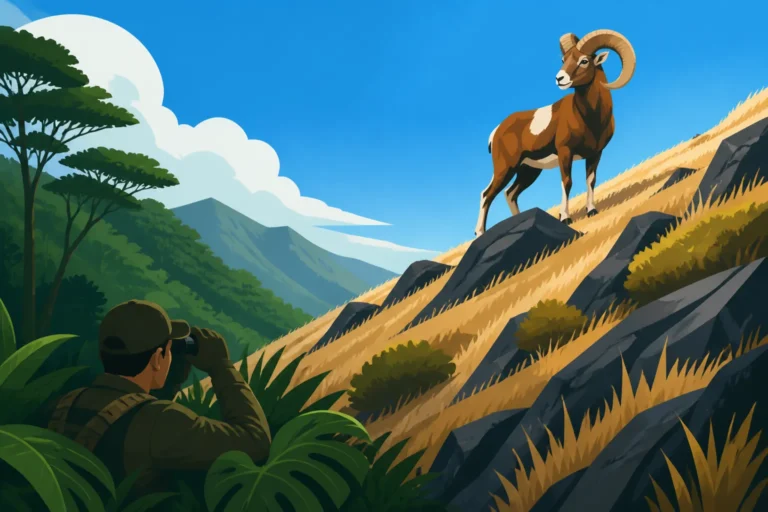
Lanai’s Axis Deer Density Compared to Maui
It's a question every hunter thinking about axis deer in Hawaii eventually asks: "How do the deer numbers on Lanai really compare to Maui?" We've all heard the legends of Lanai's incredible deer density, almost like a deer farm, but is it true? And what about Maui, which has far more land mass? This guide will dive deep into the fascinating differences in axis deer populations between these two islands, helping you understand what drives their numbers and what that means for your hunting experience.
The Foundational Differences: How Axis Deer Arrived and Flourished
To truly grasp why Lanai and Maui have such distinct axis deer densities today, we first need to look back at how these magnificent animals even arrived in the islands and how their initial introductions set them on different population trajectories. It's a tale of deliberate actions and unintended consequences that shaped the hunting landscapes we know.
From India to Hawaii: A Journey Across Oceans
Axis deer, or chital, are not native to Hawaii; they hail from the Indian subcontinent. Their introduction to the islands was a calculated move, primarily for sport hunting. The very first successful introduction of axis deer to Hawaii occurred in 1867 when King Kamehameha V received a gift of several deer from Hong Kong, releasing them onto the island of Molokai. These initial animals thrived in Hawaii's predator-free environment and abundant forage, establishing a robust population. From Molokai, it wasn't long before they were translocated to other islands.
Maui received its first axis deer in the early 1900s. These were private releases, primarily by ranch owners seeking to establish a game animal for recreational hunting on their vast landholdings. The deer quickly adapted to Maui's diverse terrain, from the dry leeward slopes of Haleakala to the wetter, more vegetated areas. Lanai, on the other hand, received its axis deer much later, reportedly in 1920, with only a handful of animals released. This initial smaller number and later introduction date meant Lanai started with a significantly different baseline population compared to Maui. The early populations on Maui had a longer head start and likely more initial animals to build from, allowing them to spread and multiply for decades before Lanai's herd truly established itself.
The Role of Private Land and Early Management
Both islands initially saw axis deer flourish largely on private ranch lands. These vast properties offered expansive habitat, protection, and often active management to ensure healthy herds for hunting. On Maui, numerous large ranches provided ideal conditions for the deer to reproduce and expand their range. Over time, as populations grew, deer began to spill over into adjacent public lands and even impact agricultural areas, which laid the groundwork for future management challenges.
Lanai's story is slightly different. For much of its history, the island was dominated by a single pineapple plantation owner, limiting public access significantly. This meant the deer population, though starting smaller, benefited from a relatively undisturbed environment with less widespread hunting pressure. The dense kiawe forests and limited water sources naturally concentrated the deer in certain areas, allowing them to breed efficiently within these ideal pockets. While Maui's deer were spreading across a much larger and more varied landscape, Lanai's smaller, more uniform island environment, coupled with private land control, fostered a highly concentrated population, which started to boom in later decades once the pineapple industry declined and deer populations could expand further without the constant pressure of agricultural clearing. This historical foundation is critical when we look at the current state of affairs.
Lanai's Axis Deer Dynamics: A Concentrated, Managed Resource
When hunters talk about "deer everywhere," they're often thinking of Lanai. It truly does hold a reputation for incredibly high axis deer densities. But this isn't just a fluke; it's the result of a unique combination of environmental factors and specific management strategies that have shaped the island's deer herd into a highly concentrated, yet carefully managed, resource.
The Ecosystem: Where Deer Thrive on Lanai
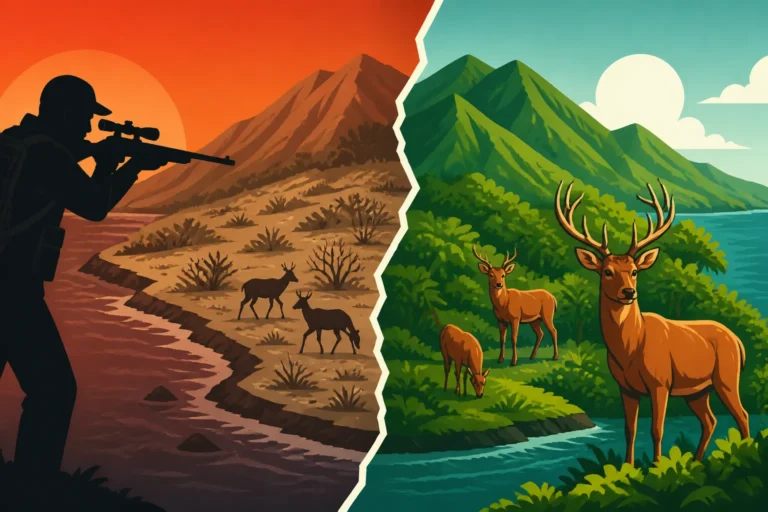
Lanai, often called the "Pineapple Isle," is a much drier island than Maui, especially its western and southern sides. While there are areas of lush forest in the central highlands, much of the island is characterized by dry scrub, kiawe forests, and open grasslands. What makes this seemingly harsh environment so perfect for axis deer? It comes down to two critical factors: water and forage.
Despite its dryness, Lanai does have natural springs and catchments, as well as remnants of irrigation systems from its pineapple plantation days. These scattered water sources become magnets for deer, especially during dry spells. You'll find deer trails radiating out from these spots, making them prime locations for hunters. The kiawe tree, an invasive species, plays a massive role as well. Its pods are a highly nutritious and readily available food source for axis deer, especially when other vegetation might be scarce. These dense kiawe thickets also provide excellent cover from the sun and wind, creating perfect bedding areas. The relatively small size of Lanai, combined with these concentrated resources, naturally funnels and holds the deer in specific, high-density zones. Imagine a giant funnel; all the deer eventually end up near the spout where water and food are most reliably found, leading to a population that feels incredibly abundant in those areas.
Management and Access: The Lanai Draw System
Perhaps the biggest factor shaping Lanai's axis deer density and the hunting experience is the strict control over hunting pressure. Unlike Maui, which has several public hunting units open year-round for specific species, Lanai's public land axis deer hunting is primarily managed through a highly competitive lottery or "draw" system. This system, detailed further in articles like How the Lanai Axis Deer Draw Works, limits the number of hunters on the island at any given time, ensuring that the deer population isn't overharvested on public lands.
When a public hunting season is announced, hunters must apply for a limited number of slots, often for specific weekends. This controlled access means that during much of the year, the public hunting units experience very low pressure, allowing deer to move freely and feel less disturbed. While there is also private ranch land hunting on Lanai, which contributes to the overall harvest, the public land draw system is designed to maintain a healthy and robust population. The result? When you do get a permit to hunt Lanai's public units, you often encounter a substantial number of deer. This managed pressure, combined with the ideal habitat, leads to the high densities that make Lanai famous among hunters. You can even check for draw information and apply through platforms like GoHunt, making sure you don't miss any application deadlines for these sought-after tags. The combination of concentrated resources and limited, rotational hunting pressure allows the herd to sustain itself at impressive numbers, giving the impression of deer everywhere.
Maui's Axis Deer Landscape: Widespread and Continuously Managed
Maui, the second-largest Hawaiian island, presents a very different picture for axis deer. While the island certainly has a thriving and expansive deer population, its density is generally more dispersed than Lanai's concentrated herds. This difference stems from Maui's diverse geography, a wider range of hunting access points, and, crucially, an ongoing, aggressive management strategy driven by the sheer scale of the population's impact.
Diverse Habitats and Agricultural Reliance
Maui is a much larger and geologically diverse island than Lanai. It boasts two main volcanic masses – West Maui Mountains and the massive Haleakala volcano – separated by a low-lying central valley. This creates a mosaic of habitats:
- Dry Leeward Slopes: Areas like Kahikinui and Kanaio on the leeward (south-facing) slopes of Haleakala are reminiscent of Lanai's dry country, with kiawe, buffelgrass, and scattered water sources. Deer can be abundant here, but often spread out over vast, rugged terrain.
- Upcountry Forests and Pastures: Higher up on Haleakala, you find cooler, wetter forest reserves (like Kula and Polipoli) interspersed with active ranching and agricultural lands. Deer frequently move between these areas, finding food in pastures and cover in the forests.
- Rainforest Edges: Even the edges of Maui's wet, windward rainforests can hold deer, though in lower densities, as they often prefer drier conditions.
This habitat diversity means that Maui's axis deer aren't forced to congregate as intensely around limited water or specific food sources as they are on Lanai. They have a broader buffet, allowing them to spread across different elevations and ecosystems. However, this also means they frequently impact agricultural operations, from pineapple and sugar cane fields to cattle pastures and taro patches. This overlap with human interests has significantly shaped how Maui's deer population is managed, leading to efforts to curb herd numbers that are less common on Lanai.
Broader Hunting Access and Ongoing Control Efforts
One of the most significant distinctions is the scale and nature of hunting access. Maui offers more diverse public hunting opportunities throughout the year compared to Lanai's strict draw system for public lands. You can find several public hunting units on Maui, many of which have year-round seasons for axis deer, as detailed in our guide, Hunting Maui's Year-Round Axis Deer Units. This more continuous hunting pressure, spread across various units, means that while deer populations are robust, they are consistently being harvested by recreational hunters.
Beyond public lands, Maui also has extensive private ranch lands where guided hunts are common. These private operations contribute significantly to the annual harvest, often allowing for higher bag limits or more flexible hunting schedules than public lands.
However, the defining feature of Maui's axis deer management in recent years has been the Maui Nui Deer Control Program. This initiative, often employing aerial culling (helicopter-based shooting), is a direct response to the overwhelming population growth and the severe ecological and agricultural damage caused by axis deer on Maui (and neighboring Molokai). While hunting by individuals and guides plays a role, the scale of the problem demanded a more drastic, large-scale approach. These control efforts, which aim to reduce the overall population numbers, inherently lead to a more dispersed, and at times, locally reduced, density compared to an island where the population is primarily managed for sustained recreational hunting through draws. You might find pockets of very high density, but overall, the continuous pressure from both recreational hunting and intensive control programs shapes a different kind of deer landscape.
What These Density Differences Mean for Your Hawaii Hunt
Understanding the differing axis deer densities on Lanai and Maui isn't just an academic exercise; it has real, practical implications for how you plan, approach, and experience your hunt on either island. Each offers a unique set of challenges and rewards.
Hunt Experience and Tactics: Navigating Different Deer Worlds
When you step onto Lanai for a public land hunt, especially if you've been lucky enough to draw a tag, you often enter an environment where seeing deer is almost a given. The sheer concentration of animals means that your primary challenge might not be finding deer, but rather finding the right deer – a mature buck – and then executing a successful stalk in the open, kiawe-dominated terrain. Because the deer are so numerous, they can also become quite wary. They are often accustomed to the sound of vehicles (from previous agricultural operations) but can be incredibly sensitive to human scent and movement. Stalking tactics like those described in Spot-and-Stalk Axis Deer in Hawaii become paramount. You might have multiple opportunities to glass and then close the distance, but the deer often have many eyes watching. The relatively smaller land area and concentrated nature of the herd can make for a dynamic, high-opportunity hunt.
Maui, by contrast, often demands a more expansive approach. While there are certainly areas of high deer density on Maui, the population is generally more spread out across larger, more varied units. This means that a Maui hunt might require more initial scouting and a greater willingness to cover ground. You might spend more time glassing vast slopes or still-hunting through diverse forest types to locate a herd. Deer on Maui, particularly in less-pressured areas, might be slightly less wary initially, but the challenge lies in consistently locating them across a bigger footprint. The terrain can also be more diverse, from steep gulches in the upcountry to dense kiawe flats near the coast, requiring a broader skillset. Hunters might focus on Hunting Maui's Upcountry Axis Deer or exploring the dry leeward areas, each requiring different tactics.
Success Rates, Trophy Potential, and Hunter Expectations
When it comes to success rates, the high density on Lanai often translates to a higher likelihood of seeing and getting a shot at an axis deer. For many hunters, especially those focused on simply harvesting an animal for meat, Lanai offers excellent odds. Trophy potential on Lanai can also be outstanding due to good genetics and ample forage, allowing bucks to mature. However, the intense competition for resources in such high-density areas means that while there are many deer, really large, old trophy bucks might be fewer and farther between in specific areas, as the herd is always pushing its carrying capacity. The limited number of public land tags, however, helps ensure that trophy animals are still present.
Maui offers a different kind of trophy pursuit. While the overall density might not be as overwhelmingly high as on Lanai, the sheer size and diversity of habitat, combined with less uniform hunting pressure across all units, can sometimes lead to individual bucks reaching impressive sizes. Some of the largest axis deer taken in Hawaii have come from Maui, often from private ranches or less accessible public lands where bucks can mature undisturbed for longer. Success rates on Maui can be very good, especially if you put in the time for scouting and are willing to adapt your methods to the specific unit you're hunting. It might be less about a constant stream of deer sightings and more about strategically finding and ambushing a specific animal. Hunters might find themselves more often Hunting Axis Deer at First Light in Hawaii to capitalize on deer movement.
Logistics and Planning: Tailoring Your Trip
The density differences also dictate your planning. For Lanai, securing a public land tag through the draw system is the primary logistical hurdle. Once you have that, you know you're likely going into a target-rich environment. Hunters must be diligent about checking application deadlines on the GoHunt Hawaii website or through the DLNR. You'll likely encounter other hunters during the short open seasons, so being prepared for shared access is key. Our guide on Hunting Lanai Without a Guide offers valuable insights for self-guided trips.
For Maui, planning might revolve more around selecting the right unit for your skill level and desired hunt experience, as well as understanding the season dates for that specific unit. With more open units and year-round options, Maui offers greater flexibility in scheduling. If you're considering a private land hunt, Maui has many reputable outfitters who can provide access to high-quality hunting grounds, sometimes focusing on trophy animals. Regardless of the island, always remember to check in and out of your hunting unit, a process made easier through systems like the OuterSpatial app instead of a paper card, as highlighted in Using the OuterSpatial App to Check In. Both islands offer incredible axis deer hunting, but understanding their population dynamics and densities is key to setting realistic expectations and planning a successful and rewarding adventure.
| Feature | Lanai Axis Deer Hunting | Maui Axis Deer Hunting |
|---|---|---|
| Overall Density | Very High (especially localized) | High (more dispersed across island) |
| Primary Habitat | Dry kiawe forests, open plains, concentrated water sources | Diverse: Dry slopes, upcountry forests, agricultural interface |
| Public Land Access | Primarily via competitive lottery (drawn hunts) | More year-round units, broader access |
| Hunting Pressure | High during open drawn seasons, very low otherwise | Consistent, varied by unit, plus ongoing control efforts |
| Management Focus | Sustainable recreational harvest through controlled access | Population reduction (Maui Nui program), recreational harvest |
| Typical Hunt Style | Spot-and-stalk, often in open terrain, frequent sightings | Spot-and-stalk, still-hunting in varied terrain, more scouting |
| Trophy Potential | Excellent, but may require focused effort in high-density zones | Excellent, particularly on private land or less-pressured units |
| Logistical Challenge | Securing a drawn public land tag | Identifying productive units, navigating diverse terrain |
Disclaimer
This article is for general informational purposes only and does not constitute professional advice. Laws, prices and regulations vary by location and change over time. Consult a qualified professional for guidance on your specific situation.