How DOFAW Counts Hawaii’s Game Animals
It's a question every hunter in Hawaii has probably pondered at some point: just how exactly does the Department of Land and Natural Resources' Division of Forestry and Wildlife (DOFAW) know how many axis deer are running around Maui, or how many pigs are tearing up the rainforest on the Big Island? For many of us, it feels like the animals are either everywhere or nowhere, and the official numbers or season announcements can sometimes feel a little out of sync with what we’re seeing in the field. This guide aims to pull back the curtain on the challenging, intricate process DOFAW undertakes to count Hawaii's various game animals, explaining the methods they use and why it’s such a complicated endeavor in our unique island environment.
The Complexities of Counting Game in Hawaii
Let's be real, counting wild animals anywhere is tough. But trying to get an accurate headcount of game animals across the Hawaiian Islands? That's a whole different beast. Our islands present a unique set of challenges that make traditional wildlife survey methods incredibly difficult, leading to a constant balancing act for DOFAW as they try to manage populations and provide hunting opportunities.
Unique Island Challenges
Think about it for a second. We're not talking about vast, open plains where you can just fly over and count every deer. Hawaii is a mosaic of incredibly diverse and often extremely rugged terrain. You've got dense, wet rainforests with canopies so thick that a helicopter can barely see the ground. Then there are steep, eroded gulches and sheer pali (cliffs) where goats roam, making any kind of physical access incredibly risky. Add to that the vast, dry kiawe forests on the leeward sides, where axis deer can vanish into a thorny thicket, or the high-elevation volcanic slopes where mouflon sheep blend seamlessly into the lava rock. Each island, and even different areas on the same island, presents its own set of environmental hurdles. The game animals themselves are often masters of camouflage and evasion in these environments, making direct observation a painstaking process.
The "Invisible" Nature of Feral Animals
Many of Hawaii's game animals, particularly feral pigs, are notoriously elusive. Pigs are often nocturnal or crepuscular, meaning they're most active at dawn, dusk, or through the night. During the day, they're bedded down in the thickest, nastiest cover they can find – think dense strawberry guava tangles, deep fern gulches, or hidden lava tubes. You could walk within spitting distance of a huge boar and never know he was there. Goats, while sometimes visible on open cliffs, can also disappear into deep canyons or move through dense brush. Even axis deer, known for being in open pastures, quickly retreat to dense cover when pressured or during the heat of the day. This "invisible" nature of our game animals means that simply looking for them isn't enough; DOFAW has to employ a variety of indirect and high-tech methods to even begin to estimate their numbers. It’s a constant challenge to get a true picture of what's out there when so much of it is hidden from plain sight.
DOFAW's Primary Counting Methods
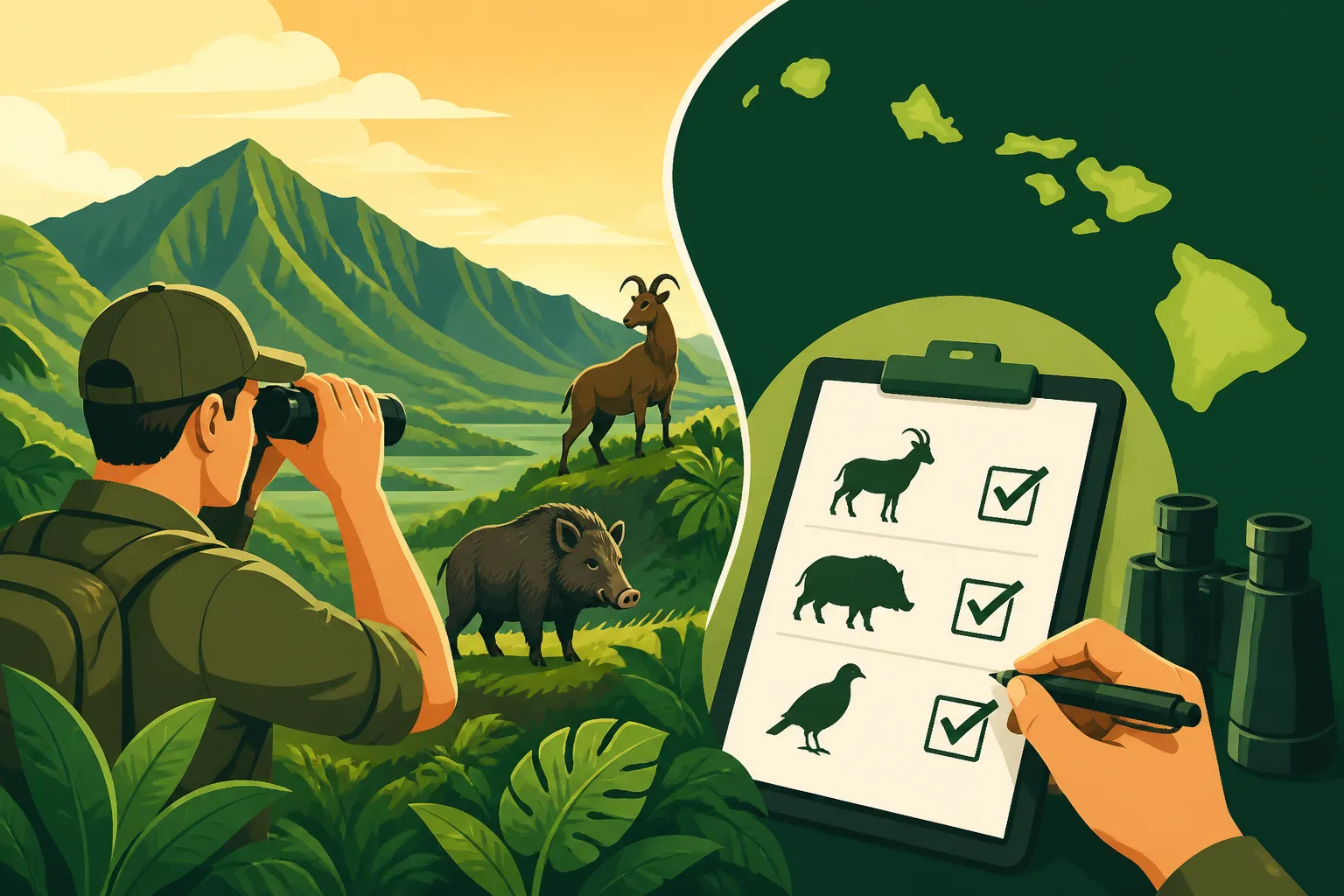
Given these immense challenges, DOFAW can't rely on just one technique. They use a combination of scientific methods, each with its own strengths and weaknesses, to try and piece together a comprehensive picture of Hawaii's game animal populations. It's a continuous effort that involves both direct observation and clever estimation techniques.
Aerial Surveys
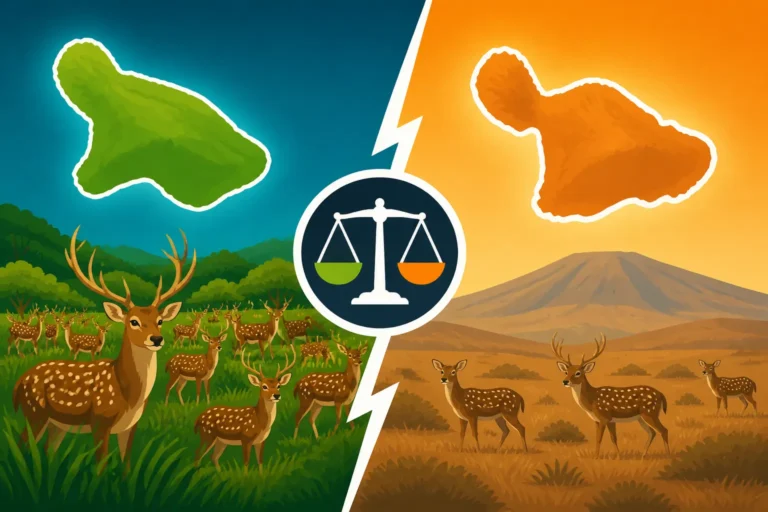
One of the most powerful tools in DOFAW's arsenal for counting certain game species is the aerial survey. This typically involves flying helicopters or, less commonly, fixed-wing aircraft over specific hunting units or large expanses of habitat. For species like axis deer, which often frequent more open areas, or mouflon sheep on the higher, more barren slopes of Mauna Kea, aerial surveys can provide valuable population data. Spotters in the aircraft methodically scan the ground, counting animals, observing herd sizes, and even assessing herd composition (bucks, does, fawns).
However, these surveys come with significant limitations. Dense tree canopy, like that found in Hawaii's rainforests, makes counting pigs or even goats in thick brush nearly impossible from the air. Weather can also be a major factor; clear flying days are essential, and Hawaii's notoriously unpredictable weather, especially in mountainous regions, can ground surveys for extended periods. The cost of running these operations is also substantial, which means they can't be done as frequently or as extensively as wildlife managers might ideally like. Despite these hurdles, aerial surveys remain critical for getting a broad overview of populations in suitable habitats, particularly for species like the Axis Deer, Hawaii's Signature Big Game or Mouflon Sheep on Hawaii's Volcanoes.
Ground Surveys and Transects
When aerial surveys aren't feasible or sufficient, DOFAW relies on ground-based methods. This can include intensive foot patrols, where staff walk pre-determined transect lines through various habitats, recording all animal sightings, tracks, and sign. These surveys are incredibly labor-intensive but can provide more detailed data about species that prefer dense cover.
Trail cameras are another increasingly important tool. Placed in strategic locations along game trails, near water sources, or in feeding areas, these cameras can capture images or videos of animals, providing insights into their presence, activity patterns, and even individual identification in some cases. While they don't give an exact headcount over a large area, they offer valuable data on species distribution and relative abundance. Spotlight surveys, conducted at night, can also be effective for nocturnal animals, though they are usually limited to areas with vehicle access. These methods are crucial for understanding populations of elusive species like Hawaii's Feral Pigs, Island by Island and contribute to decisions about Hawaii's Hunting Units and How They Work.
Hunter Harvest Data
Perhaps one of the most consistent and broad-reaching sources of information on game animal populations comes directly from us, the hunters! Every time you check in and out of a hunting unit, and especially when you report a harvest, you're contributing vital data to DOFAW's management efforts.
When you check out of a unit, whether it's through a physical check station or using a digital platform like GoHunt Hawaii, you're often asked to report what you saw (even if you didn't harvest anything), how many hours you hunted, and of course, any animals you took. This harvest data is incredibly valuable. It provides insights into hunter effort, success rates, and the number of animals removed from the population. For species that require permit-tags, like axis deer or mouflon, the return of those tags after a harvest offers direct confirmation of animals taken.
This information, collected diligently through systems outlined in Checking In and Out of Hawaii Hunting Units, helps DOFAW track trends. If harvest rates are consistently low in a particular unit despite high hunter effort, it might signal a declining population. Conversely, high success rates could indicate a robust population. While not a direct count, this data is an essential piece of the puzzle, allowing wildlife managers to infer population health and distribution across the islands. It also helps inform decisions about Hawaii Game Mammal Seasons and bag limits.
How Data Informs Management and Hunting Seasons
All the effort that goes into counting, surveying, and collecting hunter data isn't just for curiosity's sake. This information is the backbone of Hawaii's game management strategy, directly influencing the hunting opportunities available to us. It's how DOFAW tries to strike that delicate balance between managing invasive species and providing sustainable recreation.
Setting Bag Limits and Season Lengths
The most direct impact of population data is on the setting of hunting seasons and bag limits. If surveys indicate a healthy or overabundant population of a particular species in a specific unit, DOFAW might decide to extend the season, increase the bag limit, or even open new areas to hunting. This is particularly true for highly prolific species like axis deer on Maui or feral pigs on the Big Island, where control is often as much a goal as harvest. Conversely, if data suggests a population is declining or struggling, seasons might be shortened, bag limits reduced, or certain units temporarily closed to allow for recovery.
These decisions are rarely made lightly. They consider ecological impacts, agricultural damage (especially from pigs and goats), and the desires of the hunting community. For example, if there's significant damage to native forests by What Feral Pigs Do to Hawaii's Forests, DOFAW might lean towards more aggressive harvest strategies, even if it means more complex seasons or access rules. The aim is always to manage game in a way that is sustainable for the animals while also addressing the broader conservation goals of the state.
Identifying Hot Spots and Declines
By consistently collecting data from aerial surveys, ground observations, and hunter reports, DOFAW can identify trends over time. They can pinpoint "hot spots" where certain game animals are thriving and where hunting pressure might need to be increased to maintain ecological balance. For instance, knowing How Many Axis Deer Maui Holds helps determine where to focus management efforts.
Conversely, they can also identify areas where populations might be declining. This could be due to environmental factors like drought, changes in habitat, or even previous over-harvesting in localized areas. When a decline is noted, it triggers further investigation and potential adjustments to hunting regulations. This dynamic approach means that hunting seasons and rules aren't static; they adapt year to year based on the most current data available. You might see a change in access for Hunting Lanai's Drawn Axis Deer Weekends if numbers indicate a shift.
The Evolving Science of Game Management
It's important to remember that game management is an evolving science, especially in a place as ecologically unique as Hawaii. DOFAW is constantly refining its counting methods, incorporating new technologies like advanced GIS mapping and more sophisticated modeling techniques to better estimate populations. They also consider public input and work with various stakeholders, including conservation groups, ranchers, and hunters, to make informed decisions.
Sometimes, rules might seem arbitrary, or a season might feel frustratingly short when you know there are animals out there. But often, these decisions are based on the best available science and a comprehensive understanding of what’s happening across the entire ecosystem, not just in one small pocket. Programs like Hawaii's Aerial Ungulate Control Programs are also a part of this larger management picture, aiming to reduce populations in areas critical for native species protection. Hunters who engage with the DOFAW process, provide accurate harvest reports, and offer constructive feedback play a crucial role in this ongoing effort.
| Method | Primary Use Case | Strengths | Weaknesses |
|---|---|---|---|
| Aerial Surveys | Axis Deer, Mouflon (open terrain) | Covers large areas quickly; direct observation. | Expensive; limited by dense canopy/weather; hard to count small/hidden animals. |
| Ground Surveys/Transects | Pigs, Goats, Black-tailed Deer (dense cover) | Detailed data on specific areas; detects elusive animals via sign. | Labor-intensive; slow; limited coverage; human bias. |
| Trail Cameras | All species (elusive, nocturnal) | Non-invasive; continuous monitoring; activity patterns. | Localized data only; requires frequent checks; animal identification can be tough. |
| Hunter Harvest Data | All harvested species (tags, check-outs) | Broad data over time; indicates hunter effort/success; cost-effective. | Indirect estimate; relies on hunter accuracy; doesn't count unharvested animals. |
In the end, understanding how DOFAW counts Hawaii's game animals gives us a deeper appreciation for the complexities involved in managing these unique island ecosystems. It's a continuous, challenging, and essential process that helps ensure the future of hunting in our beautiful state.
Disclaimer
This article is for general informational purposes only and does not constitute professional advice. Laws, prices and regulations vary by location and change over time. Consult a qualified professional for guidance on your specific situation.