What Happens to Meat From Control Hunts
Hawaii control hunt regulations require local hunters to pack out and utilize all harvested axis deer, feral pigs, and goats.
Know what you’re after.
Big game, small game, upland birds, and waterfowl — identification, behavior, rut and migration timing, and how each species moves through the season.
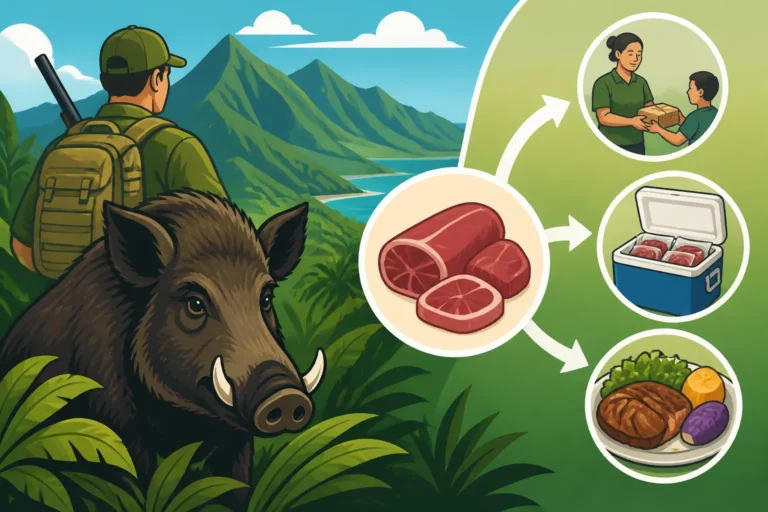
Hawaii control hunt regulations require local hunters to pack out and utilize all harvested axis deer, feral pigs, and goats.

Aerial control in Hawaii sparks intense anger among hunters who view the practice as a wasteful and disrespectful approach to wildlife management.

Hawaii aerial ungulate control programs explain how helicopters manage invasive pigs and goats to protect fragile native forests.

DOFAW aerial surveys and estimation techniques count axis deer, feral pigs, and mouflon sheep across rugged Hawaiian habitats.
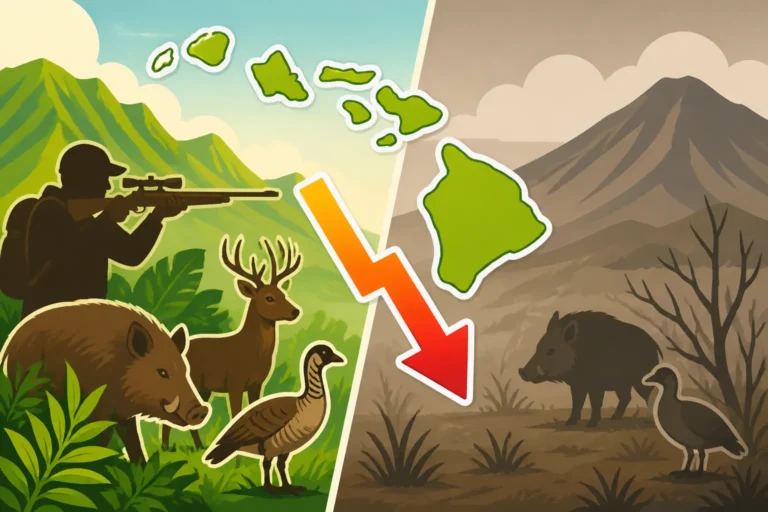
Hawaii hunting units experiencing game animal declines due to drought, wildfires, invasive plants, and management changes.

Axis deer populations on Maui and Molokai are rising, offering strong hunting opportunities across various local island habitats.

Hawaii conservation fences erected by agencies like DLNR spark opposition from hunters concerned about access, animal welfare, and tradition.

Hawaii hunting serves as a vital conservation tool to manage destructive invasive ungulates threatening fragile native ecosystems.

Introduced ungulates like feral pigs, goats, and deer degrade Hawaii watersheds, causing severe erosion and threatening water resources.

Hawaii fences protect fragile native ecosystems from destructive feral pigs and goats that cause severe environmental damage.