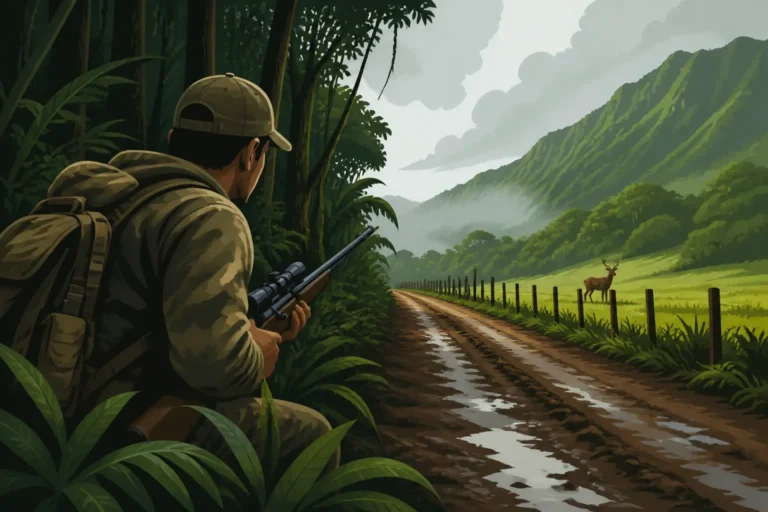
Hawaii Units Reachable Only by Helicopter
For some of Hawaii's most rugged and wild hunting grounds, simply lacing up your boots and hitting a trail just isn't an option. We're talking about units tucked away in deep, inaccessible gulches, beyond miles of impassable lava flows, or veiled by some of the densest, most unforgiving rainforest on earth. If you've ever looked at a topo map of a remote Hawaiian unit and wondered how anyone actually gets there, this guide is for you – because sometimes, the only way in or out is by helicopter.
The Reality of Hawaii's Most Remote Units
Hawaii's volcanic origins and relentless erosion have carved out a landscape that is breathtakingly beautiful but often brutally difficult to traverse on foot. While many public hunting units offer reasonable foot or 4WD access, there are pockets of true wilderness that remain virtually untouched by human presence, precisely because they're so hard to reach.
Why Helicopter Access is Sometimes the Only Way
Imagine standing at the edge of a deep, jungle-choked gulch, knowing that on the other side lies prime pig or goat country, but there's no way to get across. The slopes are too steep, the vegetation too thick, and the footing too treacherous for a safe descent and ascent, let alone trying to haul an animal out. Or picture miles of sharp, broken lava rock, an 'a'a flow that would shred your boots and ankles in hours, separating you from a remote kipuka of forest where mouflon sheep roam. These aren't just minor inconveniences; they are genuine, geographical barriers that make traditional access methods impossible. Walking Rough Lava Without Wrecking Your Boots will tell you a bit about this, but for some areas, even the toughest boots won't cut it. For these truly wild spots, a helicopter isn't a luxury; it's the only practical, and often safest, means of entry and exit. It allows hunters to bypass these natural obstacles, setting down in remote clearings or on ridge tops that would otherwise take days of punishing bushwhacking to reach.
What Makes a Unit "Helicopter-Only"?
A unit becomes "helicopter-only" not because of a specific designation on a map, but because of its inherent topography and lack of infrastructure. These are often areas characterized by immense changes in elevation, like the dramatic pali (cliffs) of the windward coasts, or vast, recently formed lava fields that are still too rough for roads or even ATV trails. Think of the deep, isolated valleys on parts of the Big Island, or sections of Molokai's north shore that are cut off by towering cliffs. Dense, primary rainforest, often referred to as "wet forest," with its relentless growth of native and invasive plants, can create an impenetrable wall. When you combine steep grades, loose volcanic soil, constant rain, and a tangled understory of uluhe fern, strawberry guava, and kiawe thickets, even a short distance becomes a major expedition. Add to this the occasional absence of legal public access points or designated trails, and you quickly realize that the sky offers the only viable route. These units often lie within larger Game Management Areas or Forest Reserves, but specifically in the portions that are geographically cut off from any established access roads or trail systems. You might be interested in Hunting Hawaii's Volcanic Terrain to understand more about these challenging landscapes.
Planning Your Helicopter Hunt in Hawaii
Embarking on a helicopter hunt in Hawaii is a significant undertaking that requires meticulous planning beyond simply knowing your target species. It involves navigating unique logistical, regulatory, and safety considerations.
Finding Helicopter-Accessible Units
Identifying specific "helicopter-only" units isn't as straightforward as looking for a label on a map. Instead, it involves a deep dive into Hawaii's hunting unit maps, often found on the DOFAW website. You're looking for units, or specific sections within larger units, that appear completely cut off from any road systems, designated trails, or readily apparent ingress points. These might be areas surrounded by extremely steep terrain, vast lava flows, or dense, unroaded forest reserves. Using mapping tools like onX Hunt becomes absolutely essential here. You can layer public land boundaries, topography, and aerial imagery to scout potential drop-off zones, identify key terrain features, and confirm the lack of ground access. I personally spend hours poring over these maps, identifying remote ridges, hidden plateaus, or isolated pockets of forest that show promise. It's about finding the "blanks" in the access network. Finding a Hawaii Hunting Unit Map is a great starting point for this crucial research.
Booking a Helicopter Charter
Once you've identified a potential unit or area, the next step is connecting with a helicopter charter service. This isn't your average tourist ride; you're looking for companies experienced in utility work, aerial surveying, or backcountry drops. These pilots and their operations are familiar with working in challenging terrain and have the specialized equipment for external loads or precise landings in confined spaces. You'll need to discuss your proposed landing zone (LZ) and ensure it's safe and permissible. Remember, weight is absolutely critical. Helicopters have strict payload limits, and every pound of gear, hunter, and potential game meat counts. You'll need to coordinate drop-off and pick-up times, and establish clear communication protocols with the pilot, as cell service in these remote areas is often non-existent. Expect to pay a premium for this specialized service, but the access it grants is unparalleled. This is where Hiring a Helicopter for Access becomes a critical read.
Regulations and Permits for Helicopter Access
While the helicopter takes care of the travel, you're still hunting under Hawaii's established regulations. This means having your Hawaii hunting license and any required permit-tags for the specific game species and unit. But here's the crucial part: you need to explicitly confirm with DOFAW if helicopter drops and pickups are permitted in your chosen hunting unit, and if there are any specific rules or additional permits required for such operations. Some areas, particularly sensitive conservation zones, might have restrictions on aircraft landings. It's always best to get this confirmation in writing or directly from a DOFAW official. You'll still need to follow standard check-in and check-out procedures for the unit, even if you're not using a ground-based hunter check station. Using an app like OuterSpatial can be helpful for this, provided you have a way to log your entry and exit points (often via satellite communicator when out of cell range). Always carry your license and tags on your person, even when flying in. You'll want to review Checking In and Out of Hawaii Hunting Units and Hawaii's Permit-Tag System Works to ensure you're fully compliant.
Logistics and Safety Considerations
Hunting in Hawaii's helicopter-only units requires an even higher degree of preparedness than a typical backcountry hunt. The remoteness magnifies every decision and potential issue.
Weight Limits and Gear Planning
Every single item you bring must be scrutinized for weight and necessity. Helicopters operate under strict payload limits, and exceeding them isn't an option. This means ultralight backpacking gear is your friend: lightweight tents, compact sleeping systems, dehydrated meals, and multi-use tools. Forget the heavy cooler; plan on boning out your meat and using game bags that allow for airflow. Even your water supply needs careful consideration – can you filter water on site, or do you need to pack in every drop? When it comes to packing out meat, remember you'll likely need to make multiple trips on the helicopter, which adds to the cost and complexity. Plan for this in your budget and timeline. Every ounce shaved off your base weight means more room for essentials or the precious meat you hope to carry out.
Communication and Emergency Protocols
In these deeply remote units, cell service is a fantasy. Your lifeline to the outside world will be a satellite phone or a satellite messenger device, like a Garmin inReach or a Zoleo. These are non-negotiable pieces of gear. You need to establish a clear communication plan with your helicopter pilot for pick-up times, and have a contingency plan in case of weather delays or an unexpected emergency. Share your itinerary with a trusted contact who knows your planned LZ, dates, and check-in times. Consider what you would do if someone got injured – how would you communicate for an emergency extraction? What if the weather prevents the helicopter from landing for your scheduled pick-up? Having a basic first-aid kit, emergency shelter, and extra food for unexpected overnights is not just wise, it's essential. No Cell Signal on a Hawaii Hunt really underscores this point.
Field Care and Meat Extraction
Hawaii's warm, humid climate means game meat spoils rapidly if not handled correctly. In a helicopter-only unit, you don't have the luxury of quickly getting a kill back to a truck and into a cooler. You must be prepared for immediate and thorough field dressing, quartering, and boning out your animal on the spot. Quality game bags are crucial for protecting the meat from insects and dirt while allowing it to cool. Finding shade, even for a short time, can make a difference. Some hunters bring lightweight, reflective blankets to create makeshift shade. The goal is to get the internal temperature down as quickly as possible. This often means hanging the meat in the coolest available spot and maximizing airflow. Your helicopter charter will need to be informed if you anticipate a meat pick-up, as this adds to their load and might require a separate trip. Make sure you understand Field Dressing Axis Deer in Hawaii Heat and Cooling Meat Fast on a Hawaii Hunt to maximize your chances of salvaging your harvest.
The Unique Challenges and Rewards
While the logistics of a helicopter hunt are formidable, the experience offers a unique blend of challenge and reward that few other hunting adventures can match.
Navigating Uncharted Terrain
When you step out of that helicopter, you're often stepping into country that sees very few human footprints. There are no well-worn trails, no convenient landmarks, and often, the vegetation is so thick that visibility is limited to a few yards. Navigation relies heavily on GPS, compass skills, and a keen understanding of topography. Every step can be a struggle through tangled undergrowth, over slippery moss-covered rocks, or across uneven lava. Fitness is paramount; you'll be earning every yard. You need to be completely self-reliant and have strong bushcraft skills to feel confident in these truly wild places. It's an immersive experience that tests your limits and connects you to the raw power of the Hawaiian wilderness in a profound way. If you're heading into a particularly dense spot, check out Staying Found in Dense Hawaii Rainforest.
The Potential for Unpressured Animals
The greatest reward of a helicopter hunt is the potential for encountering game that has seen little to no human pressure. In these remote units, animals are often less wary, sometimes even curious, and might exhibit more natural behaviors than those in heavily hunted areas. This can translate into better opportunities for harvesting older, larger animals, whether it's a massive boar, an impressive mouflon ram, or a mature goat. The solitude is also a huge draw; it's just you and the wilderness. Imagine the thrill of glassing a remote ridge and spotting a trophy animal that hasn't learned to fear humans. This is where the effort, the cost, and the planning truly pay off, offering a hunting experience that is increasingly rare in today's world. Reading Axis Deer Sign in Dry Country might be helpful, but in these remote areas, the sign might be fresher and more abundant.
Environmental Impact and Ethical Considerations
While pursuing these remote opportunities, it's critical to remember our responsibility to the land. Hawaii's ecosystems are incredibly fragile and unique, and many of our game animals are considered invasive species whose management is crucial for protecting native flora and fauna. Why Every Hawaii Game Animal Was Introduced and What Ungulates Cost Hawaii's Watersheds provide important context here. A helicopter hunt often brings you into pristine areas, so practicing strict Leave No Trace principles is non-negotiable. Pack out everything you pack in, and perhaps even a little more. Be mindful of your impact on the land and respect any sensitive areas. Ethical hunting means taking responsible shots, retrieving all game, and minimizing disturbance. Even in the most remote corners, our actions reflect on the broader hunting community and our commitment to conservation.
| Access Method | Pros | Cons | Typical Scenario |
|---|---|---|---|
| Foot | No extra cost, full immersion | Physically demanding, limited range, slow, can't carry much out | Day hunt near road, backpacking into accessible areas |
| 4WD Vehicle | Covers more ground, carries more gear/meat | Limited to roads, requires appropriate vehicle, can be crowded | Hunting units with established (often rough) road networks |
| Helicopter | Access to truly remote/unpressured areas, time-efficient | High cost, strict weight limits, complex logistics, weather dependent | Deep gulches, vast lava flows, dense unroaded rainforest, sea cliffs |
Disclaimer
This article is for general informational purposes only and does not constitute professional advice. Laws, prices and regulations vary by location and change over time. Consult a qualified professional for guidance on your specific situation.