Hawaii Hunting Near State Parks
It's easy to assume that when you see a sign for a Hawaii State Park, the entire surrounding area is automatically off-limits for hunting. This common misconception can lead hunters to overlook some incredible opportunities, or worse, accidentally stray into areas where hunting isn't permitted. This guide aims to clear up the confusion, helping you understand the nuances of hunting near Hawaii's beautiful state parks and how to navigate these often-complex boundaries safely and legally.
Understanding the "Near State Parks" Conundrum
When planning a hunt in Hawaii, the presence of a state park nearby can often feel like a giant question mark. Many hunters, especially those new to the islands or visiting from the mainland, might assume these areas are entirely walled off, creating a sort of "no-go" zone for miles around. This isn't always the case, and understanding the subtle differences in land classification is crucial for a successful and legal hunt.
The Misconception of Park Boundaries
Imagine you're driving down a winding road on Maui, heading towards a promising area you've scouted for Axis deer. You pass a sign for Polipoli Spring State Recreation Area, and your mind immediately jumps to "no hunting." It’s a natural reaction, right? We're conditioned to think of parks as sanctuaries where wildlife is protected from hunting pressure. And indeed, within the actual boundaries of a Hawaii State Park, hunting is strictly prohibited. These areas are managed for public recreation, scenic beauty, and the preservation of natural and cultural resources, not for game harvest.
However, the tricky part is that the land immediately adjacent to these parks might be a completely different story. Hawaii's landscape is a patchwork of various land designations, and a hunting unit or a Forest Reserve could literally butt right up against a state park boundary. This means that while you can't hunt in the park, you might be able to hunt on the parcel right next door. The key is knowing precisely where that line in the sand is drawn. It's a common frustration to see game animals moving freely across these invisible lines, knowing you can't pursue them into the protected zone.
Why Proximity Matters
Animals, as we know, don't read maps or respect human-drawn boundaries. A big mouflon ram might graze just outside the Mauna Kea State Recreation Area boundary in the morning, only to wander into the park for water or shade as the day heats up. Feral pigs are notorious for moving between dense forest patches, often blurring the lines between actively hunted areas and those adjacent to public recreational spaces. This constant movement creates both opportunities and challenges for hunters.
For instance, game animals might use the relative safety of a state park as a bedding area during high hunting pressure, only to move out onto adjacent public hunting lands or private ranches to feed at dawn and dusk. Understanding these movement patterns can be a huge advantage. However, it also means you must be incredibly diligent about knowing where you are at all times. A misplaced step, an arrow fired across a boundary, or a rifle shot too close to a frequented trail could lead to serious legal repercussions. The closer you are to a park, the higher the likelihood of encountering non-hunting public users, which necessitates an even greater focus on safety and ethical hunting practices.
Navigating Hawaii's Land Classifications Adjacent to Parks
Hawaii's land management system can feel like a labyrinth of acronyms and designations. It’s not as straightforward as simply "public" or "private." When you're near a state park, it's particularly important to understand the different hats the land might wear.
State Parks Versus Hunting Units
Let's make this crystal clear: State Parks in Hawaii are for recreation and conservation, not for hunting. You won't find a hunting season within Akaka Falls State Park or Hapuna Beach State Recreation Area, for example. These areas are managed by the State Parks Division, under the Department of Land and Natural Resources (DLNR), with a mandate to provide public access for enjoyment and protect natural resources. Hikers, picnickers, sightseers, and campers are the primary users here.
On the other hand, Hawaii's hunting units are designated and managed by the Division of Forestry and Wildlife (DOFAW), also under the DLNR. Their mission often includes active wildlife management, which can involve hunting as a tool to control invasive species populations like pigs, goats, Axis deer, and mouflon sheep. These units have specific seasons, bag limits, and weapon restrictions. So, while you're not hunting in the park, you might be hunting in a DOFAW-managed unit that shares a border with it. This is why a detailed map and an understanding of the specific unit regulations are your best friends.
Overlapping Designations
The Hawaiian landscape is often a mosaic of various land classifications. It's not uncommon for a State Park to be bordered by a Forest Reserve (FR) or a Game Management Area (GMA), both of which can be open to hunting. For instance, parts of the Puu Waawaa Forest Reserve on Hawaii Island are prime Mouflon hunting grounds, and it's not far from certain State Park lands. Similarly, some of Maui's Game Management Areas, vital for Hunting Maui's Year-Round Axis Deer Units, might be adjacent to smaller recreational state lands.
These "overlapping" or adjacent designations mean that animals can easily move between areas with different rules. A deer might bed down in a section of a Forest Reserve where hunting is allowed, but then move to feed in a patch of vegetation that technically falls within a non-hunting State Park boundary. This creates a scenario where hunters must exercise extreme caution and rely on detailed maps to confirm their location. Ignorance of boundaries is never an excuse, and trespassing into a State Park with a weapon, even accidentally, can lead to severe penalties. Knowing these different classifications is fundamental to Public Hunting Land in Hawaii.
The Role of Natural Area Reserves
To add another layer of complexity, sometimes you'll find Natural Area Reserves (NARs) in close proximity to State Parks or hunting units. NARs are established to preserve unique ecosystems and endangered species. Hunting is generally prohibited in NARs, with very few exceptions for specific management actions that are usually conducted by DOFAW staff, not public hunters. These areas are often incredibly sensitive, and disturbing them can have significant environmental consequences.
Imagine hunting pigs on the Big Island near a lush native forest. You might be in a designated hunting unit, but a short distance away, a NAR could exist to protect rare native birds or plants. These areas often have unmarked boundaries or subtle signs, making it easy to accidentally wander in. It's critical to understand that NARs are even more sensitive than State Parks, and any entry with a firearm or bow could be seen as a serious violation. Always consult DOFAW maps to identify NAR boundaries before heading out, especially in areas with unique ecosystems or a high density of Hawaii's Endangered Forest Birds.
Key Considerations for Hunting Near State Parks
Hunting near state parks isn't just about knowing where the lines are drawn on a map; it's also about adopting a specific mindset and approach to ensure safety, legality, and a positive experience for everyone who shares the land.
Safety First
When you're hunting in areas adjacent to state parks, you're operating in an environment that is likely to see more non-hunting public activity than a remote, deep-woods hunting unit. Hikers, birdwatchers, photographers, and families out for a stroll might be just around the corner. This demands an even higher level of safety awareness from hunters.
Always assume there are other people present, even if you don't see them. This means never taking a shot without a clear backdrop, positively identifying your target, and understanding what lies beyond it. Using blaze orange is not just a good idea; it's often a legal requirement in many Hawaii hunting units, as detailed in Hawaii Blaze Orange and Safety Rules. This helps you stand out to other hunters and, crucially, to any non-hunters who might be in the vicinity. Carrying a fully charged cell phone (though service can be spotty in remote Hawaii areas) and a reliable GPS device is paramount for safety, communication, and confirming your location relative to park boundaries. You need to be extra vigilant about muzzle control, safe zones of fire, and ensuring your hunting companions are always accounted for. The last thing anyone wants is a negative encounter or, worse, an accident with a member of the non-hunting public.
Access Points and Trail Systems
State parks often feature well-developed trail systems, scenic overlooks, and accessible parking areas. While these facilities are great for park visitors, they can present both opportunities and challenges for hunters looking to access adjacent hunting units. Sometimes, a park trail might provide the easiest or only access point to a hunting unit that shares a boundary.
For example, a hiking trail that originates in a state park might extend for miles, eventually crossing into a Forest Reserve where hunting is permitted. This could offer a convenient way to get deep into a hunting area without bushwhacking from a remote road. However, it also means you're more likely to encounter hikers on these trails, especially at dawn or dusk when game animals are most active. You must be prepared to share the trail, be courteous, and conceal your hunting gear as much as possible when passing non-hunters. Never clean game or leave visible blood trails directly on a heavily trafficked path. Conversely, some park access roads might be closed to hunting vehicles but could offer a good starting point for Hunting Hawaii on Foot Without a Truck into adjacent public lands. Always check unit-specific rules for parking and access.
Understanding Unit-Specific Regulations
Just because a hunting unit is next to a state park doesn't mean it has special "park-adjacent" rules beyond the general safety considerations. Instead, it means you need to be acutely aware of the unit's specific regulations. Each hunting unit in Hawaii has its own set of rules regarding open seasons, legal hunting days (some are weekend-only, others year-round), bag limits, and permitted weapons.
For instance, one unit might allow rifle hunting for pigs every weekend, while an adjacent unit (even if it's right next to a state park) might only be open for archery hunting on specific dates. It's not enough to know you're in a "hunting zone." You must know which hunting zone you're in and all the associated rules. Always check the current DOFAW regulations for the specific unit you plan to hunt. These are often published annually and can change. Things like shooting hours, minimum caliber requirements, and even dog hunting rules can vary dramatically from unit to unit. Being prepared means not just knowing where to hunt, but how to hunt legally within that specific slice of Hawaii.
Island-Specific Examples and Scenarios
Hawaii's islands each offer unique landscapes and hunting experiences, and the interplay between state parks and hunting grounds varies just as widely. Let's look at a few specific examples to illustrate these dynamics.
Kauai's Waimea Canyon
On Kauai, the majestic Waimea Canyon is a prime example of an area where hunting opportunities exist right alongside a major state park. Waimea Canyon State Park offers breathtaking views and popular hiking trails, drawing thousands of visitors each year. However, the surrounding terrain, particularly the Kekaha Game Management Area and parts of the Na Pali-Kona Forest Reserve, are some of Kauai's best spots for Hunting Black-Tailed Deer in Hawaii, as well as feral pigs and goats.
Imagine you're hunting the rim of Waimea Canyon. You might be glassing into the deep gorges, looking for deer moving along a distant bench. You are legally in a hunting unit, but just a short distance away, visitors are snapping photos from a scenic lookout within the state park. This scenario demands extreme vigilance. You need to be sure of your target and your backdrop, knowing that non-hunters could be on trails below or on adjacent ridges. Access to these hunting areas often involves driving on rough 4WD roads that parallel the park boundaries. Hunters often use these roads to gain elevation and then walk into the more rugged canyon country. Hunting the Waimea Canyon Rim for Deer requires not only good marksmanship but also an awareness of the broader recreational use of the canyon.
Hawaii Island's Mauna Kea
Hawaii Island, or the Big Island, presents another compelling case with Mauna Kea State Recreation Area. This park, located at a high elevation, offers camping, cabin rentals, and stargazing opportunities, making it a popular destination. Directly adjacent to it, and covering vast stretches of the mountain, is the Mauna Kea Forest Reserve and hunting Unit A, famous for its mouflon sheep and feral sheep hunting. This is truly high-elevation country, with thin air and rugged volcanic terrain.
Hunters pursuing Mouflon Sheep Hunting on Hawaii Island often find themselves navigating complex terrain where the boundaries between the state park, hunting units, and even private ranch lands can be nuanced. Mouflon sheep, particularly the rams, are known to roam widely, often moving across different land designations in search of forage. A hunter might spot a trophy ram in Unit A, but if it crosses into the State Recreation Area, it's off-limits. Access often involves driving up the Saddle Road, with turn-offs leading to hunting areas that might be close to park facilities. The key here is not only using precise navigation tools but also being aware of any hikers or campers who might be using the park's facilities, especially during morning and evening hours.
Maui's Polipoli Spring
On Maui, Polipoli Spring State Recreation Area sits high up on the slopes of Haleakala, offering cooler temperatures, pine forests, and hiking trails. It's a beautiful spot for picnics and camping. However, the areas immediately surrounding Polipoli are part of the Kula Forest Reserve and other public hunting units, which are excellent for Hunting Hawaii's Feral Pigs and goats. The distinct change in vegetation, from the park's planted pines to native forests and open grasslands, clearly delineates habitat preferences for these animals.
Hunters often access these areas via the winding Polipoli Road, which leads directly to the state park entrance but also provides access to various hunting trails and gulches. The challenge here is the close proximity of recreational users. You might be still-hunting for pigs in a dense guava thicket, and not far away, families are enjoying a picnic at Polipoli. This means being acutely aware of your surroundings, utilizing safe hunting practices, and maintaining a low profile. The game animals, especially pigs, can be found close to these developed areas, drawn by new growth or disturbed ground. Understanding the distinct differences between the recreational focus of the park and the management goals of the adjacent hunting units is paramount for a safe and successful experience. Hunting Maui's Upcountry Forest Reserves offers unique challenges and rewards when done responsibly.
Tools and Best Practices for Hunters
Successfully navigating the complexities of hunting near Hawaii's state parks requires more than just general hunting knowledge; it demands specific tools and a disciplined approach to preparation and execution.
Digital Mapping and GPS
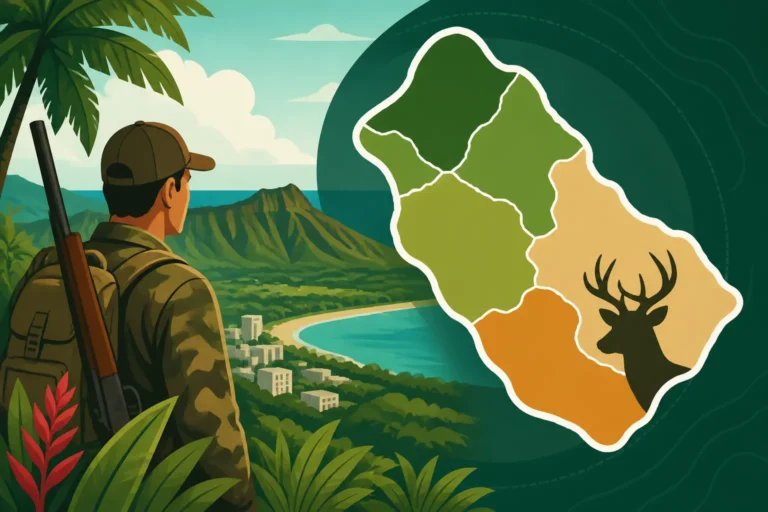
In the intricate landscape of Hawaii, where property lines and land designations can change rapidly and often without clear physical markers, digital mapping and GPS technology are absolutely indispensable. This is where tools like onX Hunt really shine. An app like onX Hunt allows you to download offline maps, showing detailed property boundaries, public land designations (including state parks, forest reserves, and hunting units), and even private land ownership. This visual clarity is critical when you're literally on the edge of a hunting unit that borders a state park.
Before you even leave home, you can use these apps to scout potential hunting areas, identify access points, and trace out boundaries to avoid any confusion in the field. Imagine zooming in on a map and seeing a clear color-coded line between a public hunting unit and a state park. In the field, your GPS will show your exact position relative to those lines in real-time. This eliminates guesswork and helps you stay legal and safe. GoHunt is another excellent resource for planning, offering insights into regulations and unit information that complement the mapping capabilities, allowing you to cross-reference season dates and species for a particular zone. Never rely solely on paper maps in Hawaii; the terrain can be too unforgiving and the boundaries too subtle. A reliable GPS or a smartphone running a mapping app is a non-negotiable piece of gear.
Official DOFAW Maps and Check-In
While digital mapping tools are incredibly powerful, they should always be used in conjunction with official information from the Division of Forestry and Wildlife (DOFAW). DOFAW publishes maps and detailed regulations for all hunting units, and these are the definitive source of truth for legal hunting boundaries, seasons, and rules. It's not uncommon for minor boundary adjustments or temporary closures to occur, and these changes are reflected in official DOFAW announcements.
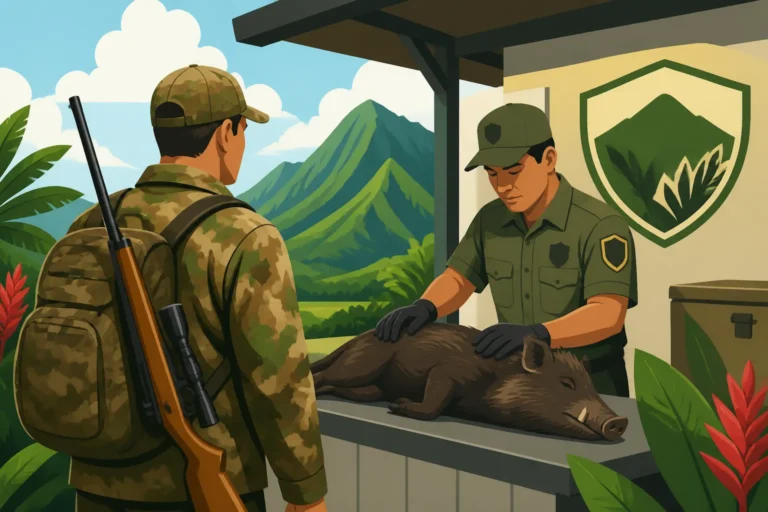
Many hunting units, especially those near higher traffic areas or with complex boundaries, require hunters to check in and out. This can be done at a physical check station or increasingly through digital platforms like the OuterSpatial app. Using the OuterSpatial App to Check In is becoming standard practice in many units. Checking in isn't just a formality; it ensures DOFAW knows who is in the field for safety reasons and helps them track hunting pressure and harvest data. Always make it a habit to obtain the most current DOFAW regulations and maps, either from their website, a local DOFAW office, or specific check stations. Cross-referencing these official sources with your digital maps provides the highest level of confidence that you are hunting legally and responsibly.
Pre-Scouting and Local Knowledge
There's no substitute for boots on the ground, especially when hunting in areas adjacent to state parks. Pre-scouting an area before opening day allows you to physically walk the boundaries, identify potential conflicts with non-hunting public access, and understand game movement patterns. You might find a well-worn trail that leads right to a picnic area in the state park, or a fence line that clearly delineates a hunting unit from park property.
During your scouting trips, pay attention to signs of non-hunting public activity, like foot traffic, picnic areas, or even designated campsites within the park. This knowledge will help you plan your hunt to minimize encounters and prioritize safety. Additionally, don't underestimate the value of local knowledge. Talking to local hunters, residents, or even DOFAW staff can provide invaluable insights into animal behavior, pressure points, and specific nuances of an area that might not be obvious on a map. They might know about a less-used access point, a favorite bedding area for pigs just outside a park boundary, or historical movement corridors. Local knowledge, combined with your mapping tools and official regulations, will give you the most complete picture for a successful and respectful hunt. Scouting a Hawaii Hunting Unit Before Opening is always a good idea, but it's especially important near state parks.
The Importance of Respect and Stewardship
Hunting in Hawaii is a privilege, and never is that more apparent than when you're operating near highly visible, recreation-focused state parks. Your actions reflect not only on you but on the entire hunting community. Embracing a mindset of respect and stewardship is paramount.
Respecting All Users and Wildlife
When you're hunting adjacent to a state park, you're sharing the landscape with a diverse group of people: hikers seeking solitude, families enjoying a picnic, photographers capturing Hawaii's unique beauty, and conservationists studying native species. It's a melting pot of outdoor enthusiasts, and not all of them understand or appreciate hunting. Therefore, it's crucial to be an ambassador for hunting. This means being courteous, keeping a low profile, and minimizing any potential for conflict. If you encounter non-hunters, a friendly nod and a brief greeting go a long way. Avoid displaying harvested game overtly near park access points, as this can be unsettling for some visitors.
Beyond human interactions, this respect extends to all wildlife. While hunting focuses on specific game animals, you'll encounter a myriad of other species. Understanding and respecting Protected Species Hawaii Hunters Must Know is not just a legal obligation but an ethical one. Avoid disturbing non-target animals, and ensure you're always positively identifying your target before taking a shot. This broad respect for the land and all its inhabitants builds positive relationships and helps ensure that hunting remains a recognized and valued part of Hawaii's conservation efforts.
Leaving No Trace
The "Leave No Trace" principles are essential for all outdoor activities, and hunting near state parks amplifies their importance. These areas often experience higher foot traffic and scrutiny, making any signs of irresponsible behavior more noticeable and impactful. Packing out everything you pack in, including spent shell casings, food wrappers, and any other trash, is a fundamental expectation.
When field dressing an animal, move away from main trails, water sources, and any areas where park users might frequent. Take care to dispose of gut piles discreetly and away from public view. The goal is to leave the area as pristine as you found it, or even better. This attention to detail prevents negative public perception, helps maintain the natural beauty of the area, and shows that hunters are responsible stewards of the land. It’s about ensuring that the next person who comes along, whether they are a hunter or a hiker, can enjoy the environment without encountering unsightly reminders of your presence. Responsible carcass disposal and clean campsites contribute directly to a positive image for hunting.
Contributing to Conservation
Ultimately, hunting in Hawaii is intertwined with conservation. Many of the animals we hunt, such as pigs, goats, and Axis deer, are invasive species that have significant negative impacts on Hawaii's fragile native ecosystems. By participating in regulated hunting, you are actively contributing to the management of these populations and helping to protect native plants and animals. This is a powerful narrative, and one that is particularly important to convey, or at least exemplify, when hunting near areas valued for their natural beauty and ecological significance, like state parks.
Educating yourself and others about the ecological role of hunting, even if it's just by demonstrating responsible behavior, helps reinforce the idea that hunters are part of the solution, not the problem. Supporting DOFAW's efforts, adhering to regulations, and promoting ethical practices contribute to the long-term health of Hawaii's ecosystems and ensure that hunting remains a viable and respected activity for future generations.
| Characteristic | Hawaii State Park (e.g., Polipoli Spring SRA) | Adjacent Public Hunting Unit (e.g., Kula Forest Reserve) |
|---|---|---|
| Primary Purpose | Recreation, scenic preservation, cultural resource protection | Wildlife management, habitat preservation, public hunting |
| Activities Allowed | Hiking, camping, picnicking, sightseeing, nature study | Hunting, hiking, some camping (unit dependent) |
| Hunting Permitted? | No | Yes (with specific regulations) |
| Primary Governing Body | DLNR State Parks Division | DLNR Division of Forestry and Wildlife (DOFAW) |
| Typical User Base | Tourists, families, casual hikers, photographers | Hunters, experienced hikers, researchers |
| Access Points | Often well-marked, maintained roads and trails | Can be rough 4WD roads, unmarked trails, or cross-country |
| Key Rules & Concerns | No hunting, quiet enjoyment, resource protection | Season dates, weapon restrictions, check-in/out, safety zones |
| Wildlife Interaction | Viewing, photography, non-disturbance | Harvest (game species), management, population control |
Disclaimer
This article is for general informational purposes only and does not constitute professional advice. Laws, prices and regulations vary by location and change over time. Consult a qualified professional for guidance on your specific situation.