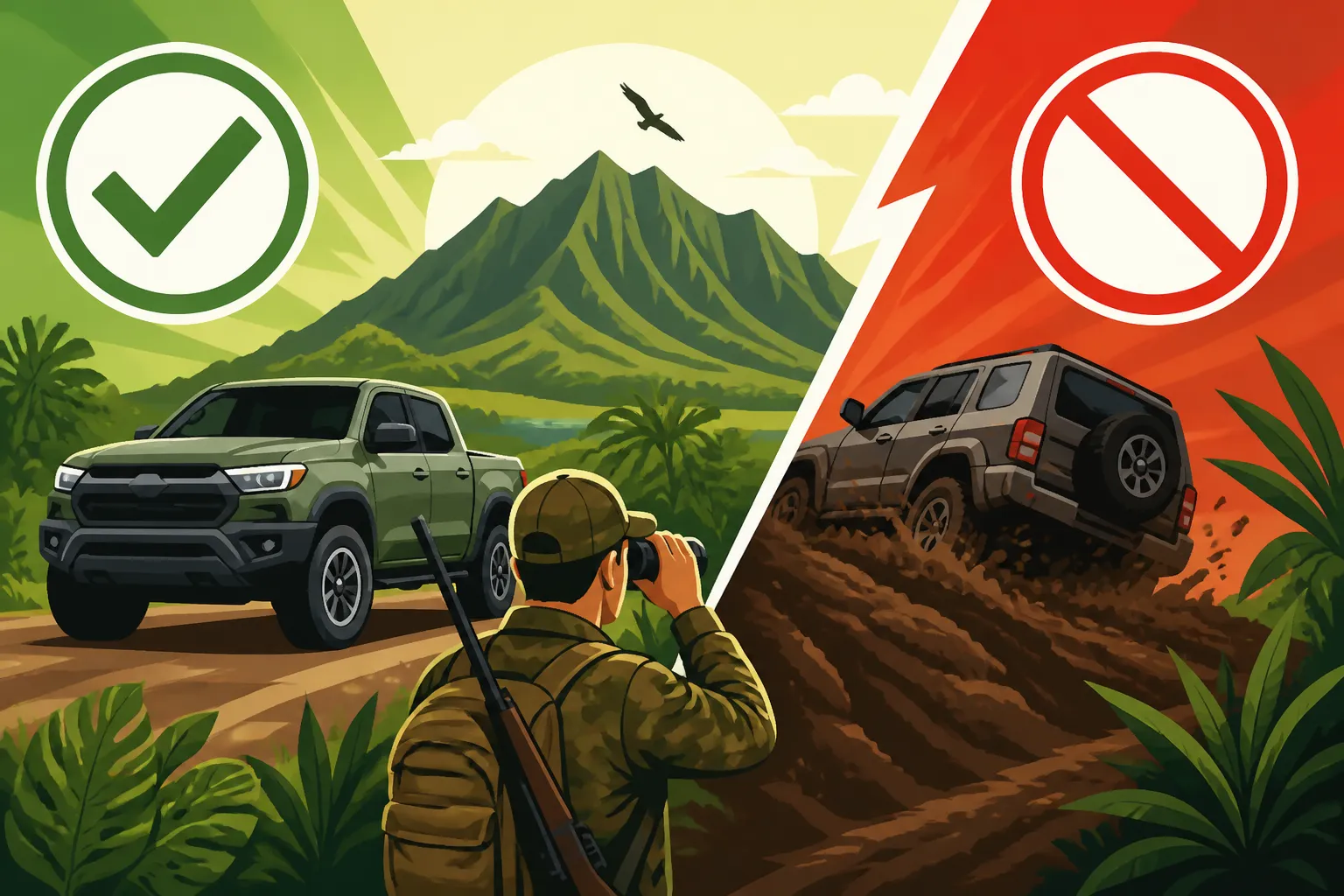
Vehicle Rules on Hawaii Public Land
Getting out to hunt on Hawaii's public lands is an incredible experience, but the unique terrain and the state's strong conservation focus mean that simply driving wherever you please isn't an option. Many hunters, especially those new to the islands, can find the vehicle access rules confusing and frustrating, leading to wasted time or, worse, unintended violations. This guide is here to unravel the complexities of Hawaii's vehicle regulations for public hunting units, helping you understand where you can drive, what types of vehicles are allowed, and how to stay on the right side of the law so your focus can remain on the hunt.
Understanding Hawaii's Designated Road Systems
One of the biggest hurdles hunters face in Hawaii is deciphering exactly where they can and cannot drive on public lands. It’s not like a vast national forest on the mainland where many dirt roads are implicitly open. Here in Hawaii, the emphasis is heavily on protecting fragile ecosystems from erosion and disturbance, which means vehicular access is often strictly limited to designated roads. Ignoring these rules isn't just a minor infraction; it can lead to hefty fines and a lot of headaches.
Why Designated Roads Matter
The concept of "designated roads" is paramount to Hawaii's public land management. These aren't just arbitrary lines on a map; they are specific routes that have been evaluated for their environmental impact, safety, and necessity for access. The lush, often wet conditions on many islands mean that off-roading, even for a short distance, can quickly create deep ruts, accelerate erosion, and spread invasive species into pristine habitats. Imagine trying to drive through a delicate fern forest or across a rare plant habitat – the damage can be irreparable. This is why the state is so stringent. Hunters often get frustrated because a road might look passable or even well-used, but if it's not officially designated for public vehicle use, driving on it is a no-go. You'll find these rules are particularly strict in areas like Hawaii's Natural Area Reserve Hunting Rules where conservation is the primary goal.
Identifying Legal Vehicle Access Routes
So, how do you know if a road is designated? This is where proper planning and modern tools become invaluable. State hunting unit maps, often available through the Division of Forestry and Wildlife (DOFAW) websites, will clearly mark legal vehicle access routes. However, these paper maps aren't always perfect in the field. Many seasoned local hunters and off-island visitors rely heavily on digital mapping applications. A good GPS-enabled mapping app like onX Hunt can be a game-changer here. It allows you to overlay public land boundaries, roads, and often even trails, directly on your phone or GPS device. You can see your exact position in real-time relative to these designated routes, which can prevent accidental trespass or driving where you shouldn't. Before you head out, make sure to download offline maps, because cell service can be spotty, if not entirely absent, in many remote hunting units. Always double-check with the latest DOFAW unit specifics for the area you plan to hunt, as rules can change.
Types of Vehicles and Their Limitations
Hawaii's public lands present a diverse range of challenges, from rough lava flows to slick, muddy rainforest trails. This means that not all vehicles are suitable, or even permitted, in every hunting unit. Understanding the specific capabilities and restrictions for different vehicle types is crucial for a successful and legal hunt.
Four-Wheel Drive Vehicles
For many of Hawaii's more rugged hunting units, a high-clearance, four-wheel drive (4WD) truck or SUV is practically a necessity. These vehicles are designed to tackle the kind of unforgiving terrain you'll encounter on old ranch roads, rocky tracks, and muddy ascents to higher elevations. Think about hunting areas around Mauna Kea or some of Maui's upcountry units – without 4WD, you're simply not getting in very far, if at all. However, even with a capable 4WD, you're still bound by the designated road rule. Just because your truck can go somewhere doesn't mean it's allowed to. Many designated roads, especially in remote areas, might be nothing more than faint two-tracks, but they are still the only legal way in. Knowing Hawaii Units That Need a Four-Wheel Drive before you go can save you a lot of grief.
All-Terrain Vehicles (ATVs) and Utility Task Vehicles (UTVs)
While popular in some mainland hunting scenarios, the use of ATVs and UTVs on Hawaii's public hunting lands is generally much more restricted. In most DOFAW-managed areas, these off-highway vehicles (OHVs) are not permitted unless specifically stated for a particular unit or special hunt. The reasons are similar to the general vehicle restrictions: concerns about environmental damage, noise pollution, and the potential for these vehicles to open up new, unauthorized trails. If you're planning a hunt that typically involves an ATV/UTV, you absolutely must verify the specific rules for your chosen unit. Do not assume they are allowed. Many hunters who are used to extensive OHV access elsewhere are surprised by these limitations, and it's a common point of confusion. For the most part, Hunting Hawaii on Foot Without a Truck is the reality for much of the public land here.
E-Bikes and Other Electric-Assist Vehicles
The rise of electric bicycles (e-bikes) has brought new questions about access. Generally, if a trail or road is open to traditional bicycles, it's also open to e-bikes that meet certain criteria (usually Class 1 or 2, meaning pedal-assist or throttle-assist up to a certain speed, but not operating as a motorcycle). However, the same restrictions that apply to motorized vehicles often apply here too: if it's not a designated road or trail open to bikes, e-bikes are typically not allowed. This is a rapidly evolving area of regulation, so always check with the specific land management agency for the most current rules. For example, some units might consider an e-bike a "motorized vehicle" and thus subject to the same strict limits as an ATV, especially if it allows for throttle-only propulsion at higher speeds.
| Vehicle Type | General Rule on Hawaii Public Hunting Land | Key Considerations |
|---|---|---|
| 4WD Truck/SUV | Generally permitted on designated, maintained roads within hunting units. | Essential for accessing many remote or rugged units. Must stay on marked roads. |
| 2WD Passenger Vehicle | Permitted on designated, well-maintained gravel or paved access roads. | Limited access; many units require 4WD. Check road conditions, especially after rain. |
| ATV/UTV (OHVs) | Generally NOT permitted unless specifically designated for a particular unit or special hunt. Very strict restrictions. | Do not assume access. Verify with DOFAW for the specific unit. High risk of violation. |
| Motorcycles/Dirt Bikes | Very limited to specific designated routes, similar to ATVs/UTVs. | Rarity on public hunting lands due to environmental impact and noise concerns. |
| E-Bikes | Typically allowed where traditional bicycles are permitted, but rules vary. May be classified as "motorized" in some units. | Verify specific unit rules regarding electric-assist. Class 1/2 are generally more accepted than Class 3 or higher. |
Access Points, Parking, and Check-In Procedures
It's not just about what you drive, but also how you use it to access the hunting area and where you leave it. Hawaii has specific protocols for entering public hunting lands, and these often involve designated check-in stations and parking areas that impact your vehicle use.
Locating Check-In Stations and Gates
Many public hunting units in Hawaii require hunters to check in before entering and check out after leaving. These check-in stations often serve as the primary access points for vehicles. You might encounter unmanned kiosks with sign-in sheets, or in some cases, manned stations during peak seasons. Even if a unit doesn't require a physical check-in, there might be locked gates that require a permit or specific access code, or simply gates that indicate the boundary of a hunting area where vehicle use beyond that point is prohibited. Always know the specific requirements for your unit. For information on the larger system, see Checking In and Out of Hawaii Hunting Units. Digital tools like the Using the OuterSpatial App to Check In can streamline this process, but the underlying rules regarding physical access points remain critical.
Designated Parking Areas
Once you've entered a unit via a designated road, you'll eventually need to park your vehicle to begin your hunt on foot. Just like roads, parking areas are often designated. You can't just pull off the road anywhere and leave your vehicle. Look for clearings, gravel pull-offs, or marked parking lots. Parking off-road or in areas not designated for parking can lead to fines, towing, or environmental damage. It also signals to land managers that hunters might not be respecting the rules, which can jeopardize future access. Consider how far you'll need to walk from your vehicle to your hunting spot and plan accordingly. Sometimes, you might need to park at the very beginning of a unit and walk in for miles. What Hawaii Hunters Park and Walk In provides more specific examples of these situations.
Navigating Beyond the Vehicle Access Point
Remember that the ultimate goal for most hunters in Hawaii is to hunt on foot. Your vehicle is simply a tool to get you to an access point. Once you're out of the vehicle, you'll be traversing varied and often challenging terrain. This could involve hiking through dense forests, across rocky lava flows, or up steep gulches. Planning your route on foot and understanding the unit's boundaries is just as important as knowing your vehicle access. This is where tools like onX Hunt become invaluable again, helping you navigate trails and cross-country terrain once you've parked the truck. Being prepared for a serious hike, with appropriate gear and water, is key to a successful Hawaiian hunt.
Consequences of Non-Compliance and Best Practices
Ignoring Hawaii's vehicle rules on public hunting lands carries real risks, both for your wallet and your hunting privileges, not to mention the environment. Understanding these consequences and adopting best practices will help ensure a positive experience for everyone.
Penalties for Violations
The state of Hawaii takes its conservation laws seriously. Violations of vehicle access rules can result in significant fines, and in some cases, confiscation of your vehicle. Imagine driving your prized 4WD truck down a non-designated track, getting stuck, and then facing a fine in the hundreds or even thousands of dollars, plus the cost of towing and potential impoundment. Beyond the monetary penalties, serious or repeated violations can lead to the suspension or revocation of your hunting license and permits. This means you could lose the privilege to hunt on any public land in Hawaii for a period of time. It's a risk simply not worth taking. Staying informed about Hawaii Trespass and Closed Area Rules is part of being a responsible hunter.
Environmental Impact and Community Relations
Beyond the legal ramifications, operating vehicles off-designated roads causes tangible harm to Hawaii's unique and fragile environment. This includes accelerating soil erosion, damaging sensitive plant communities, disturbing wildlife, and introducing or spreading invasive species. The local hunting community in Hawaii is deeply intertwined with these conservation efforts, and unauthorized vehicle use reflects poorly on all hunters. Maintaining good relations with land managers, conservation groups, and the general public is crucial for preserving hunting access for future generations. When people see vehicles tearing up sensitive areas, it fuels anti-hunting sentiment, which nobody wants.
Best Practices for Responsible Vehicle Use
To avoid issues, here are some essential best practices:
- Plan Ahead, Way Ahead: Before you even pack your bags, research the specific unit you plan to hunt. Use the DOFAW website, call the local branch, and study maps. Know exactly where Hawaii's Hunting Units and How They Work and where the legal vehicle access points are.
- Utilize Mapping Apps: Tools like onX Hunt are your best friends in the field. Download maps for offline use, mark your planned route, and constantly monitor your position. This is the single most effective way to stay on designated roads.
- Observe Posted Signage: Pay attention to signs on gates, along roads, or at trailheads. They often provide critical, up-to-the-minute information about access restrictions, closures, or special conditions.
- Prepare Your Vehicle: Ensure your 4WD is in good working order, with appropriate tires for the terrain. Carry recovery gear (tow strap, shovel) if you're venturing into remote, rugged areas. Getting stuck on a public access road can lead to its temporary closure for everyone.
- Consider Walking In: If you're unsure about a road's status or if vehicle access is very limited, embrace the hike. Many of the best hunting spots in Hawaii are only accessible by foot anyway. Packing Meat Out of a Hawaii Gulch is a real consideration when you have to walk a long way.
- Check for Road Closures: Weather conditions, especially heavy rains, can lead to temporary road closures due to flooding or washouts. Always check for current advisories from DOFAW before heading out. Information on various seasons, including those for larger game, often comes with access updates, so keep an eye on resources like Hawaii Game Mammal Seasons.
- Report Violations (Respectfully): If you witness someone violating vehicle rules, note the details and report it to DOFAW. This helps protect hunting access and the environment.
By being diligent and respecting these regulations, you're not just avoiding fines; you're contributing to the sustainability of Hawaii's unique hunting opportunities. Happy hunting, and drive safe!
Disclaimer
This article is for general informational purposes only and does not constitute professional advice. Laws, prices and regulations vary by location and change over time. Consult a qualified professional for guidance on your specific situation.