Hunting Below a Watershed Fence
Ah, Hawaii hunting. It's a world unto itself, isn't it? You spend hours planning, scouting, and finally get into a good spot, only to find your target game hugging a fence line, just outside your unit or seemingly impossible to reach. It’s a common frustration, especially with those ever-present watershed fences. This guide is all about helping you understand what those fences mean for your hunt, how to navigate the unique challenges of hunting below them, and how to stay legal and ethical while pursuing game in these often-productive, yet tricky, areas.
Why Watershed Fences Exist in Hawaii and What They Protect
If you've spent any time hunting in Hawaii, you've probably encountered a watershed fence. These aren't just arbitrary boundaries; they're critical infrastructure for protecting Hawaii's most precious resource: fresh water. Our islands are fragile ecosystems, and much of our water supply comes from rain filtering through the high-elevation forests. These fences are put in place by agencies like the Department of Land and Natural Resources (DLNR) and private conservation groups to keep out feral ungulates – pigs, goats, sheep, and deer – that cause immense damage to the native forests.
Environmental Conservation Goals
The primary goal of these fences is watershed protection. Feral animals, with their rooting, browsing, and trampling, destroy native vegetation. This vegetation acts like a sponge, soaking up rainfall and slowly releasing it into underground aquifers, streams, and rivers. When the forest understory is destroyed, rain runs off much faster, leading to erosion, increased sediment in streams, and reduced groundwater recharge. Imagine a lush, moss-covered forest floor, perfect for absorbing water, versus a barren, muddy hillside where every raindrop just washes soil away. That's the difference these fences aim to maintain. It's a big picture, long-term effort to ensure future generations have clean water. You might be focused on putting meat in the freezer, but understanding the why behind these fences helps you respect the rules and the land. For more insight into these efforts, you can read about Hawaii's Fenced Conservation Boundaries.
These fences also protect Hawaii's unique and often endangered native plant and animal species. Many of our forest birds and insects rely on specific native plants that are highly vulnerable to damage from feral ungulates. By fencing off areas, conservationists create refuges where these plants can recover and thrive, which in turn supports the entire native ecosystem. So, when you're walking along a fence line, remember that on one side, you might be seeing a forest trying to heal, a place where rare plants are making a comeback, all thanks to that barrier. It's a constant battle, and the fences are literally the front lines.
Design and Construction of Fences
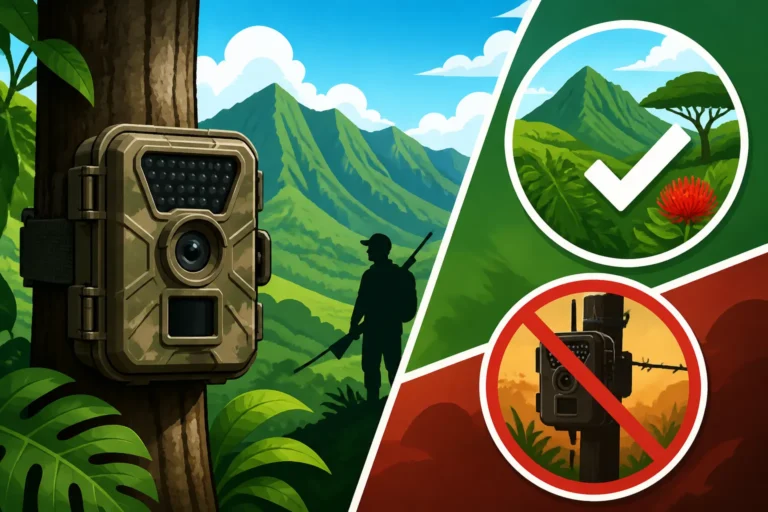
Watershed fences in Hawaii are typically robust, designed to be animal-proof and withstand the harsh mountain environments. They're often constructed with heavy-gauge wire mesh, sometimes several feet high, with additional wire or even electric components at the bottom to prevent rooting animals like pigs from digging underneath. Posts can be metal or treated wood, anchored deeply into the ground, often across incredibly steep and challenging terrain. Building and maintaining these fences is a monumental task, requiring significant resources and effort, often with volunteers scaling ridges and rappelling into gulches.
You'll notice that many of these fences follow natural contours like ridgelines or deep gulches, using the landscape to their advantage, but they also cut straight across easier terrain. These fences aren't cheap or easy to put up, and they require constant monitoring and repair due to weather, falling trees, and, yes, determined animals trying to get through. It’s a testament to the commitment to conservation that these barriers are built and maintained in such remote and rugged locations. When you’re using a mapping tool like onX Hunt, you might be able to see these fenced areas marked as conservation districts or restricted zones, giving you a heads-up on where they might impact your hunt plan.
Understanding Game Movement Near Fences and How to Adapt
The presence of a watershed fence dramatically alters how game animals move through the landscape. For hunters, this creates both challenges and unique opportunities. Animals will often behave differently when they encounter these barriers, and understanding these patterns is key to successful hunting below them.
Animal Behavior Near Fences
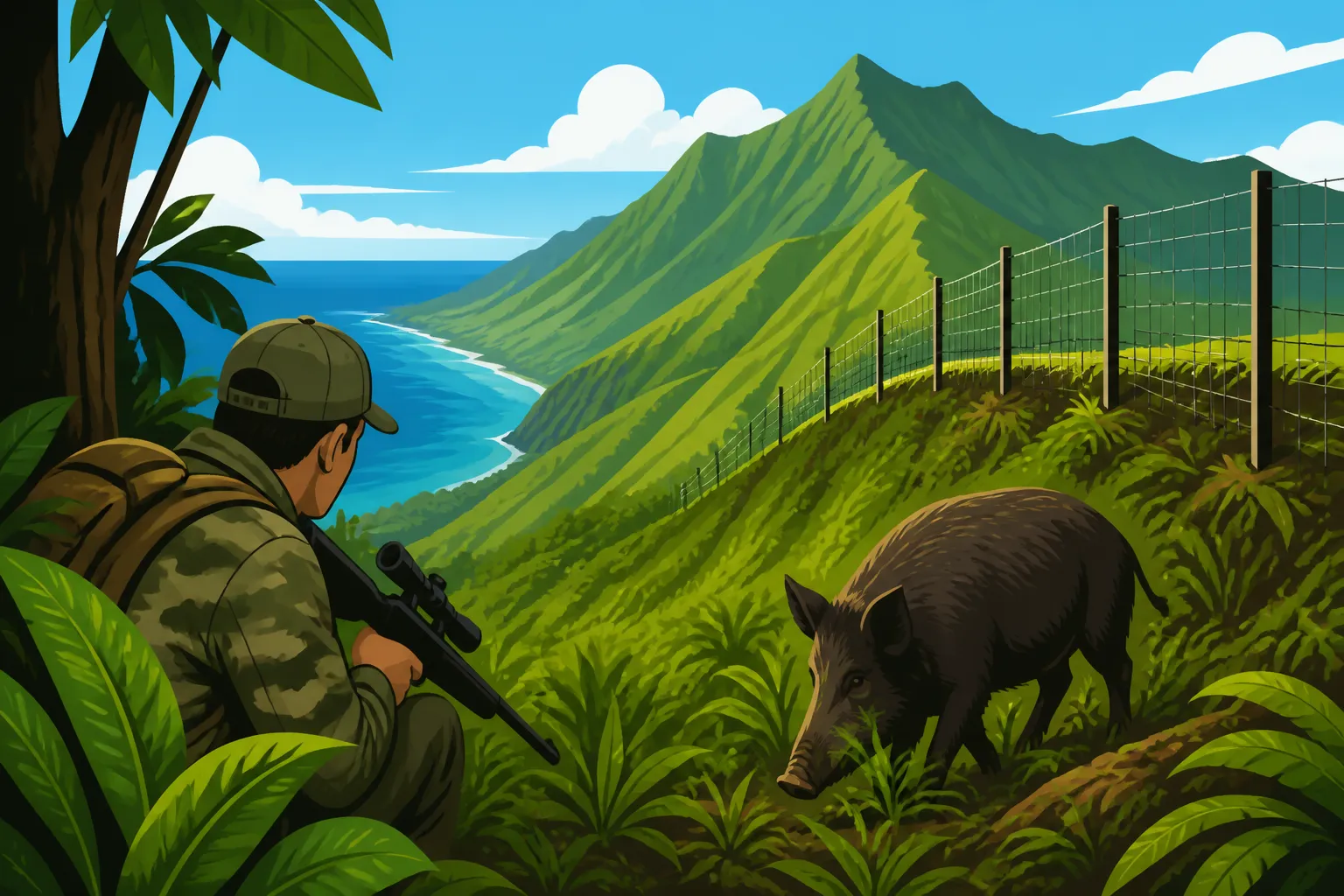
Animals, especially pigs and goats, learn quickly where these fences are. They'll often follow the fence lines, looking for weak points, low spots, or areas where the fence might cross a less-steep gulch. Think of the fence as a highway for them, a predictable travel corridor. You might find well-worn trails running parallel to the fence, just outside the protected area. Pigs, notorious for their intelligence, will sometimes attempt to root under fences, creating small breaches that other animals might exploit. You’ll often find fresh sign—tracks, droppings, rubs—clustered along these fence lines, making them excellent places to scout. Reading Pig Sign Along a Muddy Trail can be particularly effective in these scenarios.
Deer, particularly axis deer if you're on Maui or Molokai, also use fence lines, though they might be more inclined to jump over lower sections or find gaps where the terrain allows. Goats are masters of the steep, rocky terrain and will often be found clinging to cliffs and ledges just below or adjacent to a fence that cuts across a sheer face. It’s their natural habitat, and the fence merely redirects them. They might congregate in pockets of palatable vegetation or near watering sources that are just outside the fenced boundary. Understanding Why Hawaii Goats Move at First Light is crucial if you plan to hunt them along these linear features.
Strategic Considerations for Hunters
Hunting below a watershed fence means adjusting your strategy. Since animals often travel parallel to the fence, setting up ambushes along these corridors can be effective, especially at dawn or dusk when animals are on the move. Look for natural funnels or pinch points where the terrain might force animals into a narrower path along the fence. Consider where they might be crossing from one habitat type to another, using the fence as a guide. If you're hunting in a unit adjacent to a fenced area, the fence can act as a natural boundary, often concentrating animals in the huntable areas.
Another strategy is to identify potential crossing points or areas where animals might be trying to bypass the fence. These spots can be very productive. For example, if a fence goes over a particularly deep, narrow gulch, animals might be pushed around the ends of it, or if there's a wash-out under the fence that they've been using, that's a prime target. Always remember that the fenced area itself is off-limits, so all your efforts must be focused on the legal hunting ground. Tools like onX Hunt can be incredibly valuable here, as you can often overlay public/private land boundaries and conservation areas directly onto your map, helping you visualize these fence lines and plan your approach, ensuring you're always on the correct side of the boundary.
Navigating the Challenging Terrain Below Hawaii's Watershed Fences
The terrain surrounding Hawaii's watershed fences can be some of the most challenging on the islands. These fences are often built in rugged, remote areas specifically because those are the critical watershed zones. Hunters venturing into these areas need to be prepared for everything from dense jungle to steep, rocky slopes.
Typical Terrain Features
Below these fences, you'll encounter a real mix of Hawaii's diverse landscapes. In many windward areas, you'll be dealing with incredibly dense, wet rainforest, full of tangled vines, steep-sided gulches, and slick, muddy footing. Visibility can be extremely limited, making close-quarters hunting the norm. It's a world away from the open country often associated with deer hunting. Preparing for hunting Hawaii's wet forest is essential here. Think about navigating a maze of thick strawberry guava, clidemia, or hau bush, all while trying to stay quiet and scent-free.
Conversely, on the leeward sides of the islands, these fences might cut through dry, rocky, kiawe-dominated flats or steep, eroded canyon country. Here, the challenge shifts from dense vegetation to sharp lava rock, loose scree, and intense sun exposure. Footing can be just as treacherous, but in a different way – ankle-breaking lava tubes or slick, dusty slopes. Knowing how to adapt to Hunting Hawaii's Dry Leeward Country is crucial for success and safety. Regardless of the specific terrain, these areas below the fence lines often represent the interface between human activity (like ranching or development) and the wild, protected upland forests, meaning they can be transitional zones for game animals.
Access and Entry Points
Getting to these fence lines can be an adventure in itself. Many watershed fences are in remote areas with limited road access. You might find yourself hiking in for miles, often starting at a public access point and working your way through private or state lands to reach the boundary. Some areas may require walking along an old jeep track or cattle trail that parallels the fence, while others demand bushwhacking through trackless wilderness. Always check with the DLNR for specific unit rules on access and vehicle use. Sometimes, you'll encounter a hunter check-in station far from the actual fence, making precise navigation even more critical. Walking In to a Remote Hawaii Unit is often the name of the game in these situations.
Be mindful of private land boundaries, which can often run adjacent to or even intersect with state-managed watershed lands. This is where a reliable mapping app is your best friend. Seriously, I can't stress enough how important it is to be absolutely sure of your location. You definitely don't want to accidentally trespass onto private property while trying to get to a good hunting spot below the fence. The GoHunt platform might not always have Hawaii-specific land ownership maps, but it’s a good general reminder to always confirm boundaries through official DLNR maps or reputable apps like onX Hunt which often show these detailed boundaries.
Safety Concerns in Rugged Terrain
Safety is paramount when hunting below watershed fences. The terrain is often unforgiving. Steep slopes, loose rock, slippery mud, dense vegetation that hides hazards – it's all part of the package. Sprained ankles, falls, and getting lost are very real risks. Always hunt with a buddy if possible, or at least let someone know your exact plans and expected return time. Carry a reliable GPS device, a map, and a compass, and know how to use them. Cell service is often nonexistent in these remote areas, so don't count on your phone for navigation or emergencies. No Cell Signal on a Hawaii Hunt is a common reality.
Beyond the terrain, consider the unique challenges of Hawaii's climate. Intense heat and humidity, especially in the sun-exposed leeward areas, can lead to dehydration and heat exhaustion. On the windward side, sudden heavy rains can turn dry streambeds into raging torrents and make already slick trails downright dangerous. Packing sufficient water, first-aid supplies, and rain gear is non-negotiable. Knowing how to read Hawaii's Trade Wind Patterns can also help you predict weather shifts and understand animal movement, adding another layer of safety and strategy to your hunt.
Legal and Ethical Hunting Practices Near Fenced Boundaries
Hunting near watershed fences isn't just about strategy and navigation; it's deeply tied to understanding and respecting the legal boundaries and ethical responsibilities that come with them. These fences delineate important conservation areas, and hunters play a vital role in upholding their integrity.
Understanding Boundary Laws
The most crucial rule when hunting near a watershed fence is simple: do not cross the fence. These fences mark the boundary of a protected area, typically a Natural Area Reserve (NAR), Forest Reserve (FR), or other conservation zone where hunting is either restricted, requires a special permit, or is entirely prohibited. What to Do at a Fenced Unit Boundary is to always respect it. Even if you see a monster boar or a trophy ram just on the other side, pursuing it into the closed area is a serious violation.
It's your responsibility as a hunter to know where you are at all times. Before you even set foot in the field, study detailed maps of your hunting unit. The DLNR website is an excellent resource for unit boundaries and regulations. Using a GPS mapping app like onX Hunt on your phone (downloading offline maps is key where there’s no signal) can be incredibly helpful for confirming your exact position in real-time. Don't rely on guesswork or old, faded paper maps that might not show the most recent fence lines or unit changes. Ignorance of the boundary is rarely an excuse when it comes to violations.
Ethical Hunting Practices
Beyond the law, there's a strong ethical component to hunting near these fences. The conservation efforts behind these barriers are vital for Hawaii's future. By respecting the fences, you're respecting the land, the wildlife, and the efforts of those working to preserve Hawaii's unique ecosystems. This means not damaging the fence, not creating new access points, and not leaving gates open if you pass through one that is part of the hunting unit but still delineates a conservation area.
It also means being extra diligent with shot placement. If an animal is right up against the fence, consider if you can make a clean, ethical shot that ensures the animal falls on the huntable side of the boundary. The last thing you want is a wounded animal jumping or crawling into a protected area where you cannot retrieve it. That's a waste of a life and a potential violation. Good planning and patience are key. If you are hunting a unit that involves checking in and out, make sure to follow all protocols, whether it's a physical hunter station or using the OuterSpatial app to record your entry and exit. It all contributes to being a responsible hunter.
When you pack out your harvest, particularly if it's a large animal like a pig or a mouflon, consider the terrain. Packing Meat Out of a Hawaii Gulch can be brutal work. Plan your route carefully to avoid unnecessary damage to sensitive areas, especially those near the fence where ecological recovery might be underway. These actions not only reflect well on you as an individual hunter but also on the entire hunting community, showing that we are responsible stewards of the land, even when pursuing game animals.
| Terrain Type Below Watershed Fence | Typical Game Species | Hunting Challenges | Strategic Tips |
|---|---|---|---|
| Dense Wet Rainforest | Feral Pigs, Goats | Low visibility, slick mud, thick vegetation, steep gulches | Still-hunt slowly, use dogs, focus on trails parallel to fence, hunt scent-free |
| Dry Kiawe Flats / Lava Fields | Axis Deer, Feral Goats | Ankle-breaking lava, heat, limited cover, dusty trails | Spot-and-stalk from a distance, hunt water sources, use optics, morning/evening hunts |
| Steep Canyon Country | Feral Goats | Extreme vertical, loose rock, limited access, tricky recovery | Glass from across canyon, stalk from above, ensure stable footing, use ropes for recovery |
| Mixed Forest & Pasture Edges | Feral Pigs, Axis Deer | Transition zones, private land boundaries, human activity | Hunt dawn/dusk, check fence line funnels, secure private land permission if needed |
Disclaimer
This article is for general informational purposes only and does not constitute professional advice. Laws, prices and regulations vary by location and change over time. Consult a qualified professional for guidance on your specific situation.