Hunting Oahu’s Mokuleia Ridges
For many hunters on Oahu, the vast, undulating landscape of the Mokuleia Ridges presents a challenging yet rewarding pursuit, often leaving newcomers feeling overwhelmed by the dense vegetation and steep inclines. This guide will walk you through everything you need to know to confidently plan, prepare for, and execute a successful hunt for feral pigs and goats in this unique Hawaiian environment, helping you understand its quirks and conquer its demands.
Exploring the Unique Landscape of Mokuleia Ridges
The Mokuleia area on Oahu's North Shore is a world away from the island's bustling tourist spots. For hunters, it offers a rugged, often remote experience that demands respect and preparation. Understanding the specific characteristics of this terrain and the animals that call it home is the first step to a successful hunt.
The Unique Topography of Mokuleia
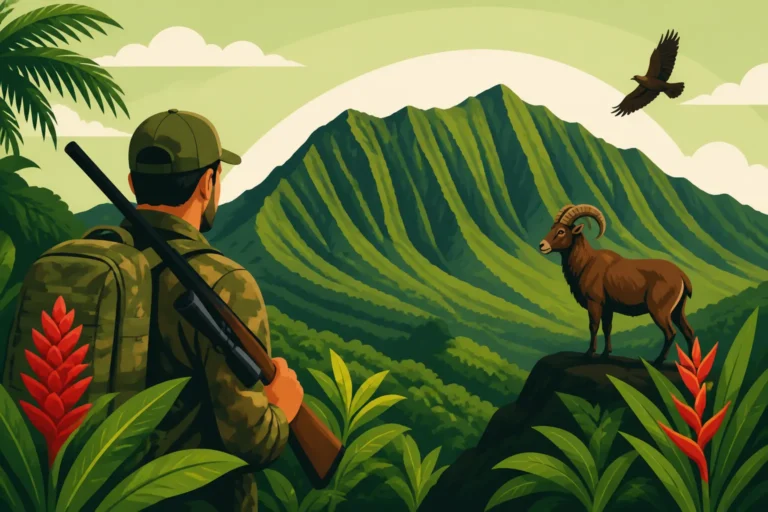
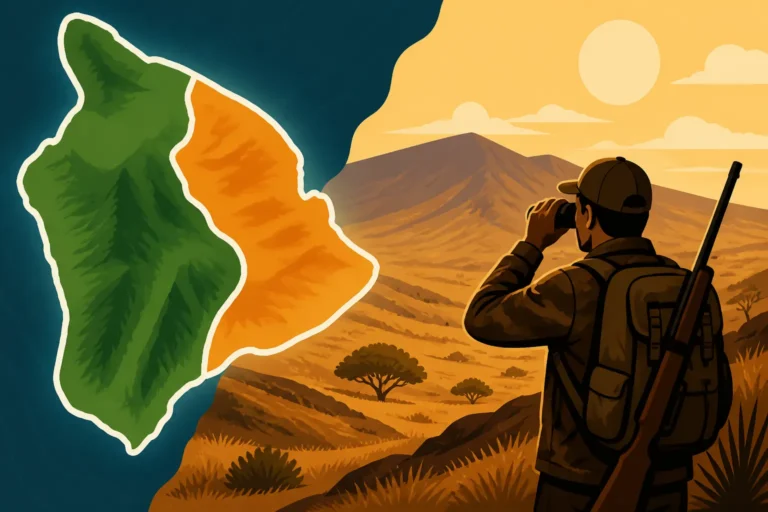
Mokuleia's hunting units are characterized by a series of steep, finger-like ridges that descend from the Waianae Mountain Range towards the coast. These ridges are often covered in a mosaic of vegetation, from open, grassy slopes near the lower elevations to dense, tangled guava, uluhe fern, and clidemia thickets further up. The valleys and gulches between these ridges can be incredibly steep and choked with vegetation, making travel arduous and sometimes dangerous. Water sources are often limited, especially during drier periods, influencing animal movement patterns dramatically. Knowing these features is crucial for navigation and understanding animal behavior.
Imagine trying to push through a wall of chest-high uluhe fern, slippery underfoot after a morning shower, while trying to maintain your footing on a 45-degree slope. This isn't your mainland deer woods; it's an intense, physical environment. Hunters often find themselves working against gravity for hours, climbing one ridge, dropping into a gulch, and ascending the next, sometimes for miles. This constant elevation change and challenging cover means you need to be in good physical condition and have your navigation skills sharp. The rewards, however, are often incredible views and the satisfaction of a truly hard-earned animal.
Primary Game Species: Feral Pigs and Goats
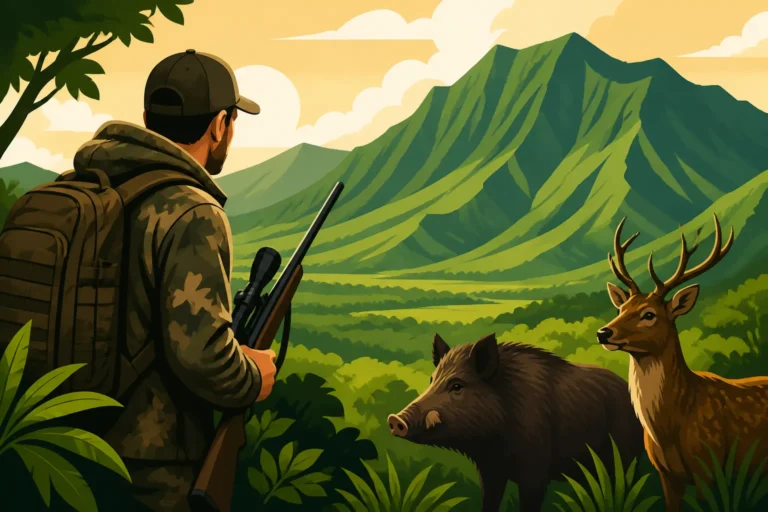
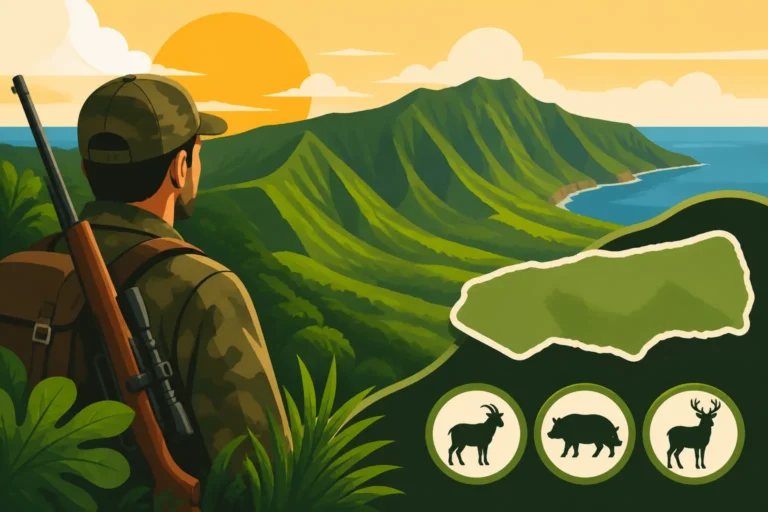
The Mokuleia Ridges are primarily hunted for feral pigs and, in certain areas, feral goats. Both species thrive in this rugged environment, utilizing the dense cover for bedding and the varying vegetation for forage.
Feral pigs are abundant across Oahu, including the Mokuleia area. They are incredibly adaptable, feeding on roots, fallen fruit, invertebrates, and even small animals. You'll find them ranging from the lower elevations, where they might root up grassy areas and agricultural fringes, to the higher, wetter reaches of the forest reserves. These pigs can be elusive, often moving at dawn and dusk, or remaining hidden in the thickest parts of the gulches during the day. Their damage to the native ecosystem is significant, as What Feral Pigs Do to Hawaii's Forests outlines, which is why hunting them is encouraged as a management tool.
Feral goats, while perhaps less numerous than pigs in some parts of Mokuleia, can also be found in the steeper, more open and rocky areas of the ridges. They are masters of vertical terrain, often found clinging to impossibly steep faces and ledges. Goats are primarily browsers, feeding on leaves, twigs, and shrubs, and their presence can lead to severe erosion on fragile slopes, as detailed in Why Goats Cause Erosion in Hawaii. Hunting these agile animals requires a keen eye and a steady hand, often involving long-range shots in challenging conditions. Both pigs and goats in this area tend to be smaller than their counterparts on other islands due to high hunting pressure and more limited forage, but they still offer a fantastic challenge.
Navigating Regulations and Preparing for Your Hunt
Hunting in Hawaii comes with its own set of rules and requirements, and Oahu's public lands are no exception. Proper preparation, from understanding the legalities to assembling the right gear, is crucial for a safe and successful trip to the Mokuleia Ridges.
Permits, Licenses, and Regulations Specific to Oahu
Before you even think about lacing up your boots, you need to ensure you're squared away with the necessary permits and licenses. All hunters in Hawaii, residents and non-residents alike, must possess a valid Hawaii hunting license. While Oahu doesn't operate on a permit-tag system for pigs and goats like some other islands, you still need to be aware of specific unit regulations.
You'll need to check the current hunting regulations provided by the Department of Land and Natural Resources (DLNR), Division of Forestry and Wildlife (DOFAW). These regulations detail open units, specific weapon restrictions, and season dates. For instance, Oahu's Public Hunting Areas will give you a general overview of where hunting is permitted. Remember, these regulations can change, so always consult the latest DOFAW pamphlets or their official website. You can often find information and even purchase your license through platforms like GoHunt, which simplifies the process of getting ready for your trip. For a deeper dive into statewide requirements, check out Hawaii Hunting Licenses and What They Cost.
Gear Up for the Rigors of Ridge Hunting
The terrain of Mokuleia demands specific gear choices to keep you safe, comfortable, and effective. Skimping on quality here can quickly turn a challenging hunt into a miserable, or even dangerous, experience.
First and foremost, invest in solid, waterproof hiking boots with excellent ankle support and aggressive tread. You'll be traversing slippery, uneven ground, and ankle injuries are a real concern. Layered clothing is also key; the mornings can be cool and damp, especially at higher elevations, but the mid-day sun can be intense. Opt for quick-drying, synthetic fabrics that wick moisture away. A good rain jacket is non-negotiable, as sudden downpours are common on the windward side of the ridges. Beyond clothing, a sturdy backpack to carry water, snacks, a first-aid kit, and game processing tools is essential. Consider a pack that can also handle carrying out meat, as a successful hunt means a heavy hike out.
| Item Type | Specific Gear Recommendation | Why It's Essential in Mokuleia |
|---|---|---|
| Footwear | Waterproof, high-ankle hiking boots with aggressive tread | Crucial for slippery, steep, uneven terrain; ankle support is vital |
| Clothing | Layered, quick-drying synthetics (base, mid, rain jacket/pants) | Manages varying temperatures and sudden rain; wicks sweat |
| Navigation | GPS device or smartphone with mapping app (e.g., onX Hunt), compass, paper map | No cell signal in many areas; staying found is paramount |
| Hydration | Hydration pack (2-3 liters minimum) + water filter/purifier | Heat and exertion demand constant hydration; natural sources are iffy |
| First Aid | Comprehensive kit with blister treatment, bandages, pain relief | Cuts, scrapes, and strains are common in thick cover and rough terrain |
| Game Care | Sharp knife, game bags, cordage, nitrile gloves | Field dressing in heat requires speed and hygiene; packing out meat |
| Safety | Whistle, headlamp, signaling mirror, personal locator beacon (PLB) | For emergencies, especially if staying out after dark or getting lost |
| Weapon | Appropriate firearm or archery equipment (check regulations) | Reliable, accurate, and suited for dense cover or longer shots |
Utilizing Mapping Tools for Mokuleia
Navigation on the Mokuleia Ridges can be incredibly challenging due to dense canopy cover, repetitive terrain features, and the lack of distinct landmarks. This is where modern mapping tools become indispensable.
An app like onX Hunt can be a game-changer. It allows you to download offline maps before you head out, which is vital because cell service is often non-existent in the deeper gulches and remote sections of the ridges. With offline maps, you can accurately track your position, mark waypoints for game sightings, water sources, or tricky terrain, and delineate property boundaries to avoid trespassing. It's not just about finding your way; it's about having a real-time understanding of the contours, elevation changes, and vegetation types that will dictate your approach. Pair your digital map with a traditional compass and a paper map as a backup, because electronics can fail, and getting lost in the thick Hawaiian jungle is a serious concern. Remember, No Cell Signal on a Hawaii Hunt is a common reality, so always have a backup plan.
Tactics for Hunting Feral Pigs and Goats on the Ridges
Once you're geared up and understand the rules, it's time to strategize your hunt. The Mokuleia Ridges demand specific approaches for both navigating the challenging terrain and effectively pursuing the resident game animals.
Navigating the Steep Slopes and Dense Cover
The primary challenge in Mokuleia is simply moving efficiently and quietly through the environment. The steepness of the ridges means you'll spend a lot of time climbing, and the dense vegetation requires constant attention.
When moving through uluhe fern or guava thickets, try to find existing game trails. Animals, especially pigs, create networks of trails that offer the easiest path through the dense undergrowth. These trails are also excellent places to find fresh sign. Move slowly and deliberately, taking short steps, and constantly scanning ahead and to the sides. Use natural features like fallen logs or rock outcroppings to break up your silhouette. Staying Found in Dense Hawaii Rainforest is a skill you'll develop, but always rely on your map and compass, not just your memory. The wind is also critical; Hawaii's trade winds are generally consistent, but the topography of the ridges can create swirling thermals, especially in the mornings and evenings. Always try to hunt with the wind in your favor, keeping your scent from reaching the animals you're pursuing.
Spotting and Stalking Tactics for Pigs and Goats
Both pigs and goats in Mokuleia are wary animals, and successful hunting often hinges on a combination of patient spotting and careful stalking.
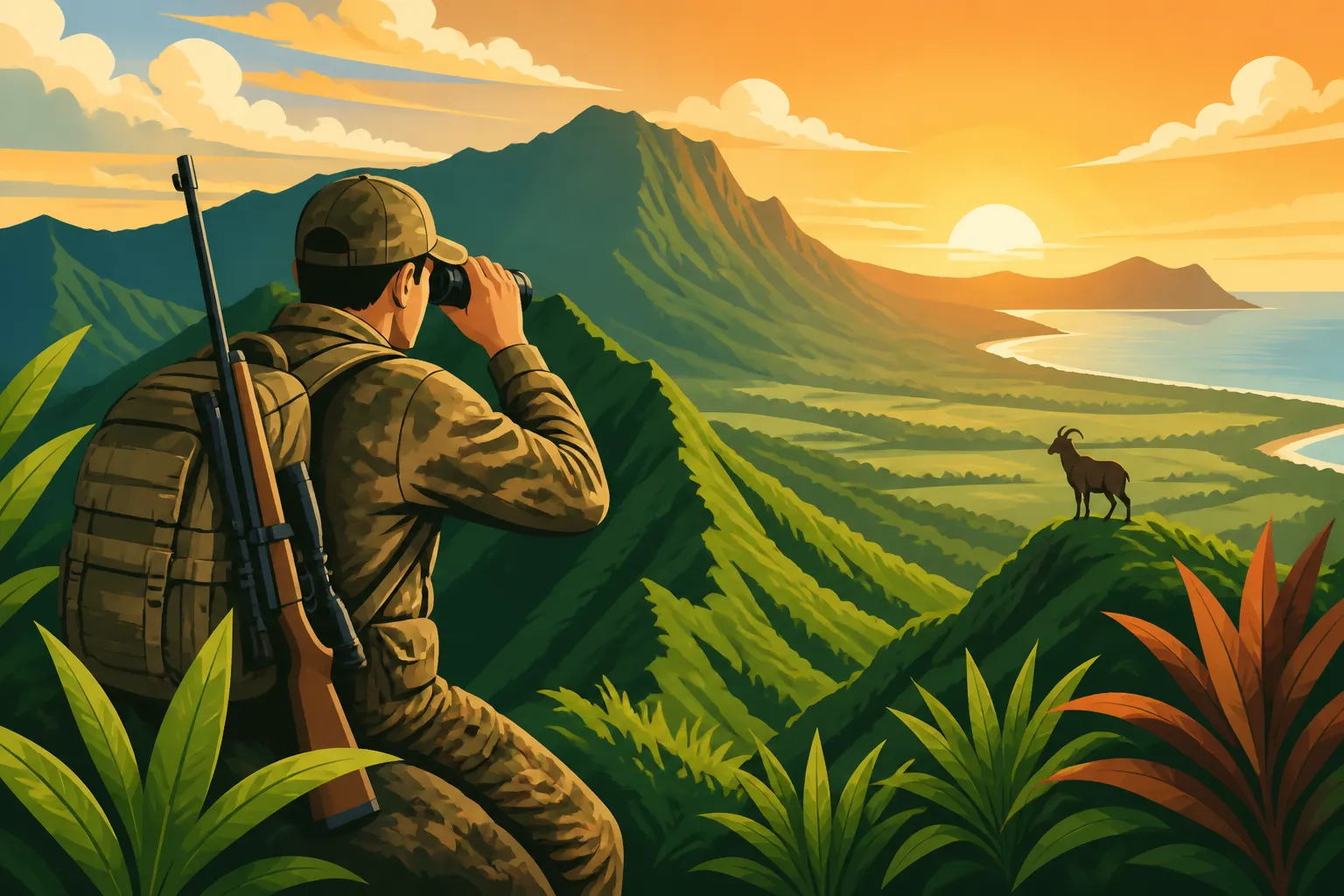
For goats, focus your attention on the steeper, more open slopes and rocky outcroppings, particularly at dawn and dusk. Goats often move to feed during these cooler parts of the day. Use binoculars or a spotting scope to systematically glass the distant ridges and gulches. Look for movement, distinct shapes, or changes in color that indicate an animal. Once spotted, the stalk for goats can be incredibly demanding. It often involves long detours to get above or across from them, utilizing every bit of cover available. Wind direction is paramount, as goats have an excellent sense of smell. You might find goats congregating on sun-drenched ledges in the early morning, offering a unique challenge when trying to get within shooting range. Hunting Goats on a Sea Cliff Safely gives you a sense of how challenging these approaches can be.
Pigs, on the other hand, often prefer the denser cover of the gulches and the lusher vegetation found along drainages. They'll venture out into more open areas to feed, but will quickly retreat to cover at the first sign of danger. Still-hunting, moving extremely slowly and stopping often to listen and look, is highly effective for pigs in thick country. Pay close attention to fresh rooting, tracks, and scat. Listen for their grunts, the rustling of leaves, or the distinctive sound of them chewing. When you locate a pig, a slow, deliberate stalk using the available cover is crucial. Consider the time of day: during cooler, wetter periods, pigs might be more active. During hotter, drier stretches, they'll likely be holed up in the shadiest, wettest parts of the gulches. Still-Hunting a Guava Thicket for Pigs offers insights into effective tactics in such dense environments.
Reading Sign and Animal Behavior
Being able to interpret the clues animals leave behind is a fundamental skill for any hunter, and in Mokuleia, it can mean the difference between success and going home empty-handed.
For pigs, look for fresh rooting, where they've dug up the soil in search of roots and invertebrates. The freshness of the dirt and the presence of moisture can tell you how recently they were there. Tracks in muddy areas or along game trails are also a clear indicator. Look for distinct cloven hoof prints, and if you see drag marks, it might indicate a heavier pig. Wallows – muddy depressions where pigs cool themselves – are another strong sign, especially if the mud is still wet or the wallow is still active. Rubs on trees where pigs scratch themselves are also good indicators of activity. Their scat, typically cylindrical and clumpy, can also tell you about their diet and recent movements.
Goat sign is slightly different. They leave distinct, smaller droppings, often in piles where they've rested. Tracks are narrower and more pointed than pig tracks, and you'll often find them in rocky areas or along narrow ledges. Goats also rub their horns on smaller trees and shrubs, especially during rut, leaving frayed bark. Understanding Why Hawaii Goats Move at First Light can help you predict their travel patterns and be in position when they're most active. By combining all these pieces of information, you can build a mental picture of where the animals are spending their time, what they're feeding on, and how best to intercept them.
Ensuring Safety and Ethical Practices
Hunting on Oahu's Mokuleia Ridges is an incredible adventure, but it comes with responsibilities. Prioritizing safety, respecting the land, and following ethical guidelines are not just good practices—they are essential for protecting yourself, others, and the future of hunting in Hawaii.
Staying Safe in Remote Oahu Country
The remote nature of Mokuleia means you're often far from immediate help. Personal safety is paramount. Always hunt with a buddy, or at least let someone know your exact hunting plan, including your route and expected return time. Carry a fully charged cell phone (though as mentioned, service is spotty) and consider a personal locator beacon (PLB) for emergencies.
Hydration is critical in Hawaii's warm, humid climate. Carry more water than you think you'll need, and consider a water filter or purification tablets. Sun protection, including a hat, sunglasses, and sunscreen, is also vital to prevent sunburn and heat exhaustion. Be aware of the dangers of falling on steep terrain, especially when traversing wet, slippery areas or loose scree. Move deliberately, test your footing, and use hiking poles for added stability. Watch out for sharp lava rock if present, and dense tangles of thorny plants. Additionally, be mindful of unexploded ordnance in areas bordering military training lands, though these are typically well-marked and outside designated hunting units. Always consult DOFAW maps and advisories.
Respecting the Land and Other Users
Hawaii is a place where respect for the land, or malama 'aina, is deeply ingrained. Hunters have a crucial role to play in upholding this value. This means packing out everything you pack in, including all trash and spent casings. Avoid disturbing cultural sites, which might be unmarked in remote areas; if you encounter anything that looks like a historical or sacred site, avoid it and report its location to DOFAW.
Remember that hunting units often abut private property. Always be aware of unit boundaries using your mapping tools like onX Hunt and avoid trespassing. There might also be other recreational users in the area, such as hikers or birdwatchers. Be courteous, make your presence known, and ensure your hunting activities do not negatively impact their experience. Adhering to blaze orange requirements, where applicable, is also a simple way to increase visibility and safety for everyone in the field, as discussed in Hawaii Blaze Orange Requirements. Ethical hunting also means taking clean, humane shots and making every effort to recover your game.
Checking In, Checking Out, and Game Recovery
Hawaii has a mandatory check-in and check-out system for many public hunting units, including those in Mokuleia. This system is crucial for safety and for wildlife management.
Before you start your hunt, you are required to check in at the designated check station or, increasingly common, electronically through an app like OuterSpatial. This informs DOFAW of your presence in the unit. Similarly, after your hunt, whether successful or not, you must check out. This not only ensures your safety (they know you're out of the unit) but also provides valuable data on hunter effort and success rates. Failing to check in or out can result in citations or fines. For more details on this process, see Checking In and Out of Hawaii Hunting Units.
Successful game recovery in Mokuleia can be incredibly challenging. If you harvest an animal, especially a pig or goat in a deep gulch, be prepared for a difficult pack-out. Have a plan for how you will quarter and cool the meat quickly, especially in Hawaii's heat and humidity. Game bags are essential to protect the meat from flies and debris. Carrying enough rope or sturdy cordage can assist in getting an animal up a steep slope. The satisfaction of a successful hunt on the Mokuleia Ridges is immense, but the work truly begins after the shot.
Disclaimer
This article is for general informational purposes only and does not constitute professional advice. Laws, prices and regulations vary by location and change over time. Consult a qualified professional for guidance on your specific situation.