Hunting a Strawberry Guava Thicket
Hunting strawberry guava thickets in Hawaii can feel like you're battling the jungle itself, a dense, thorny, and often suffocating environment that seems impenetrable. But for those willing to put in the hard work, these thickets are often where Hawaii's wiliest feral pigs, goats, and even some deer choose to hide, making them prime hunting ground. This guide will walk you through everything you need to know to successfully navigate and hunt these challenging, yet rewarding, landscapes, from preparation and gear to effective strategies and essential field care.
Why Strawberry Guava Thickets are Both a Challenge and an Opportunity
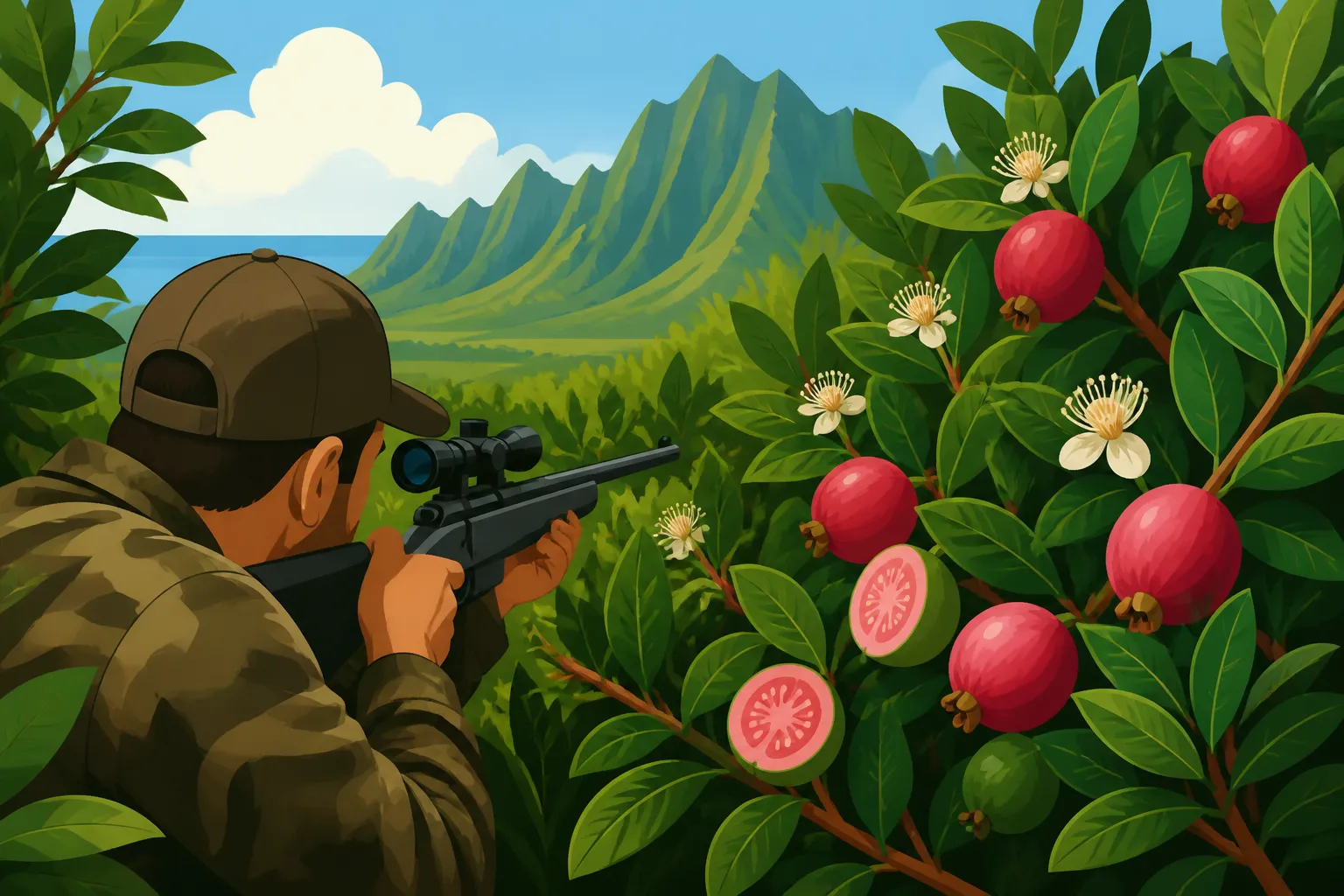
You've probably seen it: that impenetrable green wall on a hillside or choking out the edges of a pasture. Strawberry guava (Psidium cattleianum) is everywhere in Hawaii, and for hunters, it presents a unique paradox. It's incredibly frustrating to move through, yet it's also where the game animals you're after are often concentrated. Understanding this love-hate relationship is key to successful hunting.
The Nature of Strawberry Guava in Hawaii
Strawberry guava is an invasive species that absolutely thrives in Hawaii's climate, especially in the wetter, cooler elevations, though it can pop up just about anywhere. It grows incredibly fast, forming dense, multi-stemmed stands that can reach impressive heights, creating a canopy that shades out native plants and a thick understory that’s a nightmare to walk through. Imagine trying to push through a wall of intertwined branches and leaves, often covered in little, almost invisible thorns that cling to your clothes and scratch your skin. It’s relentless.
These thickets are so dense that sunlight struggles to penetrate, keeping the ground beneath relatively cool and moist, even on hot days. The interlocking branches create a natural fortress, providing incredible concealment and protection. From a hunter's perspective, it feels like trying to find a needle in a haystack, and the sheer physical effort required to push through just a few yards can be exhausting. It’s not for the faint of heart, or those who prefer easy walking.
What makes it even more frustrating is its sheer prevalence. On islands like Oahu, Maui, and parts of the Big Island, you’ll encounter strawberry guava in various stages of growth, from small, dense patches to sprawling forests. It's often found bordering open pastures, in old fallow fields, and especially in the mid-elevation Hunting Hawaii's Rainforest Units where moisture is abundant. Recognizing it and understanding its growth habits is the first step in deciding how to approach it.
Why Animals Seek Out Guava Thickets
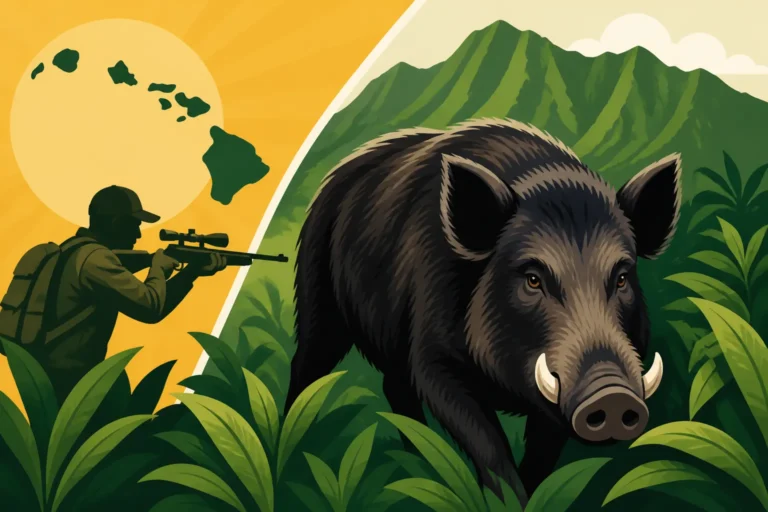
Despite the difficulty they present to us, strawberry guava thickets are an absolute haven for Hawaii's game animals, particularly feral pigs and goats, but also Axis deer and Black-tailed deer on their respective islands. For pigs, it's a dual-purpose paradise: an abundant food source and impenetrable security. The fruits of the strawberry guava, which ripen throughout the year in waves, are a major dietary component for pigs, drawing them into these areas like magnets.
Beyond the fruit, the dense cover offers unparalleled protection from predators (though Hawaii has few natural ones, human hunters are a different story) and the elements. A pig can bed down deep within a guava thicket and feel incredibly secure, virtually invisible to anything moving on the outside. This is especially true for large boars and sows with young piglets, who prefer the security of dense cover over open areas. They can vanish into a patch of guava like smoke, leaving hunters wondering if they ever existed.
Feral goats also utilize guava thickets, especially when looking for shade on hot days or seeking refuge from hunting pressure. While they might browse on the leaves, the primary draw is usually the cover. Axis deer, particularly on Maui and Lanai, will use the edges of guava thickets for bedding down during the day, especially if it offers shade and a vantage point without compromising their ability to disappear. It's like their personal security blanket, allowing them to rest undisturbed. The denser the thicket, the safer they feel, which is why hunting these areas can be so effective if you know what you’re doing.
Essential Gear and Preparation for Guava Hunting
Venturing into a strawberry guava thicket unprepared is a recipe for a miserable, unproductive, and potentially dangerous hunt. The terrain itself demands specialized gear and a methodical approach to preparation. It’s not just about finding the animals; it’s about surviving the environment.
Clothing and Protection for the Jungle
Your clothing is your first line of defense against the relentless guava. Forget your lightweight, breathable upland gear; you need tough, durable fabrics that can withstand thorns, constant snagging, and moisture. Think heavy-duty canvas, ripstop nylon, or even leather for crucial areas. Long sleeves and pants are non-negotiable, even in Hawaii's heat, to protect against scratches, insect bites, and the abrasive nature of the thicket. Many experienced local hunters wear old jeans and durable work shirts because they simply hold up better.
Footwear is equally critical. You need sturdy, waterproof boots with excellent ankle support to navigate uneven, often slippery terrain hidden beneath dense vegetation. Lava rock, muddy slopes, and hidden roots are common hazards. Leather or rubber boots that can shrug off punctures from stray branches and keep your feet dry are ideal. And don’t forget gaiters! They will prevent debris, mud, and thorns from getting into your boots, which can turn a long walk into a torture session.
Finally, consider your visibility and personal protection. A blaze orange vest or hat is a must, not just for safety in thick cover, but also because you'll likely be moving slowly and making some noise, which will alert game animals more readily than if you were moving fast. Don’t forget thick gloves to protect your hands when pushing branches aside or handling a downed animal. A good pair of work gloves can save your hands a lot of pain and prevent unnecessary cuts.
Navigation and Communication in Dense Cover
In a dense guava thicket, visibility can drop to just a few feet. It's incredibly easy to become disoriented, even in a small patch, as familiar landmarks disappear instantly. This is where modern navigation tools become absolutely essential. A reliable GPS unit or a smartphone with a robust hunting app like onX Hunt is non-negotiable. These tools allow you to pinpoint your exact location, track your movement, mark animal sign, and, most importantly, find your way back out. Before you even step foot in the thicket, use the app to mark your vehicle, potential escape routes, and any known trails or features.
Because cell service can be spotty or nonexistent in remote No Cell Signal on a Hawaii Hunt areas, especially deep within gulches or dense forests, don't rely solely on your phone. Carrying a physical compass and map as a backup is always a smart idea, along with knowing how to use them. For communication with hunting partners, especially if you're spreading out for a drive, two-way radios are invaluable. Ensure they have sufficient range and fresh batteries. You might even consider a satellite communicator or personal locator beacon for emergencies, especially if you're deep in a unit like Hunting Pigs in Hawaii's Rainforest Gulches.
Beyond the tools, it's about preparation. Study your unit map thoroughly before you go. Understand the topography, where ridges and gulches lie, and where the guava thickets are most dense. Mark potential access points and egress routes. Share your hunting plan with someone not on the hunt, including your expected return time and location. This kind of diligent planning isn't overkill; it's a safety net when you're literally diving into the green unknown.
Weapon Choices for Close-Quarters Action
Hunting in dense strawberry guava thickets often means extremely close-range encounters, where quick shots and brush penetration are key. Your weapon choice needs to reflect this reality. For rifle hunters, a fast-handling rifle chambered in a cartridge known for good brush performance – something like a .30-30, .45-70, or even a .308 with heavier bullets – can be effective. Lever actions are popular for their compact size and quick follow-up shots. Avoid high-magnification scopes; a low-power variable or a red dot sight is often more appropriate, allowing for faster target acquisition in tight spaces. Hawaii's Legal Rifle Calibers for Big Game gives you specifics.
Shotguns, especially with slugs, are also excellent choices for guava thickets. They offer significant knockdown power at close range and are often easier to swing and aim quickly in dense cover. For archers, a compact compound bow with a heavier arrow setup and sturdy broadheads designed for penetration is advisable. Shots will be close, so practice quick draws and shooting in awkward positions. Choosing an Arrow Setup for Axis Deer can provide good insights on heavy arrow setups applicable to pigs and goats too.
Many local hunters prefer the dog and knife method for feral pigs in these environments. This involves using trained dogs to locate, bay, and then hold a pig, allowing the hunter to move in for a quick, humane dispatch with a knife or spear. This method is incredibly effective in guava, as the dogs can penetrate where a human hunter struggles. However, it requires extensive training for both dogs and handlers, specialized gear like cut vests for the dogs, and a deep understanding of safety protocols. Dog and Knife Pig Hunting in Hawaii is a great resource if you're considering this approach. Regardless of your chosen weapon, practice shooting quickly and accurately at very close ranges, as this will be the reality of your guava hunting experience.
Strategies for Hunting Strawberry Guava
Successfully hunting a strawberry guava thicket is less about luck and more about patience, stealth, and understanding how animals use this dense cover. It's a deliberate chess match against a wily opponent in a challenging arena.
Still-Hunting the Edges and Lanes
One of the most effective strategies for Still-Hunting Pigs in Hawaii's Wet Forest or within guava is a slow, methodical approach. This involves moving incredibly slowly, pausing frequently, and using all your senses. You're not just walking; you're observing, listening, and smelling. Animals often create small trails or "tunnels" through the dense guava, especially along its edges or connecting different feeding areas. These are your highways into the thicket. Focus on these subtle openings.
Pay close attention to the wind. In thick cover, thermals can be tricky and swirling, but generally, you want to hunt into the wind to keep your scent from reaching the animals. Listen for subtle sounds – a rustle of leaves that isn't the wind, the soft grunting of pigs, the nervous cough of a goat, or the alarm bark of a deer. Reading Pig Sign Along a Muddy Trail is also crucial here; look for fresh tracks, scat, rooted areas, or rubs on branches that indicate recent activity. The fresher the sign, the closer the animal.
When you pause, don't just stand there. Scan the thicket, looking for any break in the pattern, a patch of hide, the flick of an ear, or an antler tine. Animals will often be bedded down just inside the densest cover, listening. Your patience can be their undoing. Move just a few feet, pause again for several minutes, and repeat. This "stop and go" method mimics natural movement and allows you to hear and see animals before they detect you. It's a slow dance, but it's often the most productive way to encounter game in this challenging habitat.
Driving or Pushing Thickets With Caution
For larger, more impenetrable guava thickets, a coordinated "drive" or "push" with a group of hunters can be highly effective, but it requires careful planning and strict adherence to safety protocols. This strategy involves one or more hunters (the "drivers") slowly moving through the thicket, attempting to push animals out towards other hunters (the "standers") positioned strategically on the downwind side or along escape routes.
Communication is paramount. Everyone needs to know their role, their assigned position, and the direction of the drive. Two-way radios are essential for coordinating movements and ensuring everyone knows where others are. Safety zones and shooting lanes must be clearly defined, and no one should ever shoot in the direction of other hunters. Blaze orange is not just recommended; it’s a non-negotiable safety measure when conducting drives in thick cover.
Animals pushed from a thicket will often try to sneak out quietly along familiar trails, but if spooked, they can burst out at high speed. Standers need to be alert, ready for quick shots, and aware of what's behind their target. This method is particularly effective for rooting out large boars that prefer to hide deep within the thickest cover. Remember, the goal is not to "run" the animals out but to move them calmly and predictably.
Leveraging Dogs for Success
As mentioned earlier, utilizing trained hunting dogs is one of the most efficient and culturally significant methods for hunting feral pigs in Hawaii's guava thickets. Bay dogs are trained to locate pigs and then "bay" them (hold them at bay by barking and circling) without making physical contact, allowing the hunter to approach. Catch dogs are then released to subdue the pig, giving the hunter an opportunity for a humane dispatch. This is a specialized skill set.
Dogs can penetrate the dense cover much more effectively and quickly than humans, allowing them to cover ground and locate pigs that would be otherwise impossible to find. GPS collars for your dogs are practically essential in these environments, allowing you to track their movement in real-time, even when you can't see or hear them. This helps you navigate to the bay and prevents dogs from getting lost.
However, hunting with dogs in guava comes with its own challenges. The thick cover can be incredibly hard on dogs, leading to cuts and scrapes. Fitting a Cut Vest on a Catch Dog is crucial to protect them from tusks and sharp branches. Hydration is also a serious concern in Hawaii's heat and humidity, so ensuring your dogs have access to water is important. A good dog handler understands their dogs' limits and knows when to call off a hunt or give them a rest. It's a partnership, and the dogs' well-being is always a top priority.
Locating Water and Feeding Areas Within Guava
Even within the seemingly uniform mass of a guava thicket, animals have preferred areas. Pigs, especially, will seek out wallows or muddy areas if there's any water source present. These hidden springs or seeps can be magnets during dry periods. Learning to read the subtle changes in vegetation that might indicate moisture is a skill developed over time. Look for lusher, greener patches or depressions in the terrain that could hold water.
Strawberry guava fruits drop when ripe, and these fruit-laden areas become feeding hotspots. During peak fruiting seasons, you might find fresh rooting sign or tracks concentrated in specific sections of a thicket. The smell of ripe fruit can even sometimes carry on the wind, giving you a clue. Pay attention to the ground cover; areas with abundant dropped fruit will show signs of disturbance.
Additionally, animals will often establish bedding areas deep within the densest parts of the guava for security. These might be slightly elevated spots that offer a slight thermal advantage or just the thickest, most tangled sections. Identifying these microhabitats within the larger thicket is key to placing yourself in the right position for an encounter. Animals are creatures of habit, and even in a chaotic environment like guava, they'll often return to favored spots.
Field Care and Extraction from the Thicket
After the shot, the work truly begins, especially in a dense guava thicket under the Hawaiian sun. Getting your animal processed and out efficiently is crucial to preserving the meat and ensuring a successful conclusion to your hunt. Field Care in Hawaii's Heat and Humidity is a critical skill here.
Initial Field Dressing in Difficult Terrain
Once an animal is down in a guava thicket, your priority is to field dress it quickly. Hawaii's tropical climate means meat spoils rapidly, and flies can descend almost immediately. The dense cover makes this difficult; you won't have the luxury of laying the animal out in an open, clean space. You'll likely be kneeling, crouching, or working in awkward positions, surrounded by branches and thorns.
Work efficiently to gut the animal. Remove the entrails as cleanly as possible to allow the carcass to cool internally. If you have partners, one person can hold branches back while another works. Having a sharp, reliable knife and a few game bags on hand is essential. Don't worry about perfection; focus on speed and opening the cavity. If possible, elevate the carcass slightly off the ground on some branches to allow for better airflow and cooling.
After gutting, consider skinning the animal, especially larger ones like pigs or deer, if you plan to pack it out in pieces. Removing the hide significantly aids in cooling and reduces spoilage. However, this is even more challenging in dense guava. If you're using dogs, they might lead you to a bayed pig in a gulch, making extraction even harder. Getting a Pig Out of a Hawaii Gulch requires planning and effort.
Getting Your Animal Out of the Guava Jungle
This is often the hardest part of hunting in strawberry guava. Extracting a heavy pig or deer from the depths of a dense thicket can be an immense physical challenge, akin to Packing Meat Out of a Hawaii Gulch. You can't just throw it over your shoulder and walk out easily.
If the animal is small enough, or you’re strong enough, you might be able to drag it, but prepare for it to be constantly snagged and hung up on branches. A game sled or heavy-duty tarp can help, reducing friction and protecting the carcass, but it still requires brute force. For larger animals, breaking the animal down into manageable pieces (the "boned-out" method) is often the most practical solution. Pack each quarter, along with the backstraps and other valuable cuts, into game bags and carry them out in multiple trips if necessary. This might require leaving some meat to return for, so proper tagging and marking of the location are important.
Sometimes, the only way to get an animal out of a truly impenetrable section of guava is to cut a path. This means bringing a machete or a small, packable saw to clear enough vegetation for you to pass with the animal. This is slow, arduous work, and it's another reason why having a hunting partner is invaluable. Remember, the journey doesn't end when the animal is down; it ends when the meat is safely home or at the processor.
Comparison of Guava Hunting Methods
| Method | Pros | Cons | Ideal Scenario | Key Gear |
|---|---|---|---|---|
| Still-Hunting | Stealthy, high observation, good for solo hunters | Very slow, physically demanding, limited visibility | Smaller thickets, edges, or known animal travel lanes | GPS, good boots, sharp knife, low-power optic |
| Thicket Drive/Push | Effective for large thickets, flushes out hidden game | Requires multiple hunters, strict safety protocols, high noise | Large, sprawling guava patches, clear exit routes for animals | Radios, blaze orange, well-defined roles |
| Dog Hunting | Highly efficient for pigs, covers ground fast | Requires trained dogs, dog safety gear, high risk of injury | Dense, difficult-to-penetrate thickets, targeting pigs | GPS collars, cut vests, radios, quick-action weapon |
Disclaimer
This article is for general informational purposes only and does not constitute professional advice. Laws, prices and regulations vary by location and change over time. Consult a qualified professional for guidance on your specific situation.