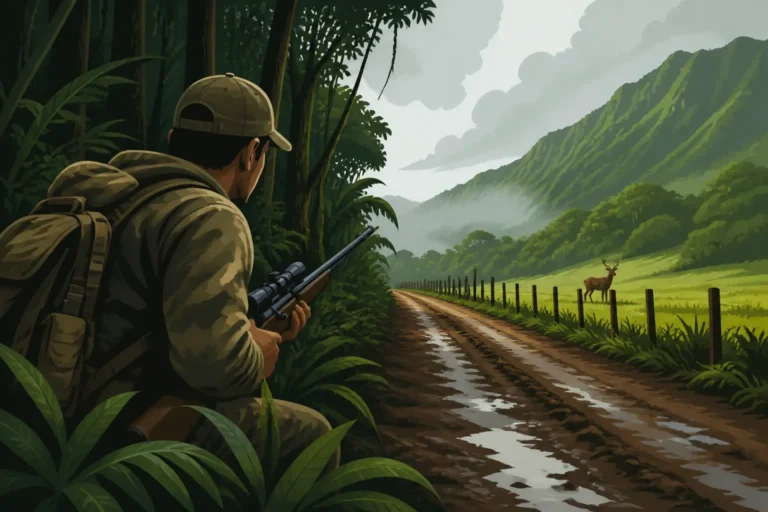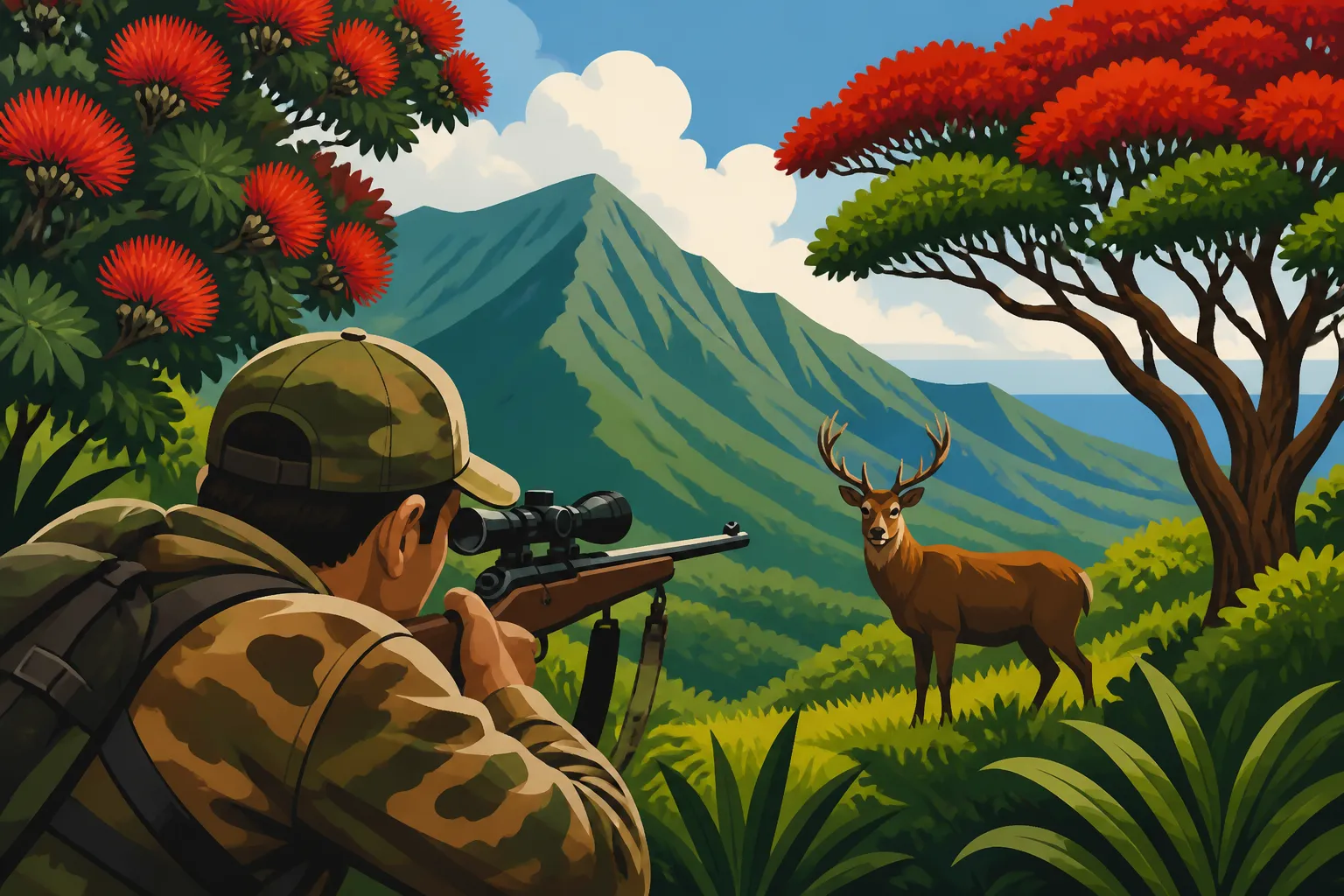
Hunting an Ohia and Koa Mix
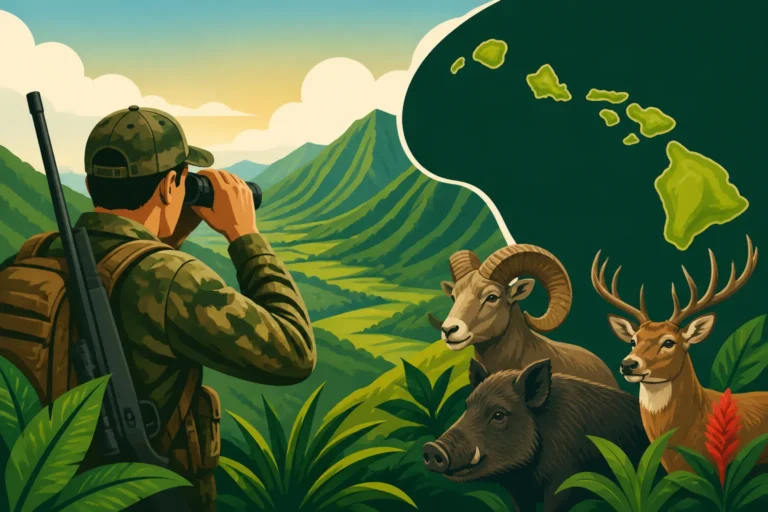
Hunting in Hawaii's diverse landscapes can be an incredibly rewarding experience, but navigating specific habitats like the mixed Ohia and Koa forests presents its own unique set of challenges. These beautiful, dense environments often hide elusive game, making it tough for hunters to locate animals, maintain visibility, and move quietly. This guide is here to walk you through the intricacies of hunting an Ohia and Koa mix, offering practical advice and strategies to help you succeed in these remarkable Hawaiian woodlands.
Understanding Ohia and Koa Forests in Hawaii
Before you even step foot into an Ohia and Koa forest with your hunting gear, it's crucial to understand what kind of environment you're getting into. These aren't your typical mainland woods; they're a vibrant, often rugged, and sometimes unforgiving ecosystem that plays a significant role in Hawaii's natural landscape. Knowing the characteristics of these trees and the forest they create will give you a huge advantage.
The Ecosystem and Its Significance
Ohia lehua (Metrosideros polymorpha) is often the first tree to colonize new lava flows, making it incredibly resilient and widespread across the islands. It forms the backbone of many Hawaiian forests, from sea level to high elevations. Koa (Acacia koa), on the other hand, is one of Hawaii's largest native trees, famed for its beautiful wood and often found growing in mid to higher elevations, frequently alongside ohia. When you encounter an "Ohia and Koa mix," you're looking at a forest where these two dominant native species coexist, creating a specific kind of habitat.
This mix can vary dramatically. Sometimes, you'll find towering koa trees forming an open canopy with an understory of smaller ohia, ferns, and various native shrubs. Other times, the ohia might be incredibly dense, almost impenetrable, with scattered koa emerging above the canopy. The ground can be uneven, covered in leaf litter, fallen branches, or even slippery moss and volcanic rock, making every step a conscious effort. Understanding this variability is key to adapting your hunting strategy. This isn't a flat, open pine forest; it's a dynamic, often steep, and generally wet environment that demands respect and careful navigation.
Why Game Animals Thrive Here
Despite the density and challenging terrain, Ohia and Koa forests are prime hunting grounds because they offer everything Hawaii's feral game animals need: abundant food, excellent cover, and often reliable water sources. Feral pigs, in particular, absolutely love these areas. They root around the rich forest floor for tubers, fallen fruits, and invertebrates, and the dense undergrowth provides perfect bedding and escape cover. You’ll often find signs of Hunting Pigs in Hawaii's Rainforest Gulches or Still-Hunting Pigs in Hawaii's Wet Forest in these areas.
Axis deer and feral goats, while more commonly associated with drier, more open environments, will also utilize the edges and more open sections of Ohia and Koa forests, especially where they transition into pastures or drier kiawe flats. They use the denser cover for bedding during the day and browse on the various understory plants. Mouflon sheep, particularly in certain areas on the Big Island, can also be found in the more open, higher elevation koa forests, especially those bordering mamane-naio dry forests. The thick canopy and undergrowth offer crucial protection from the elements, both sun and rain, and predators (which are few in Hawaii, but the cover still provides a sense of security). Water is often readily available through natural springs, rain catchment in tree hollows, or ephemeral streams, especially on the windward sides of the islands.
Scouting and Locating Game in Ohia/Koa Mix
Scouting is paramount in any hunting scenario, but it takes on an almost forensic quality when you're dealing with the dense, often confusing terrain of an Ohia and Koa mix. You can't rely on long-range glassing like you might in open country; instead, you're looking for intimate details that tell a story.
Reading the Landscape for Sign
In these forests, you'll spend most of your time with your eyes on the ground and the immediate surroundings. Look for freshly turned earth, known as "rooting," which is a dead giveaway for feral pigs. The size and depth of the rooting can give you an idea of the pig's size and how recently it was there. Pay attention to trails—animals, especially pigs, will create distinct paths through the thick vegetation. These trails are often deeply worn, sometimes muddy, and frequently weave through the densest parts of the forest, connecting feeding areas to bedding sites or water sources.
Beyond rooting, look for fresh tracks. Muddy areas, especially near streams or seeps, are excellent places to find clear prints. Rubs on trees, particularly smaller ohia or hapu'u fern trunks, can indicate a pig or goat has been marking its territory or scratching an itch. Droppings are another critical sign; fresh, moist droppings mean an animal is very nearby. Also, don't overlook natural food sources. If there's a particular tree dropping fruit, like guava or thimbleberry, expect pigs to be frequenting that spot. If you're on the Big Island hunting higher elevation koa, look for mouflon droppings and bed sites on more open ridges within the forest. Reading Pig Sign Along a Muddy Trail can give you more insights.
Using Technology for Scouting
While boots-on-the-ground scouting is essential, modern technology can significantly aid your efforts in these challenging environments. Apps like onX Hunt are invaluable for understanding the landscape before and during your hunt. You can download offline maps to your phone, which is critical because cell service is often nonexistent in remote forest units. These maps show property boundaries, topography, and often vegetation types, helping you identify potential travel corridors or dense bedding areas.
Before your hunt, use the app to identify potential access points, contour lines that might indicate steep gulches or ridges (animals often travel along these), and any marked water sources. While in the field, you can drop pins on fresh sign, creating a digital breadcrumb trail that helps you remember hotspots and navigate back out. Always remember that while technology is a fantastic tool, it's supplementary to your own observations and woodsmanship. It helps you stay found, especially when Staying Found in Dense Hawaii Rainforest, and helps plan your route in, but it won't tell you exactly where the animals are in real-time. For checking regulations and season dates for your specific unit, platforms like GoHunt or the official DOFAW website are essential. This will ensure you're hunting legally and ethically in the Ohia and Koa mix.
Effective Hunting Tactics in This Habitat
Hunting in Ohia and Koa can be a test of patience, stealth, and adaptability. The dense vegetation and often uneven terrain demand specific tactics different from those used in more open environments. Success often comes down to moving slowly and deliberately, understanding animal behavior, and utilizing the cover to your advantage.
Still-Hunting and Stalking Strategies
Still-hunting is perhaps the most effective method in dense Ohia and Koa forests. This involves moving incredibly slowly, pausing frequently (often for minutes at a time) to observe, listen, and scan your surroundings. Think of it as hunting at a snail's pace. Take three steps, stop, listen for rustling leaves, the snap of a twig, or the faint grunts of a pig. Watch for subtle movements, a flicker of an ear, or a patch of darker hide against the dappled light.
When stalking, use the dense undergrowth to your advantage. Duck and weave through vegetation, always trying to keep a tree or thick bush between you and where you expect the animals to be. Foot placement is critical. Test each step before committing your full weight, looking for stable ground or soft leaf litter that won't crunch. Walk on your heels or the balls of your feet, keeping your weight low. The sounds of the forest itself can be your friend; a sudden gust of wind or the rustling of leaves can mask your approach. Pay close attention to wind direction; game animals in dense cover rely heavily on their sense of smell. Always try to hunt Hunting Downwind in Hawaii's Shifting Thermals to avoid alarming animals.
Ambush Points and Stand Hunting
While still-hunting is excellent for covering ground, identifying natural ambush points can also be highly effective, especially for wary animals. Look for natural funnels where game trails converge, or where dense cover bottlenecks into a more open area, like a crossing over a small stream or a saddle between two ridges. These are ideal spots to set up and wait.
Water sources are another prime location. In dry periods, a secluded seep or small spring within the Ohia and Koa mix will be a magnet for animals. Set up downwind of these spots, arriving well before first light, and be prepared to wait. Similarly, if you've identified a heavily used feeding area (like a fruiting tree or a recent rooting patch), positioning yourself on an elevated point or along a known travel route to that area can pay off. While traditional tree stands are less common in Hawaii's public lands, finding a naturally elevated position on a ridge or a large fallen log can provide a better vantage point in the thick canopy. Consider the natural routes animals would take as you are Navigating a Hawaii Gulch System.
Essential Gear for Ohia and Koa Hunting
The unique environment of Hawaii's Ohia and Koa forests demands specific gear choices to ensure comfort, safety, and success. You'll be dealing with moisture, uneven terrain, and often dense vegetation, so preparing properly is crucial.
Footwear and Clothing Considerations
Your footwear is arguably the most important piece of gear. You need boots that offer excellent ankle support, superior traction on slippery, wet, or uneven surfaces, and are durable enough to withstand sharp lava rock or abrasive tree roots. Waterproof boots are a non-negotiable, even on seemingly dry days, as morning dew or sudden rain showers are common, especially on the windward side. Look for models with aggressive lug patterns on the soles to grip mud and moss. Walking Rough Lava Without Wrecking Your Boots is a skill, but good boots make it far easier.
For clothing, layers are key. The temperature can fluctuate throughout the day, and humidity can make you feel both hot and clammy. A lightweight, moisture-wicking base layer is crucial. Over that, a durable, quick-drying mid-layer will provide warmth without bulk. An outer shell that is both waterproof and breathable is essential for protection against rain and wind. Avoid cotton, as it retains moisture and will leave you cold and uncomfortable. Opt for quiet fabrics that won't rustle as you move through dense brush. And don't forget blaze orange, as it's often a requirement in Hawaii's public hunting units for visibility and safety.
Navigation and Safety Gear
In the dense, often featureless expanse of an Ohia and Koa forest, it's incredibly easy to get disoriented. A reliable GPS device (either a dedicated handheld unit or a smartphone with offline maps like onX Hunt) is absolutely critical. Always carry a compass and a physical map as a backup, and know how to use them. Mark your starting point and any significant landmarks or animal sign as you go.
Beyond navigation, a comprehensive first-aid kit is non-negotiable. Scrapes, cuts, and sprains are common in this rugged terrain. Carry enough water for your entire outing, plus a purification method, as dehydration can set in quickly in Hawaii's humidity. A whistle for signaling, a headlamp with extra batteries, and a sharp knife are also essential. If you're heading into a particularly remote unit, consider a satellite communication device, as cell service will likely be non-existent. Inform someone of your hunting plan, including your expected return time and location. Remember that No Cell Signal on a Hawaii Hunt is a real possibility and requires careful planning.
| Aspect of Ohia/Koa Mix | Hunting Implication | Recommended Tactic/Gear |
|---|---|---|
| Dense Canopy/Undergrowth | Low Visibility, Limited Shooting Lanes, Excellent Cover | Still-hunting, Close-range shots, Heavy-hitting calibers, Good optics |
| Uneven, Slippery Terrain | Difficult Movement, Risk of Falls, Noise | High-traction waterproof boots, Trekking poles (optional), Slow, deliberate steps |
| Abundant Food/Water | Attracts Game, Concentrates Activity | Focus scouting on rooting/browsing, Ambush near water/food sources |
| Humid/Wet Conditions | Sweat, Rain, Equipment Issues | Layered moisture-wicking clothing, Waterproof outer shell, Dry bags for gear |
| Remote Areas, No Cell | Navigation Challenges, Emergency Prep | GPS with offline maps (onX Hunt), Compass/map, Satellite communicator, First-aid kit |
| Game Trails/Funnels | Predictable Animal Movement | Identify pinch points, Set up downwind, Practice silent movement |
Disclaimer
This article is for general informational purposes only and does not constitute professional advice. Laws, prices and regulations vary by location and change over time. Consult a qualified professional for guidance on your specific situation.