Hunting a Wet Forest Boundary Road
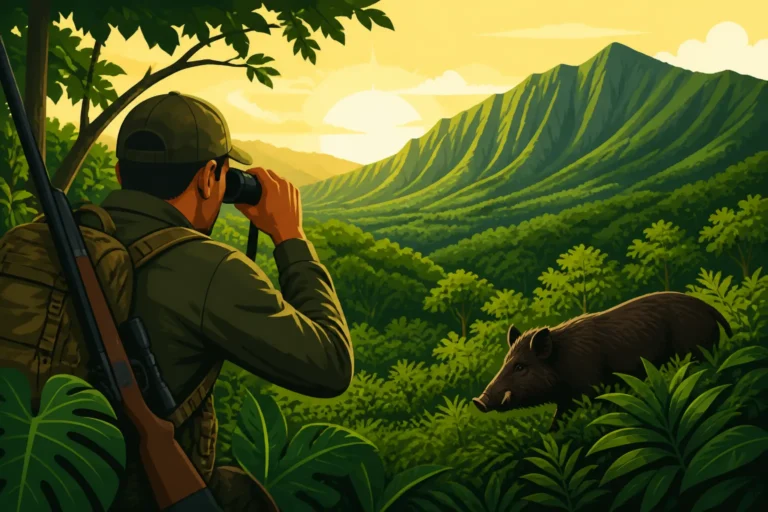
Hunting Hawaii's dense, wet forests can feel like wrestling a giant, muddy octopus. The sheer effort of pushing through tangled undergrowth, navigating slippery slopes, and trying to see more than ten feet in front of you can be utterly exhausting, often leaving you wondering if there are any animals in there at all. But here's a little secret: sometimes, the easiest path is also the most productive. This guide is all about understanding how to effectively hunt those often-overlooked boundary roads that cut through Hawaii's wet forest units, transforming frustration into opportunity by leveraging animal behavior and smart tactics.
Why Boundary Roads are Prime Hunting Real Estate in Wet Forests
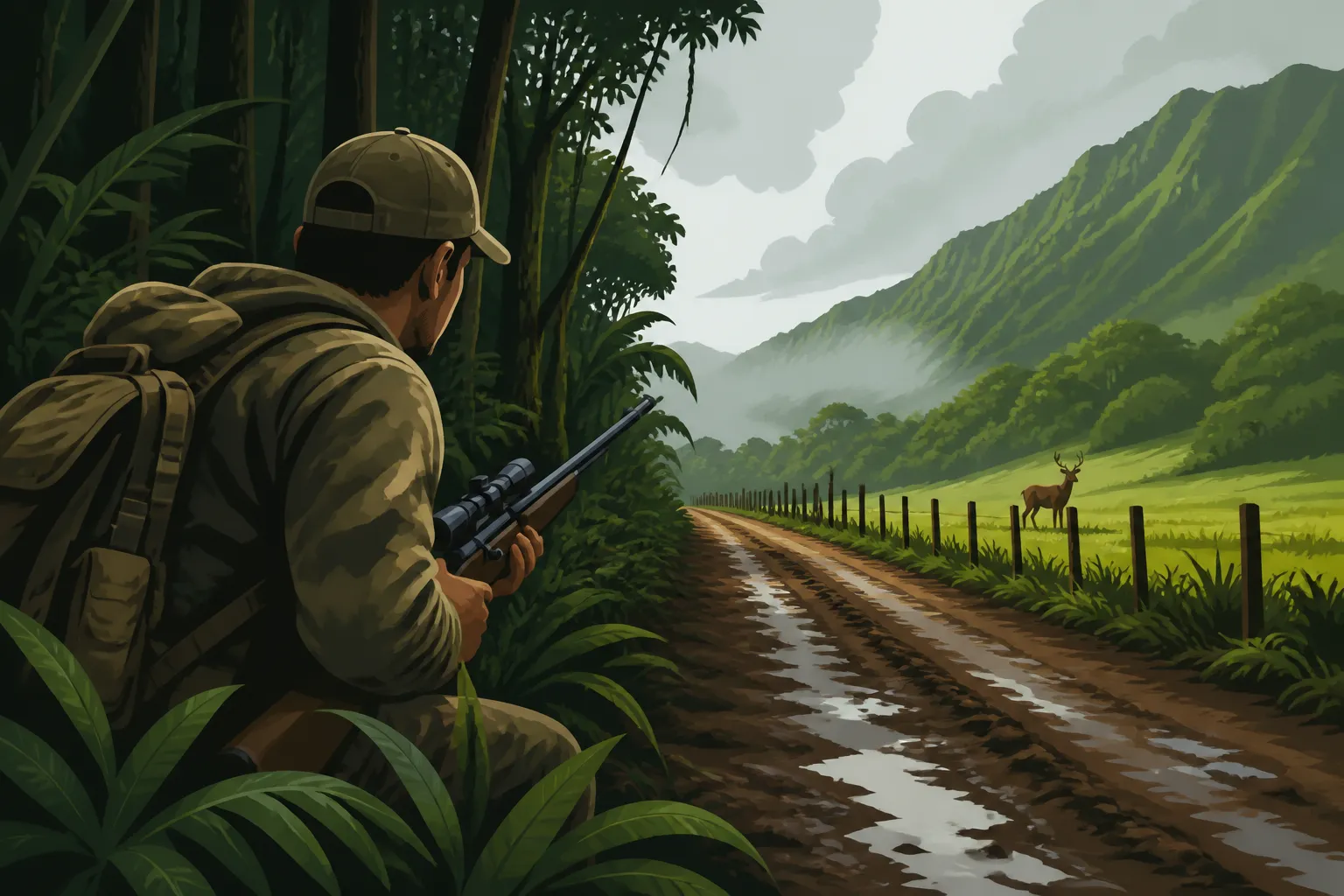
It’s easy to dismiss a road as too obvious, too “easy” for hunting in Hawaii’s rugged terrain. But when you’re talking about the deep, wet forest, a boundary road isn't just a path; it's a lifeline for wildlife, and therefore, a smart hunter’s advantage. These roads, whether they're old logging tracks, utility easements, or simply designated access points, create an "edge effect" that concentrates game and offers visibility that's otherwise impossible.
The Edge Effect and Animal Movement Patterns
Think about it from an animal's perspective. Pushing through a solid wall of uluhe fern, guava, or ginger is hard work, even for a stout Hawaiian pig or a nimble feral goat. These boundary roads, by their very existence, create a break in that dense cover. This isn't just a physical break; it's an ecological one. The edges where the forest meets the road are often transition zones, offering a mix of cover, food, and ease of travel. Animals will use these clearings as travel corridors, moving between bedding areas deeper in the jungle and feeding grounds, or simply using the less-obstructed path to get from point A to point B.
You'll often find pigs rooting right on the edges of these roads, where sunlight can sometimes penetrate, encouraging different types of forage. Goats, too, might browse the more open growth that lines these tracks. These edges are also natural funnels, concentrating animal movement in predictable ways. Instead of trying to guess where an animal might be in an entire square mile of impenetrable forest, you can focus your efforts on the linear paths they're most likely to use. This makes them fantastic places for still-hunting or setting up an ambush.
Ease of Access and Navigation (Relief from Jungle Trekking)
One of the biggest frustrations of Hunting Pigs in Hawaii's Rainforest Gulches or any dense wet forest unit is the sheer physical toll. Every step is a battle against tangled roots, slick mud, and thorny branches. Visibility is often terrible, and trying to navigate without getting completely turned around is a constant struggle. This is where boundary roads become your best friend. They offer, quite literally, a clearer path.
While you're not going to be driving a sedan down most of these, they provide an open lane for walking, listening, and spotting. This increased visibility, even if it's only 20-30 yards down the road, is a luxury in these environments. It also means less noise. Instead of crashing through brush, you can move much more quietly on a road, allowing you to hear approaching animals or spot them before they hear or see you. Furthermore, these roads often follow terrain features like ridges or contours, making navigation much simpler, especially when using a GPS app like onX Hunt to track your position relative to the road and unit boundaries. They essentially offer a grid system in a otherwise chaotic landscape, which is invaluable when you're deep in the jungle and trying to avoid getting lost.
Strategic Approaches for Hunting Wet Forest Boundary Roads
Hunting these boundary roads isn't about aimlessly walking down the middle; it's about thoughtful strategy. You need to leverage the unique characteristics of these environments to your advantage, combining slow movement, keen observation, and understanding animal behavior.
Still-Hunting the Road Edges and Reading Sign
Still-hunting these boundary roads is a slow, deliberate art. You're not trying to cover ground quickly; you're moving at a snail's pace, often taking one or two steps, then pausing to scan, listen, and glass the edges of the forest. The goal is to catch movement or hear faint sounds before the animals detect you. Focus your attention into the dense cover that borders the road – that’s where the pigs and goats feel safe, often just inside the tree line, watching the open road.
The wet conditions of these forests are actually a huge advantage when it comes to reading sign. Tracks are often clearly imprinted in the soft mud, and even faint scrapes or rubs will stand out. Look for fresh rooting right on the edge of the road, where pigs have been digging for roots and invertebrates. Pay attention to downed logs and trees along the road; pigs often rub against these or even create wallows in muddy depressions. Fresh droppings can tell you how recently an animal has passed. When you find fresh sign, slow down even more, or consider setting up for an ambush nearby. Remember, wind direction is paramount, especially in these humid environments where thermals can shift. Always try to hunt with the wind in your face or across your body, ensuring your scent is carried away from where you expect animals to appear. For more on tracking, check out Reading Pig Sign Along a Muddy Trail.
Stand Hunting or Ambush Tactics
If you've spent some time still-hunting a particular boundary road and noticed consistent patterns of animal movement, or identified specific crossings, then stand hunting or ambush tactics can be incredibly effective. Look for natural pinch points where the dense forest funnels animals into a smaller crossing area on the road, or where the road traverses a saddle between two hills. Creek crossings, or areas where game trails visibly intersect the road, are also prime locations.
You don't necessarily need a fancy treestand, though some hunters do use lightweight climbing stands where permitted. Often, simply finding a comfortable spot with good visibility and solid back cover (like a large tree trunk or a dense clump of vegetation) is enough. Get there well before first light, settle in, and remain absolutely still and quiet. Pigs and goats are often most active during the low-light hours of dawn and dusk, and in the wet forest, they might even move at odd times during the day if it's raining or heavily overcast. Waiting them out at a predictable crossing point can pay off big. The principle of Hunting Axis Deer at First Light in Hawaii applies here too – capitalize on those early morning movements.
Incorporating Dog Hunting Tactics
For those who hunt with dogs, boundary roads can be an integral part of the strategy, where regulations allow. While dogs are often released deeper into the forest to find and bay pigs, the roads can serve as excellent staging areas and recovery points. Hunters can walk the roads, releasing dogs into promising-looking gulches or dense thickets that parallel the road. If a pig is bayed, the road might provide the quickest, most efficient path to reach the dogs and the animal.
It's also common for dogs to work the edges, scenting where pigs have crossed, and then diving into the cover. For the handler, having that open road for communication, navigation, and maintaining contact with GPS-collared dogs is a huge advantage in otherwise impenetrable country. However, special care must be taken with dog hunting on or near roads. Safety is paramount, both for the dogs and any other road users. Always be aware of vehicle traffic, and ensure your dogs are well-trained and controlled. For more on this technique, see Pig Hunting With Dogs in Hawaii.
Gear, Safety, and Environmental Considerations
Hunting wet forest boundary roads in Hawaii requires specific gear, a strong emphasis on safety, and a deep respect for the unique environment. These are not casual strolls; they are challenging hunts in demanding conditions.
Essential Gear for Wet Road Hunting
When you're slogging through a Hawaiian wet forest, even on a road, your gear choices can make or break your hunt. First and foremost, waterproof footwear is non-negotiable. Look for boots that offer excellent traction on mud and slippery roots, and provide solid ankle support. Boots for Hawaii Lava and Wet Forest offers great insight here. Layered rain gear is also crucial; you'll likely encounter sudden downpours, and staying dry will keep you comfortable and focused.
Beyond staying dry, reliable navigation is key. A GPS device or a smartphone with a robust mapping app like onX Hunt is incredibly valuable for showing unit boundaries, tracking your movement, and marking points of interest or animal sign. Pair this with a physical map and compass as a backup, because cell service is often nonexistent. Other essentials include a sharp, sturdy knife, a reliable headlamp (even for daytime hunts, as the forest can get incredibly dark), plenty of water, and a comprehensive first-aid kit. Consider a personal locator beacon (PLB) for remote areas where help might be hours away.
Navigating Regulations and Unit-Specific Rules
Hawaii's hunting regulations can be complex, and they vary significantly by island and even by individual hunting unit. Before you ever step foot on a boundary road, you must thoroughly research the specific rules for that unit. This includes season dates, legal hunting days, bag limits, and authorized weapons. The State of Hawaii's DOFAW website and their "Go Hunt Hawaii" portal are your primary resources. The GoHunt app can also provide some regulatory information and a streamlined way to check in and out of units.
Pay close attention to public versus private land boundaries. Some boundary roads may traverse both, and accidentally trespassing can lead to serious legal consequences. Use your mapping app to verify your location at all times. Remember to follow all check-in and check-out procedures for the unit. Skipping these steps, even unintentionally, can result in fines or loss of hunting privileges. Understanding Hawaii's Hunting Units and How They Work is vital, as is knowing how to use systems for Checking In and Out of Hawaii Hunting Units.
Respecting the Environment and Other Users
Hunting in Hawaii is a privilege, and hunters are often the front line of conservation efforts for our native ecosystems. Always practice Leave No Trace principles: pack out everything you pack in, and perhaps even a little more. These boundary roads are often shared by hikers, trail runners, bird watchers, and other recreational users. Be mindful of their presence, especially with regard to firearm safety. Wearing blaze orange, as specified in Hawaii Blaze Orange and Safety Rules, is not just a legal requirement in many units; it's a critical safety measure that makes you visible to other hunters and outdoor enthusiasts.
Be aware of sensitive ecological areas, such as fenced conservation zones, which are designed to protect native plants and animals from ungulate damage. Never cross a fence or enter an area marked as restricted, even if it seems like a small detour. Your actions reflect on the entire hunting community, so setting a good example of responsible, ethical, and safe hunting is paramount to ensuring these beautiful wet forest boundary roads remain open for future generations to enjoy.
Disclaimer
This article is for general informational purposes only and does not constitute professional advice. Laws, prices and regulations vary by location and change over time. Consult a qualified professional for guidance on your specific situation.