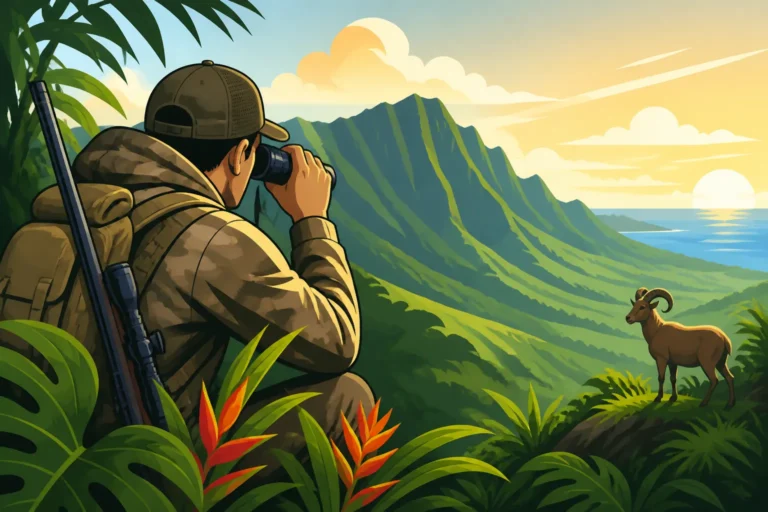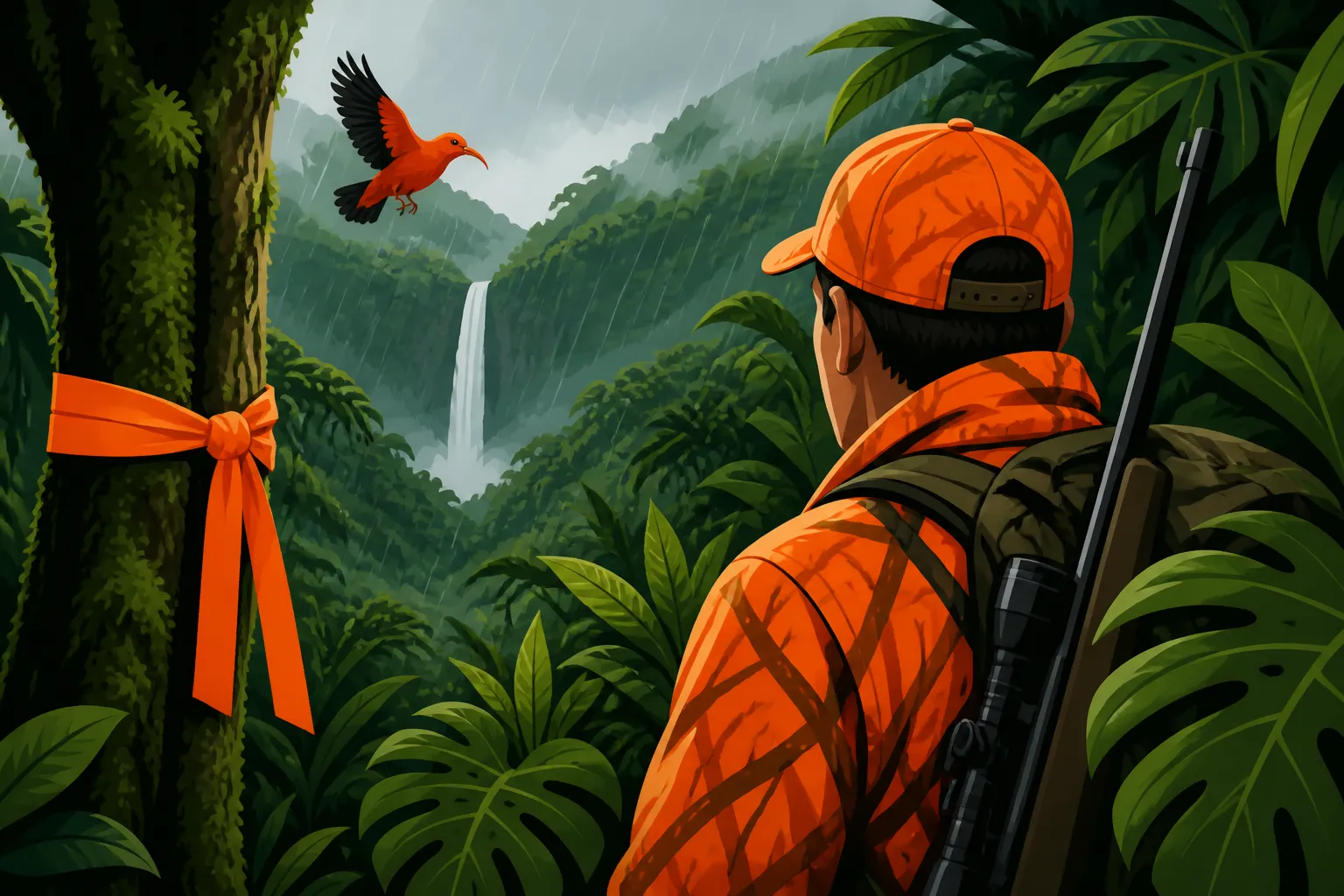
Staying Found in Dense Hawaii Rainforest
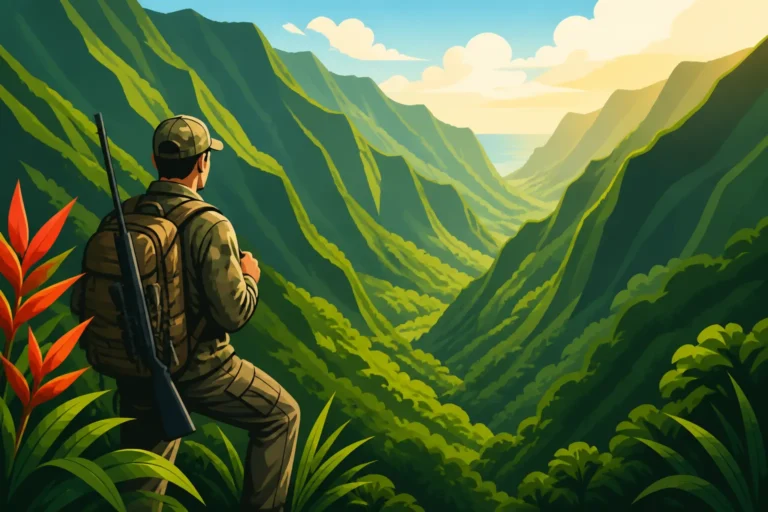
There’s a unique dread that washes over you when the thick, emerald walls of a Hawaiian rainforest close in. One moment you’re following what felt like a game trail, the next, the canopy has swallowed the sky, the ground cover is waist-high, and every tree looks identical. The familiar path vanishes, replaced by an endless tangle of uluhe fern, guava, and hāpuʻu. This is where hunters can easily find themselves disoriented, even experienced ones. This guide will walk you through the essential tools, preparation, and mindset you need to stay found and safe when navigating Hawaii’s incredibly dense rainforests.
The Unique Challenges of Hawaii's Rainforest Terrain
Hunting in Hawaii's rainforests isn't like navigating open timber or clear-cut plains. The environment here presents a specific set of hurdles that can quickly turn a productive hunt into a serious survival situation. Understanding these challenges is the first step to overcoming them.
Dense Vegetation and Limited Visibility
Imagine stepping into a world where everything around you is green, humid, and utterly devoid of clear sightlines. That's a Hawaii rainforest. The vegetation here grows with an almost aggressive vigor, creating a thick, multi-layered canopy that blocks sunlight and makes long-range visibility practically impossible.
You'll encounter vast stands of uluhe fern, sometimes called "false staghorn," that can be chest-high or taller, completely obscuring the ground and any faint trails. Beneath that, you might be pushing through dense thickets of strawberry guava, its branches forming an impenetrable wall, or navigating groves of hāpuʻu (tree ferns) with their enormous fronds. Even mature native ʻōhiʻa and koa trees often have understories so choked with invasives that seeing more than a few yards in any direction is a luxury. This limited visibility means that common navigation techniques, like picking out a distant landmark or looking for a break in the canopy, often won't work. The concept of "line of sight" often shrinks to just a few feet, making it incredibly easy to lose your bearing, especially when you're focused on tracking game or pushing through a tough section.
Rapid Weather Changes and Disorientation
Hawaii's weather is notoriously fickle, especially in the windward rainforests. One moment it can be clear and sunny, the next, a heavy downpour can begin, turning trails into muddy slides and soaking everything instantly. But it's not just the rain you need to worry about. Often, the clouds themselves drop down, enveloping the forest in a thick fog.
This fog drastically reduces visibility even further, compounding the challenges presented by the dense vegetation. Familiar landmarks — if you even had any — disappear. Sound becomes muffled and distorted, making it hard to judge direction or distance, or to communicate with hunting partners. A steady trade wind might give you a general direction, but once you drop into a gulch or climb a ridge, those wind patterns can shift or vanish entirely. The combination of intense rain, fog, and shifting winds creates a highly disorienting environment where the sense of direction can easily be lost, even for those who think they know the area well. Remember, on the Hawaii's Wet Windward Side, these conditions are the norm, not the exception.
Unpredictable Gulches and Drainages
Hawaii's volcanic landscape is carved by countless gulches, valleys, and drainage systems that run from the mountains to the sea. In the rainforests, these features can be incredibly steep, rocky, and densely vegetated, often hiding sudden drops or impassable waterfalls. When you're trying to Hunting Pigs in Hawaii's Rainforest Gulches, these features become both the path and the peril.
What might look like a minor dip on a topographical map can quickly become a 50-foot sheer drop or a tangled mess of boulders and fallen trees that is impossible to traverse without specialized gear. It's incredibly easy to follow a promising-looking drainage downhill, only to find yourself cliffed out or in an area that requires backtracking for hours. Furthermore, these gulches often meander in unpredictable ways, making it hard to maintain a consistent bearing. If you're relying solely on a mental map or a general sense of direction, getting caught in a complex gulch system can lead to hours of wasted effort, frustration, and the real possibility of getting truly lost. Even getting a pig out after a successful hunt can be a huge chore when you're facing these obstacles, as anyone who has tried Packing Meat Out of a Hawaii Gulch can tell you.
Essential Gear for Rainforest Navigation
Navigating Hawaii's dense rainforests demands more than just a good sense of direction. It requires reliable tools that can cut through the confusion and help you stay on track, even when nature is doing its best to disorient you. Don't skimp on these essentials – your safety depends on them.
GPS Devices and Smartphone Apps
In the age of technology, dedicated GPS units and smartphone apps have become indispensable for hunters. They provide real-time location data and the ability to track your path, mark waypoints, and stay within unit boundaries.
- Dedicated GPS Units (e.g., Garmin inReach, Garmin GPSMAP): These devices are purpose-built for rugged outdoor use. They are typically more durable, water-resistant, and have longer battery lives than smartphones. Many, like the Garmin inReach series, also include satellite communication capabilities, which are crucial when you find yourself in an area with No Cell Signal on a Hawaii Hunt. You can send and receive text messages, and more importantly, trigger an SOS call to emergency services even when miles from the nearest cell tower. Their accuracy tends to be superior in dense canopy environments compared to some phones, and they come pre-loaded with detailed topographic maps. The peace of mind alone is worth the investment.
- Smartphone Apps (e.g., Avenza Maps, OuterSpatial, GoHunt): Your smartphone, when properly prepared, can also be a powerful navigation tool. Apps like Avenza Maps allow you to download detailed PDF or GeoPDF maps (often available from DLNR/DOFAW websites) that show trails, contours, and unit boundaries, and then track your real-time location on them without cell service. The OuterSpatial app is particularly useful in Hawaii, as it's often the designated tool for Checking In and Out of Hawaii Hunting Units and provides detailed unit maps. While useful, remember that smartphones are more fragile, susceptible to water damage, and their batteries drain much faster, especially when actively using GPS. Always download your maps before you lose service, carry a portable power bank (or two!), and keep your phone in a waterproof case. The GoHunt platform also provides mapping features and unit information that can be very helpful for planning and in-field navigation. It's a great resource for getting detailed information on public hunting land.
| Feature | Dedicated GPS Unit | Smartphone App (with offline maps) |
|---|---|---|
| Durability | High (rugged, waterproof) | Low (fragile, needs waterproof case) |
| Battery Life | Very High (days, often with replaceable batteries) | Low (hours, needs power bank) |
| Cell Service | Not required for GPS; satellite comms available | Not required for GPS; cell for calls/data |
| Map Quality | Excellent (pre-loaded topo maps) | Variable (depends on downloaded maps) |
| Communication | Satellite text/SOS (e.g., inReach) | Cell calls/text (if signal), no satellite comms |
| Cost | High initial cost, possible subscription | Low (free apps, cost of phone/data) |
| Reliability | Very High | Moderate (hardware, software glitches possible) |
Communication and Signaling Tools
When you're deep in the rainforest, yelling for help might only reach a few yards. Dedicated communication and signaling tools are vital for both your safety and that of your hunting partners.
- Satellite Messengers (e.g., Garmin inReach, Zoleo, Spot): As mentioned, these devices go beyond simple GPS. They allow you to send pre-set messages, custom texts, and, critically, an SOS signal to a 24/7 monitoring center, even when there's no cell service. Many also offer tracking capabilities, allowing friends or family to follow your progress online. This is paramount for safety in remote areas.
- Whistles: A simple, high-pitched whistle can carry much further in dense vegetation than the human voice. Establish a signal code with your hunting partners (e.g., three short blasts for "I need help," two for "come to me," one for "where are you?"). This is a cheap, lightweight, and effective backup.
- Signal Mirrors: While less effective in dense canopy due to limited clear lines of sight, a signal mirror can still be useful if you find a clearing or are trying to attract attention from a helicopter or aircraft. They are small and lightweight, so there’s no reason not to carry one.
Basic Navigation Aids and Survival Essentials
Even with advanced technology, it’s crucial to carry basic, analog navigation tools and other survival items. Batteries die, electronics fail, and a solid understanding of fundamentals can save your life.
- Compass and Map: A reliable baseplate compass and a detailed, waterproof topographic map of your hunting unit are non-negotiable. Learn how to use them together before your hunt. Orienting your map, taking a bearing, and following a compass course are fundamental skills that can override any electronic failure. Physical maps don't run out of battery.
- Headlamp/Flashlight: Even in daylight, the rainforest canopy can be so thick it feels like dusk. If you get caught out after dark, a headlamp is essential for navigation, setting up camp, or dealing with an emergency. Carry extra batteries.
- Water and Filtration: Hydration is key in Hawaii's heat and humidity. Carry plenty of water, but also pack a reliable water filter or purification tablets. You might find plenty of water in gulches, but it needs to be made safe to drink. This is critical for Water and Heat Planning for a Hawaii Hunt.
- First-Aid Kit: A comprehensive first-aid kit is essential for dealing with cuts, scrapes, sprains, insect bites, and other common injuries encountered in rough terrain.
- Emergency Shelter: A lightweight tarp, emergency blanket, or even a large garbage bag can provide crucial protection from rain and hypothermia if you're forced to spend an unexpected night in the woods.
- Knife/Multi-tool: Indispensable for countless tasks, from cutting cordage to preparing game.
- Fire Starter: Waterproof matches, a lighter, or a ferro rod can be life-savers for warmth, signaling, and morale.
- Blaze Orange: While not always required by law in every unit, wearing blaze orange or a similar high-visibility color is a smart safety measure, especially when hunting with partners or in areas where other hunters might be present. It helps prevent accidental shootings and makes you easier to spot if rescuers are searching for you.
Pre-Hunt Preparation and Field Tactics
Staying found in the rainforest isn't just about the gear you carry; it's heavily reliant on what you do before you even set foot in the woods and how you approach every step of your hunt. Preparation and disciplined field tactics are your best defense against getting lost.
Thoroughly Scouting and Planning Your Route
You wouldn't head into battle without a strategy, and hunting in a Hawaii rainforest is no different. The more you know about your chosen unit, the better equipped you'll be to navigate it.
- Study Topographic Maps and Satellite Imagery: This is your homework. Before you even pack your truck, spend hours poring over detailed topographic maps (available from sources like USGS or the DLNR/DOFAW website) and satellite imagery. Look for key features:
- Ridge lines and Gulches: Identify the major drainage systems. Understand how they flow and where they connect. These are often the easiest (or sometimes the only) ways to move through dense country. Note any prominent gulches where you might be Hunting Pigs in Hawaii's Rainforest Gulches.
- Elevation Changes: Note steep ascents and descents. These are energy-sapping and can slow your progress.
- Vegetation Patterns: Satellite imagery, especially recent high-resolution images, can give you clues about vegetation density. Look for lighter green areas that might indicate more open canopy or darker, thicker areas that signal impenetrable tangles.
- Unit Boundaries: Crucially, know your public land boundaries. The last thing you want is to inadvertently trespass onto private land or enter a closed conservation area. Use apps like GoHunt or OuterSpatial to overlay public land data onto your maps.
- Pre-load GPS and Phone Apps: Download all relevant maps (topo, unit boundaries) to your dedicated GPS unit and smartphone apps (like Avenza Maps or OuterSpatial) before you lose cell service. Mark potential entry/exit points, prominent landmarks (e.g., a known stream crossing, a unique lava formation, a large banyan tree), and any access roads.
- File a Hunt Plan and Check In: Always let someone know exactly where you’re going and when you expect to return. Give them a copy of your map and planned route. In Hawaii, it's mandatory to Checking In and Out of Hawaii Hunting Units. Many units now require you to use the Using the OuterSpatial App to Check In for this, which also gives you digital access to unit maps and rules. Don’t skip this step – it’s a critical safety measure.
Navigational Strategies While on the Move
Once you're actually in the rainforest, it's about constant vigilance and employing smart, proactive navigation techniques. Don't wait until you're feeling lost to start paying attention.
- Breadcrumbing and Waypoint Marking: As you move, consistently mark your path with your GPS device or phone app. Many GPS units have an automatic track logging feature that creates a "breadcrumb" trail. If you get disoriented, you can simply follow your digital breadcrumbs back to your starting point. Additionally, mark significant waypoints: trail junctions, stream crossings, ridge tops, and especially your vehicle's location. Give these waypoints descriptive names to jog your memory.
- Constant Compass Checks and Terrain Association: Even with a GPS, keep your compass handy. Every so often, pull it out, take a bearing, and orient yourself to your map. Look around you and try to "read" the terrain. Are you on a ridge? In a gulch? Is that slope rising to your left or right? Comparing what you see with your map will help you build a mental picture of your surroundings and prevent you from unknowingly drifting off course.
- Identify Natural Markers and Back-Azzimuths: Look for unique natural features – a strangely bent tree, a particularly large boulder, a small waterfall, a unique rock formation – and make a mental note of them, relating them to your position on the map. If you're moving in a specific direction, occasionally look back the way you came. What does the terrain look like from that perspective? This helps you recognize the return path if you need to backtrack.
- Move Deliberately and Maintain Situational Awareness: Don't rush. The rainforest is no place for careless strides. Take your time, place your feet carefully, and constantly scan your surroundings. It's easy to get tunnel vision when tracking game, but you need to balance that focus with an awareness of your broader environment. Stop frequently to hydrate, take a snack, and re-check your position. This is also a good opportunity to re-evaluate your Boots for Hawaii Lava and Wet Forest and ensure they are holding up to the brutal terrain.
What to Do If You Get Disoriented
Even the most prepared hunter can get turned around. The key is to react calmly and methodically, rather than panicking. Panic leads to poor decisions.
- S.T.O.P. (Stop, Think, Observe, Plan): This age-old acronym is your best friend when you realize you're lost.
- Stop: Immediately cease movement. Don't take another step. Trying to push on when disoriented often makes things worse.
- Think: Take a few deep breaths. Calm yourself. Review what you know. When was the last time you were certain of your location? What direction were you headed? How much daylight, water, and food do you have?
- Observe: Look around you. Do you recognize any landmarks? Check your compass. Pull out your map. If you have a GPS or phone app, check your track log for your breadcrumbs. Listen for any sounds that might give you a clue (e.g., traffic, ocean, a distant stream).
- Plan: Based on your observations, formulate a plan. Is it safe to try and backtrack using your GPS? Should you try to follow a drainage downstream (if you know it leads to a road or ocean)? Or, if it's late in the day or you're truly unsure, is it safer to hunker down and await rescue?
- Signal for Help: If you decide to call for help, use your satellite messenger to send an SOS. If you don't have one and do get a cell signal (unlikely in deep rainforest), call for help immediately. Use your whistle in three short, sharp blasts, repeated regularly. Build a signal fire if possible.
- Stay Put: Unless you are absolutely certain of your direction and have a clear, safe path, staying put is usually the best option. Moving while lost can lead you deeper into trouble, make it harder for rescuers to find you, or even lead to injury. Find a relatively safe, visible spot, build a small shelter if needed, and conserve your energy and resources. Make yourself as visible as possible with blaze orange. This is especially important for Getting the Most From a Hawaii Weekend Unit, where rescuers might be able to reach you within the same day.
Post-Hunt Review and Continuous Improvement
The learning doesn't stop when you exit the rainforest. Every hunt, especially one where navigation was challenging, offers valuable lessons. Reflecting on these experiences is key to becoming a more confident and safer hunter in Hawaii.
Learning from Each Excursion
After every hunt, take some time to debrief, either with yourself or your hunting partners.
- Review Your GPS Tracks: Upload your GPS tracks to your computer and overlay them on detailed maps. Where did you go exactly? Were there areas where you drifted off course? Why? Did you take the most efficient route? Were there hidden obstacles that the map didn't clearly show? This visual review is incredibly powerful for understanding your navigation habits.
- Identify Areas for Improvement: Maybe you realized you weren't checking your compass often enough, or you relied too heavily on a faint game trail that disappeared. Perhaps your map reading skills need a refresh, or you forgot to mark critical waypoints. Be honest with yourself about what worked and what didn't.
- Note Specific Terrain Features: Make a mental (or even written) note of challenging areas or unique features in the unit. "That gulch near the old koa tree is much steeper than it looks on the map," or "The uluhe on that ridge is exceptionally thick." This builds a valuable mental library for future hunts in that area. This also helps you become a better judge of where Hawaii's Feral Pigs might be holding.
Practicing Your Skills Regularly
Navigation is a perishable skill. Just like shooting, it requires practice to maintain proficiency.
- Navigation Exercises: Even without actively hunting, take your compass and map out for a walk in a local park or a smaller, less daunting wilderness area. Practice setting a bearing and walking to it, identifying landmarks, and using terrain association. The more you practice, the more intuitive these skills become.
- Gear Familiarity: Don't wait until you're lost to figure out how your GPS works or how to properly read your map. Spend time at home learning every function of your devices. Know how to switch between different map views, mark waypoints quickly, and initiate an SOS. Ensure your Rain Gear for a Windward Hawaii Hunt is functioning and packed correctly.
- Stay Updated: Navigation technology and mapping resources are constantly evolving. Keep your GPS software updated, and regularly check for new versions of your mapping apps or updated public land boundary information from sources like DOFAW or GoHunt. Familiarize yourself with new features, such as those that help you stay found while Hunting Hawaii's Kipuka Islands of Forest.
By taking these steps, both before and after your hunts, you’ll not only improve your chances of staying found in the dense Hawaiian rainforests but also enhance your overall hunting experience and safety.
Disclaimer
Hunting in Hawaii involves inherent risks, including navigating challenging terrain and encountering wildlife. Always prioritize safety, understand and follow all local hunting regulations, and ensure you are adequately prepared and equipped for your chosen hunting area. The information provided in this guide is for informational purposes only and should not replace proper training, experience, or professional guidance.