Hawaii’s Game Birds and Where to Find Them
It's incredibly frustrating when you're looking to hit the field for some upland action or a dove shoot, but all the hunting information out there seems to focus solely on big game. Hawaii offers fantastic opportunities for game bird hunting, but knowing what species are available, where to find them, and how to navigate the specific rules and terrain can feel like trying to find a needle in a haystack. This comprehensive guide is here to shed light on Hawaii's diverse game bird populations, detailing where these exciting birds make their homes and offering practical advice to help you plan your next successful hunt across the islands.
Understanding Hawaii's Unique Game Bird Landscape
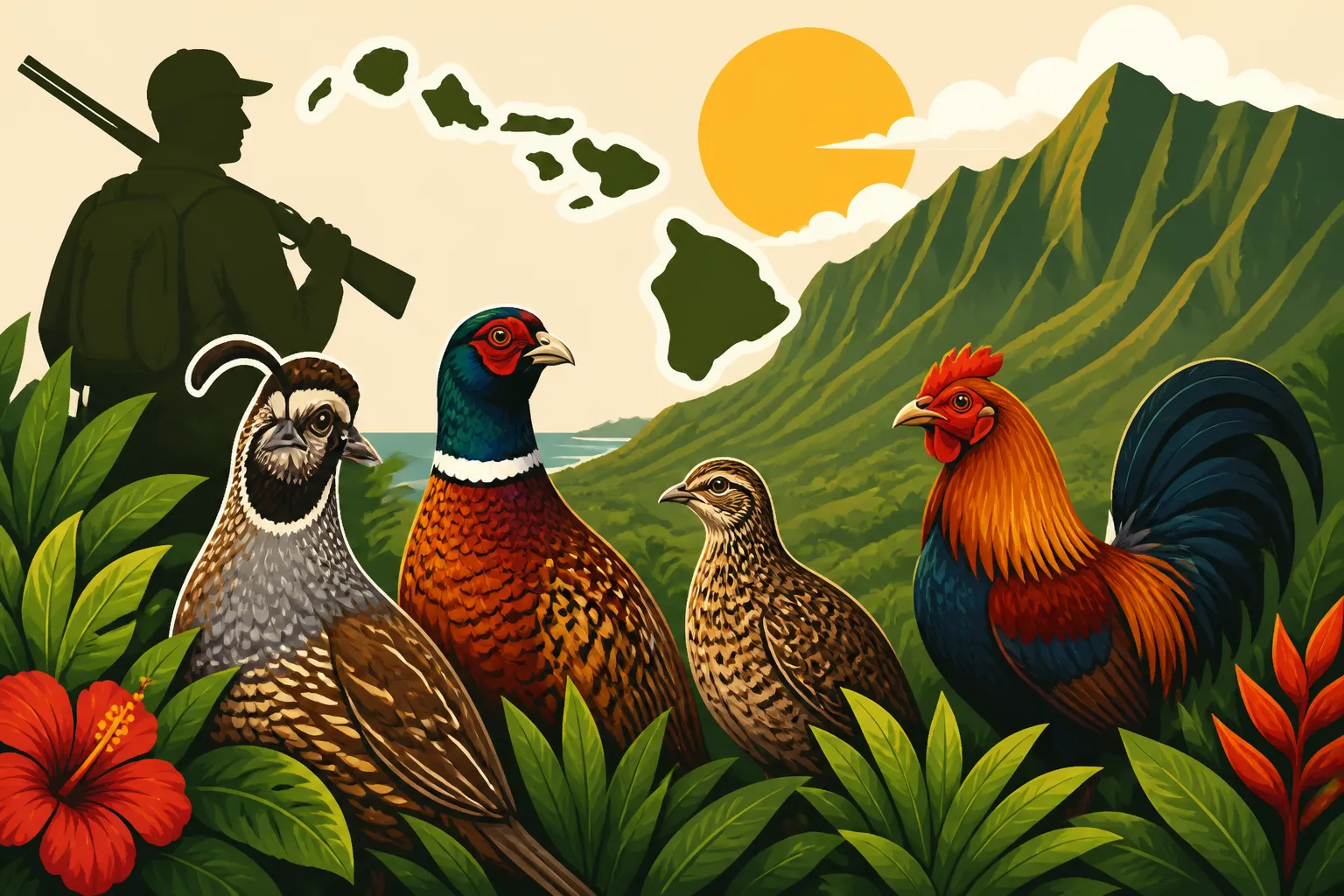
When most people think of hunting in Hawaii, their minds often jump straight to Axis deer, feral pigs, or perhaps Mouflon sheep. But for those of us who appreciate the quick flush, the challenging wing shot, or the quiet patience of a dove stand, Hawaii's game bird opportunities are truly something special. These aren't native species, of course; like much of Hawaii's game, they were introduced over the decades for various reasons, including sport, food, and even to control insects. This history means their distribution is often tied to specific ranch lands, former agricultural areas, or unique pockets of public land that mimic their preferred mainland habitats.
The Role of Introduced Species in Island Ecosystems
It's a delicate balance, and one often misunderstood by those not intimately familiar with Hawaii's ecology. While native species are fiercely protected, the introduced game birds, much like other feral ungulates, exist within a managed framework. Their populations are monitored, and hunting seasons are established not just for recreational purposes, but often as a tool for managing their numbers and mitigating potential impacts on sensitive native flora. For example, some of these birds thrive in disturbed areas or non-native grasslands, where they don't necessarily compete directly with endangered forest birds that inhabit higher, wetter elevations. Hunters, in a very real sense, become part of this ongoing management effort.
The Department of Land and Natural Resources (DLNR) Division of Forestry and Wildlife (DOFAW) manages these populations, setting the seasons and bag limits you'll need to know. What makes hunting here unique is that you're pursuing these birds in settings that can range from arid kiawe flats on Maui, reminiscent of parts of Texas, to the dense, wet forests of the Big Island, feeling more like Southeast Asia. Each species has carved out its niche, and understanding these specific habitats is key to finding success and truly appreciating the diversity of the islands. It’s a stark contrast to mainland hunting, and that’s precisely what makes it so rewarding.
General Seasons and Licensing for Game Birds
Before you even think about loading up your shotgun, you need to make sure your paperwork is in order. Hunting licenses are mandatory for all game bird hunting in Hawaii, whether you're a resident or a non-resident. You’ll also need a Hawaii Wildlife Conservation Stamp, which supports conservation efforts across the state. On top of that, a Hawaii Game Bird Stamp is a separate requirement specifically for bird hunting. These licenses and stamps are typically valid for one year from the date of purchase.
The good news is that acquiring these is straightforward. You can often purchase them online through the DLNR's GoHunt Hawaii portal, which is a fantastic resource for everything from license purchases to checking into hunting units. It really takes a lot of the guesswork out of the process, which is a blessing when you're dealing with island-specific regulations. It's always a smart move to check the current Hawaii Game Bird Seasons and Bag Limits well in advance of your trip, as dates can shift slightly year to year. Generally, game bird seasons run from November through January or February on most islands, with specific weekend-only hunts being very common.
Pheasants: Ring-necked, Green, and Kalij
Hawaii is home to a few different species of pheasant, each with its own characteristics and preferred stomping grounds. These birds offer some of the most exciting and challenging wingshooting opportunities you'll find in the islands, demanding good dog work or careful still-hunting tactics.
Ring-Necked Pheasant: The Classic Upland Bird
The Ring-necked Pheasant, often simply called "pheasant" by most hunters, is probably the most iconic game bird in Hawaii, much as it is in many parts of the mainland. These beautiful birds, especially the roosters with their iridescent plumage and characteristic white neck ring, are a prized find. They thrive in open country with a mix of cover, often near agricultural fields, overgrown pastures, or dry brushland. On the Big Island, you'll find them scattered in the uplands, particularly in areas around Waimea and the rolling ranch lands, and even into parts of the Pohakuloa Training Area (PTA) when those units are open.
Hunting Ring-necked Pheasant in Hawaii presents its own unique challenges. The vegetation can be incredibly thick, even in seemingly open areas, with tall guinea grass or dense kiawe thickets making it tough to flush birds and even tougher to recover them without a good bird dog. The heat, too, can be a factor, especially if you're hunting in the lower elevations or later in the morning. Getting out at first light, before the sun really starts to beat down, is often the best strategy. The birds tend to hold tight in cooler, denser cover as the day progresses, becoming incredibly wary. Success often comes down to persistent searching and knowing their preferred hiding spots.
Green Pheasant: A Splash of Emerald
The Green Pheasant, with its striking emerald and violet plumage, is less common than its ring-necked cousin but offers an even more exotic hunting experience. These birds are native to Japan and were introduced to Hawaii decades ago. They tend to prefer areas with thicker cover than the Ring-necked, often found in more forested edges or dense scrub where they can quickly disappear. On the Big Island, small populations can sometimes be found in the transitions between ranch lands and forest reserves, particularly in units like Puu Anahulu or even lower parts of the Mauna Kea slopes.
Hunting Green Pheasant is similar to hunting Ring-necked, but with an added layer of difficulty due to their preference for denser cover. They're masters of evasion, often running long distances through thick vegetation before flushing, if they flush at all. This makes a well-trained flushing dog almost indispensable. Without a dog, still-hunting through likely cover, moving slowly and deliberately, can sometimes push them into the air. Keep an eye out for their distinctive calls, which can give away their presence even when hidden from sight. Remember, these birds are not as widespread, so consider them a bonus if you find them.
Kalij Pheasant: The Wet Forest Resident
The Kalij Pheasant is a completely different beast, both in appearance and habitat. These dark, almost black pheasants with their bright red facial patches prefer the wet, dense forests of the windward sides of the islands. You'll find them predominantly on the Big Island in the vast tracts of rainforest, such as the Hilo Forest Reserve or parts of the Ka'u Forest Reserve. They're often found along old logging roads, trails, or the edges of clearings within the wet forest, where they forage for insects, berries, and seeds.
Hunting Kalij Pheasant is a truly unique challenge, often involving navigating steep, muddy terrain and dense, tangled undergrowth. They're less prone to flying long distances and more likely to run or glide down steep slopes. Listening for their distinct clucking calls and scratching in the leaf litter is often the first sign of their presence. A good dog is invaluable here, not just for flushing but for finding downed birds in the thickest cover imaginable. Rain gear is non-negotiable, as you’ll likely be hunting in the mist or drizzle that characterizes their rainforest home. This type of hunting is physically demanding but incredibly rewarding for those who embrace the elements. You can learn more about finding them in this terrain by looking into Hunting Kalij Pheasant in Wet Forest.
Francolins: Erckel's, Gray, and Black
Francolins are another group of introduced game birds that provide fantastic hunting in Hawaii. They're smaller than pheasants but incredibly fast and cunning, often found in brushy or grassy areas.
Erckel's Francolin: The Mountain Bird
The Erckel's Francolin is a striking bird, recognizable by its rufous-brown plumage, distinctive white throat patch, and bold black markings. These birds are primarily found in the higher, drier elevations of Hawaii Island, particularly on the slopes of Mauna Kea and Mauna Loa, often in areas bordering mamane-naio forests or open pastures with scattered kiawe or scrub. They are particularly prevalent in Units A and G on Mauna Kea, where they share habitat with Mouflon sheep.
Hunting Erckel's Francolin usually involves covering a lot of ground in challenging, often rocky or sloped terrain. They are quick to flush and fly with incredible speed, making them a difficult target. They also have a habit of running uphill, making them tricky to pin down. Walking up on them is possible, but a good pointing dog can make a huge difference, allowing you to get into position before the explosive flush. The thin air and steep ascents in their high-elevation habitat add another layer of physical demand to this hunt, but the views are always spectacular. For hunters interested in the Big Island's higher elevations, understanding Hunting Mouflon in Mauna Kea's Thin Air could provide helpful context for the terrain.
Gray Francolin: The Desert Runner
The Gray Francolin, sometimes called the "Indian Francolin," is a smaller, more subtly colored bird with a preference for drier, more open scrubland and grasslands. You'll find them in the leeward, arid areas of Maui, Molokai, and Lanai, often alongside Axis deer in kiawe forests or dry pastures. Their camouflage is superb, and they are notorious for running rather than flying, making them incredibly challenging to hunt without a keen eye or a fast dog.
Hunting Gray Francolin means getting intimately familiar with the dry country. These birds will hug the ground, weaving through dense kiawe or tall, brittle grasses, making them very hard to see before they bolt. A dog with a good nose and plenty of stamina is almost essential for consistent success. Without a dog, you’ll need to employ very slow, methodical pushes through cover, hoping to surprise them into a flush. Listen for their distinctive "chik-cherrrr" call, which can sometimes betray their position. Given their preferred habitat, also be mindful of the sharp kiawe thorns and the intense heat in these dry regions.
Black Francolin: The Chameleon of the Fields
The Black Francolin is the darkest of the francolins, with males boasting iridescent black plumage and striking white cheek patches. They typically inhabit agricultural fields, dense cane grass, or thick brush near water sources, making them a bit more adaptable than their cousins. You can find them on various islands, including the Big Island, Maui, and Oahu, though their populations can be localized and fluctuate. They prefer areas where they can dart into thick cover at the first sign of danger.
Hunting Black Francolin often involves working the edges of fields or dense, low-lying cover. They are excellent at hiding and will often hold tight, only flushing when you're almost on top of them. When they do flush, they explode into the air with surprising speed. Like the Gray Francolin, a good dog is a significant asset here, helping to pinpoint birds that would otherwise be invisible in the dense undergrowth. Hunters often target these birds during specific Hunting Hawaii's Game Bird Weekends in designated units, where management efforts ensure sustainable populations. It's a fantastic hunt for those who enjoy the thrill of a surprise flush and a fast-flying target.
Quail: California and Japanese
Quail hunting in Hawaii offers a different kind of challenge compared to the larger pheasants and francolins. These smaller, fast-flying birds typically live in coveys, providing exciting multiple-bird flushes for quick-thinking hunters.
California Quail: The Upland Icon
The California Quail, with its distinctive forward-curling plume, is probably the most widely recognized quail species in Hawaii. These charismatic birds are found on various islands, including the Big Island, Maui, and Kauai, typically in arid to semi-arid uplands, brushy canyons, and areas with a mix of open ground and dense cover for escape. They often prefer edges, where agricultural lands meet natural brush, or along riparian zones. On Kauai, they can be found in the uplands surrounding the Waimea Canyon, an area also known for Hunting Black-Tailed Deer in Kokee.
Hunting California Quail is classic upland bird hunting. You're typically looking for coveys, which can be surprisingly large. When flushed, they explode into the air in all directions, offering a challenging volley of shots. The key is to find the coveys, often by listening for their distinctive "chi-ca-go" call, especially at dawn and dusk. A good pointing dog is invaluable for locating these birds and holding them for the flush. Without a dog, systematic grid-searching through suitable habitat can be effective, but be prepared for a lot of walking. Pay close attention to water sources and feeding areas, as these are often hot spots for quail.
Japanese Quail: The Field Dweller
The Japanese Quail is a smaller, more migratory species, though the populations in Hawaii are largely resident. These birds are less visually striking than the California Quail, with mottled brown plumage, but they are incredibly fast flyers. They typically inhabit open grasslands, pastures, and agricultural fields, often found in areas with lower, denser cover that allows them to remain hidden. On the Big Island, they can be found in some of the expansive ranch lands or fallow fields.
Hunting Japanese Quail is a fast-paced affair. They are much less prone to holding for a dog than California Quail, often flushing wildly and unpredictably. This means you need to be constantly ready and have quick reflexes. They tend to scatter widely once flushed, making follow-up shots on individual birds difficult but not impossible. Walking the edges of pastures or working through patches of tall grass can be productive. Because they are smaller, consider using smaller shot sizes (e.g., 7.5 or 8) to avoid excessive meat damage while still delivering enough pattern density for a clean kill. It's a great hunt for those who love rapid-fire action and unpredictable flushes.
Doves: Barred and Spotted
Dove hunting in Hawaii offers a more relaxed, yet still challenging, experience compared to the frantic pace of pheasant or francolin hunting. These birds provide excellent opportunities for pass shooting or hunting over bait (where legal and specifically managed).
Barred Dove: The Agile Aerialist
The Barred Dove, also known as the Zebra Dove, is a small, slender dove with distinctive barring on its neck and chest. These birds are ubiquitous across all the main Hawaiian Islands and are often found in low-lying areas, open fields, lawns, parks, and agricultural lands. They're incredibly adapted to human environments and are often seen foraging along roadsides or in backyard gardens.
For hunters, Barred Doves offer fantastic pass-shooting opportunities, especially in the mornings and evenings as they fly between roosting areas, feeding grounds, and water sources. Setting up along a flight path near a large pasture, a harvested field, or a pond can yield consistent action. They are incredibly agile in flight, capable of quick turns and sudden changes in direction, which makes them a sporting target. They respond well to decoys, and a few well-placed dove decoys can significantly increase your chances. Hunting over a water source in dry country can be particularly productive. For more specific tactics, check out Dove Hunting on Hawaii Farm Ground.
Spotted Dove: The Larger, Wiser Cousin
The Spotted Dove is a larger, stockier dove than the Barred Dove, easily identified by the distinctive black-and-white spotted patch on its neck. Like the Barred Dove, they are widespread across the islands, though they often prefer slightly more rural or agricultural settings, such as macadamia nut orchards, coffee farms, or large pastures with scattered trees. They are also frequently found foraging on the ground.
Hunting Spotted Doves often involves similar tactics to Barred Doves: pass shooting, decoying, or hunting over feeding areas. However, because they are larger and often a bit warier, they can present a slightly different challenge. They fly with a strong, direct flight path, and while not as acrobatic as the Barred Dove, their speed can be surprising. They are often targeted during the same Hawaii Game Bird Season Opening Day as other doves, providing a great way to warm up your shotgun skills. Be prepared for varied bag limits between species, and always consult the most current regulations to ensure you're compliant.
Chukar Partridge: The High-Elevation Challenge
For the truly adventurous upland bird hunter, the Chukar Partridge offers one of Hawaii's most unique and physically demanding game bird experiences. These tough, fast-flying birds are perfectly suited to the rugged, high-elevation terrain of the Big Island.
Hunting Chukar in Hawaii's High Country
Chukar Partridge are instantly recognizable by their bold black eye stripe, red bill and legs, and distinctively barred flanks. These hardy birds are found exclusively on the Big Island, inhabiting the dry, rocky, and steep slopes of Mauna Kea, typically above 6,000 feet in elevation. This is truly wild country, characterized by lava flows, sparse mamane-naio scrub, and often extreme weather conditions, from intense sun to sudden cold winds and rain. This habitat is shared with unique flora and fauna, so understanding What Mamane Trees Mean to Mauna Kea can provide insight into their ecosystem.
Hunting Chukar is not for the faint of heart. It involves significant hiking over incredibly rough and uneven volcanic terrain. The birds themselves are masters of their environment, preferring to run uphill at incredible speeds rather than fly, often leading hunters on grueling chases. When they do flush, they explode downhill with astonishing speed, making for extremely challenging shots. A well-conditioned and experienced bird dog is almost a necessity for this hunt, not only to locate the birds in the vast landscape but also to help with recovery in the steep, broken terrain.
Success with Chukar often comes down to fitness, patience, and good glassing skills. Spend time scanning the slopes with binoculars for movement, and listen for their distinctive "chuk-chuk-chukar" call, which they often use to communicate within a covey. Approaching them from above can sometimes offer a better chance at a downhill flush, but always prioritize safety in this unforgiving environment. For a deep dive into this challenging hunt, look up Chukar Hunting Hawaii Island's High Country.
Essential Gear and Tactics for Game Bird Hunting in Hawaii
Hunting game birds in Hawaii isn't like hunting pheasants in Kansas or quail in Georgia. The terrain, climate, and vegetation here demand specific gear and a thoughtful approach. Don't underestimate the islands; they will test your preparedness.
Footwear and Clothing for Diverse Terrain
Your feet are your most important tool when hunting Hawaii's game birds. You'll be traversing everything from sharp, uneven lava fields to slippery, muddy rainforest trails, or dry, thorny kiawe flats. A sturdy pair of waterproof hiking boots with excellent ankle support and a stiff sole is non-negotiable. Look for boots that can handle abrasion and provide good traction on varied surfaces. For specific insights into navigating rough ground, consider the advice in Walking Rough Lava Without Wrecking Your Boots.
Layering is key for clothing. Even on a hot day, mornings can be cool in the uplands, and sudden showers are common in wetter areas. Breathable, moisture-wicking materials are essential. Blaze orange is a requirement for certain units and seasons, so always check the regulations. Consider durable pants that can withstand thorns and abrasive brush, especially if you're pushing through dense guinea grass or kiawe. A lightweight rain jacket, even on a sunny forecast, is a smart addition to your pack, particularly when hunting in the wet forest.
Shotguns, Ammunition, and Shooting Skills
For most Hawaii game bird hunting, a 12-gauge or 20-gauge shotgun is the standard. An over-and-under or semi-automatic is preferred by many for quick follow-up shots on fast-flushing birds. While steel shot is not universally required, it's always a good idea to check specific unit regulations, especially near water bodies. Lead shot is still legal in many areas. For pheasants and francolins, 6 or 7.5 shot is common, while for doves and quail, 7.5 or 8 shot is usually sufficient.
Practicing your wing shooting before you arrive is crucial. Game birds in Hawaii are fast, erratic, and often present fleeting opportunities. Clays courses or even just setting up a thrower in a safe location can help hone your reflexes and lead. Many hunters find that a modified or improved cylinder choke is versatile enough for most situations, offering a good balance between pattern density and spread. Remember, safety first – always be aware of your muzzle and target background, especially in units that can see other hunters or hikers.
The Invaluable Role of a Good Bird Dog
While it's certainly possible to hunt game birds in Hawaii without a dog, having a well-trained bird dog can dramatically increase your success and enjoyment. Pointers are excellent for finding and holding quail and francolins, allowing you to get into position. Flushers are invaluable for pushing pheasants and francolins out of thick cover, and they are essential for finding downed birds in dense vegetation. For those interested in bringing their canine companions, exploring Using a Bird Dog in Hawaii Terrain offers more detailed advice.
However, bringing a dog to Hawaii requires careful planning and adherence to strict quarantine laws. If you're visiting, it's often more practical to hunt with a local outfitter who provides dogs, or to focus on species like doves that can be effectively hunted without one. If you do bring your dog, ensure it's conditioned for the heat and rugged terrain. Carrying plenty of water for both yourself and your dog is paramount, as dehydration can quickly become a serious issue. Also, be aware of the many sharp seeds and thorns that can injure paws, so protective boots for your dog might be a wise investment.
Seasons, Permits, and Access: Navigating Hawaii's Regulations
Understanding the specifics of Hawaii's hunting regulations can feel like a maze, but a little homework goes a long way. Each island, and even specific hunting units within an island, can have unique rules regarding seasons, bag limits, and access.
How Hawaii's Permit-Tag System Applies
For game birds, the permit-tag system used for big game (like Axis deer or Mouflon) doesn't typically apply. Instead, a valid hunting license and game bird stamp are generally all you need for the species open to hunting. However, always double-check the current DOFAW regulations for the specific unit you plan to hunt, as rules can change. For instance, some units might have additional check-in requirements or special area restrictions.
Most game bird seasons are structured around "weekend-only" hunting days or specific holiday periods. This means you can't just hunt any day of the week. These dates are published annually by DOFAW. Knowing the schedule is critical for planning your trip, especially if you're coming from off-island. Checking in and out of Hawaii hunting units is often a requirement, even for game bird hunts. This can be done at physical check stations or, increasingly, through digital apps like OuterSpatial, which simplifies the process significantly.
Best Islands and Units for Game Bird Action
While game birds are found on multiple islands, some offer more consistent or diverse opportunities.
- Hawaii Island (Big Island): This island is a game bird powerhouse. You'll find Chukar Partridge in the high country, Erckel's Francolin on the slopes of Mauna Kea, Ring-necked Pheasant in the ranch lands, and Kalij Pheasant in the wet forests. Areas like the Mauna Kea Game Management Areas (GMAs) and certain Forest Reserves offer varied terrain and bird species.
- Maui: Maui offers excellent opportunities for Gray Francolin and Ring-necked Pheasant in its drier, leeward slopes and ranch lands, particularly in areas like Kahikinui or around Polipoli. Doves are also abundant across the island.
- Molokai: Known for its impressive Axis deer, Molokai also holds good populations of Gray Francolin and Barred Doves, especially in its drier west end.
- Oahu: While often overlooked for bird hunting, Oahu does have huntable populations of Black Francolin, California Quail, and various dove species in its public hunting areas like Kaena Point State Park or parts of the Waianae Mountains.
- Kauai: Kauai is home to California Quail in its upland brushlands and various dove species, particularly around agricultural areas. The Kokee and Na Pali-Kona Forest Reserves are key areas to explore.
A valuable tool for identifying specific public hunting areas and checking current regulations is the GoHunt Hawaii website, which often features interactive maps and the latest announcements from DOFAW. It's truly a one-stop shop for planning your hunt. Always confirm the exact dates and units before heading out, as circumstances can lead to temporary closures or adjustments to the season, which DOFAW will announce on their website.
Table: Hawaii's Primary Game Birds by Island and Habitat
To help visualize where you might find different species, here's a quick overview:
| Game Bird Species | Primary Islands Found | Typical Habitat | General Season Notes |
|---|---|---|---|
| Ring-necked Pheasant | Hawaii, Maui, Oahu | Open pastures, dry brush, agricultural field edges, upland ranch lands | General upland season (Nov-Jan/Feb), often weekend-only. |
| Green Pheasant | Hawaii | Thicker forest edges, dense scrub, less widespread | General upland season, highly localized populations. |
| Kalij Pheasant | Hawaii | Dense, wet rainforests, old logging roads, clearings | General upland season, challenging terrain, rain gear essential. |
| Erckel's Francolin | Hawaii (Mauna Kea/Loa) | High-elevation dry slopes, mamane-naio forest edges, rocky terrain | General upland season, physically demanding hunt. |
| Gray Francolin | Maui, Molokai, Hawaii, Oahu | Dry scrubland, kiawe forests, open grasslands, arid zones | General upland season, notorious runners. |
| Black Francolin | Hawaii, Maui, Oahu | Agricultural fields, dense cane grass, thick brush near water | General upland season, often found in thick, low cover. |
| California Quail | Hawaii, Maui, Kauai, Oahu | Brushy canyons, upland scrub, open ground near dense cover | General upland season, covey birds, good pointing dog. |
| Japanese Quail | Hawaii, Maui, Oahu | Open grasslands, pastures, fallow agricultural fields | General upland season, fast-flying, sporadic flushes. |
| Barred Dove | All Main Islands | Low-lying areas, open fields, lawns, agricultural lands | Dove season (often longer than upland), prolific. |
| Spotted Dove | All Main Islands | Rural/agricultural settings, orchards, pastures, scattered trees | Dove season, larger and warier than Barred Doves. |
| Chukar Partridge | Hawaii (Mauna Kea) | High-elevation rocky/lava slopes, sparse scrub | General upland season, extremely challenging, best with a dog. |
Always consult the current Hawaii Division of Forestry and Wildlife (DOFAW) regulations for exact season dates, bag limits, and unit-specific rules before planning your hunt.
Conservation and the Future of Hawaii's Game Birds
Hawaii's unique ecological landscape means that hunting game birds isn't just a recreational pursuit; it's intricately woven into the broader fabric of conservation and land management. These introduced species, while providing valuable hunting opportunities, also exist within ecosystems that contain many fragile native species.
Balancing Hunting with Native Species Protection
The ongoing challenge for DOFAW, and for hunters, is to find a balance. Game bird hunting seasons and bag limits are carefully set to ensure sustainable populations of the game birds themselves, while also considering their interactions with native plants and animals. For example, some hunting units are specifically managed to control populations of certain introduced species that might negatively impact watersheds or native forest regeneration. Understanding Hawaii's Fenced Conservation Boundaries highlights areas where game management is particularly focused on protecting sensitive habitats.
Hunters play a crucial role in this balance. By purchasing licenses and stamps, they contribute directly to the funding of wildlife management programs. By adhering to regulations, reporting their harvest, and respecting closed areas, hunters act as stewards of the land. It's a partnership, and responsible hunting is an essential component of Hawaii's overall conservation strategy. The emphasis here isn't just about bagging birds; it's about being a conscious participant in the complex ecosystem of the islands.
The Impact of Habitat Changes
Habitat loss and alteration are significant challenges for both native and introduced species in Hawaii. Urban development, invasive plant species, and changing land-use practices (like the shift from sugar cane to diversified agriculture or conservation) can all impact game bird populations. For instance, areas that once held abundant pheasants in old sugar cane lands might now be less productive due to new development or different crops.
Conversely, some management efforts, such as the removal of invasive ungulates (pigs, goats, sheep) in certain areas, can lead to forest regeneration, which in turn might alter the habitat suitability for some game bird species. It's a dynamic landscape, and game bird populations will ebb and flow with these changes. Staying informed through DOFAW's public announcements and community meetings is a great way for hunters to understand these shifts and advocate for responsible management that supports both hunting opportunities and conservation goals.
Supporting Hawaii's Hunting Future
For the game bird hunting tradition to thrive in Hawaii, active participation and advocacy are essential. This includes supporting organizations that work with land managers, mentoring new hunters, and educating the public about the positive role hunting plays in the islands. Initiatives like Hawaii Youth Hunt Weekends are vital for introducing the next generation to ethical hunting practices and fostering an appreciation for the outdoors.
Furthermore, continuing to use resources like the GoHunt Hawaii platform for licenses and permits not only streamlines your hunting experience but also directly supports the system that manages these valuable resources. By being an engaged and responsible hunter, you're not just enjoying a day in the field; you're contributing to the legacy of hunting in Hawaii and helping to ensure that future generations can also experience the thrill of chasing game birds across these stunning islands.
Disclaimer
Hunting is an inherently dangerous activity. This article provides general information and should not be considered a substitute for reading and understanding all current Hawaii Department of Land and Natural Resources (DLNR) Division of Forestry and Wildlife (DOFAW) hunting regulations, which are subject to change. Always verify season dates, bag limits, legal weapons, and unit-specific rules before hunting. Adhere to all safety guidelines, carry appropriate gear, and be prepared for variable and challenging terrain and weather conditions.