Why Hawaii Game Meat Spoils Fast
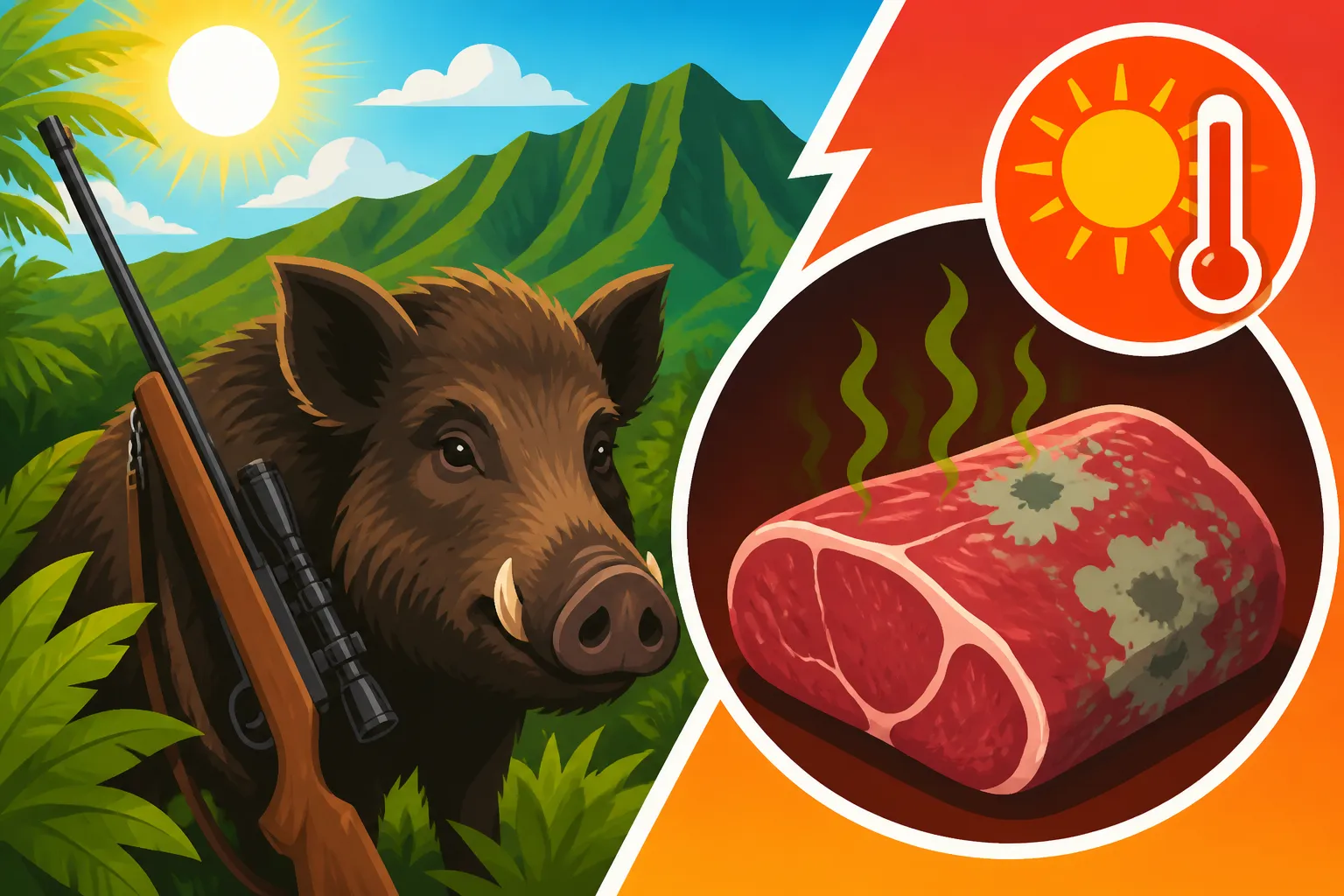
Hunting in Hawaii is an incredible experience, but it comes with a unique set of challenges, especially when it comes to game meat care. Many hunters, both kama'aina and visitors alike, quickly learn that meat can spoil at an alarming rate here if you're not prepared. The warm, humid climate, combined with the dense vegetation and often difficult terrain, creates a perfect storm that can turn your hard-earned harvest into a heartbreaking loss. This guide will dive deep into why Hawaii game meat spoils fast and, more importantly, equip you with the knowledge and strategies to ensure your venison and wild pork make it to the dinner table in prime condition.
The Tropical Gauntlet: Understanding Hawaii's Climate Challenges
It’s easy to think of Hawaii as paradise, and it is! But that tropical warmth and lushness, which makes for such beautiful landscapes and incredible hunting adventures, is also the meat hunter's biggest adversary. Unlike many mainland hunting grounds where you might have crisp autumn air to help cool down a carcass, Hawaii rarely offers that luxury.
Humidity's Relentless Grip
One of the most insidious enemies of freshly harvested game meat in Hawaii is the relentless humidity. Imagine you've just taken down a beautiful Axis deer on the dry leeward slopes of Maui or a hefty feral pig deep in a Big Island rainforest. You've field dressed it perfectly, but the air itself feels thick with moisture.
Humidity creates an environment where bacteria thrive. Bacteria love warmth and moisture, and Hawaii provides both in spades. When you're trying to cool a carcass, the goal is to dissipate heat and moisture from the meat's surface, creating a dry "rind" that inhibits bacterial growth. In high humidity, this simply doesn't happen efficiently. The air is already saturated, so moisture from the carcass can't evaporate quickly. Instead, it lingers on the meat's surface, providing a perfect breeding ground for spoilage bacteria. This is why even a properly gutted animal can begin to sour quickly, especially in the muscle tissue closest to the surface, if it isn't cooled aggressively. You might find yourself in a scenario similar to Hunting Pigs in Hawaii's Rainforest Gulches, where the air is constantly damp, making every step of meat care a race against time and microscopic organisms.
Persistent Warm Temperatures
Beyond humidity, the sheer warmth of Hawaii's climate is a constant challenge. Even on a "cool" day in the islands, ambient temperatures can be significantly higher than what hunters are accustomed to in more temperate zones during hunting season. After an animal is harvested, its internal body temperature needs to drop rapidly. This process, called chilling, is crucial for preventing bacterial growth and enzyme activity that degrades meat quality.
In Hawaii, the warm air acts as an insulator, making it incredibly difficult for the carcass to shed its heat. If you've ever hunted in conditions where the ground itself feels warm, you know the struggle. Laying a field-dressed animal directly on warm ground, even for a short time, can transfer heat back into the carcass, negating some of your cooling efforts. This is especially true after a long stalk, when both you and the animal have been exerting energy. The goal of cooling is to get the internal temperature of the deepest muscle to a safe level, typically below 40°F (4°C), as quickly as possible. In Hawaii, this often requires constant fanning, propping the cavity open wide, and, most importantly, getting the meat to ice as soon as humanly possible. Think about the difference between hunting Hawaii's High Elevation Alpine Ground where it might be cooler, versus a low-elevation kiawe flat. Every degree matters.
Factors Beyond the Weather: Why Hawaii's Game Animals Present Unique Challenges
It’s not just the weather; the animals themselves, and the unique conditions they live in, also play a significant role in how quickly meat can spoil. Understanding these factors can help you adjust your strategy.
Body Heat and Insulating Fat
All animals generate body heat, and after death, this heat needs to escape. Larger animals, and those with a good layer of fat or dense musculature, retain heat for longer. Hawaii's feral pigs, particularly the larger European boar crosses often found in the wetter forests, can have substantial fat layers and dense muscle. While a thick layer of backfat is a prize for rendering lard, it also acts as an insulator, holding residual body heat within the carcass even after gutting. This means that while the outer surface might feel cool, the deep muscle tissue could still be simmering, allowing bacteria to multiply internally.
Similarly, a big-bodied Axis buck, especially one taken during the rut when they're in peak condition, can hold a surprising amount of heat. You might be admiring a trophy from Hunting Molokai's Big-Bodied Axis Bucks, but its mass means you need to be even more aggressive with cooling than you would a smaller doe. The challenge is to not just cool the surface, but to facilitate heat transfer from the deepest parts of the animal. This often means quartering or even boning out the animal right there in the field, exposing more surface area to the air or, ideally, to ice.
Gut Bacteria and Contamination Risks
Another major factor contributing to rapid spoilage is the ever-present risk of gut bacteria. Every animal carries a vast amount of bacteria in its digestive tract, and these bacteria are designed to break down organic matter. While field dressing is essential to remove the source of most spoilage, even a small nick to the stomach or intestines can release these potent bacteria onto the meat. In Hawaii's warm and humid conditions, these bacteria go into overdrive.
If gut contents spill onto the cavity walls, the meat needs to be cleaned immediately and thoroughly. Some hunters carry a small spray bottle of water or even a dilute vinegar solution for this purpose. Ignoring even minor contamination can lead to rapid greening or souring of the meat, especially in the tenderloin or other deep muscles that are harder to cool. This risk is particularly high with pigs, whose digestive systems are robust and often contain very strong-smelling contents.
Beyond direct contamination, there's the consideration of parasites and potential diseases like leptospirosis, which can be found in feral pigs. While these aren't directly spoilage factors, they emphasize the need for careful handling and quick cooling to maintain meat integrity and safety. For more details on this, you can look into Handling Pig Meat and Leptospirosis or Diseases Hawaii Hunters Should Know. Always be mindful of sanitation from the moment of harvest.
Crucial Steps for Rapid Meat Care in the Field
Knowing why meat spoils quickly in Hawaii is the first step; the second is knowing what to do about it. Field care in Hawaii isn't just important—it's absolutely critical, and every minute counts.
Immediate and Thorough Field Dressing
The moment your animal is down, the clock starts ticking. Immediate field dressing is paramount. This means getting the entrails out as quickly as possible to remove a major source of heat and bacteria. Don't delay for photos or celebration.
- Safety First: Ensure the animal is expired and safe to approach.
- Positioning: Roll the animal onto its back, propping it with rocks or logs if needed to keep the belly open.
- Opening the Cavity: Make a shallow cut from the sternum to the pelvis, being careful not to puncture the intestines. Cut around the anus to free the rectum.
- Removing Organs: Reach deep and sever the trachea and esophagus, then pull all organs out. Ensure the bladder is removed without spilling its contents.
- Cleanliness: Once the cavity is clear, inspect for any gut spills. If there's any contamination, wipe it out with clean cloth or paper towels. Some hunters will even rinse the cavity with potable water if available, though drying it thoroughly afterward is crucial. The goal is to get the cavity as clean and dry as possible.
- Open it Up: Prop the chest cavity open with a stick to allow maximum airflow. This is not optional in Hawaii.
For species like Axis deer, which are often pursued in dry, open country where cooling might seem easier, prompt field dressing is still essential. The same goes for goats taken on cliff faces; the terrain may be challenging, but the immediate need to cool the animal remains. This is the absolute foundation of good meat care.
Airflow, Shade, and Elevation
After field dressing, your primary mission is to get that meat cooled down. Airflow is your best friend.
- Elevate: If possible, hang the carcass off the ground. Even a few feet off the ground can make a difference in exposing the entire animal to air circulation, particularly if you're in a gulch or dense forest where air movement is limited. This also keeps it off the warm ground and away from ground-level insects.
- Prop Open: Use sticks or even branches to keep the body cavity wide open. The more air that flows through the cavity, the faster heat will dissipate.
- Seek Shade: Direct sunlight will cook your meat. Find the densest shade you can, whether it’s under a kiawe tree on the leeward side or beneath a towering koa in the uplands. This can be tricky when you're Glassing Lanai's Open Ridgelines where shade is scarce, but it's vital.
- Utilize Elevation: If your hunt allows for it, consider moving the animal to higher elevations. Even a few hundred feet higher can mean a noticeable drop in temperature. If you're hunting Mouflon in Mauna Kea's Thin Air, you might have natural cooling on your side, but in lower units, you'll fight against the heat.
For hunters working alone or in very remote areas, especially if you're Packing Meat Out of a Hawaii Gulch, these steps become even more critical before you begin the strenuous task of packing.
Getting the Meat to Ice, Fast
This is arguably the single most important step in Hawaii meat care. Once field dressed and air-cooled as much as possible, the meat must get onto ice.
- Bone Out or Quarter: Unless you're hunting very close to your vehicle and have an oversized cooler, you'll likely need to bone out or at least quarter your animal in the field. Boning out removes dense bones that retain heat and greatly reduces the weight you have to carry. For Axis deer, many hunters will bone out the deer entirely, separating primal cuts into game bags.
- Game Bags: Always use breathable game bags, even if you plan to put the meat directly on ice. These protect the meat from flies, dirt, and debris while allowing air to circulate. Don’t use plastic bags for initial cooling, as they trap heat and moisture.
- Pre-Chilled Coolers: Have large, clean, high-quality coolers waiting at your vehicle. Pre-chill them with ice or frozen water bottles before you leave for your hunt. This gives you a head start.
- Ice, Ice Baby: Bring ample ice. We're talking serious quantities. Block ice melts slower than cubed ice, so a combination is often ideal. Place some ice on the bottom, layer meat (in game bags), then more ice, and repeat. You want the meat completely surrounded by ice. Remember, you're not just chilling the meat; you're rapidly dropping its temperature. This is particularly important for species like Axis Deer, Hawaii's Signature Big Game where the lean meat is highly prized.
For a thorough discussion on this, check out Cooling Meat Fast on a Hawaii Hunt. It's a game-changer for preserving quality.
The Journey Home: Transport and Post-Hunt Processing
The effort doesn't stop once the meat is on ice in your truck. The trip home and the subsequent processing are just as vital to ensuring a quality product.
Proper Cooler Management
Once the meat is in the coolers, your job is to keep it cold and clean.
- Drain Water (or don't, carefully): There's a debate about draining meltwater. Some hunters prefer to keep the meat submerged in icy water, believing it cools faster and prevents drying. Others prefer to drain the water regularly, arguing that sitting in bloody water can taint the flavor and promote bacterial growth. If you choose to keep it submerged, ensure the water is always icy cold and change it regularly if it becomes excessively bloody. If you choose to drain, make sure you have plenty of fresh ice to replenish. The key is to keep the meat temperature consistently low.
- Minimize Opening: Every time you open the cooler, cold air escapes and warm air rushes in. Keep cooler openings to a minimum.
- Secure Transport: Ensure your coolers are securely strapped down in your vehicle. Bouncing around on a rough Hawaii 4WD road, common when Reaching a Hawaii Unit by 4WD Road, can jostle ice and meat, exposing parts to warmer air.
Consider adding a small, waterproof thermometer to one of your coolers to monitor the temperature. This lets you know if your cooling efforts are truly effective. Using a resource like GoHunt to familiarize yourself with unit maps and access points can help you plan the quickest route back to your coolers, reducing critical field time.
Processing Quickly and Efficiently
Once you're home, don't let your guard down. The meat needs to be processed into manageable cuts for the freezer.
- Timeliness: Aim to process the meat within 24-48 hours of harvest, especially given Hawaii's climate. The longer it sits, even on ice, the higher the risk of spoilage or degradation.
- Cleanliness is King: Set up a clean work area. Sanitize your knives, cutting boards, and hands. Wear gloves if you have them.
- Butcher or DIY: If you're comfortable, process the meat yourself. Otherwise, take it to a reputable game processor. Many areas have local butchers who understand the unique demands of processing wild game in Hawaii. A quick search, perhaps even through community forums found via GoHunt, can help you locate a good one. For those who choose to butcher their own, resources like Getting Meat Processed on a Hawaii Hunt can provide valuable tips.
- Vacuum Seal and Freeze: Once processed, vacuum seal your cuts. This prevents freezer burn and extends the shelf life dramatically. Label everything with the date and cut, then get it into a deep freezer immediately. Don't overload a small home freezer, as it can struggle to freeze a large quantity of warm meat, potentially leading to slow freezing and a loss of quality.
Remember that Hawaii has specific rules about transporting game meat, especially between islands or off-island. Always check current regulations through resources like the state's Department of Land and Natural Resources website or through the GoHunt platform before planning your transport to avoid any issues. This is especially important if you're considering Shipping Meat Home From Hawaii.
Comparison: Meat Care in Hawaii vs. Mainland
To truly drive home the differences, let's look at a quick comparison between typical mainland conditions (think a crisp autumn hunt in the Rockies) and Hawaii's unique environment.
| Feature | Typical Mainland Hunting Conditions (e.g., Autumn Mountains) | Hawaii Hunting Conditions (e.g., Tropical Islands) | Impact on Meat Spoilage |
|---|---|---|---|
| Ambient Temp. | Often 30-50°F (0-10°C) | Typically 70-85°F (21-30°C) or higher | Slower cooling, faster bacterial growth |
| Humidity | Low to moderate | High to very high (60-95% often) | Inhibits air drying, promotes surface bacterial bloom |
| Ground Temp. | Cool or cold | Warm, can transfer heat back to carcass | Hinders passive cooling when animal is on ground |
| Airflow | Generally good in open country, even in forest | Often poor in dense, humid gulches and thick forest | Slows heat dissipation, traps moisture |
| Insect Pressure | Present, but often manageable | High, especially flies, which lay eggs rapidly | Contamination, maggots within hours in worst cases |
| Vegetation | Often sparse or deciduous in autumn | Dense, lush, traps humidity and warmth | Difficulty finding cool, open areas for carcass; physical barriers |
| Cooling Time | Carcass can hang overnight or for several hours before processing | Needs immediate, aggressive cooling and icing; every minute counts | Significantly reduced window for safe meat handling |
| Transport | Often cooler vehicle interiors, less critical icing need | Hot vehicle interiors, absolute necessity of massive ice supply | High risk of spoilage during transport if not iced well |
As you can see, nearly every environmental factor in Hawaii works against rapid meat cooling. This means that a proactive, aggressive approach to field care and transport isn't just a good idea – it's absolutely essential for any hunter hoping to bring home quality wild game meat.
Disclaimer
This article is for general informational purposes only and does not constitute professional advice. Laws, prices and regulations vary by location and change over time. Consult a qualified professional for guidance on your specific situation.