Hawaii Island’s Dry Leeward Hunting Units
The Big Island, or Hawaii Island, offers some truly unique hunting experiences, but often, the conversation revolves around the lush, wet windward side. What many hunters, especially those visiting, might not realize is the stark contrast and incredible opportunities waiting on the dry, leeward side. This guide is dedicated to shedding light on those often overlooked, sun-baked units, helping you understand the terrain, the game, and the unique challenges and rewards of pursuing animals in Hawaii Island's arid landscapes.
Understanding Hawaii Island's Leeward Environment
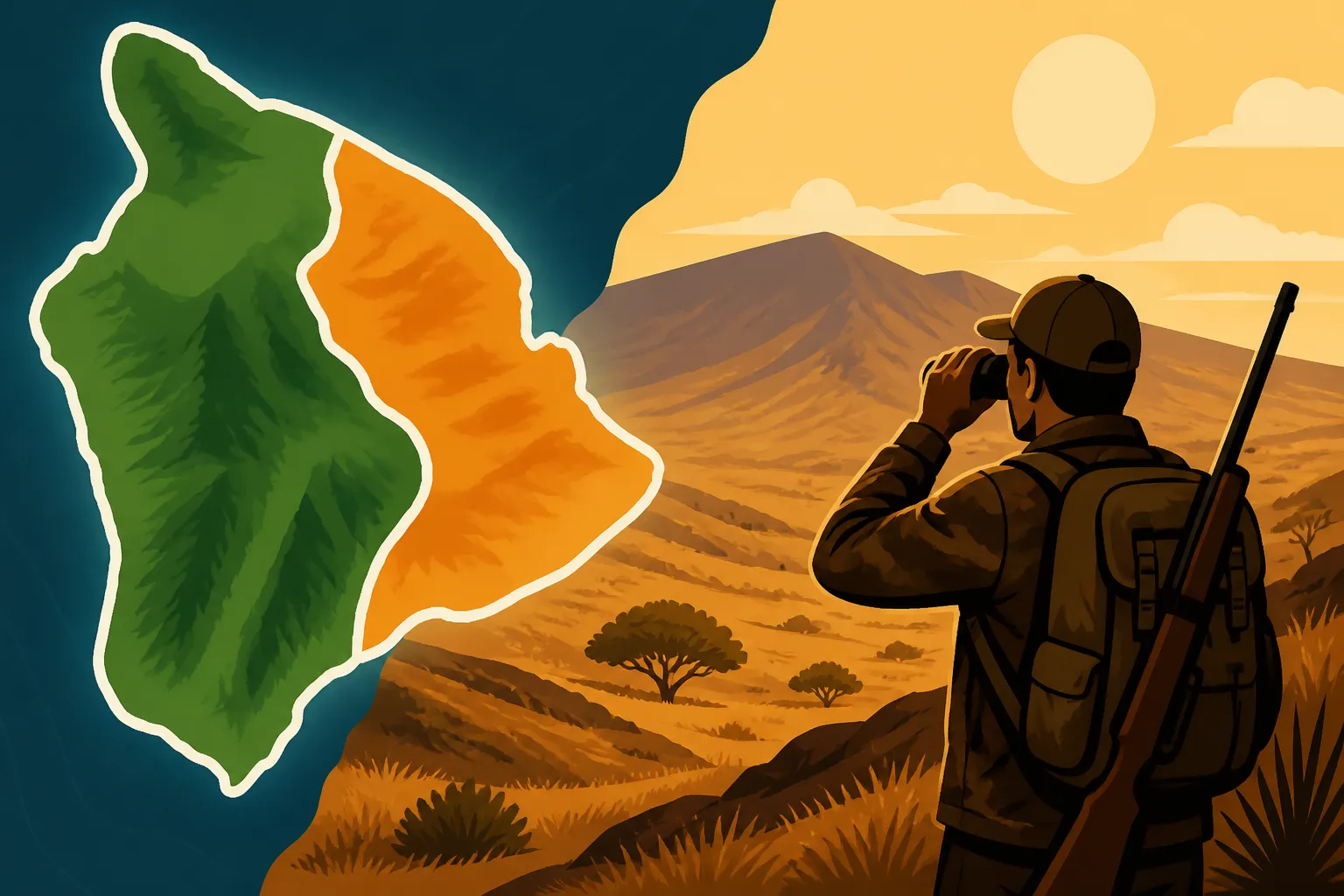
The leeward side of Hawaii Island is a world away from the humid, dense rainforests often pictured. Here, the trade winds, blocked by the towering volcanoes, drop their moisture on the windward slopes, leaving the leeward side in a rain shadow. This results in an incredibly dry, often hot, and sparse landscape that dictates everything from vegetation to animal behavior and, ultimately, hunting strategy.
Climate and Terrain Specifics
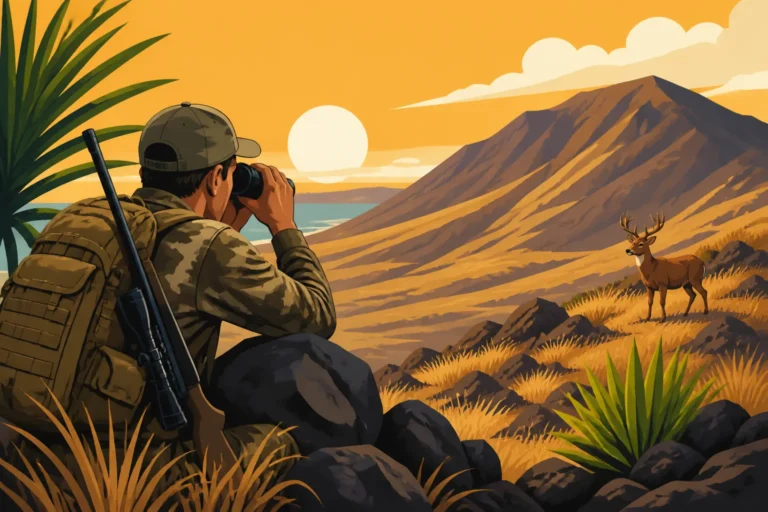
Imagine expansive grasslands, broken by ancient lava flows, sparse kiawe and scrub brush, and rocky slopes that absorb the sun's heat. That's the leeward side. Temperatures can soar during the day, and while nights cool down, the overall environment is one of heat and aridity. Water sources are scarce, making them prime congregation points for game animals. The terrain can be deceptively challenging; what looks like open ground can quickly turn into fields of sharp, uneven lava rock or steep, eroded gulches. Hunters need to be prepared for intense sun exposure, thorny vegetation, and footing that will test even the most rugged boots.
The sparse vegetation means less cover for both hunter and hunted, pushing tactics towards long-range glassing and patient spot-and-stalk approaches. Unlike the wet side where you might hear animals moving through thick undergrowth, here, the wind is your main acoustic factor, and spotting game from afar becomes critical. Understanding Reading Hawaii's Trade Wind Patterns is paramount, as swirling winds in these open areas can quickly give away your position.
Unique Ecosystems and Vegetation
While dry, this side isn't barren. It supports a unique collection of drought-resistant plants. You'll find extensive kiawe forests, especially at lower elevations, which provide crucial cover and forage for axis deer and pigs. Higher up, the landscape transitions into mamane-naio forests, particularly around the slopes of Mauna Kea, where mouflon sheep thrive. These trees are tough, often thorny, and offer surprisingly dense pockets of shade and concealment.
The ground cover typically consists of dry grasses, scattered shrubs, and various invasive weeds that provide sustenance for goats and pigs. Water sources, whether natural springs, ephemeral puddles after a rare rain, or man-made stock tanks, are magnets for all game species. Knowing how to identify these areas and understand their significance in a parched environment is key to locating animals. Hunters often find themselves Hunting a Water Source in Dry Hawaii Country.
Key Hunting Units on the Dry Leeward Side
Hawaii Island boasts several public hunting units on its leeward side, each with its own characteristics, primary game species, and access challenges. Understanding these distinctions is crucial for planning a successful hunt.
Puu Waawaa Wildlife Sanctuary
Puu Waawaa is probably one of the most well-known and sought-after leeward units. Located on the slopes of Hualalai volcano, it's famous for its mouflon sheep and feral goats, with a healthy population of feral pigs as well. The terrain here is a mix of dry grasslands, open mamane-naio forest, and rugged lava flows. Access can be challenging, requiring 4WD in many areas, and permits are often by lottery draw, especially for the prime mouflon season.
The hunting in Puu Waawaa is primarily spot-and-stalk. With open vistas and the chance to glass for miles, patience and good optics are your best friends. The mouflon here can be majestic, and the goats are plentiful. Pig hunting is also productive, particularly around the gulches and thicker kiawe pockets. Being familiar with the unit's specific boundaries and regulations, often found on the DOFAW website or through tools like onX Hunt, is vital. You can learn more about specific hunting regulations for this area in Hunting Puu Waawaa's Forest Reserve and Hunting Puu Waawaa's Archery Season.
Puu Anahulu Game Management Area
Adjacent to Puu Waawaa, the Puu Anahulu GMA offers a similar dry leeward environment, though perhaps a bit less rugged in spots. This unit is managed for feral sheep, mouflon, and feral goats. Axis deer sometimes venture into this area as well, especially when forage is good. The lower elevations feature more kiawe and open grasslands, while higher up, it mirrors the mamane forests of Puu Waawaa. Access is generally via unpaved roads, and again, 4WD is often necessary.
Puu Anahulu typically has a slightly longer season than Puu Waawaa, making it a good option if you miss the draw for the sanctuary. It offers excellent opportunities for glassing and stalking, particularly for goats and mouflon. The vastness of the area means you can often find solitude, but it also means you need to be prepared for long walks and self-sufficiency. Make sure to check the current regulations for Hunting the Puu Anahulu Game Management Area.
Mauna Loa Forest Reserve Unit A
Moving higher up the slopes of Mauna Loa, Unit A, though part of a broader forest reserve, encompasses significant leeward areas that are strikingly dry and open. This unit is known for its feral sheep, goats, and a decent population of feral pigs. The elevation can be considerable, reaching up into cooler, thinner air, which adds another layer of challenge. The terrain is characterized by extensive lava fields, cinder cones, and scattered mamane-naio trees.
Hunting here demands excellent physical conditioning and a keen eye for spotting animals against the desolate lava rock. Goats are adept at navigating the steep, broken terrain, while sheep often graze on the sparse vegetation between lava flows. Pigs can be found in the kipuka (islands of vegetation surrounded by lava) and any pockets of thicker growth. Water is extremely limited at these elevations. Preparation for Hunting Mouflon in Mauna Kea's Thin Air applies here, emphasizing the need for robust hydration and appropriate gear for variable conditions. You can find more specific information on Hunting Unit A on Mauna Kea.
Game Species and Hunting Strategies
The leeward side's dry environment shapes the behavior and distribution of the game animals, requiring hunters to adapt their strategies accordingly.
Axis Deer, Mouflon Sheep, and Feral Goats
While axis deer are most commonly associated with Maui, Lanai, and Molokai, they do exist on Hawaii Island, particularly on its drier leeward slopes and coastal areas. They're often found in the lower, brushier kiawe flats, and near any available water. Reading Axis Deer Sign in Dry Country becomes crucial, as rubs and tracks near a water source or bedding area can tell you a lot. They're wary animals, and the open terrain makes long-range shooting and patient stalks the norm.
Mouflon sheep, on the other hand, are creatures of the higher, rockier, more exposed slopes of Mauna Kea and Hualalai. They blend incredibly well with the volcanic rock, making glassing an art form. Patience is key; often, the only way to spot them is to sit and scan for hours, looking for movement or a tell-tale horn curl. Once spotted, a stalk can be grueling over jagged lava and steep inclines. Understanding Judging a Mouflon Ram's Horn Curl is essential to determine if you're pursuing a mature animal.
Feral goats are perhaps the most widespread and resilient leeward game animal. They thrive in the harshest, steepest, and driest country. You'll find them on sea cliffs, in deep canyons, and across open lava fields. They are excellent climbers and can be surprisingly difficult to approach. Often, the best strategy is to locate them from a distance and plan a stalk that uses terrain features to stay out of sight. Remember that What Goats Eat in Dry Country will often be tough, scrubby plants, pushing them to specific areas.
Feral Pigs and Their Leeward Habits
Feral pigs on the leeward side behave differently than their wet forest cousins. While they still prefer thicker cover, they are far more tied to water sources and cooler pockets during the day. In areas with kiawe forests, they will root extensively, and their trails will be well-worn leading to water. They tend to be more nocturnal in the heat, so hunting at first and last light near water or bedding areas is often most productive.
Tracking in the dry, dusty conditions can be challenging, but fresh tracks around a water hole or a freshly rooted area are undeniable. Unlike the windward side where dogs are commonly used to bay pigs in dense jungle, leeward pig hunting is more often a still-hunting or spot-and-stalk affair, though some hunters still employ dogs in areas with sufficient cover. When hunting in these dry areas, understanding Reading Pig Sign Along a Muddy Trail means finding the least muddy, most damp ground, or even just fresh dust churned up.
Essential Gear and Preparation for Leeward Hunts
Hunting in Hawaii Island's dry leeward units demands specific gear and a meticulous approach to preparation. The unforgiving environment will test both your equipment and your endurance.
Water, Hydration, and Sun Protection
This is non-negotiable. You absolutely cannot have enough water when hunting the leeward side. Temperatures can easily reach uncomfortable levels, and the dry air will dehydrate you quickly. Plan for at least a gallon of water per person per day, and consider carrying electrolyte-rich drinks. A reliable hydration pack is far superior to water bottles, allowing you to drink on the move.
Beyond water, sun protection is paramount. Wide-brimmed hats, lightweight long-sleeve shirts, and pants are essential, even if it feels hot. Sunscreen, sunglasses, and lip balm with SPF are a must. There's often very little shade to be found, so anything you can do to protect yourself from the intense UV rays is critical. Planning for Water and Heat Planning for a Hawaii Hunt should be at the top of your list.
Footwear, Optics, and Navigation Tools
Your boots are your most important piece of gear. The lava rock is incredibly abrasive and unforgiving. Choose sturdy, ankle-supporting boots with stiff soles that can withstand sharp edges and provide good traction on loose cinders or steep dirt. Many hunters prefer a waterproof boot, even in dry country, as crossing a small stream or an unexpected puddle can happen, and they offer better support. You might also want to consult Walking Rough Lava Without Wrecking Your Boots.
Good optics are also non-negotiable. Binoculars (10×42 or 12×50) are essential for glassing vast open areas, and a spotting scope can be incredibly useful for judging animals at extreme distances, especially mouflon rams. A rangefinder is also crucial for ethical shots in the open, often undulating terrain. For navigation, a reliable GPS unit or a smartphone app like onX Hunt is invaluable. The maps on onX Hunt often show public land boundaries, jeep trails, and topographic features that are critical for Reading a Hawaii Unit Boundary Map and staying found in areas with limited distinct landmarks. Don't rely solely on cell service; download offline maps before you head out.
Access and Regulations on Leeward Units
Navigating the rules and access points for Hawaii Island's dry leeward units requires careful attention to detail. Regulations can change, and understanding how to properly enter and exit these areas is crucial.
Checking In and Unit-Specific Rules
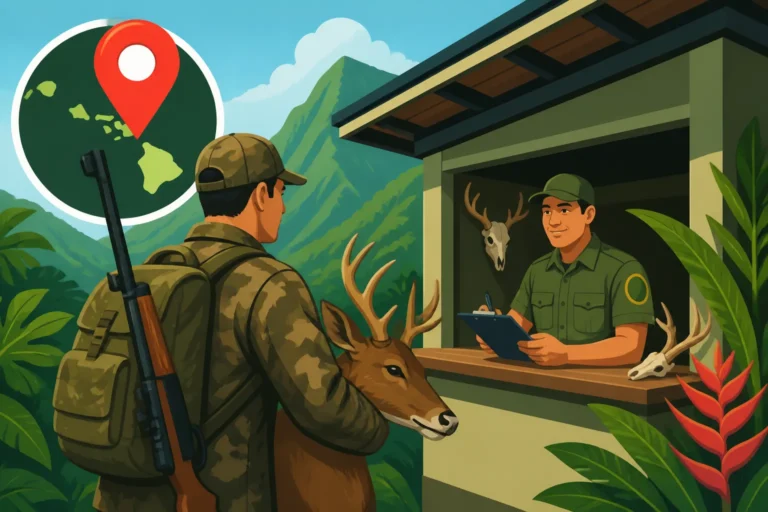
Many of Hawaii Island's leeward units, especially those managed by the Division of Forestry and Wildlife (DOFAW), require hunters to check in and out. This can be done at a physical hunter check station, or increasingly, through digital means like the OuterSpatial app. Always confirm the specific check-in/check-out procedure for your chosen unit before heading out. For instance, Using the OuterSpatial App to Check In has become the norm for many areas.
Beyond general check-in, each unit may have specific rules regarding legal weapons, hunting days, bag limits, and vehicle access. For example, some areas might be archery-only, while others allow rifle hunting on specific weekends. Always consult the most current DOFAW hunting regulations for Hawaii Island. These are typically available online or at DOFAW offices. Ignorance of the rules is not an excuse for violations.
| Unit Name | Primary Game | Typical Terrain | Key Access Challenge | Check-In Method |
|---|---|---|---|---|
| Puu Waawaa Wildlife Sanctuary | Mouflon, Goat, Pig | Dry forest, grasslands, lava | 4WD required, permit draw | Digital/Check Station |
| Puu Anahulu GMA | Goat, Sheep, Pig | Kiawe flats, dry forest | 4WD recommended | Digital/Check Station |
| Mauna Loa FR Unit A | Sheep, Goat, Pig | High elevation lava, cinder cones | Rugged 4WD, high altitude | Digital/Check Station |
| Kau Forest Reserve (Leeward sections) | Pig, Goat | Dry forest, gulches | Varying 4WD, remote | Digital/Check Station |
Navigating Access Roads and Boundaries
Accessing these dry leeward units often involves unpaved, rough roads that demand a high-clearance 4WD vehicle. Some roads are graded, but many are not, featuring large rocks, ruts, and steep inclines. Always assess road conditions before attempting to drive them, especially if there has been recent rain, which can turn dry tracks into impassable mud. Some areas might require significant Reaching a Hawaii Unit by 4WD Road or even Hunting Hawaii on Foot Without a Truck after parking further out.
Public land boundaries are generally well-marked, but it's incredibly easy to inadvertently cross onto private land, especially in remote areas where fences might be in disrepair or non-existent. This is where a reliable mapping app like onX Hunt comes in handy, as it overlays public and private land boundaries directly onto your map, allowing you to confirm your location in real-time. Respecting private property is crucial, and trespass laws are strictly enforced. Always double-check What Hawaii Trespass Law Requires.
Final Considerations for a Leeward Hunt
Preparing for a hunt on Hawaii Island's dry leeward side is about more than just gear; it's about mindset and understanding the unique challenges of this environment.
Safety and Emergency Preparedness
The remoteness of many leeward units means you'll often be far from immediate help. Carry a well-stocked first-aid kit, and know how to use it. A satellite communication device (like a satellite messenger or phone) is highly recommended, as cell service is often nonexistent in these areas. Tell someone your exact hunting plan and your expected return time.
Be aware of the local wildlife beyond your quarry. While large predators aren't an issue, wild dogs, centipedes, and scorpions can be present. Be cautious when reaching into dark places or under rocks. And always remember fire safety; the dry conditions make brush fires a constant risk.
Respecting the Land and Culture
Hawaii is a place with deep cultural significance, and the land, or aina, is highly revered. Hunt ethically, leave no trace, and pack out everything you pack in. Be mindful of historical sites or cultural artifacts you might encounter. Engage with locals respectfully, and understand that hunting here, while important for conservation, is also part of a larger ecological and cultural landscape. Your experience will be richer if you approach it with an open mind and respect for the islands.
Disclaimer
This article is for general informational purposes only and does not constitute professional advice. Laws, prices and regulations vary by location and change over time. Consult a qualified professional for guidance on your specific situation.