Best Hawaii Public Ground for Goats
Finding prime public hunting ground for goats in Hawaii can feel like searching for a needle in a volcanic haystack, especially when you're faced with vast, rugged landscapes and varying access rules. Many hunters get frustrated trying to pinpoint exactly where to go for a truly productive goat hunt without trespassing or wasting precious time in less-than-ideal terrain. This guide will cut through the confusion, highlighting the best public lands across the islands where you have a genuine shot at a challenging and rewarding goat hunt, along with the strategies you'll need to succeed.
Understanding Hawaii's Feral Goats and Their Habitat
Before we dive into specific hunting units, it's really important to understand the animal itself. Feral goats in Hawaii aren't just any game animal; they're an integral, albeit introduced, part of the landscape, and their presence heavily influences where you'll find them and how you'll hunt them. They are tough, resilient creatures perfectly adapted to some of the most unforgiving environments the islands have to offer.
The Goat's Role in Hawaii's Ecosystem and Why They're Hunted
You might wonder why we hunt goats so actively in Hawaii. Well, these aren't native animals. They were introduced centuries ago, primarily by Captain Cook and subsequent settlers, and without natural predators, their populations can explode. While they're an exciting game animal, their unchecked grazing habits cause significant damage to Hawaii's fragile native ecosystems. They munch on endemic plants, strip vegetation from hillsides, and contribute heavily to soil erosion, especially on steep slopes. This destructive behavior directly impacts the health of our watersheds and threatens unique native species.
Because of this ecological impact, hunting them isn't just a sport; it's a vital part of conservation efforts here. The Department of Land and Natural Resources (DLNR), through its Division of Forestry and Wildlife (DOFAW), manages goat populations to mitigate this damage, and hunters play a crucial role in that management. In many units, goat tags are abundant, and seasons are long, reflecting the need to keep their numbers in check. Understanding this context can actually make your hunt feel even more purposeful, knowing you're contributing to the health of these beautiful islands while pursuing a challenging animal. How Goats Cause Erosion in Hawaii explains more about their ecological impact.
Preferred Goat Habitats: Cliffs, Canyons, and Dry Country
So, where do these resilient creatures hang out? Goats thrive in places that would send most other animals packing. Think steep, broken country, sea cliffs, deep canyons, and expansive, dry lava fields or kiawe forests. They're built for agility and climbing, with hooves designed to grip precarious rock faces. They love areas where they can quickly disappear over a ridge or into a gulch when pressured. You'll rarely find large numbers of goats in dense, wet rainforests or flat, open pastures, though they might traverse such areas to get to preferred bedding or watering spots.
The key is looking for terrain that offers both escape cover and sparse vegetation they can browse. This often means the leeward, drier sides of the islands, particularly where volcanic activity has left behind jagged, broken landscapes or where erosion has carved out dramatic cliff faces and canyons. Accessing these areas can be physically demanding, requiring good conditioning and a head for heights, but it's precisely in these challenging environments that you'll find the best concentrations of goats. If you're wondering how they survive in such harsh places, How Goats Survive on Hawaii Sea Cliffs offers some fascinating insights.
Key Public Hunting Units for Goats on Each Island
Now for the good stuff! While goats can pop up in various units, some public hunting grounds consistently offer better opportunities due to their terrain, established goat populations, and management efforts. Remember, always check the latest DOFAW regulations and unit maps on GoHunt Hawaii or the official DLNR website before heading out, as boundaries and rules can change.
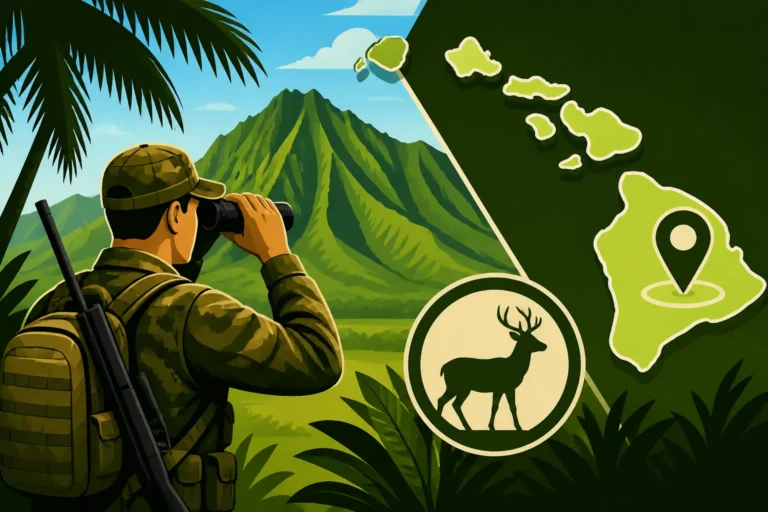
Goat Hotspots on Hawaii Island (Big Island)
The Big Island, with its immense and varied terrain, offers some fantastic public goat hunting. You'll find different types of goat country here, from coastal dry lands to the slopes of its massive volcanoes.
One of the most well-known and productive areas is Unit A on Mauna Kea. While often associated with mouflon sheep, the lower to mid-elevation sections of Unit A, particularly the dryer, rockier slopes and kipuka areas, hold healthy populations of goats. The challenging landscape means fewer hunters penetrate deep, offering better opportunities for those willing to put in the effort. The goats here are wary, often moving through the scrub and lava flows. You'll want to be prepared for thin air at higher elevations and intensely broken ground.
Another excellent option is the Puu Anahulu Game Management Area (GMA). Located on the leeward side of Hawaii Island, this unit is characterized by dryland forests of kiawe and haole koa, interspersed with old lava flows and rocky outcrops. It's prime goat habitat, offering plenty of food and escape routes. Goats here tend to be scattered but can be found in pockets, especially around the more inaccessible gulches and breaks in the terrain. This area requires a lot of walking and careful glassing to pick out animals in the sparse cover. Hunting the Puu Anahulu Game Management Area provides more specifics on this unit.
Lastly, don't overlook parts of the Kau Forest Reserve, particularly the drier, south-facing slopes and areas bordering ranch lands. While much of Kau is dense forest, the fringes where it transitions to more open, rocky country can be productive. Access can be tricky, and it's essential to consult detailed maps, like those on onX Hunt, to ensure you're within public boundaries and avoiding private property. These areas might require a longer walk-in, but the reward can be worth it.
Maui's Accessible Goat Hunting Units
Maui is legendary for its Axis deer, but it also offers some fantastic goat hunting, particularly on the drier, south-facing slopes of Haleakala. Many of these areas are year-round general seasons, which is a huge bonus.
The Kahikinui Forest Reserve and Game Management Area on the southeastern slopes of Haleakala is arguably Maui's best public goat ground. This vast, rugged landscape is a goat hunter's dream, featuring steep gulches, rocky ridges, and vast stretches of kiawe and sparse grassland. Goats are abundant here, often seen moving in herds along the slopes. Access is generally via unpaved roads, and a 4WD vehicle is highly recommended. You'll spend a lot of time glassing these slopes, and long shots are common. This unit is open year-round for goats, making it a flexible option. Hunting Maui's Kahikinui Slopes details this challenging but rewarding area.
Another unit worth exploring is Kanaio, located further west along the southern coast. This area shares similar characteristics with Kahikinui – dry, steep, and broken country. It's slightly smaller but can be just as productive, especially for hunters willing to navigate its challenging terrain. Like Kahikinui, it's open year-round for goat hunting. Be prepared for relentless sun and heat, and carry plenty of water. Understanding What a Hawaii Feral Goat Weighs can help you plan your pack-out strategy from these remote spots.
Hunting Goats on Kauai's Rugged Terrain
Kauai, known for its lush "Garden Isle" moniker, might surprise some with its goat hunting opportunities, especially in its dramatic canyon country. The Waimea Canyon area is a prime example.
The Na Pali-Kona Forest Reserve, particularly the sections around and within the Waimea Canyon, holds significant goat populations. These goats live in a spectacular, yet incredibly challenging environment. They are masters of navigating the canyon's sheer cliffs, deep gorges, and steep, brushy slopes. Hunting here is a true test of physical endurance and mental fortitude. It often involves long hikes down into the canyon or along its rim, careful glassing, and patient stalking. Hunting Goats in a Kauai Canyon provides a deep dive into the unique challenges and rewards of this area.
Portions of the Kekaha Game Management Area (GMA), particularly those adjacent to the canyon, can also be productive. These areas often feature drier, more open terrain that transitions into the canyon system. Like all Hawaii public lands, consult the specific unit maps and current regulations. Access points can be limited, and understanding property boundaries, perhaps with the aid of onX Hunt, is absolutely critical to avoid trespassing in these remote areas.
Strategies for Successful Public Land Goat Hunting
Hunting goats on public land in Hawaii isn't a walk in the park. It demands planning, physical fitness, and specific tactics to increase your chances of success. These animals are incredibly wary, and their preferred habitats offer them countless advantages.
Scouting and Accessing Remote Goat Terrain
Successful goat hunting starts long before you step foot in the unit. Remote goat terrain often means limited trails and challenging access. Start by thoroughly researching the unit maps. Use digital mapping tools like onX Hunt to study the topography, identify potential goat hideouts (steep gulches, cliff faces, lava breaks), and plan your approach. Look for old jeep trails, faded pig trails, or natural breaks in the vegetation that might offer a path of least resistance. Identifying water sources, even small seeps or stock ponds, can also pinpoint areas where goats might congregate, especially in dry conditions. Hunting a Water Source in Dry Hawaii Country can give you an edge here.
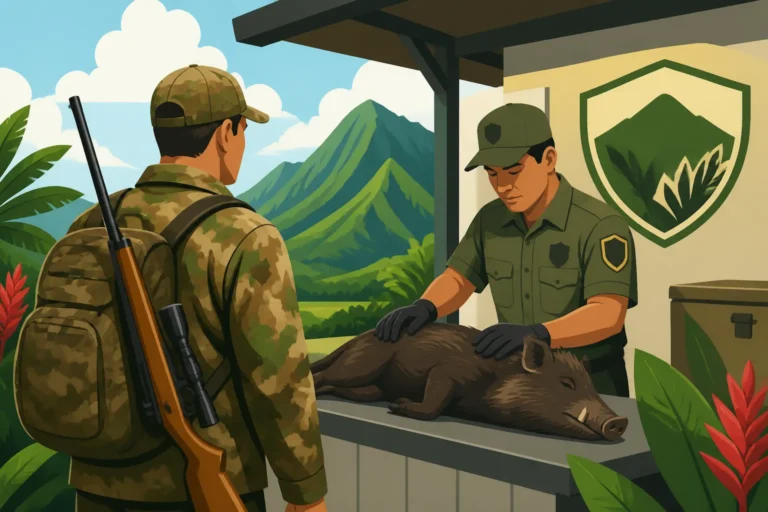
Physical scouting, even without a weapon, is invaluable if you're local. It allows you to understand the terrain, verify access points, and locate fresh sign like tracks, droppings, and rubbed vegetation. If you're traveling from off-island, dedicate your first day or two to scouting. Drive the accessible roads, glass the visible slopes, and talk to local hunters if you have the chance. Check-in procedures for Hawaii's hunting units are crucial; use resources like GoHunt Hawaii or the OuterSpatial app for current information on how to legally access and check into your chosen unit. Remember, many prime goat areas require a significant hike in, so be prepared for long distances and elevation changes. Scouting a Hawaii Hunting Unit Before Opening offers general tips that apply well to goat country.
Essential Gear for Steep, Dry Goat Country
Your gear selection can make or break a goat hunt in Hawaii's rugged public lands. Here’s what you absolutely need:
| Gear Item | Why It's Essential | Pro Tip |
|---|---|---|
| High-Quality Boots | Excellent ankle support, stiff soles, and good grip are paramount for navigating uneven lava, loose scree, and steep slopes. | Waterproofing is good, but breathability is key in Hawaii's heat. |
| Optics (Binoculars & Spotting Scope) | Goats are often spotted at great distances in open country. A good 10x binocular is a minimum; a spotting scope is highly recommended for judging animals and planning stalks. | Lightweight optics are crucial for long hikes. |
| Hydration Pack | Water is scarce in many dry goat units. You'll need to carry several liters for a full day of hunting. | Electrolyte tablets can help combat dehydration in the sun and heat. |
| Sun Protection | Wide-brimmed hat, sunglasses, long-sleeved UPF clothing, and sunscreen. Many goat units offer zero shade. | Even on cloudy days, UV index can be extremely high. |
| Navigation Tools | GPS device (like a Garmin InReach), phone with mapping apps (onX Hunt, OuterSpatial), and a physical map and compass. | Always have a backup. Cell service is unreliable in remote areas. No Cell Signal on a Hawaii Hunt explains more. |
| Lightweight Pack | Large enough to carry essentials, but comfortable for long, arduous hikes. | Ensure it can handle packing out meat, as goats can be heavy. |
| First-Aid Kit | For cuts, scrapes, blisters, and other injuries common in rough terrain. | Include pain relievers and anti-inflammatories for tired muscles. |
| Hunting Knife & Game Bags | Essential for field dressing and protecting meat from flies and spoilage in warm weather. | Cooling meat quickly is crucial in Hawaii's heat. Field Dressing Axis Deer in Hawaii Heat has relevant advice. |
Don't skimp on quality for boots or optics. These are your most important tools for comfort, safety, and success in goat country.
Field Tactics for Spotting and Stalking Goats
Goat hunting in Hawaii is predominantly a spot-and-stalk game. Given their preference for open, broken country, your eyes are your most valuable asset.
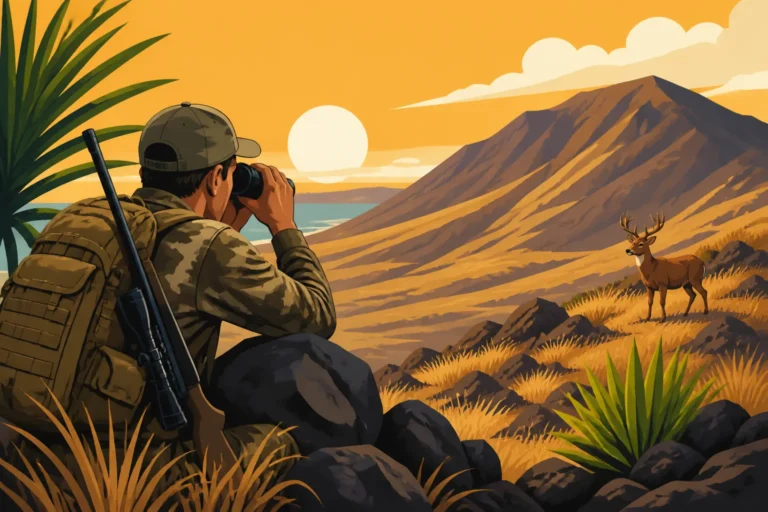
Glassing is King: Find a vantage point with a wide view of the terrain. Use your binoculars and spotting scope to systematically pick apart the landscape. Goats often blend surprisingly well with the rocks and sparse vegetation. Look for movement, a different texture, or the distinct shape of a goat against the background. Pay special attention to shaded areas in the morning and evening, or ledges where they might bed down during the midday heat. Glassing a Hawaii Coastline for Goats offers more tips for scanning the landscape.
Hunt Early and Late: Goats are most active during the cooler parts of the day, moving and feeding at first light and again in the late afternoon. During midday, they often bed down in shaded areas or on ledges that offer a good view of their surroundings. Plan your day around these activity periods. Hiking in before dawn to be on a good glassing point as the sun rises can be highly effective. Why Hawaii Goats Move at First Light elaborates on their daily movements.
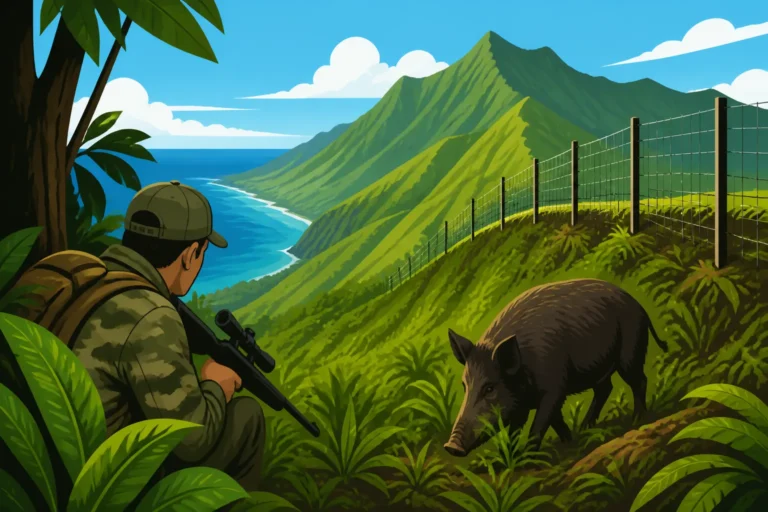
Master the Stalk: Once you spot a goat, the real challenge begins. Goats have incredible eyesight and are acutely sensitive to movement. Plan your stalk carefully, using terrain features like gulches, ridges, and dense vegetation to conceal your approach. Always factor in the wind; goats have an excellent sense of smell. Be prepared for long, slow, and often physically demanding stalks that might take hours. Sometimes, the best approach is to wait for the goats to move into a more favorable position or into cover before attempting to close the distance.
Shot Placement: Goats, especially mature billies, can be tough animals. Aim for a clean ethical shot. They are often quartering away or standing on uneven ground, so practice your shooting from various positions before your hunt. Be prepared for follow-up shots if necessary, and always be aware of your surroundings, especially if hunting on steep terrain. Retrieving a downed goat from a deep gulch or cliff face can be a monumental task, so choose your shot and location wisely. Hunting Goats on a Sea Cliff Safely emphasizes safety in extreme terrain.
Remember, patience and persistence are key. Hawaii's public goat hunting offers a truly unique and challenging experience. With the right preparation and knowledge of these prime units, you'll be well on your way to a successful hunt.
Disclaimer
This article is for general informational purposes only and does not constitute professional advice. Laws, prices and regulations vary by location and change over time. Consult a qualified professional for guidance on your specific situation.