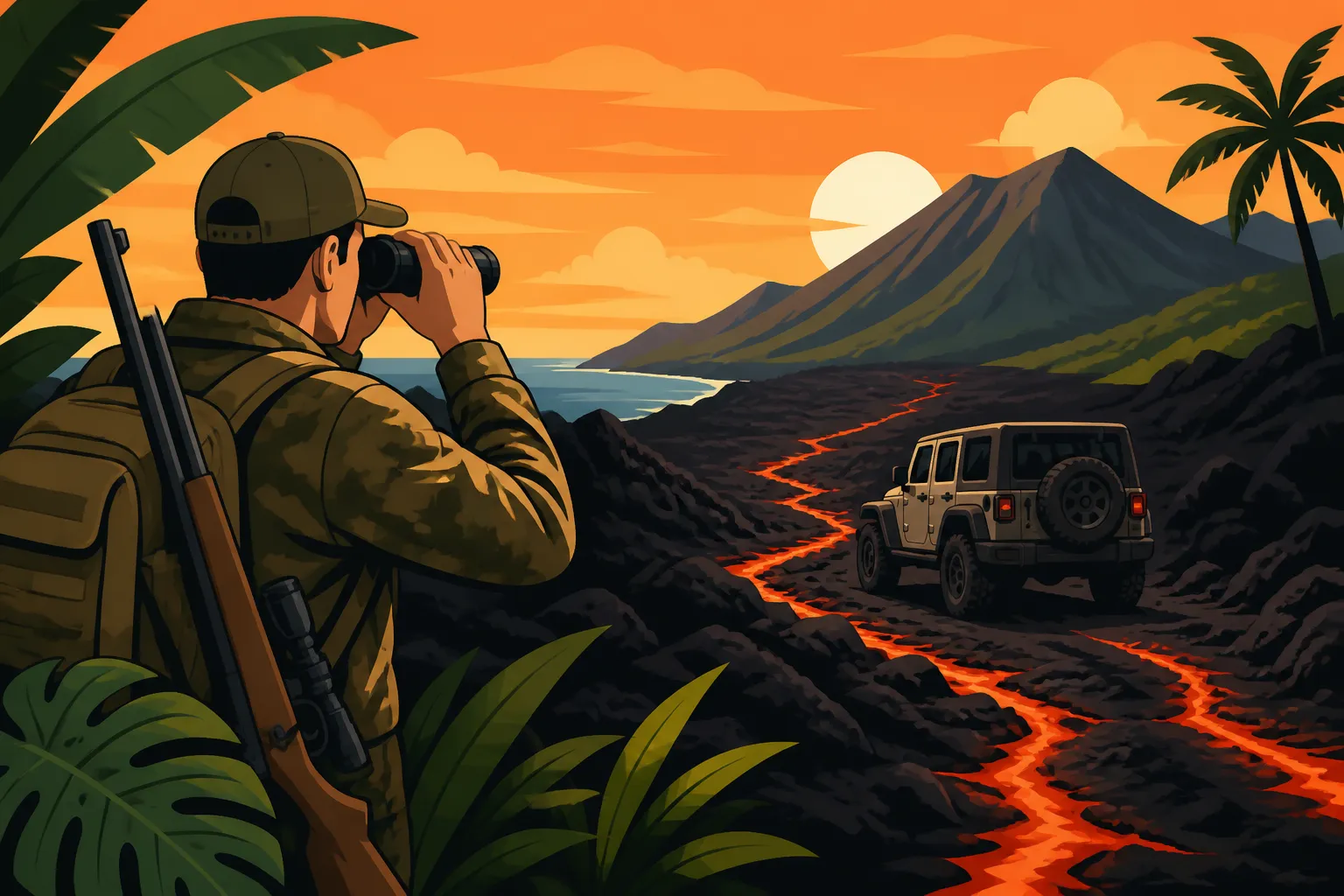
Hunting a Jeep Trail Through Lava
There’s a unique kind of hope that springs eternal when you’re looking at a map of a Hawaii hunting unit, especially one that stretches across vast lava fields. You see those thin, dashed lines marked as "jeep trails" or "unimproved roads," and your mind immediately pictures a convenient pathway into prime hunting ground. The reality, however, often hits you hard when you finally get boots on the ground: these aren't your mainland forest service roads. Hunting a jeep trail through lava here in Hawaii presents its own set of formidable challenges, from razor-sharp 'a'a to seemingly endless pahoehoe, and this guide is all about helping you navigate those unique landscapes to find success.
Understanding Hawaii's Lava Terrain and Jeep Trails
Before you even think about loading your rifle or strapping on your pack, you really need to wrap your head around what you're getting into when you plan to hunt lava country. It's unlike almost any other hunting terrain you've encountered, and those "jeep trails" are a testament to that ruggedness.
The Nature of Lava Fields and Their Impact on Access
Hawaii's lava fields are a geological marvel, but they are also incredibly challenging to traverse. You'll encounter two primary types: pahoehoe and a'a. Pahoehoe is often described as smooth, ropey, and somewhat fluid-looking. It can be easier to walk on in comparison, but don't let its smooth appearance fool you – it's still uneven, full of hidden cracks and holes, and incredibly abrasive. Then there's a'a, the stuff of nightmares for footwear. This lava is rough, jagged, clinkery, and unbelievably sharp. It will shred inferior boots, cut through pants, and make every step a deliberate, painful effort.
What about those jeep trails? Well, they're rarely graded, maintained roads in the conventional sense. Many are remnants of old ranch roads, faint utility access routes, or simply tracks carved out by repeated passage over decades. They weave through these ancient and sometimes recent lava flows, often disappearing and reappearing, or becoming completely impassable where a new flow has crossed, or vegetation has simply reclaimed the path. You might look at a map and see a dashed line, thinking "easy access!" but the reality hits when you're trying to walk or drive it, finding basketball-sized rocks, deep ruts, or sheer drops. It's frustrating, to say the least, to have a "road" on paper that offers no real passage.
Because these trails are so rarely maintained, they are in a constant state of flux. Heavy rains can wash out sections, while encroaching vegetation like kiawe or guinea grass can quickly swallow a path, making it almost invisible. You might find yourself pushing through dense, thorny scrub where a trail once clearly lay, adding another layer of difficulty to an already demanding environment. Understanding that these aren't leisurely strolls or smooth drives is the first step to a successful and safe hunt.
Why Game Animals Use Lava-Adjacent Trails
Despite their seemingly barren nature, lava fields are far from lifeless, and animals are masters of adapting to their environment. While the exposed lava itself offers little in the way of sustenance, the edges where lava meets scrub, forest, or older, weathered flows are often teeming with life. These "jeep trails" frequently run through these critical transition zones, or they lead to and from them, making them natural arteries for game movement.
Animals like feral goats, which thrive in arid, rugged environments, are particularly adept at navigating lava fields. They use the slightly easier footing of these trails to move between pockets of vegetation, find sheltered bedding areas in depressions, or access watering points. You’ll often find fresh goat sign—tracks, droppings, and rubbed horns on low-lying brush—right along these trails, especially at dawn and dusk. Hunting Goats on a Sea Cliff Safely also demonstrates their ability to thrive in extremely rugged terrain, and lava trails are no different for them.
Feral pigs, though more associated with the wet forests, will also venture into lava country, particularly if there are kipukas (islands of vegetation) or gulches with deeper soil and some water retention. They'll use the jeep trails as relatively clear travel corridors, especially when moving between feeding grounds or seeking wallows after a rain. Axis deer, found on Maui, Molokai, and Lanai, might also utilize the edges of lava flows or even cross them if there are significant water sources or prime browse on the other side. They tend to stick to more vegetated areas, but a lava trail that borders a kiawe flat can be a high-traffic zone for them too. These trails, difficult as they are for us, often represent the path of least resistance for game traversing truly hostile ground.
Scouting and Planning Your Lava Trail Hunt
Hunting lava fields via jeep trails isn't something you just "wing." It demands thorough scouting and meticulous planning, both from your armchair and boots-on-the-ground. Skipping this step is a sure-fire way to end up frustrated, exhausted, and empty-handed.
Mapping and Reconnaissance with Modern Tools
Before you even step foot on a trail, modern mapping applications are your best friend. Tools like onX Hunt can be invaluable for remotely scouting these unique Hawaiian landscapes. Start by meticulously identifying public land boundaries, which can often be hard to discern in the field. Overlay these with satellite imagery to get a bird's-eye view of the terrain. Look for those "jeep trails" and assess their apparent condition. Are they clear lines, or do they look overgrown? Are there sudden breaks or obvious impassable sections? Using onX for Hawaii Land Status is crucial here, as it clearly delineates property lines and hunting unit boundaries, ensuring you don't accidentally trespass.
Beyond just identifying trails, use the satellite view to spot key features. Look for kipukas, those islands of older, weathered vegetation within the newer, barren lava flows. These are often magnets for game, providing food, water, and shelter. Pinpoint any natural depressions or low points that might collect rainwater, as these become critical water sources during dry spells. Pay attention to elevation changes, even subtle ones, which can create microclimates and funnel points for animals. You're essentially looking for any anomaly in the vast, uniform lava that might attract or concentrate game. Mark these potential hot spots and access routes on your map for later investigation.
Don't forget to utilize the various map layers available. Topographic maps will show you contours and steepness, helping you plan your approach and understand potential thermal shifts. Identifying different types of lava flows, if distinguishable from the air, can also inform your expectations for travel speed and animal movement. The goal here is to gather as much intelligence as possible about the general layout, potential game habitat, and realistic access before you commit to a physical scout.
Pre-Season Physical Scouting and Access Points
Once you've done your digital homework, it's absolutely non-negotiable to conduct a physical scout of the area before hunting season opens. What looks like a viable track on onX Hunt might, in reality, be a boulder field that rips tires, or a trail so overgrown you can barely push through it. This is where you test your assumptions and verify access. Identify your primary access points – can you drive your 4WD vehicle all the way to where you want to start walking, or will you need to park further out and hike in? Reaching a Hawaii Unit by 4WD Road often involves navigating exactly these types of rough, unmaintained tracks, so prepare for a slow, bumpy ride.
Walking some of these jeep trails during your scouting trip is crucial. This is how you'll discover how long it actually takes to cover ground, the true difficulty of the terrain, and what kind of boots can actually withstand it. While you're out there, actively look for game sign. Are there fresh tracks in any soft earth or dust pockets along the trail? What about droppings, rubs on kiawe or other scrub, or even bedding areas in sheltered depressions? This fresh sign, observed without the pressure of a hunt, will tell you where animals are currently moving and feeding.
Take note of potential shooting lanes, natural blinds, or good glassing points along the trail. If the unit requires checking in, make sure you know the location of the check station and understand the process. Scouting a Hawaii Hunting Unit Before Opening isn't just about finding animals; it's about understanding the logistics, safety, and true nature of the ground you'll be covering, especially in Hawaii's challenging lava country.
Hunting Strategies Along Lava Jeep Trails
Actually hunting these lava jeep trails requires a blend of patience, stealth, and a keen understanding of how animals interact with this unique landscape. It's not a place for fast-paced, noisy movement; it's a game of observation and quiet persistence.
Still-Hunting and Spot-and-Stalk Tactics
Still-hunting along a lava jeep trail means moving at a snail's pace, pausing frequently to observe your surroundings. The sound of your boots on volcanic rock can carry a surprising distance, so every step needs to be deliberate and controlled. While the trail itself might offer slightly smoother footing than the surrounding a'a, don't just stare at the path. Your focus should be constantly scanning ahead, to the sides, and into any vegetation pockets or depressions. Animals often use the trails for easy travel, but they'll bed and feed in the cover immediately adjacent to them.
Spot-and-stalk is another highly effective tactic in open lava country. Find a high point or an advantageous vantage where you can glass wide sections of the terrain. Look for movement, subtle color changes, or the outline of an animal against the harsh backdrop. Once you spot game, the challenge becomes using the undulating lava formations, sparse scrub, or any available cover to close the distance without being detected. This is where the terrain can actually work to your advantage, as its broken nature can hide your approach, provided you move slowly and deliberately. Spot-and-Stalk Tactics on Open Country is a skill you'll hone quickly here, and Glassing a Lava Flow for Mouflon Rams is an excellent way to practice scanning these difficult landscapes. Remember, the animals are almost certainly looking for you, too.
The key to both strategies in lava country is patience. You're often hunting highly pressured animals that are incredibly wary. Rushing will only lead to blowing out game. Take your time, let your eyes do the work, and listen for the subtle sounds of shifting rock or rustling vegetation that might betray an animal's presence.
Utilizing Cover, Wind, and Thermals in Lava Country
In many lava fields, traditional "cover" like dense trees is scarce or non-existent. This means you need to get creative. The undulating nature of pahoehoe flows, the broken formations of a'a, and even small cinder cones can provide vital visual breaks. Use every rise, every depression, and every clump of vegetation, no matter how small, to conceal your movement. It’s about breaking up your silhouette and minimizing your visibility to sharp-eyed animals.
Wind is another critical factor, especially in exposed lava fields. Hawaii's trade winds can be remarkably consistent, often blowing from the east-northeast. This offers a predictable pattern, allowing you to plan your approach to keep the wind in your face or quartering. However, near gulches, valleys, or significant elevation changes, thermals will still play a role. As the sun rises, warm air will begin to lift out of these depressions, carrying your scent upwards. In the evening, as the air cools, it will sink. Reading Hawaii's Trade Wind Patterns is essential, but understanding how they interact with local terrain features is what truly makes the difference.
Always be mindful of where your scent is going. Animals in Hawaii, particularly pigs and goats, have an incredible sense of smell. You can bet they're using it to detect predators, and that includes you. Position yourself so the wind carries your scent away from the areas you expect animals to be. This often means carefully planning your approach and even backtracking if the wind shifts unexpectedly. Hunting Downwind in Hawaii's Shifting Thermals is a skill that will pay dividends in these challenging conditions.
Water Sources and Animal Movement
In the dry, often sun-baked expanses of Hawaii's lava fields, water is the lifeblood for all creatures, especially game animals. Identifying and understanding the location of reliable water sources is paramount to a successful hunt. These aren't always flowing streams; more often, they are natural depressions in the lava that collect rainwater, small stock ponds, or sometimes even man-made troughs. During periods of drought, these scattered water points become absolute magnets for every animal in the vicinity.
Game animals will travel significant distances along these jeep trails to access precious water. They might bed down in nearby cover and move to water during the cooler hours of dawn and dusk, or even throughout the night. If you can locate a viable water source on your map or during scouting, it immediately becomes a prime hunting spot. Consider setting up downwind from a waterhole well before first light, or staying late into the evening, observing the approaches. Remember that animals will be highly alert at water sources, as they know they are vulnerable there.
Knowing Hunting a Water Source in Dry Hawaii Country means understanding that during extended dry periods, animals might be desperate and less cautious, but also potentially in poorer condition. Always approach water quietly, using any available cover, and ensure your scent is not blowing towards the water. The jeep trails often lead right to these vital resources, making them excellent travel corridors for both you and your quarry. Keep your eyes peeled for concentrations of tracks and droppings around these areas, which will confirm their importance to local wildlife.
Essential Gear and Safety for Lava Trail Hunts
Hunting in Hawaii's lava country isn't just physically demanding; it demands the right gear and a serious commitment to safety. You're often far from aid, and the environment itself poses significant hazards.
Footwear, Water, and Navigation
Let's talk about boots first: they are your single most important piece of gear in lava country. Forget your flimsy hiking shoes or worn-out hunting boots. You need robust, thick-soled, high-ankle support boots that can withstand constant abrasion from razor-sharp 'a'a lava. Many hunters swear by stiff-soled mountaineering boots or heavy-duty leather boots with reinforced toe caps. Thin soles will be quickly shredded, and inadequate ankle support will lead to sprains and falls on the incredibly uneven terrain. Expect your boots to take a beating, and don't be surprised if they don't last as long as they would on softer ground. Walking Rough Lava Without Wrecking Your Boots is a real concern, so invest wisely here.
Next up: water. This isn't optional; it's absolutely critical. Exposed lava fields reflect the sun's heat, and temperatures can soar, leading to rapid dehydration. Even on cooler days, the physical exertion of navigating the terrain will make you sweat. Always carry more water than you think you'll need. A good rule of thumb is at least a gallon per person per day for active hunting, and maybe even more if you're alone or venturing far. Dehydration can quickly lead to disorientation, fatigue, and poor decision-making, which are dangerous in remote country. Water and Heat Planning for a Hawaii Hunt can literally be a lifesaver.
Finally, navigation. While those jeep trails might offer some visual guidance, they can often fork, fade, or lead to dead ends. A reliable GPS device (like the app on your phone, but downloaded for offline use, or a dedicated handheld unit) is essential. Load your maps, mark your vehicle's location, and save waypoints for any features you found during scouting. Don't rely solely on your phone; bring a physical map and compass as a backup, and know how to use them. Cell service is notoriously spotty or non-existent in many remote Hawaiian hunting units. No Cell Signal on a Hawaii Hunt is the norm, not the exception, so plan accordingly.
First Aid, Communication, and Emergency Preparedness
Given the remote nature and inherent dangers of lava fields, a comprehensive first-aid kit is non-negotiable. Lacerations from sharp lava rock are incredibly common, as are sprains from uneven footing. Your kit should include wound cleaning supplies, bandages, gauze, antiseptic wipes, pain relievers, and any personal medications. Knowing basic first aid is also crucial; consider taking a wilderness first aid course.
For communication, relying on cell service is a gamble you shouldn't take. A satellite messenger device, such as a Garmin inReach or Zoleo, is highly recommended. These devices allow you to send and receive text messages even without cell signal and, more importantly, have an SOS function to contact emergency services in a true crisis. They offer a lifeline when you're miles from help. Always, always let someone reliable know your detailed hunt plan: where you're going, your exact route, when you expect to return, and who to contact if you don't check in.
Hunting with a partner, especially in such challenging terrain, adds a significant layer of safety. You can help each other navigate, share the burden of packing out game, and assist in an emergency. If you must hunt alone, be extra diligent with your preparedness and communication. Think through potential scenarios: what if you break an ankle? What if your vehicle gets stuck? Having a plan for these contingencies, even if it's just knowing where your emergency beacon is, can make all the difference.
Vehicle Preparedness for Rough Terrain
Those "jeep trails" aren't called that for nothing; they demand a truly capable 4WD vehicle, and even then, you might be pushing its limits. Your personal vehicle might be fine for paved roads, but it will likely fail you on these lava tracks. A rental 4WD, ideally a larger SUV or truck with good ground clearance, is your best bet if you don't own a suitable vehicle. Even then, many rental agreements explicitly forbid off-road use, so understand the risks.
Beyond just having a 4WD, your vehicle needs to be properly equipped. At a minimum, carry at least one, if not two, full-sized spare tires, a sturdy jack (a high-lift jack is often better than a flimsy factory one), and a tire repair kit. The sharp lava can shred tires quickly, and you don't want to be stranded miles from civilization with a shredded tire on a lava trail. Bring tools for basic repairs, a shovel, and recovery straps.
Consider airing down your tires slightly before hitting the roughest sections. This increases your tire's footprint, improving traction and offering a slightly smoother ride over sharp rocks, which can help prevent punctures. However, remember to air them back up once you hit paved roads. Drive slowly and deliberately. These aren't speedways; they're obstacle courses. Pick your lines carefully, avoid driving over sharp rock edges, and be prepared to take hours to cover what might look like a short distance on the map. Your goal is to get in, hunt safely, and get back out with your vehicle intact.
| Lava Type | Appearance | Terrain Impact | Hunting Implications |
|---|---|---|---|
| Pahoehoe | Smooth, ropey, undulating surface; often shiny | Easier to walk on, but can be slippery when wet; hidden cracks & holes | Offers relatively smoother travel paths for both hunters & animals; good for fast animal movement. |
| A'a | Rough, jagged, clinkery, sharp, broken chunks | Extremely difficult, slow, and noisy to walk; shreds footwear & tires; causes cuts | Forces animals into specific, less rugged paths; offers more visual cover for stalking due to broken nature. |
| Kipuka Edges | Where lava flows meet islands of older vegetation | Transition zones, often steep, eroded, or highly broken; rich in plant life | High traffic areas for game seeking food, water, & shelter; prime spots for ambushing. |
Disclaimer
This article is for general informational purposes only and does not constitute professional advice. Laws, prices and regulations vary by location and change over time. Consult a qualified professional for guidance on your specific situation.