Hawaii Public Land Near an Airport
For many of us, getting to hunt in Hawaii is a once-in-a-lifetime adventure, but juggling flights, family vacations, and precious time off can make every minute count. The last thing you want is to spend half your limited hunting window driving across an island. This guide is dedicated to helping you discover and plan for public hunting lands that are conveniently close to Hawaii's main airports, so you can hit the ground running and maximize your time in the field.
Why Proximity to the Airport is a Game Changer for Hawaii Hunters
Let's be honest, traveling to Hawaii isn't like driving down the road to your local hunting spot. It involves significant travel time, multiple flights, and often navigating unfamiliar terrain. When you're trying to squeeze a hunt into a broader trip – maybe a family vacation where you've managed to carve out a couple of days for yourself – minimizing transit time from the airport to your hunting unit becomes paramount. It's not just about convenience; it's about making the most of every precious hour.
Time is Your Most Valuable Resource
Think about it: you land after a long flight, you're probably a bit jet-lagged, and the clock is already ticking. Every hour spent in a rental car driving to a remote unit is an hour not spent glassing for game, still-hunting through thick cover, or packing out meat. For many, a Hawaii hunt might be part of a short, intense trip. Maybe you only have a long weekend, or perhaps you’ve convinced your significant other to let you slip away for a day or two while they relax on the beach. In these scenarios, having a public hunting unit just a short drive from the airport means less stress, less fuel burned, and more boots-on-the-ground hunting time. You can get off the plane, pick up your rental, check into your unit, and potentially be in a hunting spot before the sun sets on your arrival day.
Beating the Logistics Headache
Beyond just the time, there’s the sheer logistical headache that proximity alleviates. Imagine landing, going through the firearm registration process (which can take a bit), picking up your gear, and then realizing you have a two- or three-hour drive ahead of you. That's exhausting before you even shoulder your pack. Having public land nearby simplifies everything from rental car choices (you might not need that beefy 4×4 if you're not traversing gnarly backcountry roads) to accommodation. You can stay closer to the airport, or even within a reasonable distance of the hunting unit itself, cutting down on daily travel. This is especially true if you’re trying to catch an early morning hunt or stay until last light; a shorter drive back to your lodging means more rest and less worry about navigating unfamiliar roads in the dark. It frees you up to focus on the hunt, not the journey.
Hawaii Public Lands Conveniently Located Near Major Airports
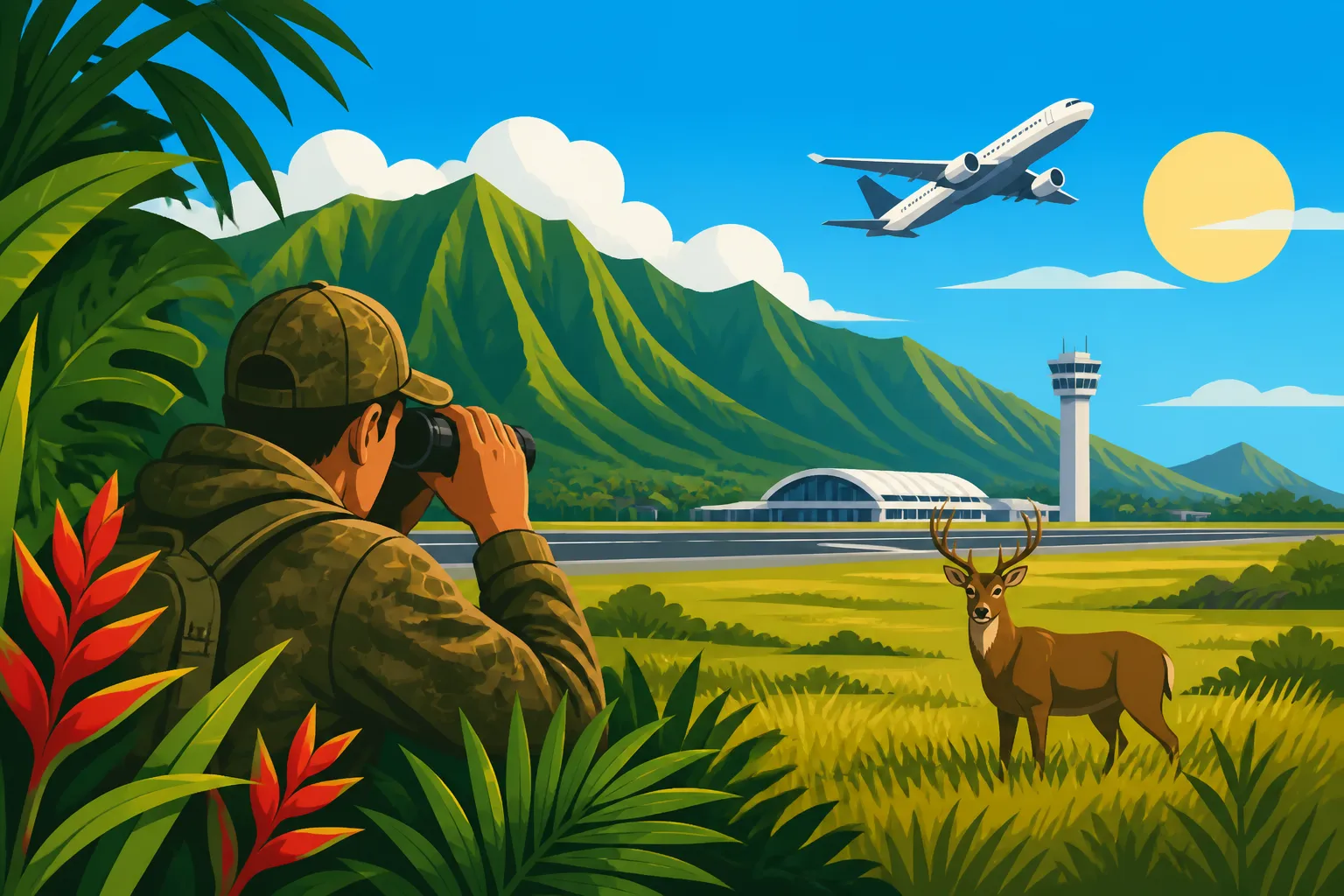
While no major airport in Hawaii has a hunting unit directly adjacent to the runway, several offer reasonably close public hunting opportunities. It’s important to remember that "close" in Hawaii terms might still mean a 30-minute to an hour-long drive, depending on traffic and the specific unit. However, this is far better than two or three hours. Always check the current regulations and unit maps on the DOFAW website or through resources like GoHunt or onX Hunt for the most up-to-date information, as boundaries and access points can sometimes shift.
Hunting Near Daniel K. Inouye International Airport HNL, Oahu
Oahu, home to Honolulu and the busiest airport, Daniel K. Inouye International (HNL), presents a unique challenge for hunters. While the island is densely populated, it does have public hunting units. The main units are typically found in the Waianae and Koolau mountain ranges. For example, units like Waianae Kai Forest Reserve or Mokuleia could be reached within an hour to an hour and a half drive from HNL, depending on traffic. These areas are primarily known for feral pigs and goats. The challenge here is the heavy population density on Oahu, meaning these units often see significant hunting pressure, especially on weekends. You’ll need to be diligent about checking in and out, and perhaps consider hunting midweek if your schedule allows to avoid the crowds. Hunting Oahu's Public Ridges can give you more insight into what to expect in these areas.
Hunting Near Kahului Airport OGG, Maui
Maui's Kahului Airport (OGG) is the gateway to the "Valley Isle" and offers some excellent opportunities for Axis deer, pigs, and goats within a reasonable drive. The Upcountry Maui areas, including parts of the Kula Forest Reserve and Polipoli Spring State Recreation Area, are often accessible within an hour or so drive from OGG. These units are renowned for Axis deer. While still a drive up the mountain, it’s far less of a trek than trying to reach some of the more remote units on the island. The terrain here can be steep and rugged, but the rewards can be great. Hunting Maui's Upcountry Forest Reserves provides a deeper dive into these areas. These are key areas for hunters looking to pursue Axis Deer, Hawaii's Signature Big Game.
Hunting Near Kona International Airport KOA, Hawaii Island
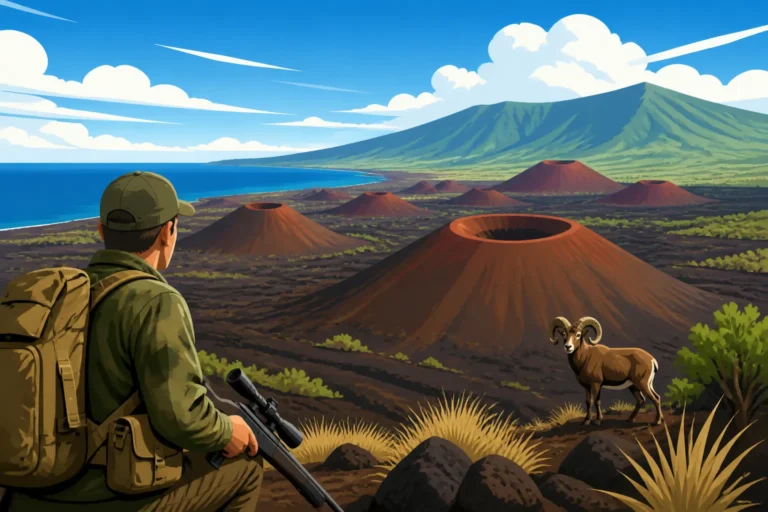
For those landing on the "Big Island" at Kona International Airport (KOA), you're positioned well for some fantastic hunting opportunities on the dry, leeward side. Units like Puu Anahulu Game Management Area or sections of the Mauna Kea Forest Reserve, accessible via Saddle Road, can be reached within about an hour to an hour and a half drive. These units are known for a mix of feral pigs, goats, and Mouflon sheep. The landscape here is often open and volcanic, requiring good optics and perhaps a bit of foot travel, but the drive itself is generally straightforward. This side of the island tends to be drier, which can influence game movement, especially around water sources. Hunting Hawaii Island's Dry Leeward Hunting Units is a good resource if you plan to hunt this side of the island.
Hunting Near Hilo International Airport ITO, Hawaii Island
If your flight takes you to Hilo International Airport (ITO) on the wet, windward side of Hawaii Island, you're closer to dense rainforest units. Areas like the Hilo Forest Reserve or Waiakea Forest Reserve are within an hour's drive, sometimes less depending on the specific access point. These areas are prime for Hawaii's Feral Pigs, Island by Island and offer a very different hunting experience from the dry side. Expect dense vegetation, frequent rain, and challenging tracking conditions. You'll likely be Still-Hunting Pigs in Hawaii's Wet Forest or utilizing dogs in these units. While these units are "close," the hunting itself is often more physically demanding due to the terrain and weather.
Hunting Near Lihue Airport LIH, Kauai
On Kauai, the Lihue Airport (LIH) is fairly central to the island's main road network. From LIH, you can reach the famed Kokee and Waimea Canyon public hunting units in about an hour to an hour and a half drive. These units are home to Black-Tailed Deer in Hawaii, as well as feral pigs and goats. The Waimea Canyon area is often referred to as the "Grand Canyon of the Pacific" for good reason, with its stunning cliffs and deep gorges. Hunting here involves navigating steep trails and sometimes thick vegetation. This area is a primary location for Black-Tailed Deer Hunting in Hawaii.
Here's a quick overview of some potential public hunting units near major airports:
| Airport Code | Island | Nearest City | Primary Hunting Units Near Airport (Approx. Drive Time) | Primary Species | Key Considerations |
|---|---|---|---|---|---|
| HNL | Oahu | Honolulu | Waianae Kai, Mokuleia (1-1.5 hours) | Pigs, Goats | High pressure, dense cover, plan for traffic. |
| OGG | Maui | Kahului | Kula Forest Reserve, Polipoli Spring (1 hour) | Axis Deer, Pigs | Elevation gain, rough terrain, popular for deer. |
| KOA | Hawaii Is. | Kona | Puu Anahulu GMA, Mauna Kea FR (1-1.5 hours) | Pigs, Goats, Mouflon | Dry, open country, volcanic terrain, good glassing. |
| ITO | Hawaii Is. | Hilo | Hilo Forest Reserve, Waiakea Forest Reserve (30-60 min) | Pigs | Wet, dense rainforest, challenging tracking, dog hunting. |
| LIH | Kauai | Lihue | Kokee, Waimea Canyon (1-1.5 hours) | Black-tailed Deer, Pigs, Goats | Steep canyons, varied terrain, good views. |
Note: Drive times are approximate and can vary significantly based on traffic, road conditions, and the specific access point within a unit.
Navigating Permits, Gear, and Access for Your Airport-Adjacent Hunt
Even with public land close to an airport, you can't just show up with your rifle and start hunting. Hawaii has a specific process for licensing, permits, and checking into units. Being prepared ahead of time is crucial, especially when you're on a tight schedule.
Licensing and Permitting Ahead of Time
The most critical step is obtaining your Hawaii hunting license and any necessary permit-tags well in advance. For non-residents, this often involves completing a hunter education course or providing proof of a prior hunter education certification, which can be done through a "Letter of Exemption." Don't wait until you land; you can start this process online through the state's official GoHunt Hawaii portal. Hawaii Hunter Education Requirements covers what you'll need to know. Once you have your license, you'll need to secure any required permit-tags for the specific species and units you plan to hunt. How Hawaii's Permit-Tag System Works details this process. Many units operate on a check-in/check-out system, either at a physical hunter check station or increasingly via digital platforms like the OuterSpatial app. Using the OuterSpatial App to Check In is becoming more common, making it convenient even if you're hunting remotely.
Essential Gear for a Quick Hunt
Because you're likely aiming for a quick hunt, packing smart is key. You won't want to drag a ton of heavy gear through the airport and then into a rental car. Focus on versatile, lightweight equipment. Good quality binoculars are essential for spotting game in Hawaii's varied terrain, from open lava flows to dense forest fringes. Invest in durable, waterproof boots suitable for hiking steep, often muddy, or rocky trails. Even on the "dry" sides of the islands, pop-up showers are common, so lightweight rain gear is a must. Don't forget ample water, high-energy snacks, a first-aid kit, and a reliable headlamp. If you're bringing your own firearm, ensure you understand Hawaii Rules on Bringing a Firearm to the Islands and plan for secure transport and registration upon arrival. Otherwise, many outfitters offer rifle rentals, which might be a good option for a quick, self-guided trip.
Vehicle and Access Considerations
While being near an airport often means paved roads initially, access to the actual hunting units can vary wildly. Many public hunting units in Hawaii require a 4-wheel drive vehicle, even if the main road is paved. Rental car companies might have restrictions on taking vehicles off-pavement, so always clarify this. Research your chosen unit's access roads beforehand using online maps and satellite imagery (tools like onX Hunt are invaluable for this). Some units might have gated access that requires specific keys or combinations, typically obtained during the check-in process. Others might have designated parking areas requiring a walk-in, sometimes a significant one. Understanding these details before you arrive prevents wasted time and potential headaches. If you're on a very tight schedule, sticking to units with more straightforward vehicle access might be a wise choice.
Maximizing Your Time on the Ground in Close-Proximity Units
You've landed, secured your gear, and checked into your unit. Now it's time to hunt! When your time is limited, every decision counts. Focusing on efficient tactics and knowing how to adapt to Hawaii's unique environment will boost your chances of success.
Scouting from Afar and On the Ground
Even if you only have a day or two, pre-hunt scouting can make a huge difference. Use satellite imagery and topographical maps (again, onX Hunt is a hunter's best friend here) to identify potential game trails, water sources, natural funnels, and feeding areas. Look for prominent features like gulches, ridges, or forest edges where animals might move or bed. Once you're on the ground, especially if you have an afternoon arrival, use any remaining daylight to do some quick, initial scouting. Walk a main access road, look for fresh tracks, droppings, and other signs. Even an hour of scouting can give you invaluable intel for your morning hunt. Remember, Scouting a Hawaii Hunting Unit Before Opening isn't just for multi-day trips; it's vital for maximizing short windows too.
Focused Tactics for Short Windows
With limited time, you'll want to employ tactics that are efficient and capitalize on peak game movement. Early mornings and late evenings are typically your best bets, as Hawaii's heat often pushes animals into cover during the middle of the day. If you're targeting Axis deer, focus on areas where they feed at first light, or where they might be heading to water in dry areas. For pigs, look for fresh rooting or wallows, especially in shaded, wetter areas. Still-hunting slowly and quietly through likely cover, paying close attention to wind direction (which can be notoriously shifty in Hawaii), can be very effective. If permitted, setting up near a known water source can also be a productive strategy, particularly during dry periods. Consider Hunting Axis Deer at First Light in Hawaii or Hunting a Water Source in Dry Hawaii Country for specific strategies.
Efficient Field Care and Check-Out
The hunt doesn't end when you pull the trigger. Proper field care is paramount in Hawaii's warm climate to prevent spoilage. Even if you're close to your car, plan to field dress your animal quickly and efficiently. For larger game like Axis deer or pigs, consider quartering the animal to allow for faster cooling. Bring plenty of ice and quality coolers. Learning how to Field Dressing Axis Deer in Hawaii Heat and Cooling Meat Fast on a Hawaii Hunt are essential skills. Finally, make sure you understand the check-out procedures for your unit. Whether it's reporting your harvest online, at a physical station, or through an app, completing this step correctly is part of being a responsible hunter. Be aware of the rules for Tagging an Animal Correctly in Hawaii immediately after the kill. You don't want to risk any violations after a successful, albeit quick, hunt!
Disclaimer
This article is for general informational purposes only and does not constitute professional advice. Laws, prices and regulations vary by location and change over time. Consult a qualified professional for guidance on your specific situation.