Where a Hawaii Outfitter Puts You Up
One of the many details that can feel overwhelming when planning a Hawaii hunting trip is figuring out where you'll be staying once you arrive. Will your outfitter handle everything, or are you on your own for lodging? It's a valid question, and the answer isn't always a straightforward "yes" or "no" because it really depends on the outfitter, the type of hunt, and even the specific island you're targeting. This guide will walk you through the various lodging scenarios you might encounter with a Hawaii outfitter, helping you understand what to expect and what questions to ask.
The Range of Outfitter Lodging Options
The hospitality aspect of a guided hunt in Hawaii can vary wildly, from a full-service experience where your bed is made and meals are served, to a more minimalist setup where the outfitter simply meets you at the trailhead. Understanding these differences is key to finding a hunt that matches your comfort level and expectations.
Integrated Lodges or Hunt Camps
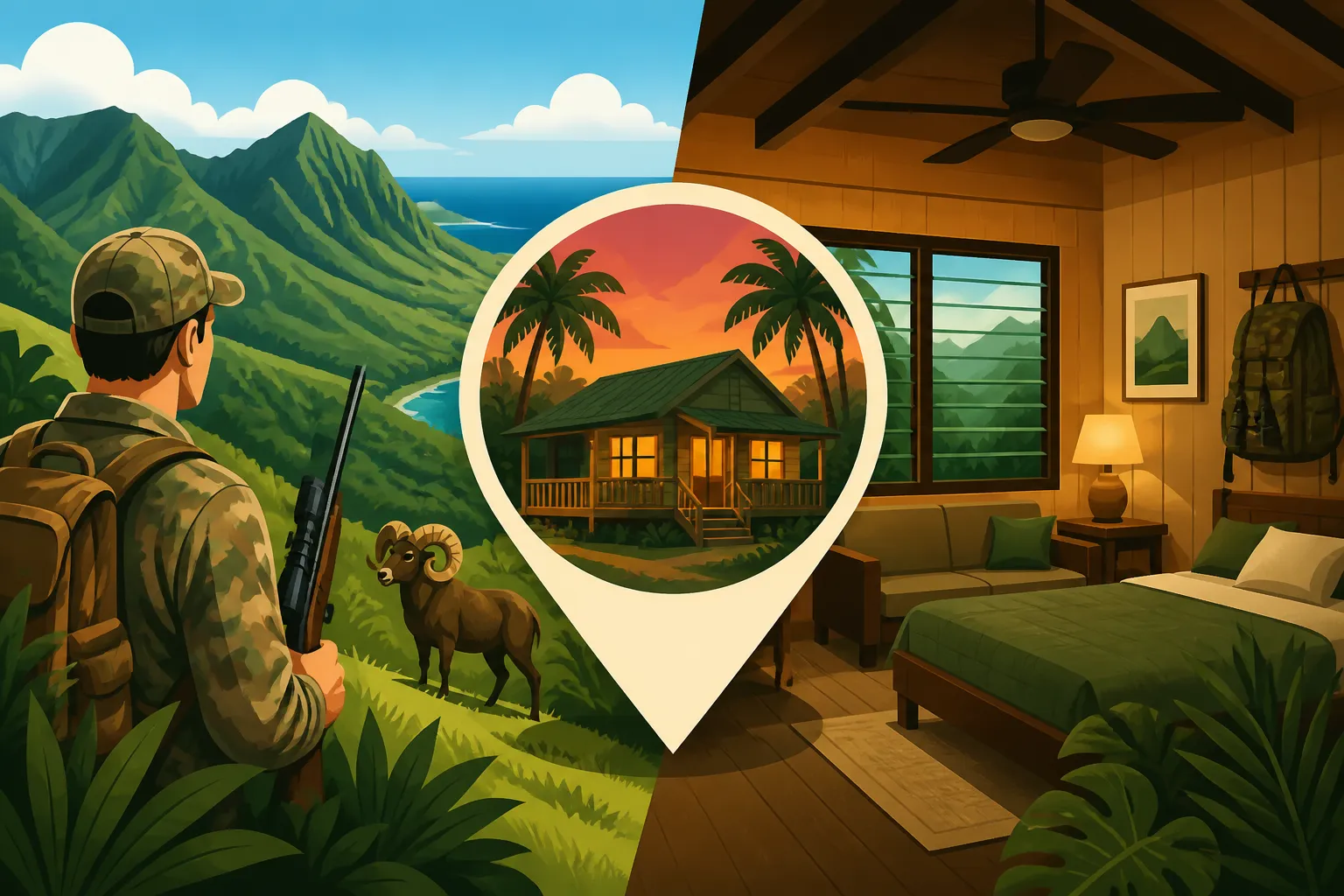
Some Hawaii outfitters, especially those operating on larger private ranches or with exclusive access to expansive areas, offer dedicated lodging right on or very near the hunting grounds. These can range from rustic cabins and bunkhouses to more comfortable, lodge-style accommodations. The big advantage here is convenience; you're often just minutes from where you'll start your hunt each morning, maximizing your time in the field.
Imagine waking up to the sounds of tropical birds, stepping out onto a lanai with a view of rolling hills where axis deer graze, and then heading straight to breakfast before loading up for the day. These integrated camps often foster a strong camaraderie among hunters, sharing stories around a campfire or at a communal dining table. They typically include meals, which can be a huge relief after a grueling day of navigating Hawaii's rugged terrain. You might find this kind of setup on some of the larger ranches on Maui or Molokai, where Hawaii Private Ranch Hunts are more common, providing a true immersive experience. The trade-off can sometimes be less privacy and potentially a more "camp" feel, but for many, it's part of the adventure.
Partnered Hotels and Vacation Rentals
More commonly, Hawaii outfitters, particularly those who guide on public lands or smaller private parcels, don't own their own lodging facilities. Instead, they often partner with local hotels, motels, or vacation rental properties in nearby towns. In these cases, the outfitter might offer a "package deal" that includes lodging, or they might simply recommend a few places where their clients usually stay.
This arrangement offers a different kind of flexibility. You might be staying in a comfortable hotel in a town like Waimea on the Big Island or in Kihei on Maui, giving you access to restaurants, shops, and other amenities. After a day of Hunting Hawaii's Volcanic Terrain or stalking through dense rainforest gulches, having a hot shower and a comfortable bed in a proper hotel can be incredibly appealing. The outfitter usually picks you up from your accommodation each morning and drops you off in the evening. This option is great for hunters who appreciate modern conveniences and a bit more personal space. It's also beneficial if you're combining your hunt with a family vacation, as your non-hunting companions can enjoy the island while you're in the field. When browsing platforms like BookYourHunt, you'll often see these types of arrangements clearly outlined in the package details.
No Lodging Included: The "Base Camp" Approach
Then there are situations where the outfitter focuses purely on the guiding service itself, leaving all lodging arrangements entirely up to you. This is common with outfitters who specialize in day hunts, or those working on islands with more dispersed public hunting units, where a centralized lodge doesn't make practical sense.
This "no lodging included" model might seem daunting at first, but it can also be the most flexible and potentially cost-effective, especially if you're a Hawaii resident or familiar with the islands. You might choose to camp in a designated area (be sure to check regulations for Hawaii Public Land Camping for Hunters), stay with family or friends, or book your own hotel. This approach puts the control in your hands, allowing you to pick accommodations that perfectly fit your budget and desired level of comfort. For instance, if you're planning a hunt in a remote unit, you might opt for a vacation rental that’s closer to the trailhead, even if it’s a bit off the beaten path. This flexibility also extends to your meal planning – you can dine out, cook your own meals, or pack field lunches as you see fit.
Factors Influencing Lodging Choices
The kind of lodging an outfitter offers, or expects you to arrange, isn't arbitrary. Several factors play into these decisions, and understanding them will help you plan better.
Hunt Type and Duration
The nature of your hunt is a primary driver for lodging arrangements. A single-day guided pig hunt on Oahu, for example, is far less likely to include lodging than a multi-day Axis Deer Hunting in Hawaii expedition on Lanai. For day hunts, many outfitters simply meet you at a predetermined location, and you’re responsible for getting yourself there. This keeps costs down for both parties.
However, if you're planning an intense, multi-day experience deep in the backcountry, an integrated hunt camp becomes almost essential. Imagine pursuing mouflon sheep high on Mauna Kea; you wouldn't want to drive an hour or two back to a hotel every night. Remote hunts often necessitate on-site camps to maximize hunting time and minimize travel fatigue. Booking a Hawaii Hunt Months Ahead can help you secure the best lodging, especially for these longer, more specialized trips, as availability can be limited.
Budget and Preference
Let's be real: hunting in Hawaii isn't always cheap, and lodging is a significant part of the overall What a Hawaii Guided Hunt Costs. Outfitters who provide full-service lodge experiences will naturally charge more than those who simply offer guiding services. Your personal budget will heavily influence which type of outfitter and lodging setup you consider.
Beyond budget, your personal preference for comfort and amenities matters. Are you the type who loves roughing it in a tent or a basic cabin, or do you prefer a luxurious bed, air conditioning, and a private bathroom at the end of a long day? Some hunters thrive on the ruggedness of a simple camp, finding it enhances the hunting experience. Others see the hunt as demanding enough and want a comfortable retreat. Discussing your preferences upfront with an outfitter, perhaps even checking reviews on platforms like BookYourHunt, can help manage expectations. For example, if you're targeting Hunting Mouflon on Hawaii's Highest Slopes, you might find that a basic cabin is the most practical and authentic option, even if it's not a five-star hotel.
Island and Unit Specifics
The specific island and even the particular hunting unit you choose can greatly impact lodging availability. Larger islands like Hawaii Island (the Big Island) and Maui offer more diverse lodging options, from resort areas to remote cabins. Smaller, less developed islands like Molokai or Lanai might have fewer choices, especially if you’re looking for something directly adjacent to a hunting unit.
Some public hunting units are deep in remote wilderness areas, far from any towns or services. In these instances, your options might be limited to primitive camping, or the outfitter may have special access to a basic cabin or private land campsite. Conversely, if you're hunting in a unit close to a populated area, a wide range of hotels and vacation rentals will be available. For example, Hunting Maui's Upcountry Forest Reserves might offer proximity to Kula-area rentals, while a hunt further out might require more rustic options. Tools like GoHunt Hawaii can provide maps of units, helping you visualize their proximity to towns and potential lodging.
Questions to Ask Your Outfitter About Lodging
Never assume. The best way to avoid surprises is to have a clear, candid conversation with your outfitter about their lodging arrangements before you book. Here are some key questions to ask.
Details of Accommodation
Go beyond simply asking "Is lodging included?" Dig into the specifics.
- What kind of lodging is it? Is it a private room, shared bunkhouse, tent camp, or a local hotel? Getting a clear picture helps you prepare.
- What amenities are provided? Think about essentials: running water, hot showers, electricity, Wi-Fi, heating/cooling. Some remote camps might be rustic with limited power or shared facilities, while others are surprisingly well-appointed. Knowing this allows you to What to Pack for a Hawaii Hunt appropriately.
- Is it on-site or off-site? If it's off-site, how far is it from the hunting area? What's the commute like each morning and evening? Is transportation provided from the lodging to the hunting grounds?
- Are there private rooms available, or is it communal? This is particularly important for couples or groups traveling together.
- Are there any additional costs associated with lodging? Sometimes there are "resort fees," cleaning fees, or taxes not included in the initial quoted price. You also want to confirm if anything like Cooling Meat Fast on a Hawaii Hunt or handling your cape and horns is part of the package or if there are extra fees.
Logistics and Meals
Beyond the room itself, think about the practicalities of your stay.
- Are meals included with the lodging? If so, what kind of meals (breakfast, lunch, dinner), and are they served at the lodge or provided as packed lunches for the field? What if you have dietary restrictions?
- What's the schedule like? When do you need to be ready in the morning? What time do you typically return in the evening? This impacts your personal time and planning.
- What about laundry facilities? For longer hunts, especially in Hawaii's often humid environment, having access to laundry can be a big plus.
- What should I bring? Even if lodging is provided, you might need personal toiletries, towels, or even bedding in more rustic setups. For instance, Renting a Rifle From a Hawaii Guide might simplify your travel, but knowing what else you need to bring for your stay is crucial.
- What happens if there's an emergency? Knowing the communication capabilities and emergency procedures at your lodging, especially in remote areas, is vital for peace of mind.
By asking these detailed questions, you'll gain a comprehensive understanding of your accommodations and can plan your Hawaii hunting adventure with confidence, ensuring that your lodging contributes positively to your overall experience.
| Lodging Type | Description | Pros | Cons | Best For |
|---|---|---|---|---|
| Integrated Hunt Lodge/Camp | Facilities (cabins, bunkhouses) directly on or very near hunting grounds. | Maximize hunting time, immersive experience, communal atmosphere, meals often included. | Less privacy, potentially rustic, limited amenities. | Multi-day, remote hunts (e.g., Mouflon Sheep Hunting on Hawaii Island), group trips. |
| Partnered Hotel/Vacation Rental | Outfitter recommends or includes local hotels/rentals in package. | Modern amenities, more comfort, privacy, access to town services. | Commute to hunting grounds, meals often separate, less "wilderness" feel. | Hunters prioritizing comfort, family trips, easier access to towns. |
| Hunter-Arranged (No Lodging Included) | Hunter is responsible for all accommodation arrangements. | Maximum flexibility, budget control, choose preferred comfort level. | Requires more planning, potential for longer commutes, no included meals. | Residents, experienced Hawaii hunters, budget-conscious, self-sufficient. |
Disclaimer
This article is for general informational purposes only and does not constitute professional advice. Laws, prices and regulations vary by location and change over time. Consult a qualified professional for guidance on your specific situation.