Hawaii’s Feral Goats and Why They Matter
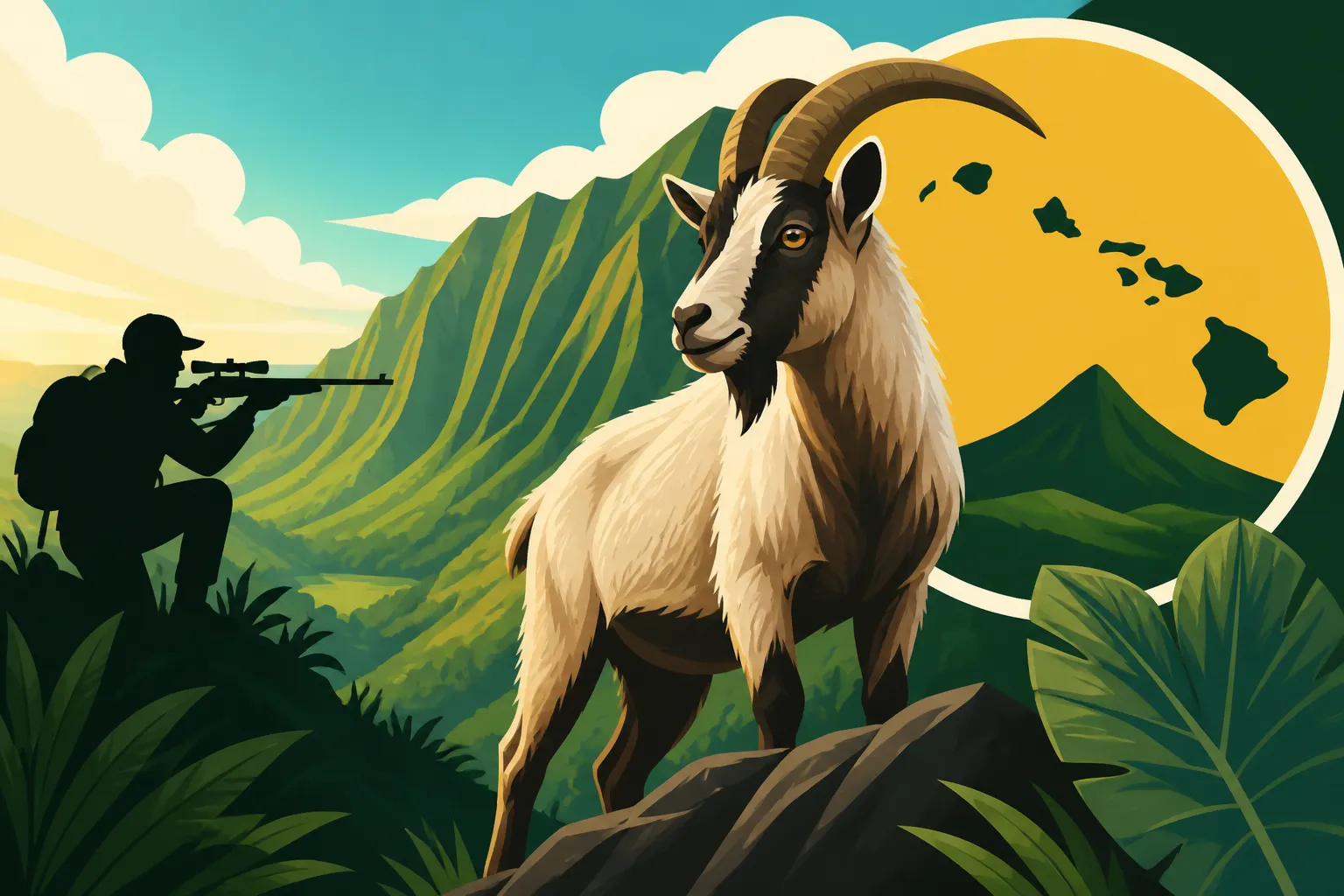
Feral goats are an undeniable presence across the Hawaiian Islands, presenting a unique challenge and opportunity for both conservationists and hunters. Often seen as a destructive force by some, yet a prized game animal by others, their impact on the fragile Hawaiian ecosystem is complex and far-reaching. This guide aims to pull back the curtain on Hawaii's feral goats, delving into their history, characteristics, ecological footprint, and what it truly means to hunt them in this stunning, yet delicate, island environment.
The Arrival and Spread of Feral Goats in Hawaii
It’s easy to look at the wild goats bounding across a lava field or perched precariously on a sea cliff and think they’ve always been here, a natural part of the landscape. But like many of Hawaii’s game animals, feral goats are an introduced species, and their story is a fascinating, if sometimes troubling, tale of adaptation and unintended consequences. Understanding their origins is key to grasping why they've become such a significant part of the island experience, both for good and for ill.
Early Introductions and Colonization
The first goats to set hoof on Hawaiian soil weren't wild escapees, but rather deliberate introductions by European explorers, most notably Captain James Cook in 1778. He brought domestic goats as a food source, gifting some to island chiefs in an attempt to establish provisions for future voyages. Over the following decades, more livestock, including goats, arrived with whalers, traders, and early settlers. These animals, accustomed to harsh, rocky terrain in their homelands, quickly found Hawaii's diverse environments surprisingly welcoming. With no natural predators like wolves or mountain lions to keep their numbers in check, and an abundance of forage, some inevitably escaped or were released from domestic herds. These pioneer escapees quickly reverted to a wild, or "feral," state, adapting to the islands' unique climates and terrains with astonishing speed. They found sanctuary in steep gulches, dense thickets, and remote lava flows, places where human access was difficult, allowing their populations to explode unchecked across every major island. From the dry slopes of Mauna Kea to the lush, wet valleys of Kauai, the goats established themselves, their sharp hooves and voracious appetites beginning to reshape the landscape.
How Goats Thrived in Island Environments
What made Hawaii such a perfect home for these European imports? It wasn't just the lack of predators. The islands offered an incredible range of habitats, from the desert-like kiawe flats to the high-elevation grasslands and dense rainforests. Goats are natural opportunists and incredibly resilient grazers. They adapted their diets to whatever was available, nibbling on native ferns, grasses, and the young shoots of trees that had never evolved defenses against such intense browsing pressure. Their social structure also played a role; forming small, cohesive herds, they could quickly colonize new areas, reproduce efficiently, and learn from one another how to exploit the local forage. The steep, rocky terrain that often makes hunting so challenging for humans was a natural refuge for them. Places like the precipitous slopes of the Na Pali Coast on Kauai or the rugged volcanic canyons of Maui offered ideal escape routes and cover. Plus, Hawaii’s generally mild climate meant no harsh winters to thin their numbers, allowing them to breed year-round in many areas. This combination of no predators, abundant food, diverse terrain, and a favorable climate created a perfect storm for feral goat populations to flourish, quickly spreading from a handful of domestic animals to the thriving, wild herds we see today.
Understanding Hawaii's Two Feral Goat Types
When you're out in the field in Hawaii, you might notice that not all goats look the same. While the term "feral goat" broadly covers all wild goats, there are distinctions, especially when considering their lineage and physical traits. It's not just about size or horn shape; understanding these subtle differences can give you clues about their behavior, where they might be found, and even how challenging they'll be to hunt.
Distinguishing Between Common Feral Goats and Feral Hybrids
Primarily, when people talk about "feral goats" in Hawaii, they are usually referring to descendants of the domestic Capra aegagrus hircus species, which reverted to the wild. These are your classic "range goats" – hardy, often with varied coat colors ranging from solid black, white, brown, or tan, to spotted or patched patterns. Their horns can be quite impressive, often sweeping back in a majestic arc, especially on the older billies. These are the goats you'll encounter most frequently on the dry, open slopes and coastal areas.
However, things get a bit more complex because goats were often cross-bred with other ungulates historically. While pure goat-sheep hybrids are rare and typically sterile, continuous interbreeding between different domestic goat breeds over centuries, before they went feral, created a diverse genetic pool. You might encounter goats that show traits reminiscent of Spanish goats, Nubians, or even Angoras from their distant past, though these are all still fundamentally Capra hircus. What some refer to as "feral hybrids" might actually be goats displaying a particularly unique mix of these domestic traits, or in some specific instances, feral sheep (like those in the Mauna Kea area of Hawaii Island) could be mistaken for goats from a distance if their wool is shorn short by the environment or they are very young. Truly, the vast majority of what you'll encounter are just feral goats, but their appearance can be incredibly varied due to this mixed domestic ancestry. It’s a bit like seeing a diverse collection of mutts in the wild; they're all dogs, but their lineage makes each one distinct.
Physical Characteristics and Adaptations
Hawaii's feral goats are a testament to natural selection, perfectly honed by their environment. They generally stand about 20-30 inches tall at the shoulder and can weigh anywhere from 60 to 150 pounds, with billies (males) being significantly larger and more robust than nannies (females). Their build is lean and muscular, ideal for navigating the steep, broken terrain they call home. A key adaptation is their hooves: hard, sharp, and cloven, providing incredible grip on slick rock, loose scree, and even muddy slopes. This allows them to scale vertical cliffs that seem impossible for a human to traverse, giving them a significant advantage when escaping predators – or hunters.
Their coats are typically coarse, and while varied in color, they often feature earth tones that provide excellent camouflage against the volcanic rock, dry grasses, and sparse kiawe brush. Their keen eyesight is another vital adaptation, allowing them to spot movement from a distance in open country, while their acute hearing and sense of smell help them detect danger even when hidden. These senses, combined with their natural wariness, make them a challenging adversary for any hunter. When you see a billy with long, sweeping horns, often scarred from territorial battles, you're looking at a true survivor, an animal that has thrived in an unforgiving landscape, embodying the wild spirit of Hawaii's introduced game. This ruggedness is what makes them such a captivating and formidable game animal.
| Feature | Common Feral Goat in Hawaii | Distinguishing Traits | Typical Habitat |
|---|---|---|---|
| Origin | Descendants of various domestic goat breeds introduced by European explorers and settlers. | Direct lineage from Capra aegagrus hircus. Wide range of coat colors (black, white, brown, spotted). | Dry, arid slopes, coastal cliffs, steep gulches, lava fields. Found on all major islands. |
| Horn Structure (Billies) | Often long, thick, and backward-curving, sometimes spiraled. Can be very impressive. | Horns are typically rough and ridged. Older billies develop significant horn growth. | Favors open, rocky terrain where they can spot predators. |
| Size & Build | Medium-sized, lean, and very muscular. Billies can weigh 100-150 lbs, nannies 60-100 lbs. | Built for agility and climbing. Strong legs and sharp hooves. | Can cover vast distances quickly. |
| Ecological Role | Primary grazer/browser, significant impact on native vegetation and soil erosion. | Highly adaptable diet. Can survive on sparse forage. | Contributes to the expansion of invasive grasses and plants. |
The Ecological Impact of Feral Goats on Island Ecosystems
While hunters appreciate the challenge and the meat, it's impossible to discuss Hawaii's feral goats without acknowledging their profound and often devastating impact on the islands' unique and incredibly fragile ecosystems. Hawaii's native flora and fauna evolved in isolation, without the presence of large, browsing mammals. When goats arrived, they introduced a level of disturbance that the ecosystem was simply not equipped to handle, leading to significant changes in biodiversity and landscape stability.
Grazing Damage and Erosion on Hawaii's Landscape
The most visible and immediate impact of feral goats is the sheer destruction caused by their voracious appetites and constant movement. Goats are incredibly efficient browsers and grazers, capable of consuming vast quantities of vegetation, from tender seedlings to the bark of mature trees. Unlike native herbivores that evolved alongside the plants, Hawaii's plants often lack the defenses (thorns, bitter compounds, rapid regrowth strategies) necessary to withstand continuous browsing pressure. This leads to what's often called a "browse line," where all vegetation up to a goat's reach is stripped bare. The consequences are dire: native forests struggle to regenerate, as young trees are eaten before they can grow. Areas that were once lush with diverse native plants become open, dusty, and dominated by invasive, less palatable species that goats avoid.
Beyond eating the plants, their sharp hooves exacerbate the problem. When goats traverse steep slopes, their hooves loosen soil and dislodge rocks, leading to severe soil erosion. During heavy rains, this loosened soil washes down, silting up streams and nearshore reefs, further damaging aquatic ecosystems. Think about a steep hillside that's been denuded of vegetation – when the rain comes, there's nothing to hold the soil in place. This runoff not only destroys habitats but can also impact water quality for human use. The cumulative effect over decades has transformed significant portions of Hawaii's landscape, particularly in drier regions and on coastal cliffs, into barren, eroded badlands where native plant communities once thrived. Many of Hawaii's Feral Goats and Why They Matter is deeply tied to this landscape degradation.
Competition with Native Species and Habitat Destruction
The impact of feral goats extends beyond just direct plant consumption; it creates a cascade of negative effects throughout the ecosystem. By eliminating native plants, goats indirectly remove food sources and shelter for native insects, birds, and other animals. For example, a native forest bird that relies on the fruits or nectar of a specific native tree will suffer if that tree cannot regenerate due to goat browsing. This competition for resources isn't always direct, but it is fierce. Goats also create open pathways and disturb ground cover, which can provide easy access for other invasive species, like predatory rats or mongoose, further threatening ground-nesting birds and native invertebrates.
Furthermore, the continuous disturbance fundamentally alters the very structure of the habitat. A dense understory of native ferns and shrubs, crucial for countless species, is replaced by open ground or a monoculture of invasive grasses. This homogenization of habitat reduces biodiversity and makes the ecosystem less resilient to other threats like climate change or introduced diseases. The long-term outcome is a simplified, degraded ecosystem that can no longer support the rich tapestry of life that once characterized Hawaii. Understanding Why Hawaii Fences Out Pigs and Goats helps illustrate the severity of this issue.
The Role of Fences in Goat Management
Given the extensive damage, a primary tool in conservation efforts to protect Hawaii's most sensitive ecosystems from feral goats has been the construction of extensive fencing. These "exclosure" fences are strategically built around critical native forest remnants, watershed areas, and rare plant populations. The idea is simple: exclude the goats from these areas, allowing the native vegetation to recover and regenerate without constant browsing pressure. These fences are not cheap or easy to build, often spanning miles over incredibly rugged and remote terrain, but their effectiveness has been proven in numerous locations.
Once an area is fenced, active goat removal efforts (often involving hunting or aerial control) are undertaken within the exclosure to completely eliminate the population. The recovery within these fenced areas can be remarkable, with native plants returning, understories thickening, and native bird populations showing signs of rebound. However, fencing is a costly and labor-intensive solution, and it's not feasible for every threatened area across the islands. It highlights the stark reality of how significantly feral goats, along with other ungulates, impact Hawaii's environment, necessitating such extreme measures to preserve what little native habitat remains. These efforts are often a crucial component of broader strategies discussed in articles like Hunting Hawaii's Fenced Conservation Boundaries.
Prime Feral Goat Hunting Areas in Hawaii
For hunters, the very characteristics that make feral goats a conservation challenge also make them an exciting and accessible game animal. Their widespread presence across the islands means there are numerous opportunities, both on public and private lands. However, knowing where to look and understanding the terrain they prefer is key to a successful hunt. The ruggedness of Hawaii means you'll be earning your goat, often in breathtaking, yet challenging, environments.
Coastal Cliffs and Arid Canyons on Various Islands
Feral goats are masters of steep, broken country, and nowhere is this more evident than along Hawaii's dramatic coastlines and within its arid canyons. These areas, characterized by sharp drops, rocky ledges, and sparse vegetation, provide both cover and escape routes. On islands like Maui, the Kanaio area and certain parts of the southern coast offer incredible goat hunting opportunities. Here, you'll find goats navigating seemingly impossible sea cliffs, often bedding down on small ledges high above the crashing waves. Kauai, particularly along the Na Pali-Kona Forest Reserve and within the Waimea Canyon system, holds substantial populations. The deep, eroded canyons provide endless pockets for goats to hide, and their ability to scale the near-vertical walls is legendary. The Big Island also has significant goat populations, especially in the more arid leeward districts and along the south point cliffs.
Hunting these areas requires excellent physical conditioning and a good head for heights. You'll often be glassing vast expanses from high vantage points, trying to pick out a goat camouflaged against the rock. Once you spot one, the stalk can be incredibly demanding, involving careful navigation over loose scree and dangerous drops. Safety is paramount, and it’s always wise to let someone know your plans when you venture into such unforgiving terrain. For a deeper dive into this specific challenge, check out Hunting Goats on Hawaii's Coastal Cliffs.
Identifying Hotspots and Accessible Public Units
While many areas hold goats, some public hunting units are particularly renowned for their populations and accessibility. On the Big Island, areas like the Puu Anahulu Game Management Area (GMA) or the Kaohe GMA, particularly in their drier, lower elevation sections, often have good goat numbers. These areas are characterized by kiawe and dryland forest, with scattered lava flows where goats find excellent cover and feed. For hunters looking to navigate regulations and find specific unit information, resources like GoHunt or the official Hawaii DLNR website are invaluable. They provide updated season dates, unit maps, and check-in procedures, essential for planning any hunt.
Maui’s Kula Forest Reserve and Polipoli Spring State Recreation Area also hold goats, though these areas are often higher in elevation and have different vegetation. Lanai and Molokai, while famous for axis deer, also host healthy goat populations, often found on the rugged edges of their public hunting units. Hawaii's Hunting Units and How They Work provides a comprehensive overview of how these units are structured and where you might find opportunities. It's crucial to always confirm current regulations and open seasons before heading out. Sometimes, specific goat seasons are opened to manage populations in certain areas, and keeping up to date via the GoHunt platform or the local DOFAW office is a must. These accessible units offer a fantastic opportunity for both resident and non-resident hunters to experience the thrill of a Hawaii goat hunt without necessarily needing to book a private land outfitter.
Hunting Strategies for Hawaii's Feral Goats
Hunting feral goats in Hawaii is an exhilarating experience, demanding patience, physical prowess, and a keen understanding of their behavior. These animals are incredibly wary and inhabit some of the most rugged landscapes the islands have to offer. A successful goat hunt isn't just about pulling the trigger; it's about the entire process, from spotting to stalking to recovery, all under the challenging conditions of the Hawaiian environment.
Spot-and-Stalk Tactics in Challenging Terrain
The vast majority of goat hunting in Hawaii is conducted using spot-and-stalk methods. This approach is highly effective given the open, often treeless, terrain that goats frequent, especially on arid slopes and coastal cliffs. Your most important tools will be high-quality binoculars or a spotting scope. Spend significant time glassing likely areas from a vantage point that offers a wide view without exposing yourself. Look for any movement, a patch of white against the lava, or the distinctive shape of horns. Goats often blend in remarkably well, so patience is key. Once spotted, the real challenge begins: the stalk.
This isn't your grandfather's deer stand hunt. You'll be navigating incredibly steep, often unstable ground. Planning your approach requires careful consideration of the wind, sun, and cover. Goats have excellent eyesight, so staying out of sight is crucial. This might mean long detours, crawling on hands and knees, or using every bit of sparse vegetation and terrain feature to mask your movement. Remember, goats are often found in groups, so if you spot one, there are likely more. Taking your time, moving slowly, and pausing frequently to re-evaluate the situation will dramatically increase your chances of getting within shooting range. This demanding style of hunting truly tests your skills and physical limits, often making the reward all the sweeter. For more on navigating these landscapes, consider reading Walking Rough Lava Without Wrecking Your Boots or Hunting Goats in Hawaii's Canyon Country.
Why Goats Move at First Light and How to Use It
Feral goats, especially in the hotter, drier parts of Hawaii, are most active during the cooler parts of the day. This makes first light and last light absolutely critical for hunters. As the sun rises and begins to warm the landscape, goats will often emerge from their overnight bedding areas to feed. They might move down from higher ledges or out from dense kiawe thickets to browse on fresh vegetation. This window of activity is your best chance to spot them in the open, before they retreat to shaded, inaccessible areas as the day heats up.
To capitalize on this, you need to be in your glassing position well before dawn, ready to scan as soon as there's enough light. Position yourself where you have a good view of known goat habitats – ridgelines, canyon edges, and areas with patchy vegetation. Observing Why Hawaii Goats Move at First Light teaches you to anticipate their patterns. Similarly, in the late afternoon, as the sun dips lower and the temperatures cool, goats will often become active again, feeding before settling down for the night. This late afternoon window can be just as productive as dawn, but be mindful of having enough daylight to safely recover your animal and hike out. Planning your hunt around these peak activity times dramatically increases your odds of encountering these elusive animals.
Essential Gear for a Successful Goat Hunt
Beyond your firearm or bow, a Hawaii goat hunt requires specific gear to cope with the challenging environment. Optics are paramount: good quality 10x binoculars and a 15-45x spotting scope on a sturdy tripod will be your eyes in the expansive terrain. Footwear is non-negotiable; sturdy, high-ankle boots with excellent traction are essential for navigating volcanic rock, loose scree, and potentially wet, slippery areas. Consider boots with stiff soles to protect your feet from sharp lava. Hydration is critical; carry plenty of water, even more than you think you’ll need, especially on dry, exposed slopes. A good hydration pack is often preferred.
Sun protection is also vital: a wide-brimmed hat, sunglasses, and high SPF sunscreen are a must. Dress in layers, as temperatures can change dramatically from early morning cool to midday heat. A lightweight rain jacket is always a good idea, as pop-up showers can occur. A backpack capable of carrying your essentials, and ideally a quartered goat, is necessary for packing out your meat. Finally, a reliable first-aid kit is a must, especially if you're venturing into remote areas with no cell service. Given the distances and terrain, a GPS device or a reliable navigation app like OuterSpatial loaded with offline maps is highly recommended to ensure you stay found and can check in and out of units. When hunting areas that might include private land or require specific access, always ensure you have the correct information, as seen in Getting Onto Molokai Private Land or Hawaii Private Land Access Permits (though goats are primarily public land opportunities).
Hawaii's Goat Management and Conservation Efforts
The presence of feral goats in Hawaii presents a complex dilemma: they are a valuable game animal for hunters, yet a significant threat to the fragile native ecosystem. Managing their populations requires a delicate balance of conservation goals, cultural considerations, and practical solutions. The Hawaii Department of Land and Natural Resources (DLNR), specifically its Division of Forestry and Wildlife (DOFAW), plays a central role in navigating this challenging landscape.
DOFAW's Role in Population Control and Habitat Restoration
DOFAW is tasked with a dual mandate: providing hunting opportunities for game animals while simultaneously protecting and restoring Hawaii's native ecosystems. For feral goats, this means implementing a range of management strategies. Hunting seasons are often liberal, with open seasons and generous bag limits in many public hunting units (check GoHunt or the official DLNR site for specifics). This is a recognition that hunting is one of the most cost-effective methods of population control. By encouraging hunters to harvest goats, DOFAW aims to reduce their numbers and mitigate their ecological impact.
Beyond hunting, DOFAW also employs more intensive control methods in sensitive areas, particularly within Natural Area Reserves or critical watershed regions. These can include staff-led ground culls, trapping, and, in some remote and inaccessible areas, aerial culling conducted via helicopters. The meat from these operations, when possible and safe, is often donated to local communities or food banks. These interventions are usually reserved for situations where goat populations are severely impacting endangered species or critical habitat that hunting alone cannot protect. The goal isn't necessarily eradication across the board, but targeted population reduction to allow native ecosystems a chance to recover and thrive. This often ties into the broader discussions around Hawaii's Feral Animal Control Programs.
The Ongoing Debate: Hunting vs. Eradication
The question of how to manage Hawaii's feral goats frequently sparks passionate debate. On one side are conservationists and native plant enthusiasts who advocate for aggressive, often complete, eradication of goats from critical areas to protect endangered species and restore native habitats. Their argument is rooted in the scientific evidence of the profound ecological damage caused by these introduced ungulates. They point to the success of fenced exclosures and intensive culling programs in allowing ecosystems to rebound.
On the other side are hunters and some local communities who view feral goats as a valuable food source, a cultural tradition, and a challenging game animal. They argue that hunting provides a sustainable method of control and offers recreational opportunities, and that blanket eradication overlooks these values. There's also a sentiment that total removal could be seen as wasteful, given the potential for protein. The reality is that there's rarely a one-size-fits-all answer. In some highly sensitive, remote areas, eradication might be the only viable option to save unique native species. In more accessible areas, well-managed hunting programs can effectively keep populations in check while providing an important resource. The ongoing dialogue between these perspectives shapes policy and management decisions, with DOFAW continually trying to find common ground and effective strategies. This discussion is similar to Why Some Hawaii Hunters Oppose Fencing for other species.
Preparing and Utilizing Your Feral Goat Harvest
Bringing a feral goat home from the mountains or cliffs of Hawaii is a hard-earned reward, but the work isn't over once the shot is fired. Proper field care and preparation are crucial to ensuring that your harvest provides delicious, high-quality meat. Hawaii's tropical climate presents unique challenges for hunters, making immediate and thorough attention to your animal even more important than in cooler climates.
Field Dressing and Meat Care in Hawaii's Climate
Hawaii's heat and humidity are not forgiving to harvested game meat. As soon as your goat is down, the clock starts ticking. Immediate field dressing is paramount. This means gutting the animal quickly to allow the body heat to escape. Lay the carcass on its back, head uphill if possible, and make a careful incision from the sternum to the pelvis, cutting around the anus. Remove all internal organs, ensuring the cavity is as clean as possible. In hot conditions, some hunters also choose to skin the animal in the field if time and conditions allow, to facilitate even faster cooling. However, be mindful of flies and contamination if skinning.
Once field dressed, the next critical step is to get the meat cooled down rapidly. If you're near a vehicle, having a cooler packed with ice is essential. Quartering the animal (separating it into four main pieces: two front shoulders, two hindquarters, and optionally the backstraps and tenderloins) makes it easier to handle and allows for better air circulation and cooling. Pack these quarters in game bags or pillowcases to keep them clean, then immediately get them on ice. Never pile warm meat directly into a cooler without ice, and avoid submerging meat directly in water unless it's a rapidly cooling ice slurry and you plan to process it immediately upon reaching home. The goal is to bring the core temperature of the meat down as quickly as possible to prevent bacterial growth. For more detailed advice, refer to Field Dressing Axis Deer in Hawaii Heat, as the principles are similar for goats, and Cooling Meat Fast on a Hawaii Hunt for general best practices. If you're deep in a gulch, discussions around Packing Meat Out of a Hawaii Gulch become critically relevant.
Culinary Considerations for Feral Goat Meat
Feral goat meat, often referred to as chevon or cabrito (for young goat), is a delicious and lean protein, though it sometimes gets an undeserved reputation for being tough or "gamey." This largely depends on the age of the animal and how it's prepared. Young goats generally have very tender, mild meat, similar in texture and flavor to lean lamb. Older billies, while still flavorful, can be tougher and have a stronger, more pronounced "game" flavor due to their diet and age.
To get the best out of your goat meat, proper preparation is key. Marinating older cuts can help tenderize them and infuse flavor, especially with acidic marinades containing citrus, vinegar, or yogurt. Slow-cooking methods like stewing, braising, or using a pressure cooker are excellent for tougher cuts from older animals, breaking down connective tissues and resulting in incredibly tender, flavorful meals. Think about traditional stews, curries, or even Hawaiian-style kalua goat. For younger, more tender cuts, quick grilling, roasting, or pan-frying can be fantastic. Ground goat meat makes excellent burgers, tacos, or chili. Because goat meat is very lean, it benefits from being cooked at slightly lower temperatures or with added fat (like bacon or olive oil) to prevent it from drying out. Don't be afraid to experiment with different spices and cooking methods; you'll be surprised at how versatile and delicious Hawaii's feral goat meat can be!
Disclaimer
Hunting in Hawaii involves inherent risks and is subject to strict regulations. The information provided in this article is for general guidance only and does not constitute legal or professional advice. Hunters are solely responsible for understanding and complying with all current Hawaii Department of Land and Natural Resources (DLNR) rules, regulations, license requirements, and unit-specific restrictions. Always confirm season dates, bag limits, legal weapons, and access protocols directly with DOFAW or through official channels like GoHunt before planning any hunt. Safety should always be your top priority.