How to Recognize a Nene in the Field
It's an unfortunate truth that when you're out hunting in Hawaii, focused on finding game like pigs or goats, the last thing you want is to accidentally encounter a protected species. The islands are home to a unique array of wildlife, and sometimes, a quick glance isn't enough to tell a legal game bird from a highly protected one. This guide is here to help you confidently identify the Nene, Hawaii's state bird, ensuring you respect the law and contribute to conservation efforts while enjoying your hunt.
The Nene Up Close: Understanding Hawaii's Protected State Bird
When you're afield, especially in areas where various bird species might overlap, having a solid understanding of what a Nene looks like, how it behaves, and where it prefers to spend its time is absolutely essential. Many hunters might not realize just how distinct this bird is from the game birds they're accustomed to pursuing. It’s not just about avoiding a mistake; it’s about recognizing and appreciating a true Hawaiian treasure.
Unmistakable Physical Characteristics of the Nene
Let's get down to the brass tacks of what makes a Nene, also known as the Hawaiian Goose, stand out. First and foremost, you'll notice its overall size. The Nene is a medium-large goose, typically standing about 25 to 28 inches tall and weighing in the range of 4 to 6 pounds. This immediately sets it apart from smaller game birds like francolins or chukar, and even from pheasants, though it’s considerably smaller than a feral turkey.
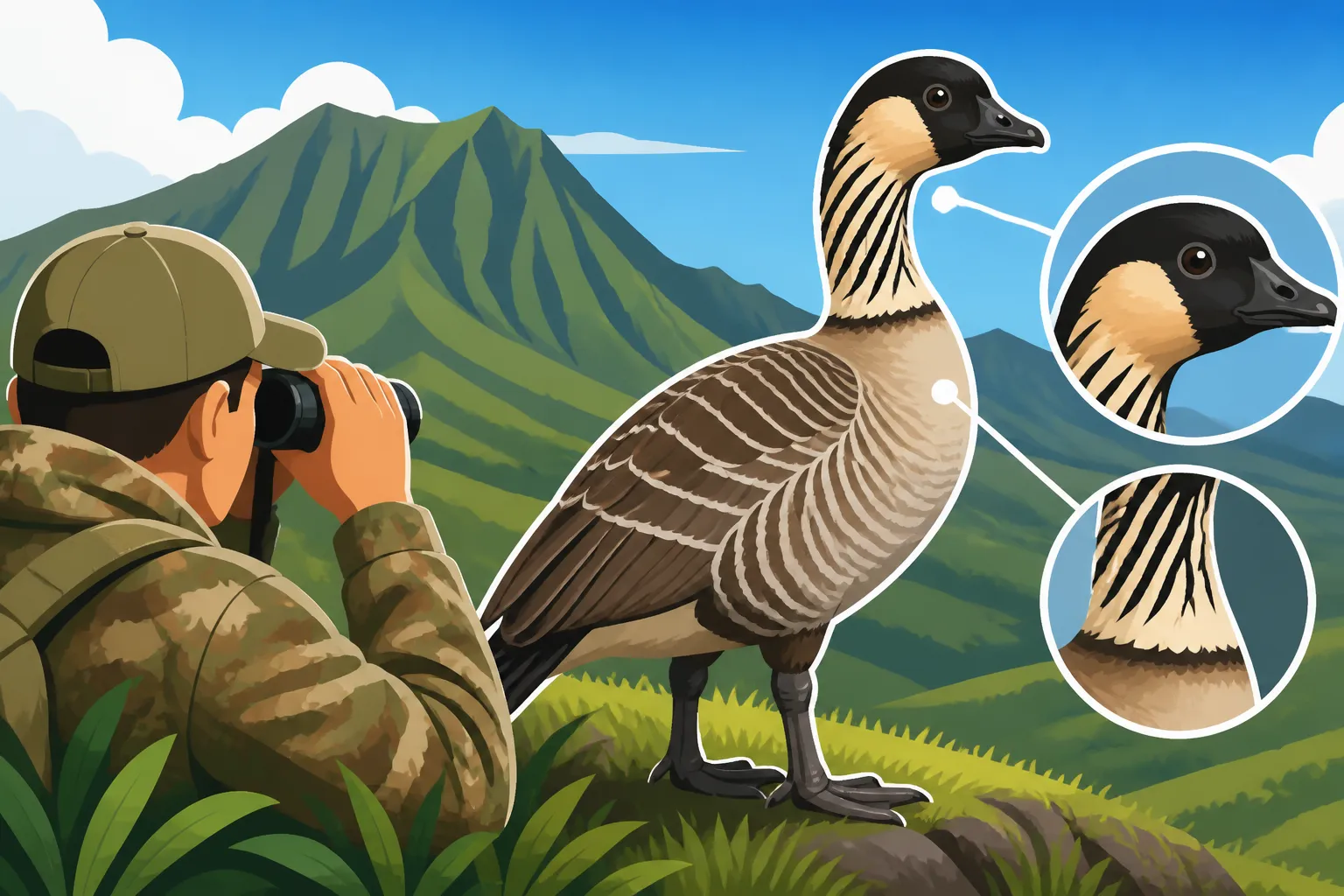
The most striking feature, and your primary identification cue, will be its neck and head. The Nene has a distinctive black head and hindneck, but the sides of its neck and its cheeks are a lovely buff or creamy-white color. Look closely, and you'll see deep, prominent furrows or diagonal black and buff stripes running down its neck, almost giving it a corrugated appearance. This pattern is unique; no other bird in Hawaii shares this specific neck marking. Its bill is relatively short and stout, and its legs and feet are dark, though notably, its feet are less webbed than those of a typical mainland goose, a sign of its evolution on volcanic terrestrial landscapes rather than extensive wetlands. Its body plumage is generally a soft brownish-gray, with some barring on the flanks and a paler belly. If you see a goose-like bird with these specific head and neck markings, you're almost certainly looking at a Nene.
Habitat Preferences and Behavioral Cues
Beyond just how they look, understanding where Nene live and what they do can give you crucial hints in the field. Nene are quite adaptable, found in a variety of habitats, which can sometimes make them unexpected encounters for hunters. They frequent open grasslands, sparse lava fields, and even golf courses and agricultural edges, particularly on Maui and Hawaii Island. They've been observed at various elevations, from near sea level up to several thousand feet, depending on the island and specific recovery efforts. Unlike their mainland goose cousins, Nene are not highly aquatic; you'll typically see them grazing on vegetation on dry land rather than actively swimming or dabbling in deep water, though they do need access to freshwater for drinking.
Behaviorally, the Nene often moves in small family groups or larger flocks, especially outside of breeding season. They are primarily grazers, walking slowly and deliberately as they feed on grasses, herbs, and berries. While they can fly, they often prefer to walk or run if disturbed, especially if a water source or thick cover is nearby. Their call is another dead giveaway: a soft, drawn-out "nene" or "neho" sound, quite distinct from the cackles or clucking of game birds. They tend to be less wary of humans in protected areas like national parks, but even in more remote spots, they might not flush as dramatically as a francolin or pheasant. Pay close attention to these habitat and behavioral clues; sometimes, seeing a flock of goose-like birds grazing calmly in an open lava field, rather than skulking in dense cover, is your first sign you've found Nene. Knowing the areas designated as Hawaii's Fenced Conservation Area Closures is also crucial, as these often protect Nene populations.
Why Nene Identification is Critical for Every Hawaii Hunter
Hunting in Hawaii is a privilege that comes with significant responsibilities, and few responsibilities are as important as knowing the difference between a game animal and a protected species. The Nene's status as Hawaii's state bird and an endangered species means that any misidentification can lead to severe consequences, not just for the individual hunter but for the hunting community as a whole.
The Legal Ramifications of Misidentification
Let's be blunt: accidentally (or intentionally) harming a Nene is a very serious offense. The Nene is protected under both federal law (the Endangered Species Act) and state law. This isn't a slap on the wrist kind of mistake. Penalties for taking an endangered species can be steep, ranging from significant fines that could run into tens of thousands of dollars to potential imprisonment, and certainly the loss of all hunting privileges, likely for life. Imagine losing your license, facing hefty legal fees, and carrying a criminal record, all because you didn't take an extra moment to confirm your target. Ignorance of the law or of the bird's identity is absolutely no excuse in the eyes of the authorities. This is why resources like the official DOFAW website and reliable platforms like GoHunt are so important for understanding Hawaii's Nene and Why It Is Protected and familiarizing yourself with hunting unit rules.
The legal system here is designed to protect these irreplaceable native species, and they take violations very seriously. Law enforcement, including federal agents and state conservation officers, have dedicated resources to investigate any reported incidents. The ripple effect of such an incident can also be damaging, leading to increased scrutiny of hunting seasons, potential closures of units, and a general negative perception of hunters among the wider public. No one wants to be "that guy" who caused a major setback for conservation, not to mention their own hunting future.
Ethical Hunting and Conservation in the Islands
Beyond the legal penalties, there’s a deeper, more personal reason why Nene identification is critical: ethical hunting and your role in Hawaii's unique conservation landscape. Hunters, by nature, are often some of the most dedicated conservationists. We understand ecosystems, animal populations, and the importance of responsible management. In Hawaii, where nearly all game animals are introduced species, hunting plays a vital role in managing populations that can otherwise devastate native plant life and fragile ecosystems. However, this management must be conducted with the utmost respect for the native species that are struggling to survive.
Being able to confidently identify a Nene is a direct reflection of your commitment to ethical hunting. It shows respect for the land, the wildlife, and the local community's values. By making a conscious effort to avoid protected species, you uphold the integrity of hunting as a tool for conservation and ensure its acceptance by the broader public. Hunters are crucial partners in maintaining ecological balance, and that includes being incredibly careful around native birds. Understanding Protected Species Hawaii Hunters Must Know is fundamental to this commitment. Utilizing tools like GoHunt helps hunters stay informed about specific unit regulations and potential protected species habitats, fostering a culture of informed and ethical hunting.
Field Strategies for Avoiding Nene-Related Mistakes
Mistakes happen, but when it comes to protected species, they're simply not an option. By incorporating a few key strategies into your pre-hunt preparation and in-the-field practices, you can dramatically reduce any risk of misidentifying a Nene and ensure your hunt is both successful and responsible.
Pre-Hunt Preparation and Scouting for Nene Hotspots
The hunt for knowledge starts long before you ever step foot in a unit. Your most powerful tool against misidentification is thorough preparation. Start by meticulously researching the specific hunting unit you plan to visit. The Hawaii Division of Forestry and Wildlife (DOFAW) provides detailed maps and information about public hunting units, often noting areas where Nene or other protected species are known to frequent. Don't just glance at the map; study it. Pay attention to any designated conservation areas or wildlife sanctuaries within or adjacent to your hunting grounds.
Platforms like GoHunt are invaluable for gathering this kind of intelligence. Many mapping applications also allow you to overlay public and private land boundaries, and sometimes even specific wildlife habitat zones. Beyond maps, talk to local wardens, experienced hunters, or even park rangers if you're near a national park. They often have real-time knowledge of animal movements and concentrations. When scouting, actively look for signs of Nene. Their droppings are distinct, and you might observe areas where they prefer to graze. Knowing that a specific pasture or a section of a lava field is a known Nene hangout will immediately raise your alert level when you're there on opening day. Remember, Scouting a Hawaii Hunting Unit Before Opening isn't just about finding game; it's about knowing your entire environment.
In-The-Field Best Practices for Positive ID
Once you're actually in the field, vigilance and disciplined observation are paramount. Always carry and use good quality optics – binoculars are non-negotiable, and a spotting scope can be incredibly helpful for long-distance identification. Before you even consider raising your weapon, put your glass on the bird. Look for all those distinctive Nene characteristics we discussed: the black neck, buff cheeks, and furrowed neck stripes. Confirm its size, its gait, and its call.
A critical rule to live by, especially in Hawaii's biodiverse landscape, is: "If in doubt, don't shoot." It's far better to let a potential game bird walk away than to risk harming a Nene. There will always be another opportunity to fill your tag. Pay close attention to calls; the Nene's distinctive "nene" sound is hard to mistake once you've heard it. Observe flight patterns – Nene have a slower, more deliberate flight than many game birds, with slower wingbeats, although they can be surprisingly agile. Also, be mindful of Legal Shooting Hours for Game Birds. Nene might be active outside of these hours, but you should only ever be targeting game birds during legal times, further reducing the chance of a nocturnal Nene encounter being mistaken.
To further aid your in-field identification, here's a quick comparison of the Nene against some common game birds you might encounter:
| Feature | Nene (Hawaiian Goose) | Erckel's Francolin | Ring-Necked Pheasant (Male) | Chukar Partridge | Feral Wild Turkey |
|---|---|---|---|---|---|
| Size/Weight | Medium-large goose (25-28", 4-6 lbs) | Medium game bird (16-18", 1-2 lbs) | Large game bird (20-36", 2-4 lbs, long tail) | Medium game bird (13-15", ~1.5 lbs) | Very large game bird (24-48", 10-25 lbs) |
| Head/Neck | Black head, black hindneck, buff cheeks, furrowed neck | Rufous brown head, gray neck, distinct white throat | Iridescent green/purple head, white neck ring | Black band on forehead, black gorget/collar | Bare, warty head (red/blue/white), dark body |
| Body Color | Brownish-gray, barred flanks, pale belly | Brown back, barred flanks, white belly | Iridescent body, mottled brown on hen | Gray body, black bars on flanks, white belly | Dark, metallic sheen; large, fanned tail |
| Legs/Feet | Dark, semi-webbed | Yellow-orange, strong, unwebbed | Strong, unwebbed | Orange-red, unwebbed | Dark, strong, unwebbed |
| Distinct Call | Soft "nene" or "neho" | Loud, cackling "kek-kek-kek" | Crowing "kock-kock," cackle when flushed | Distinct "chuk-chuk-chukar" | "Gobble-gobble-gobble" |
| Typical Habitat | Open grasslands, lava flows, sometimes golf courses. Less reliant on water. | Open grasslands, dry brush, rocky slopes. | Agricultural fields, dense cover, wetlands. | Steep, rocky hillsides, dry shrubland, high elevation. | Forests, open woodlands, often near agricultural edges. |
This table provides a quick reference, but remember, there's no substitute for careful observation. When considering game birds like Hawaii's Game Birds and Where to Find Them, understand their distinct characteristics relative to the Nene.
Resources and Ongoing Education for Responsible Hunters
Hunting in Hawaii is a dynamic experience, with rules and wildlife populations constantly being monitored and managed. Staying informed and continuously educating yourself is not just a suggestion; it's a responsibility that every hunter should embrace.
Leveraging Technology and Community Knowledge
In today's world, hunters have access to incredible technological tools that can significantly enhance safety and compliance. The OuterSpatial app, for instance, is increasingly used by DOFAW for checking in and out of hunting units and provides detailed maps of unit boundaries and regulations. Using the OuterSpatial App to Check In means you can often see your precise location in relation to protected areas or known Nene habitats, which is a game-changer for avoiding accidental incursions. Always download offline maps before heading out, as cell service can be spotty in Hawaii's remote hunting areas.
Beyond technology, community knowledge is a goldmine. Engage with local hunting clubs, attend public meetings hosted by DOFAW, or participate in online forums where Hawaiian hunters share information. These are excellent venues for learning about recent Nene sightings, specific unit advisories, or even just reinforcing good identification habits. GoHunt also provides updated information on hunting regulations and can be a valuable resource for planning your trip and staying informed. Remember, the collective experience of the hunting community is a powerful tool for responsible behavior in the field.
Commitment to Lifelong Hunter Education
Think of hunter education not as a one-and-done requirement, but as a lifelong commitment. While you've likely completed Hawaii Hunter Education Requirements to get your license, the landscape of hunting regulations and conservation efforts is always evolving. New Nene populations might be established, or certain areas might become critical habitat. Staying current means regularly checking the DOFAW website for season announcements, rule changes, and any specific alerts about protected species.
The importance of this ongoing education cannot be overstated. By staying informed, you not only protect yourself from legal trouble but also contribute positively to the future of hunting in Hawaii. Every time you consciously identify a Nene and ensure its safety, you are a part of the larger conservation story, demonstrating that hunters are responsible stewards of the land and its unique creatures. Always remember to perform Checking In and Out of Hawaii Hunting Units, as this practice helps DOFAW monitor hunting pressure and wildlife encounters, including those with protected species.
Disclaimer
This article is for general informational purposes only and does not constitute professional advice. Laws, prices and regulations vary by location and change over time. Consult a qualified professional for guidance on your specific situation.