Hawaii Units That Need a Long Walk In
Hunting in Hawaii is often romanticized, but the reality for many of our public hunting units is a whole lot of sweat, steep climbs, and miles put in on your own two feet. While some areas offer reasonable access, many of the most productive and least pressured spots demand a significant commitment to walking, hiking, and frankly, earning your hunt. This guide will walk you through what to expect and how to prepare for those Hawaii units that truly require a long walk in.
Why Some Hawaii Units Demand a Long Walk-In
It's a common misconception that because Hawaii is a collection of relatively small islands, everything is easily accessible. That couldn't be further from the truth. The topography here, combined with management strategies, means that many prime hunting grounds are tucked away far from any paved or even graded road.
Seeking Less Pressure and More Solitude
Let's be honest: most hunters, given the choice, would rather drive right to their hunting spot. This natural human inclination creates a distinct advantage for those willing to put in the effort. The farther you walk into a unit, the less likely you are to encounter other hunters, especially on busy weekends. This isn't just about peace and quiet; it's about finding game that hasn't been constantly pushed and spooked. Animals, particularly the smarter, older ones, learn to avoid areas with high human activity. By venturing deep into the backcountry, you're essentially stepping into their sanctuary.
Think about a unit that might have a few access points along a main road. The areas within a mile or two of those points often see the heaviest pressure. But once you commit to a two, three, or even four-mile hike, the landscape changes. You'll start seeing less trash, fewer boot prints, and more undisturbed game sign. This solitude often translates directly into higher chances of success, and a much more rewarding experience. It’s about getting away from the crowds and into the wild heart of Hawaii's hunting grounds.
Remote Terrain and Geographic Challenges
Hawaii's geological features are stunning, but they can be absolutely brutal on your body and your boots. We're talking about extremely rugged terrain that makes even a short distance feel like an expedition. You'll encounter everything from ancient lava flows that are sharp enough to shred footwear and ankles, to dense, tangled rainforests where every step is a battle against roots, fallen trees, and thorny undergrowth. Then there are the infamous gulches – massive, steep-sided canyons that dissect the landscape, often requiring a grueling descent and even more grueling climb out. Hunting Hawaii's Volcanic Terrain often means navigating these challenging features.
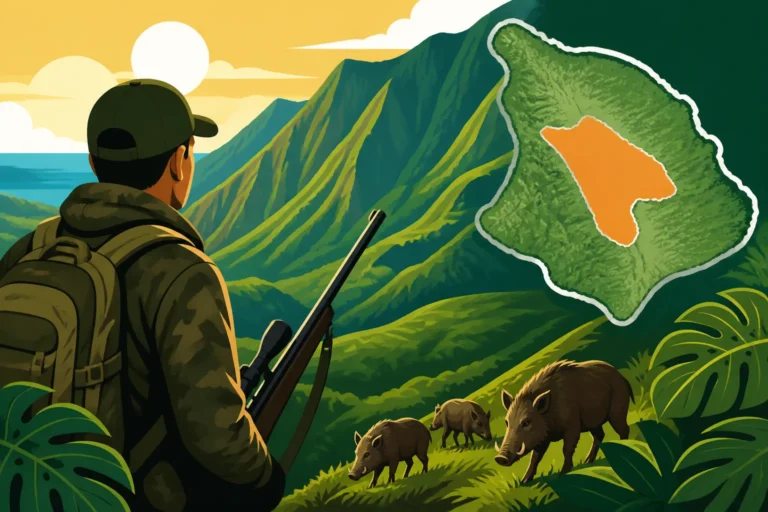
Consider a hunt for pigs in a wet forest on the windward side of Hawaii Island. You might start on relatively flat ground, but soon you're plunging into a series of steep, muddy gulches choked with strawberry guava and uluhe fern. Every foot gained or lost is a major physical undertaking. Or imagine pursuing mouflon on the higher slopes of Mauna Kea, where you're not only dealing with sharp a'a lava but also rapidly thinning air. These natural barriers are precisely what keeps these areas wild and less hunted, but they demand respect and serious preparation. It's not just a walk; it's an adventure through some of the most unforgiving landscapes you'll ever encounter.
Limited Road Access in Conservation Areas
A significant portion of Hawaii's public hunting lands are within Forest Reserves, Natural Area Reserves, or Watershed Partnership areas. These lands are managed primarily for conservation, protecting native species and vital water sources. As such, vehicle access is often intentionally limited or entirely prohibited beyond certain points. The goal is to minimize human impact and disturbance to these fragile ecosystems.
You might find that a decent dirt road leads you into the edge of a unit, but soon it becomes a "foot-access only" trail, or simply peters out into overgrown tracks. This isn't an oversight; it's by design. The Department of Land and Natural Resources (DLNR) and its Division of Forestry and Wildlife (DOFAW) prioritize conservation, and restricting motorized access is a key tool in that effort. This means that if you want to reach the deeper, more remote sections, your boots are your only option. Sometimes, even what looks like an old ranch road on a map might be completely reclaimed by vegetation, becoming nothing more than a faint suggestion of a path. Understanding Hawaii's Fenced Conservation Area Closures can also shed light on why certain areas might be harder to access or off-limits entirely.
Essential Gear and Physical Preparation for Extended Hikes
Embarking on a long walk-in hunt in Hawaii isn't something you decide on a whim. It requires meticulous planning, the right gear, and a good hard look at your physical fitness. The islands' unique environment — from humid rainforests to arid lava fields — means your equipment choices are critical.
Footwear and Clothing for Varied Terrain
Your feet are your most valuable asset on a walk-in hunt, and the wrong footwear can spell disaster. Forget those flimsy hiking shoes; you need serious, broken-in boots that can withstand the abuse of Hawaii's terrain. Look for boots with aggressive traction for slippery mud, deep gulches, and loose volcanic rock. Waterproofing is non-negotiable, especially on the windward side or during rainy seasons, but they also need to be breathable enough to handle the humidity. Ankle support is paramount when traversing uneven lava fields or steep, root-bound trails, preventing sprains and twists that can end a hunt. I've seen too many hunters limp back to the truck with blisters or worse because they underestimated the demands on their feet.
For clothing, layering is your best friend. Even if it starts warm, conditions can change rapidly as you gain elevation or enter a cloud forest. Start with a moisture-wicking base layer to manage sweat. Add an insulating layer if needed, and always, always carry a lightweight, durable rain shell. Even on sunny days, pop-up showers are common, especially in mountain areas. Quick-drying fabrics are essential, as you're bound to get wet from sweat, rain, or stream crossings. Camouflage patterns that mimic the local vegetation (think greens and browns for rainforests, or more muted tones for dry scrub) can also be beneficial, but ultimately, comfort and functionality trump aesthetics. Don't forget a sturdy hat for sun protection and insect repellent! Rain Gear for a Windward Hawaii Hunt will be invaluable.
Hydration, Nutrition, and Emergency Supplies
Dehydration is a real and dangerous threat in Hawaii's climate, even on cooler days. You'll be sweating more than you realize, and navigating challenging terrain burns calories at an alarming rate. You absolutely must carry more water than you think you'll need, along with electrolyte supplements. A hydration bladder in your pack is excellent for consistent sipping. Plan for at least a gallon of water per person per day for strenuous activity, especially in dry, hot units. Water and Heat Planning for a Hawaii Hunt is paramount to your safety.
For nutrition, pack high-energy, easy-to-eat snacks like trail mix, energy bars, dried fruit, and jerky. These provide sustained energy without requiring a full stop and cooking. Think about what you can eat on the go.
Beyond the basics, a well-stocked emergency kit is non-negotiable. This should include:
- First-aid: Blister treatment, pain relievers, antiseptic wipes, bandages, gauze, athletic tape, any personal medications.
- Navigation: A reliable GPS device with extra batteries (more on this next), a physical map, and a compass. Remember, electronics can fail.
- Communication: A satellite messenger or personal locator beacon (PLB) is strongly recommended for deep backcountry areas where cell service is non-existent. No Cell Signal on a Hawaii Hunt is a common reality.
- Lighting: Headlamp with fresh batteries.
- Signaling: Whistle, signal mirror.
- Fire: Lighter, waterproof matches.
- Shelter: A lightweight emergency blanket or tarp.
Always let someone know your exact hunting plan, including your route and expected return time.
Navigation Tools and Map Skills
When you're miles into a tangled rainforest or across a vast, featureless lava field, getting lost is a terrifying prospect. Modern navigation tools are incredible, but they're only as good as your understanding of them and your backup plan.
A dedicated GPS unit or a robust GPS app on your smartphone, like onX Hunt, is indispensable. Before you even set foot in the field, download offline maps for your hunting unit. This is critical because, as we discussed, cell service often vanishes. Mark your starting point (your vehicle) as a waypoint, and consider marking key terrain features, potential water sources, or even notable game trails. onX Hunt is particularly good for showing public/private land boundaries, which is crucial for staying legal.
However, never rely solely on electronics. Always carry a physical topographic map of your hunting area and a compass. Learn how to read contour lines, identify major drainages, and orient yourself without a battery. Practice using your map and compass together before your hunt. In dense Hawaiian forests, the canopy can sometimes interfere with GPS signals, making traditional navigation skills even more vital. Understanding Reading a Hawaii Unit Boundary Map is a key skill for any serious hunter here. Knowing your escape routes, where major trails or roads should be, and how to use natural features for orientation can literally save your life.
Strategies for Hunting Deep in Walk-In Units
Hunting units that demand extensive foot travel require a different mindset and approach than those with easy vehicle access. You need to maximize your efficiency, conserve your energy, and have a robust plan for dealing with success – or lack thereof – miles from your starting point.
Planning Your Approach and Exit
The key to a successful walk-in hunt begins long before you hit the trail. Start with detailed topographical maps and aerial imagery. Use tools like GoHunt or onX Hunt to virtually scout the unit. Look for natural funnels, potential bedding areas, feeding zones, and crucially, water sources. Identify ridges that offer easier travel or gulches that might slow you down. Try to visualize the terrain and potential animal movements. Scouting a Hawaii Hunting Unit Before Opening is an absolutely critical step.
Your entry and exit routes should be well-thought-out. If you're planning a multi-day hunt, consider caching water or supplies if regulations allow and it's safe to do so. For day hunts, be realistic about how far you can comfortably travel in and out, especially if you're carrying out an animal. Remember that hiking out with an extra 100+ pounds of meat and gear will take significantly longer and be far more strenuous than hiking in. Have a contingency plan for getting back to your vehicle if you encounter unforeseen difficulties.
Conserving Energy and Pacing Yourself
These are not hunts for sprinting through the woods. Pacing is everything. Start slow, even if you feel fresh. Conserve your energy, especially on uphill climbs. Take regular, short breaks to rehydrate, refuel, and catch your breath. Use these breaks to glass the terrain, listen for animal sounds, and scan for fresh sign. Moving too quickly will not only exhaust you but also increase your chances of blowing past game.
Learn to move quietly and deliberately. In thick Hawaiian cover, stealth is paramount. Often, game will be very close before you see it. Pay attention to the wind, especially the shifting thermals that occur as temperatures change throughout the day. In gulches and valleys, thermals will typically rise in the morning and fall in the evening. Hunting Downwind in Hawaii's Shifting Thermals is a fundamental tactic that becomes even more important when you're deep in an area where animals feel secure. Use natural features for cover, and avoid silhouetting yourself on ridges. Remember, the deeper you go, the less tolerant the game will be of mistakes.
Field Care and Meat Preservation Challenges
Here's the harsh reality: shooting an animal miles deep in a walk-in unit is only half the battle. Getting the meat out intact and unspoiled in Hawaii's heat and humidity is a monumental challenge. The clock starts ticking the moment an animal hits the ground. Rapid field dressing is absolutely essential. Get the guts out quickly to allow the carcass to cool internally. Field Dressing Axis Deer in Hawaii Heat is a skill you'll need to master.
Next, you need to quarter the animal and get the meat into game bags immediately. This allows air circulation and protects the meat from flies and debris. If you're solo, you'll need a stout frame pack to carry the heavy loads. If hunting with a partner, you can divide the load, which helps immensely.
Cooling the meat quickly is critical. This might involve finding a shaded spot, hanging the meat to get it off the hot ground, or even using portable coolers with ice if you can manage the logistics of packing them in. Without rapid cooling, your hard-earned venison can spoil surprisingly fast. Cooling Meat Fast on a Hawaii Hunt is not just a preference, it's a necessity. Be prepared for multiple trips if the animal is large and the distance is great. Never underestimate the difficulty of Packing Meat Out of a Hawaii Gulch. It's a true test of grit and planning.
Examples of Hawaii's Demanding Walk-In Units
While many units across the islands require some degree of hiking, certain areas consistently stand out for their challenging access and the rewards they can offer to the determined hunter. These are not for the faint of heart, but they often hold undisturbed game.
Remote Sections of Hawaii Island's Forest Reserves
The Big Island is, well, big, and its vast forest reserves offer incredible hunting opportunities, particularly for feral pigs. However, many of the most productive areas are miles from any accessible road. Take, for example, the deeper sections of the Hunting Hilo Forest Reserve Country or the Hunting the Kau Forest Reserve. These areas often transition from old logging roads to faint, overgrown trails that plunge into dense, wet rainforest. The terrain is often riddled with steep, muddy gulches and thick stands of invasive species like ginger and guava, making every step a challenge.
Hunters often spend entire days navigating these labyrinths, relying on dog teams to push pigs out of the thickest cover, or still-hunting with extreme patience. The sheer density of vegetation means visibility can be severely limited, often to mere yards. This isn't wide-open country where you glass for miles; it's a close-quarters hunt that requires serious physical and mental toughness. The rewards, however, can be substantial: large, mature pigs that rarely encounter human pressure.
Steep Gulches and Canyons on Maui and Kauai
Maui and Kauai both feature dramatic, deeply carved landscapes that create natural fortresses for feral goats and pigs. On Maui, portions of Hunting Haleakala's Leeward Slopes, particularly the remote areas beyond established trails, are crisscrossed by deep gulches leading down to the coast. These areas are incredibly dry and hot, with sparse vegetation, but the goats thrive in the cliff faces and hidden pockets. Accessing these spots often means traversing loose rock and incredibly steep inclines, where a misstep could have serious consequences.
Similarly, Kauai's Hunting Goats in a Kauai Canyon, like the famed Waimea Canyon, presents an imposing challenge. The canyon rim might offer some views, but getting down into its depths and back out is a grueling expedition. Hunters often spend days in these remote canyons, navigating treacherous ledges and steep scree slopes in pursuit of wary goats and pigs. These hunts are physically demanding and require excellent route-finding skills, as well as a healthy respect for heights and unstable ground.
High-Elevation Mouflon Habitat
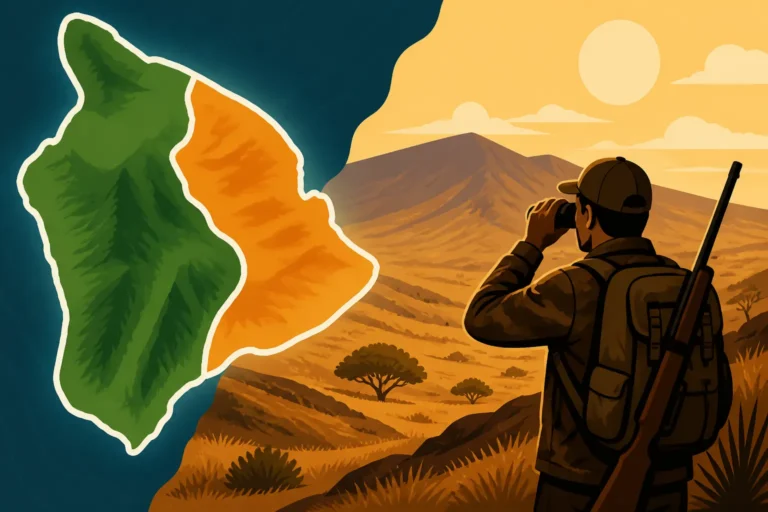
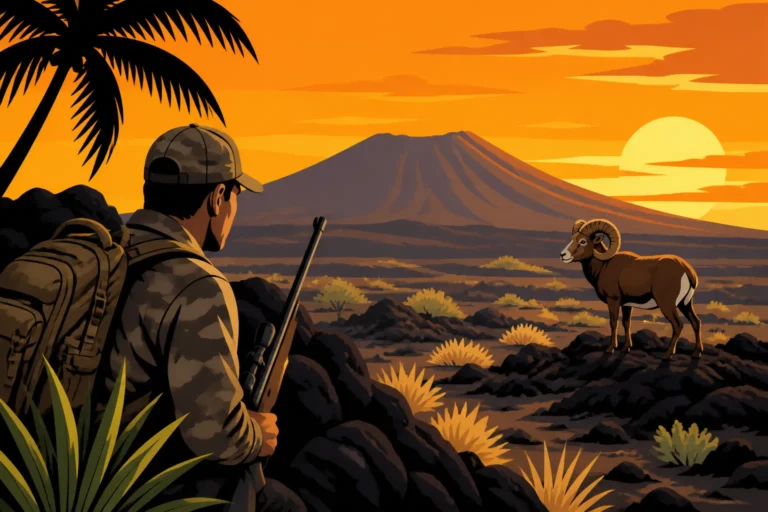
For hunters pursuing mouflon sheep, particularly on Hawaii Island, some of the most challenging (and rewarding) units are found at high elevations where roads eventually give way to rugged foot travel. The upper slopes of Mauna Kea and Mauna Loa offer iconic mouflon hunting, but these areas are often exposed, rocky, and feature significant altitude. Hunting Mouflon in Mauna Kea's Thin Air describes a hunt where the elevation itself becomes a major obstacle.
Units like the higher reaches of Unit A or Puu Anahulu Game Management Area might have initial road access, but the sheep often retreat into the most remote, broken terrain as hunting pressure increases. This means long hikes across undulating lava fields, cinder cones, and through sparse mamane-naio forests above 6,000 feet. The air is thinner, the sun is intense, and cover can be scarce. You'll need to be in excellent physical condition to handle the exertion at altitude, especially when carrying a rifle and optics. The reward, of course, is the chance at a trophy mouflon ram in a truly unique and breathtaking landscape. Hunting Hawaii's High Elevation Alpine Ground is an experience like no other.
Here's a quick look at some of the challenges and rewards of committing to those long walk-in units:
| Feature | Challenges | Rewards |
|---|---|---|
| Terrain | Steep gulches, dense jungle, sharp lava, loose rock, mud | Undisturbed habitat, unique scenery, physical accomplishment |
| Access | Miles of hiking, no vehicle access, remote starting points | Low hunting pressure, less competition for game |
| Physical Demands | High exertion, risk of injury, dehydration, heat exhaustion, altitude sickness | Improved fitness, mental resilience, deeper connection to the land |
| Logistics | Heavy pack-out, critical field care, navigation, emergency planning | Higher success rates for wary animals, sense of self-reliance, better meat quality |
| Hunting Experience | Solitary, challenging, requires advanced skills | True wilderness experience, trophy potential, unforgettable memories |
Disclaimer
This article is for general informational purposes only and does not constitute professional advice. Laws, prices and regulations vary by location and change over time. Consult a qualified professional for guidance on your specific situation.