Getting Permission on a Hawaii Ranch
It can feel incredibly frustrating when you're dreaming of a Hawaii hunt, only to find that much of the prime hunting ground is actually locked up in private hands. While public land offers fantastic opportunities, the reality is that many of the islands' healthy game populations — from hard-fighting feral pigs to elusive Axis deer — thrive on large private ranches. This guide will walk you through the often-intimidating process of respectfully seeking and securing permission to hunt on these valuable private lands, opening up new possibilities for your Hawaii hunting adventures.
The Reality of Hunting Hawaii's Private Lands
When you first start looking into hunting in Hawaii, it's easy to focus on the public hunting units managed by the Department of Land and Natural Resources (DLNR). And while those are absolutely crucial, and we cover them extensively, the sheer volume of private land, much of it owned by large ranches, often surprises newcomers. Unlike some mainland states with vast tracts of public forest, Hawaii's land ownership is complex and often concentrated.
Why Private Land Matters So Much Here
Hawaii's unique history and geography mean that large portions of land are privately held, often by generational ranching families or estates. These lands frequently encompass diverse ecosystems, from dry kiawe flats and rolling pastures to dense rainforest and high-elevation slopes. Because these areas are less accessible to the general public, and sometimes actively managed for game, they can harbor some of the densest and healthiest populations of game animals. We're talking about everything from the impressive Axis deer on Maui and Molokai to the robust feral pigs that can be found across almost all islands, and even the feral goats that roam the steep cliffs.
Consider the common scenario: you've been Scouting a Hawaii Hunting Unit Before Opening on public land, and you see fresh pig sign right at the boundary, only to realize the trail leads onto an adjacent private ranch. This is a daily occurrence for many hunters here. Private ranches often serve as de facto wildlife sanctuaries where animals can mature with less pressure, only venturing into public units seasonally or under specific conditions. Gaining access means tapping into these rich areas and often encountering animals that are less wary than their public-land counterparts.
Understanding Ranching Culture in Hawaii
The ranching culture in Hawaii runs deep, going back to the early 19th century with the arrival of cattle. These are not just businesses; they are often family legacies, rooted in a deep respect for the aina (land) and malama aina` (to care for the land). When you approach a ranch owner, you're not just asking for permission to recreate; you're stepping into a tradition and a way of life that values stewardship.
Many of these ranchers view the game animals on their property differently than, say, a recreational hunter might. Feral pigs and goats, for example, are often considered pests due to the extensive damage they cause to native ecosystems, fences, and pastures. What Feral Pigs Do to Hawaii's Forests and Why Goats Cause Erosion in Hawaii are not abstract concepts to a rancher; they're daily challenges that impact their livelihood. Axis deer, while prized for their venison, can also cause significant grazing pressure, especially during drought years. For many landowners, hunting is a necessary tool for wildlife management, not just a sport. Understanding this perspective is key to building rapport.
How to Approach Ranch Owners for Hunting Access
Navigating the world of private land access can feel daunting, especially if you're new to Hawaii or come from an area where public land is abundant. However, with the right approach and a healthy dose of respect, it's absolutely possible to open doors to some incredible hunting opportunities.
The Importance of Respect and Personal Connection
Forget about cold-calling numbers from a website or showing up unannounced. In Hawaii, personal connections and mutual respect are paramount. Many landowners, especially those who have been on their land for generations, value knowing who is on their property. The best approach is almost always face-to-face, or through a sincere, well-written letter if an in-person meeting isn't immediately feasible.
When you do make contact, be humble, polite, and genuine. Start by introducing yourself, explaining your connection to hunting (perhaps you're a local resident, or an ethical visitor who appreciates the islands), and clearly state your intentions. Don't immediately launch into asking for access. Instead, express an appreciation for their land, perhaps commenting on the beauty or the obvious care they put into it. It's about building a relationship, not just making a transaction. Remember, many of these families have seen countless hunters come and go; differentiate yourself by showing that you're in it for more than just a quick kill. Emphasize safety and your commitment to leaving no trace.
What to Offer and What to Expect
While some ranches operate as commercial hunting operations, offering Hawaii Private Ranch Hunts for a fee, many smaller operations or private landowners might be open to other arrangements. Don't be afraid to offer something in return. This could range from genuinely offering to help with fence repairs, checking water lines, or assisting with other ranch chores. For game animals like pigs and goats, which are often considered destructive, offering to help cull certain animals can be a huge benefit to the rancher. Perhaps you can even offer to share some of the meat from your harvest, showing gratitude and providing a tangible benefit.
It's also important to manage your expectations. A "no" is common, and it's essential to accept it gracefully. Don't press the issue or act entitled. A polite "thank you for considering" and moving on leaves a positive impression, and you never know when circumstances might change or when a different opportunity might arise. If they do charge a fee, be prepared to pay it. These fees help cover the costs of land management, insurance, and the landowner's time and effort. While we can't list specific prices here, expect a range depending on the species, length of hunt, and services included. Always clarify what is included in any agreement, whether it's a handshake deal or a formal contract.
Leveraging Existing Relationships and Local Knowledge
One of the most effective ways to get your foot in the door on private land is through existing relationships. The hunting community in Hawaii, while spread out, can be close-knit. If you know local hunters, ask them if they have any contacts or advice. Often, a personal introduction from someone the landowner already trusts is worth more than any cold call. Attend local hunting club meetings or events, get involved in conservation efforts, and simply be present and friendly within the community.
Additionally, Getting Onto Hawaii Private Land often means understanding how local land use works. Sometimes, certain ranches have specific programs or even allow limited access during certain times of the year for particular species. Be on the lookout for local announcements or word-of-mouth opportunities. Sometimes, securing a Hawaii Resident Hunting License Options and completing Hawaii Hunter Education Requirements can show you're a responsible hunter, which might impress a landowner. Platforms like GoHunt primarily deal with public land draws and licensing but staying on top of your general licensing and game stamps (like the Hawaii's Game Bird Stamp) through such systems demonstrates you're a serious and compliant hunter, a good first impression for anyone you approach.
Practical Steps for Securing Ranch Permission
Once you understand the culture and the general approach, it's time to get down to the nitty-gritty of making contact and formalizing your access. This isn't just about showing up; it's about being prepared and professional.
Researching Potential Ranches and Landowners
Before you even think about approaching someone, do your homework. Identify the areas where you're interested in hunting and, crucially, determine who owns the land. This is where tools like onX Hunt become invaluable. These apps allow you to see property boundaries, landowner names, and often even contact information, right on your phone. This takes out a lot of the guesswork and ensures you're knocking on the right door. You can also consult county tax assessor's offices or planning departments for parcel maps, though these are often less user-friendly than a dedicated hunting app.
Look for ranches known for cattle, pig, goat, or deer operations in areas where your target species thrive. For example, if you're after Axis deer, you'd focus your research on Maui or Molokai. If Hawaii's Feral Pigs, Island by Island are your quarry, almost any island could be a target. Once you've identified potential landowners, try to learn a bit about their operation. Are they primarily cattle ranchers? Do they cultivate crops? Understanding their business can help you tailor your approach, perhaps by highlighting how your hunting efforts can help mitigate crop damage or protect pastures.
Crafting Your Approach: In-Person, Letter, or Phone
Your initial contact sets the tone.
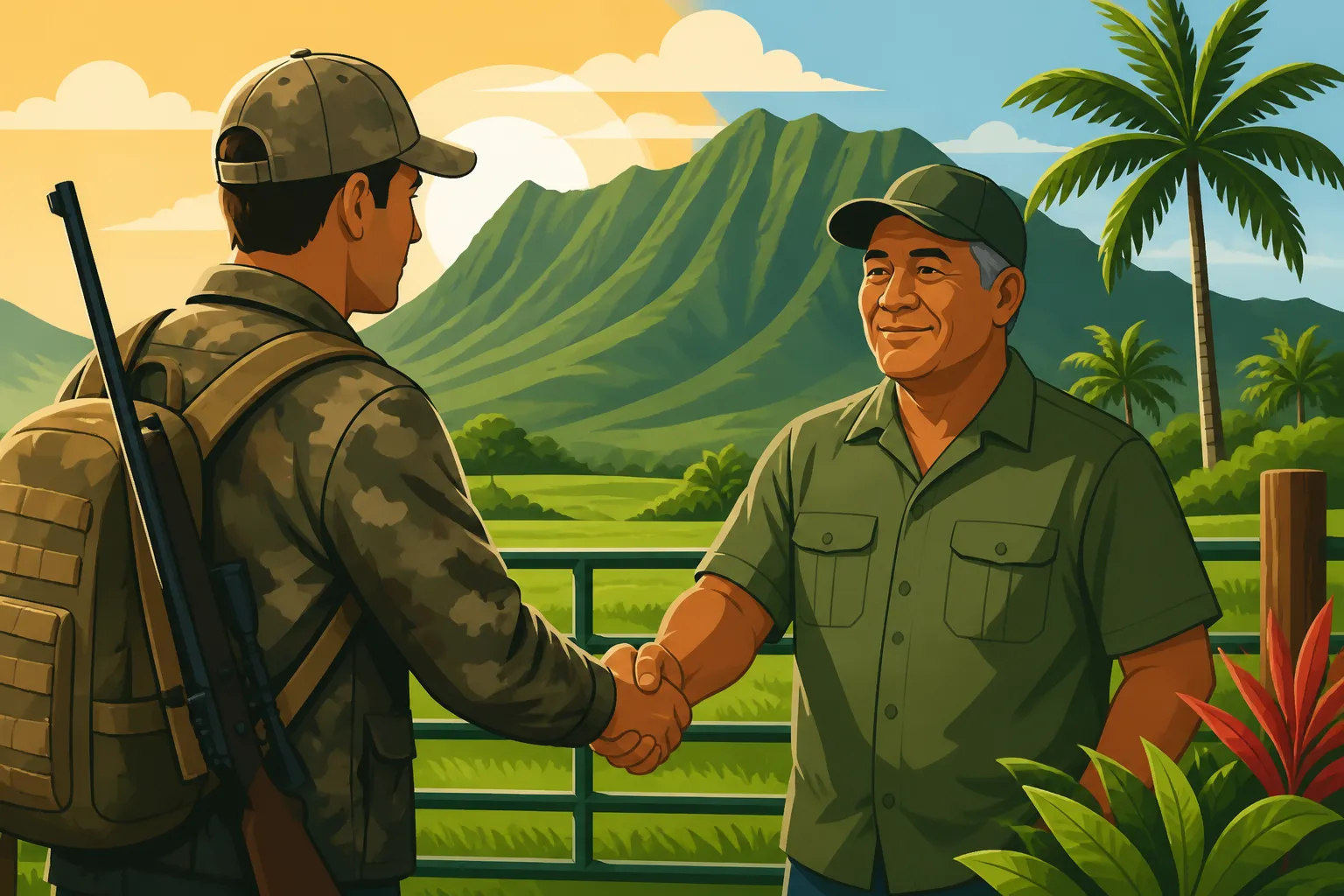
- In-person: This is often the most effective, but only if done respectfully. Don't show up in your hunting gear with a rifle. Present yourself cleanly and politely, ideally at a reasonable time of day when they're not actively working the herd or dealing with an emergency. Be prepared to be brief and to leave if they're busy. Have a simple, concise pitch ready, outlining who you are and why you're interested in their land.
- Letter: A handwritten, personal letter can be highly effective, especially if you can't get an in-person meeting. It demonstrates effort and respect. In your letter, introduce yourself, explain your hunting background (mentioning Hawaii's Legal Weapons by Season and Hawaii Blaze Orange and Safety Rules you adhere to can reassure them), what species you're interested in, and why you believe you'd be a responsible guest. Include your contact information and respectfully ask for a brief meeting or phone call to discuss the possibility further. Mentioning any insurance you carry is a huge plus.
- Phone Call: This can be trickier, as it's easy to interrupt. If you do call, choose a time when they're less likely to be busy (avoid early mornings, lunch, or late evenings). Keep the call short, polite, and to the point. The goal of the call should be to set up a brief meeting, not to get permission over the phone.
Formalizing the Agreement
Once you've had a positive initial conversation, it's crucial to formalize the agreement. Even if it's a simple written note, having clear terms can prevent misunderstandings down the line. This doesn't have to be a legal contract, but it should outline key details:
| Aspect of Agreement | Details to Clarify |
|---|---|
| Hunters Included | Your name, and names of any guests/family members allowed |
| Dates/Times | Specific days, weeks, or seasons you are permitted to hunt |
| Boundaries | Clearly defined areas where you can and cannot hunt on the property |
| Target Species | Which animals you are allowed to pursue (e.g., pigs only, goats, Axis deer) |
| Weapon Type | Specific weapons allowed (e.g., archery only, rifle, muzzleloader, dog hunting) |
| Vehicle Access | Where you can drive, where you must walk (e.g., Rules on Shooting From a Vehicle might apply) |
| Check-in/out | Required procedure for when you enter and leave the property |
| Contact Info | Emergency contacts for both parties |
| Other Rules | Gates, livestock, pets, trash, harvest reporting, fire restrictions, etc. |
This formalization protects both you and the landowner. It ensures everyone is on the same page and reduces the risk of accidental Hawaii Trespass and Private Land Law violations. Remember, a clear understanding leads to a much more enjoyable and sustainable hunting relationship.
Maintaining a Good Relationship with the Landowner
Getting permission is a fantastic first step, but the real work—and the real reward—comes from maintaining that relationship over time. A good hunting relationship with a private landowner can lead to years of consistent access and fulfilling experiences.
Adhering Strictly to All Rules and Boundaries
This cannot be overstated: follow every single rule the landowner sets, no exceptions. If they say no driving in certain pastures, don't drive there. If they ask you to close every gate, close every gate, even if you think the cows won't get out. Respecting their property means respecting their rules, no matter how minor they might seem to you. Never, ever push the boundaries, literally or figuratively. This includes staying within the agreed-upon hunting zones and avoiding any "off-limits" areas, such as near homes, active ranch operations, or sensitive ecological zones. Why Fences Change Where Animals Go is a real consideration for ranchers, so always be mindful of where the boundaries lie.
Leave the land better than you found it. Pack out all your trash, including spent shell casings. If you cross a fence, do so carefully to avoid damaging it. If you harvest an animal, ensure you handle the carcass cleanly and efficiently, especially in Hawaii's warm climate, to avoid attracting unwanted attention or leaving a mess. Field dressing should be done discreetly and hygienically.
Communicating and Showing Appreciation
Communication is key. Always check in when you arrive and check out when you leave, as agreed upon. This isn't just a courtesy; it's a safety measure for both you and the landowner. If you have a successful hunt, let them know! A simple text or call saying "Got a pig today, thank you!" goes a long way. Better yet, offer to share some of your harvest. Nothing builds goodwill faster than fresh venison or pork.
Beyond the hunt, look for opportunities to show appreciation. A small gift around the holidays, an offer to help with a task, or even just stopping by to say hello when you're in the area (without expecting to hunt) can strengthen your bond. Remember, this is about being a good neighbor and a trustworthy individual, not just a hunter looking for a place to shoot.
The Long-Term Benefits of Trust
When you consistently demonstrate respect, responsibility, and appreciation, you build trust. This trust is the foundation for a long-term relationship that can provide invaluable hunting access year after year. Not only might you be invited back, but the landowner might even offer you new areas to hunt or suggest different species to pursue. They might also be more inclined to offer you access during prime seasons or specific wildlife management events.
Think of it as an investment. The time and effort you put into building and maintaining these relationships today will pay dividends in future hunting opportunities. In a place like Hawaii, where public land access can be limited and competitive, private ranch access is a golden ticket, and a good relationship ensures that ticket remains valid. So, while Hunting Hawaii's Feral Pigs or Axis Deer Hunting in Hawaii might be your primary goal, remember that forging strong, respectful connections with landowners is just as much a part of the hunt as scouting and shooting.
Disclaimer
This article is for general informational purposes only and does not constitute professional advice. Laws, prices and regulations vary by location and change over time. Consult a qualified professional for guidance on your specific situation.