Booking a Kauai Pig Hunt With Dogs
Oh, Kauai. The Garden Isle. It’s a place of incredible beauty, dense rainforests, and some truly challenging hunting for feral pigs. If you’re dreaming of a primal adventure, tracking pigs through the thickest jungle with a pack of bay dogs and catch dogs, you’ve come to the right place. This guide is all about helping you navigate the unique world of booking a dog-assisted pig hunt on Kauai, ensuring you're prepared for the terrain, the culture, and the unforgettable experience.
Why Kauai is Unique for Dog-Assisted Pig Hunting
Kauai isn't just another pretty island; it's a hunter's paradise and a test of grit, especially when it comes to pig hunting with dogs. The terrain is notoriously rugged, wet, and often unforgiving. This isn't your mainland deer hunt; it's an immersive experience that taps into generations of local hunting traditions.
The Landscape and Its Challenges
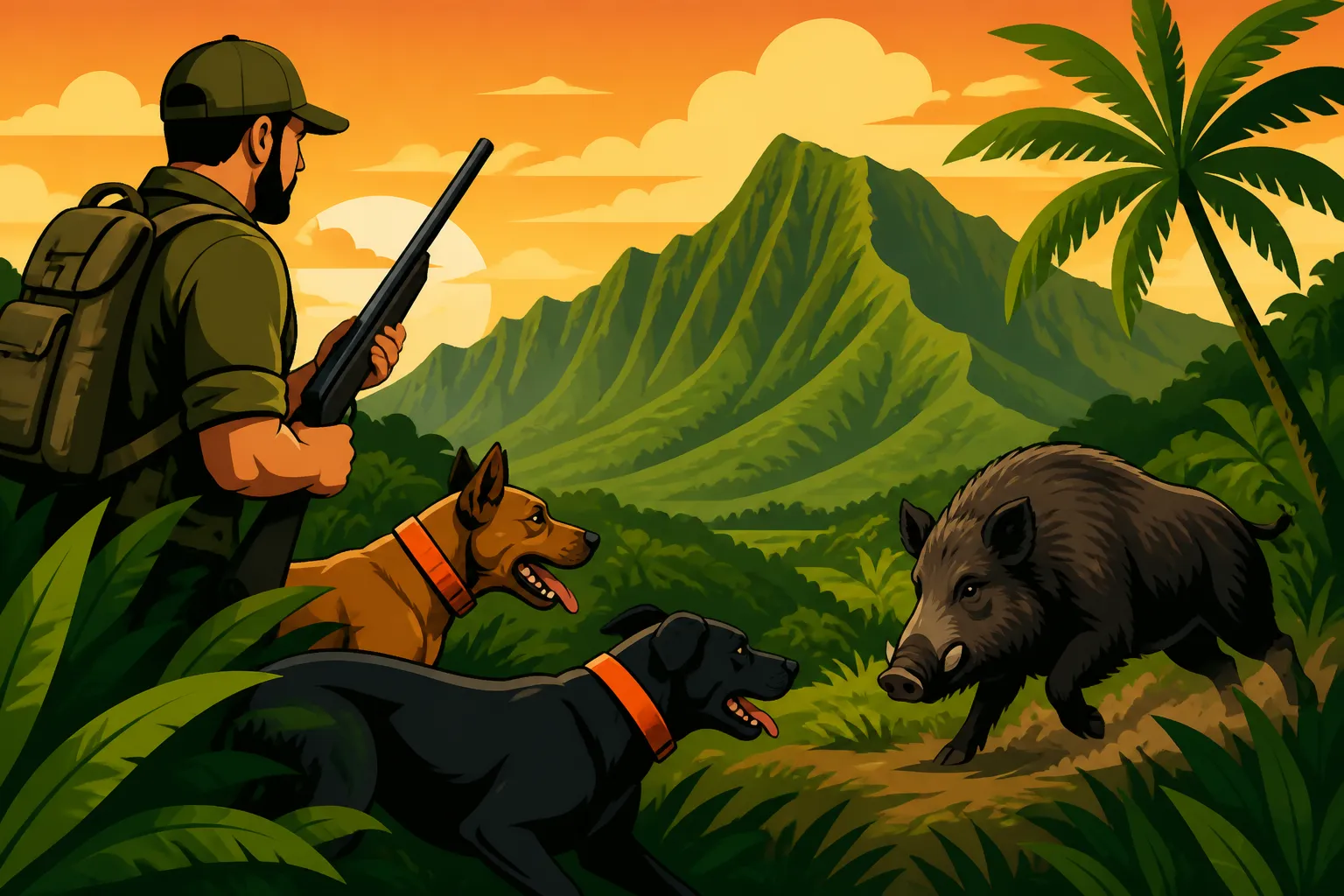
Imagine dense, tangled vegetation so thick you can barely see five feet in front of you. Think steep, muddy gulches that demand every ounce of your physical strength, and sharp, volcanic rock hidden beneath layers of fallen leaves. This is Kauai's pig country. The feral pigs thrive in these environments, using the dense cover to their advantage, making them incredibly difficult to stalk quietly. That's where the dogs come in. They push through the undergrowth, locate the pigs, and "bay" them—holding them at bay with barking until the hunter can get close.
The climate itself is a challenge. Even on the "dry" leeward side, you can experience sudden downpours, and the windward side is almost perpetually wet. This humidity and moisture mean everything gets soaked, and staying comfortable, let alone dry, is a constant battle. Your gear needs to be robust, and your mindset needs to be ready for an adventure that might feel more like an expedition. Hunting Pigs in Hawaii's Rainforest Gulches gives you a glimpse into what you might face. It's a testament to the resilience of both the hunters and their dogs.
The Local Dog Hunting Culture
Dog hunting for pigs is more than just a method on Kauai; it’s a deep-rooted cultural practice passed down through families. Generations of hunters have honed their skills and bred their dogs specifically for this challenging environment. When you join a guided dog hunt, you're not just hiring a service; you're often stepping into a tradition. These guides typically run teams of dogs – usually a "bay dog" that barks at the pig to hold it, and a "catch dog" that is released to grab the pig, allowing the hunter to move in for a quick, humane dispatch with a knife or spear.
This practice reflects a profound respect for the land and the animals, as well as a practical approach to managing an invasive species that can devastate native ecosystems and agricultural lands. Many local guides have a deep, almost intuitive understanding of the pig's behavior and movement patterns, knowing exactly where they'll bed down, feed, or try to escape. They often know every fold of the land, every hidden trail, and every water source. It's truly something to witness, and to be a part of, even for a day. Dog and Knife Pig Hunting in Hawaii explores this cultural aspect further.
Finding and Vetting a Kauai Pig Hunting Guide
Okay, so you're stoked for the adventure! But how do you actually find someone reliable to guide you through Kauai's thick jungle with dogs? It's not like there's a big directory on every corner. Finding the right guide is crucial for both your success and your safety.
Starting Your Search for Reputable Guides
The best place to start, honestly, is often by word of mouth. If you know anyone who's hunted Kauai before, ask them for recommendations. Online hunting forums specific to Hawaii or hunting groups on social media can also be invaluable resources for genuine reviews and insights. Be prepared for a more informal process than what you might be used to on the mainland. Many excellent local guides operate primarily through personal connections and referrals.
Websites like BookYourHunt can sometimes list Hawaii-based outfitters, giving you a starting point with some basic information, though dedicated Kauai pig dog hunt listings might be less common than for, say, Axis deer on Maui. Another resource to check could be GoHunt, which focuses more on licenses and public land but might have forums or directories that mention guides. When you find potential guides, look for those who specialize in pig hunting with dogs and, crucially, have a strong local reputation. You're looking for someone with extensive experience in Kauai's specific terrain and a deep understanding of dog handling in these conditions.
Key Questions to Ask Potential Outfitters
Once you've got a few names, it's time to start asking questions. Don't be shy! This is your hunt, and your safety is paramount.
Here's a table of crucial questions to ask:
| Question Category | Specific Questions to Ask | Why It Matters |
|---|---|---|
| Experience | How long have you been guiding pig hunts on Kauai? | Indicates their familiarity with the island's unique challenges and pig behavior. |
| How many dogs do you typically run? What breeds? | Helps you understand their hunting style and dog capabilities. | |
| Safety | What are your safety protocols in the field? | Crucial for navigating dense terrain, handling pigs, and potential injuries. |
| What's your emergency plan for injuries or getting lost? | Essential given the remote and rugged nature of the hunts. | |
| Logistics | What's included in the hunt price? (e.g., lunch, water, gear) | Avoids surprises; some guides are all-inclusive, others are bare-bones. |
| Do I need to bring my own weapon (knife/spear)? | Confirm what equipment the guide provides or expects you to have. | |
| How do we handle field dressing and meat transport? | Important for meat preservation and getting your harvest off the mountain. | |
| Regulations | Do you help with licensing and permit requirements? | Local regulations can be complex, especially for non-residents. |
| What are the legal weapons for dog hunting on Kauai? | Ensures you're compliant with state and island-specific rules. Legal Weapons When Hunting Pigs With Dogs | |
| Physicality | What is the typical physical exertion level? | Helps you assess if you're up to the challenge. Be honest with yourself. |
| What kind of terrain will we be hunting? | Gives you a mental picture of what to expect underfoot. | |
| Success Rates | What's your typical success rate for a pig hunt? | Provides a realistic expectation, but remember it's hunting, not grocery shopping. |
| References | Can you provide references from past clients? | Allows you to speak directly with others who have hunted with them. |
Don't just listen to the answers; gauge the guide's demeanor. Do they sound patient? Knowledgeable? Do they take your concerns seriously? A good guide wants you to have a safe and successful hunt, and that starts with clear communication.
Understanding What's Included (and What's Not)
Hawaii's guided hunts can vary wildly in what's provided. Some guides offer a truly all-inclusive experience: transportation from your lodging, all necessary gear (beyond your personal clothing), a lunch, water, and full meat processing. Others might simply provide the dogs and their expertise, expecting you to arrive fully equipped with your own knife, water, and snacks, and handle your own meat care after the field dressing.
It's absolutely vital to get a clear, itemized understanding of what your fee covers. Does it include your Hawaii Hunting Licenses and What They Cost? Probably not, you'll need to secure those yourself. Does it cover the specific permit or tag needed for the area you'll be hunting? On Kauai, depending on the unit, you might not need a traditional "tag" for feral pigs as they are often considered open season for control, but you will need your hunting license and to check in and out of public units. Always clarify these details upfront. Are there any hidden fees, like trophy fees for a particularly large boar, or fees for extra hours if the hunt runs long? Asking these questions beforehand can save a lot of headaches later.
Preparing for Your Kauai Pig Hunt with Dogs
Once you’ve got your guide locked in, the real preparation begins. This isn’t just about showing up with a positive attitude; it’s about being physically ready, having the right gear, and understanding the local regulations.
Essential Gear and Physical Readiness
Let’s talk gear first. This isn't a fashion show; it's about function and durability.
- Footwear: This is arguably your most important piece of gear. You need sturdy, waterproof hiking boots with excellent ankle support and aggressive tread. You'll be climbing, descending, traversing slippery mud, and sharp lava rock. Blisters or a twisted ankle will absolutely ruin your hunt. Some hunters even prefer tabi boots (reef shoes with felt soles) for certain wet, rocky terrain, but they offer less ankle protection. Be prepared for your boots to get thoroughly soaked and muddy.
- Clothing: Think layers, but also durability. Long pants (ripstop nylon is great) are a must to protect against thorny brush, sharp grass, and insects. A lightweight, long-sleeved shirt will offer sun and scratch protection. Bring a light rain jacket, even if the forecast looks clear; Hawaiian weather is famously unpredictable. Blaze orange is often required on public lands, so check with your guide or the regulations. Hawaii Blaze Orange and Safety Rules are worth reviewing.
- Water and Snacks: You'll be working hard. Bring more water than you think you need, especially in the tropical humidity. Electrolyte tablets can be a lifesaver. Pack high-energy snacks that won't get crushed or melt.
- Backpack: A comfortable daypack to carry your water, snacks, rain gear, and any personal items. Make sure it's durable and preferably waterproof or has a rain cover.
- Personal First-Aid: Small kit with band-aids, antiseptic wipes, pain relievers, and any personal medications. Your guide will have a kit, but it's always good to have your own.
- Weapon: Confirm with your guide whether they provide a knife or spear, or if you need to bring your own. If bringing your own, ensure it's a sturdy, sharp blade suitable for dispatching a hog. Using a Knife or Spear on a Bayed Pig is a good read on this.
Now, for physical readiness: Kauai pig hunting with dogs is strenuous. It involves a lot of walking, often at a brisk pace, through difficult terrain. You'll be climbing, descending, and sometimes scrambling. If you're not used to regular physical activity, start training several weeks or months before your trip. Focus on cardio, leg strength, and endurance. Being in good shape will not only make the hunt more enjoyable but also safer for you and the entire hunting party.
Navigating Licenses, Permits, and Regulations
This is where planning truly pays off. First and foremost, you must have a valid Hawaii hunting license. For non-residents, this involves either taking an approved hunter education course or providing proof of a prior hunter education certification or hunting license from another state. The GoHunt website or the DLNR (Department of Land and Natural Resources) website are your go-to sources for current requirements and purchasing licenses. Hawaii Hunter Education Requirements explains this in detail.
For pigs on Kauai, while a specific "tag" might not always be required in the same way it is for Axis deer on other islands, you still need to adhere to rules for the specific hunting unit you'll be in. Many public hunting units require you to check in before your hunt and check out afterward, even if it's just for feral pigs. This is often done via paper cards at a designated check station or through a digital app like OuterSpatial. Your guide should be intimately familiar with these requirements for their hunting areas. Make sure you understand Hawaii's Hunting Units and How They Work and specifically Kauai's Public Hunting Areas. Don't assume anything; verify all regulations before you step foot in the field. Ignoring these rules can lead to fines and spoil your adventure.
What to Expect on the Hunt Day
The day usually starts early, well before dawn. You'll meet your guide, go over the plan, and get the dogs ready. A lot of time will be spent hiking through dense cover, listening for the dogs, and waiting for them to "strike" a pig's scent. When the dogs do find a pig, the chase is on! You'll hear the excited barks change as they corner the animal, signalling a "bay." Then, it's a frantic rush to get to the dogs and the pig, often through incredibly tough terrain.
The guide will lead the way, ensuring you approach safely. Once you get to the bay, the guide will assess the situation, sometimes releasing a catch dog to secure the pig. The actual dispatch is typically quick and humane, using a knife or spear. This is a very up-close and personal hunting experience, requiring respect for the animal and a clear understanding of the guide's instructions.
After the kill, the work isn't over. Field dressing begins immediately to cool the meat in the tropical heat. This is another area where your guide’s experience is invaluable, especially if you're unfamiliar with Field Dressing Axis Deer in Hawaii Heat or any large game in warm climates. You might also be responsible for helping to pack the meat out, which can be an arduous task depending on how far you are from a road and how steep the terrain. Getting a Pig Out of a Hawaii Gulch is a very real challenge that you might face.
After the Hunt: Meat Care and Logistics
You've successfully harvested a Kauai pig! Congratulations! Now, the real logistics begin, especially if you want to enjoy that delicious pork back home or share it with family and friends. Handling meat properly in Hawaii's climate is critical.
Field Dressing and Meat Handling in Tropical Heat
As soon as a pig is down, the clock starts ticking. The warm, humid Hawaiian climate is not forgiving on fresh meat. Your guide will typically begin field dressing immediately to remove the internal organs and allow the carcass to start cooling. Expect this to happen right where the animal fell. You might be asked to assist, which is a great learning experience.
The key is getting that body heat out as quickly as possible. This usually means skinning the animal, at least partially, and then quartering it for easier transport. Many hunters will bring game bags to protect the meat from flies and dirt. Your guide will likely have a system for this, but communicate your intentions clearly. If you plan to ship meat home, the cleaner and colder you can keep it in the field, the better its quality will be later. This meticulous approach is vital. The article Cooling Meat Fast on a Hawaii Hunt provides excellent advice that applies directly to pig hunting in this environment.
Getting Your Harvest Home
So, you have your hard-earned pork, now what? If you're a local, you might head straight home to process it yourself or take it to a local butcher. But for visitors, getting that meat off the island (or even to another island) requires careful planning.
Most guides can recommend a local processor who is familiar with preparing game meat for travel. This typically involves cutting, vacuum-sealing, and freezing the meat solid. You'll then need to arrange for a cooler to transport it. Good quality, hard-sided coolers that can hold ice for several days are essential. Dry ice is often recommended for air travel, but specific airline regulations on dry ice vary, so check with your carrier well in advance.
When planning to fly with your meat, consider the agricultural restrictions. While Hawaii allows game meat to leave the islands with proper inspection, some items, especially plant matter or certain animal products, are prohibited from entering other states. Always declare your meat to TSA and your airline. The article Shipping Game Meat Between Hawaii Islands details the inter-island complexities, which are similar to flying back to the mainland in terms of preparation. Expect to pay additional baggage fees for your cooler. Be prepared for the costs associated with processing, freezing, and shipping; they can add up, but for many, the taste of wild Hawaiian pork is worth every penny.
Disclaimer
This article is for general informational purposes only and does not constitute professional advice. Laws, prices and regulations vary by location and change over time. Consult a qualified professional for guidance on your specific situation.