Hawaii Semi-Guided Hunt Options
You're dreaming of hunting in Hawaii, but the idea of a fully-guided, all-inclusive package might feel a little out of reach, or perhaps you just crave more independence in your pursuit. On the flip side, going completely solo on unfamiliar island terrain can be daunting, especially when trying to navigate complex public land rules or track elusive game like Axis deer or feral pigs. This guide is here to shed light on the often-overlooked middle ground: Hawaii's semi-guided hunt options, offering a balanced approach to adventure and support.
What Exactly Is a Semi-Guided Hunt in Hawaii?
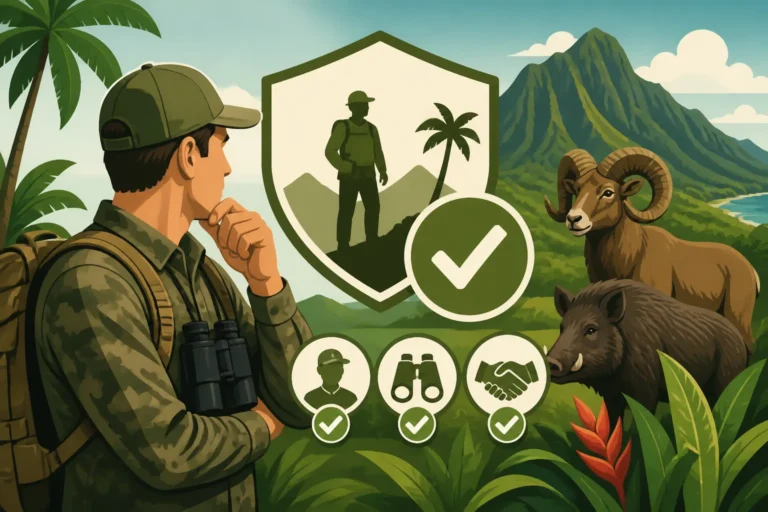
When you hear "guided hunt," most folks picture an outfitter providing everything from transportation and meals to calling in the animal and field dressing it for you. And when you hear "DIY," you imagine going it alone with just your license and gear, figuring everything out from scratch. A semi-guided hunt, especially here in Hawaii, sits squarely between these two extremes. It’s designed for the hunter who wants more input and independence than a fully guided trip, but still values local knowledge and a certain level of support to make their hunt more successful and less stressful.
Defining the "Middle Ground" for Island Hunters
Think of it this way: a semi-guided hunt in Hawaii is like having a really knowledgeable friend who lives on the island point you in the right direction, offer key insights, and perhaps even get you to the starting line, but then steps back and lets you run the race yourself. They aren't holding your hand every step of the way, but they're not abandoning you in the jungle either. This model recognizes that many hunters are capable, experienced, and prefer the satisfaction of calling their own shots, but they need help with the unique logistical challenges and local nuances that Hawaii presents. It’s a compromise that can lead to a richer, more personal hunting experience.
Common Services Included in Semi-Guided Packages
While every outfitter offering semi-guided services might have a slightly different interpretation, there are some common threads you can generally expect. These services are typically geared towards overcoming the biggest hurdles for visiting or less experienced island hunters. This often includes providing essential access, sharing critical information, and sometimes offering gear that's difficult to travel with. It’s about setting you up for success, then letting you execute your plan.
For instance, a semi-guided package might include:
- Pre-hunt consultation: A detailed discussion about target species, hunt areas, expected conditions, and tactics.
- Area orientation: This could be maps, GPS waypoints, or even a drive-through of the unit to show you key terrain features, bedding areas, or travel corridors.
- Access to private land: This is a huge one, as gaining permission on many Hawaii ranches can be tough for an individual. The guide acts as the liaison.
- Basic transportation: Getting you to and from the hunting area, especially if it requires a rugged 4×4 or ATV on challenging island roads.
- Field dressing assistance: While you'd typically do the kill and initial dressing, they might help with packing out the animal or provide facilities for further processing.
- Lodging suggestions (not included): They might not provide lodging, but they'll often point you to good, affordable options nearby.
It's crucial to clarify exactly what is and isn't included before you book. Don't assume anything!
The Pros and Cons: Why Choose Semi-Guided?
Deciding between fully guided, semi-guided, or entirely DIY can feel like a big puzzle. Each option has its unique appeal and its own set of challenges, especially when you're thinking about hunting in a place as unique as Hawaii. Semi-guided hunts offer a compelling middle ground for many, hitting that sweet spot where you get crucial support without sacrificing your independence entirely.
Advantages of a Semi-Guided Hunt
One of the most significant benefits of a semi-guided hunt is the cost savings. Fully guided trips, with all their amenities and hands-on service, naturally come with a higher price tag. By taking on more responsibility yourself, you can significantly reduce the overall expense, making a Hawaii hunt more accessible. This is a huge plus for those on a budget who still want a quality experience.
Another major draw is the increased independence and challenge. Many hunters find immense satisfaction in scouting, tracking, and ultimately harvesting an animal largely on their own terms. A semi-guided format allows you to exercise your hunting skills and strategy, making the success feel more personal and earned. You're making the decisions, adapting to conditions, and truly engaging with the hunt. This can be particularly rewarding for experienced hunters who feel constrained by the structure of a fully guided trip.
Perhaps most importantly, a semi-guided hunt provides critical local knowledge and access. Hawaii's terrain, weather patterns, and animal behavior can be incredibly different from what you might be used to on the mainland. A good semi-guide understands the nuances of hunting Hawaii's Volcanic Terrain or navigating Hawaii's Wet Forest Boundary Trail. They know which gulches hold pigs, when the Axis deer are most active in a kiawe flat, or where the goats prefer to bed on a sea cliff. They can provide maps, explain typical animal movements, and point out areas where you're likely to find game. This insider information is invaluable and can drastically improve your chances of success, reducing wasted time and effort. It also often grants you access to private lands that would otherwise be completely off-limits, unlocking prime hunting opportunities.
Potential Drawbacks and Considerations
While the semi-guided approach offers many benefits, it’s not without its potential downsides, and it’s important to go in with open eyes. The primary consideration is that you are responsible for a significant portion of the hunt. This means you need to be prepared for everything from navigation and field dressing to tracking and packing out your animal. If you’re not comfortable with these tasks, or if your physical fitness isn't up to the demanding nature of Hawaii's terrain, a semi-guided hunt might prove more challenging than anticipated. Hunters unfamiliar with Field Care in Hawaii's Heat and Humidity might find themselves in a bind without immediate assistance.
Another potential issue is the variability in what "semi-guided" actually means. As mentioned, there’s no single, universally accepted definition. Some outfitters might provide extensive information and drop-off services, while others might simply grant access and little else. This lack of standardization means you need to be very diligent in your communication and clarify every detail before booking. Not doing so can lead to unmet expectations and frustration in the field.
Finally, while you gain independence, you might miss out on some of the conveniences of a fully guided trip. Things like gourmet camp meals, luxurious lodging, or having someone else handle all the logistics from start to finish are typically not part of a semi-guided package. You'll likely be responsible for your own food, finding your own accommodations near the hunting area, and handling much of the post-harvest care yourself. If you’re looking for a pampered experience, semi-guided is probably not the right fit. It's a trade-off: more responsibility for more independence and usually, a lower cost.
What to Expect: Services and Support
When you're considering a semi-guided hunt in Hawaii, it's essential to have a clear picture of the types of services and support you can typically expect. This isn't a one-size-fits-all model, so understanding the nuances will help you choose the right outfitter and prepare effectively for your adventure. It's about getting assistance where it truly counts, while leaving you to handle the rest.
Initial Consultations and Trip Planning
The relationship with a good semi-guide often begins long before you even set foot on the islands. Expect detailed initial consultations via phone or video call. These discussions are crucial for both parties. The guide will want to understand your hunting experience, physical capabilities, target species, and expectations. This is your chance to ask every question under the sun about the terrain, the animals, and what exactly their service entails. Don't be shy! Ask about typical weather, the best time of day to hunt, and what kind of equipment they recommend.
Part of this planning might include guidance on securing your Hawaii Hunting Licenses and What They Cost and understanding How Hawaii's Permit-Tag System Works. They won't usually buy them for you, but they'll tell you exactly what you need and where to get it, often pointing you to online resources like GoHunt for current regulations and purchase portals. They can also advise on specific seasons, such as Hawaii Archery Season Windows or Hawaii Muzzleloader Season Windows, and which units might be best for your chosen method. This pre-trip intelligence is gold, saving you countless hours of research and potential headaches.
Navigating Access and Terrain with Assistance
One of the most valuable aspects of a semi-guided hunt in Hawaii is the assistance with access and navigation. Public lands in Hawaii can be rugged, remote, and confusing, with complicated check-in/check-out procedures for Hawaii's Hunting Units and How They Work. Private lands, often managed by large ranches, are generally inaccessible without specific permission or an outfitter agreement.
A semi-guide can provide:
- Private Land Access: This is paramount. Many prime hunting areas for Axis deer, Mouflon, or big feral pigs are on private ranch lands. The semi-guide acts as your liaison, granting you legal access to these properties.
- Transportation to Drop-Off Points: The guide might pick you up from a local meeting spot and transport you via 4×4 or ATV deep into the hunting area, dropping you off at a strategic location. This saves you the hassle of renting specialized vehicles or navigating challenging roads yourself.
- Maps and Waypoints: Instead of leading you, they might provide detailed maps, aerial photos, or even GPS waypoints marking trails, water sources, likely game crossings, and property boundaries. This empowers you to navigate independently while still having a solid framework.
- Terrain Briefing: They'll describe the landscape you'll be hunting – whether it's Hunting Hawaii's Dry Kiawe Forest, Hunting a Steep Windward Gulch, or Hunting Hawaii's High Elevation Alpine Ground. This helps you understand the physical demands and plan your movements accordingly.
This support is designed to get you into the hunt zone effectively and legally, then trust you to make your own way once you're there. It’s a huge relief not to worry about getting stuck, getting lost, or inadvertently trespassing.
Basic Camp Setup and Emergency Protocols
While a semi-guided hunt typically doesn't include elaborate camp setups, some outfitters might offer basic facilities or guidance. For instance, if you're hunting a remote area over multiple days, they might identify suitable spots for pitching your own tent or direct you to nearby public land camping areas. They won't set up your tent, but they might tell you where the best, safest, and most legal place to set up your tent is.
Crucially, a reputable semi-guide will always have emergency protocols in place. Even though you're hunting independently, they are still aware of your general whereabouts and have communication plans. This might involve:
- Scheduled Check-ins: You might agree to check in via satellite messenger or a designated cell phone spot at certain times.
- Emergency Contact Information: They will have your emergency contacts and medical information, and you will have theirs.
- First Aid Knowledge: While they won't accompany you, they are typically trained in basic first aid and can respond if an emergency arises and you can reach them.
- Extraction Plans: In the event of an injury or a successful harvest in a remote location, they will have a plan for Packing Meat Out of a Hawaii Gulch or assisting with extraction.
This level of background support provides a critical safety net, allowing you to hunt with greater confidence knowing that someone local is aware of your presence and has a plan for unforeseen circumstances. It's a huge psychological benefit to know you're not entirely alone on a remote island mountain or lava field.
Finding Semi-Guided Opportunities
So, you’re convinced a semi-guided hunt strikes the right balance for you. The next step is figuring out how to actually find these opportunities in Hawaii. It’s not always as straightforward as searching for "fully guided Hawaii hunts," as the term itself can be pretty fluid. However, with a bit of focused searching and direct communication, you can unearth some fantastic options.
Researching Outfitters and Guides
The best place to start is often with outfitters who do offer fully guided hunts. Many of them also have semi-guided options that aren't prominently advertised on their main packages page. Don't just dismiss a guide because their website showcases elaborate packages; always reach out and ask about alternatives. Look for terms like "drop camps," "un-guided with assistance," or "private land access only."
When researching, pay close attention to reviews and testimonials. While a semi-guided hunt requires more independence from you, the outfitter still needs to be reliable, knowledgeable, and organized. Look for comments that speak to:
- Clear Communication: Did the guide clearly explain what was included?
- Accurate Information: Was the advice about terrain and game movement helpful?
- Reliable Logistics: Were drop-off/pick-up times honored? Was access smooth?
- Local Expertise: Did they demonstrate deep knowledge of the specific hunting area?
Don't hesitate to ask for references from past semi-guided clients. Talking to someone who has actually been through the experience can provide invaluable insights into what to truly expect. Online platforms like BookYourHunt can sometimes list various packages, but often a direct call or email to outfitters advertised there will reveal more flexible, semi-guided options that aren't fully detailed online.
Where to Look for These Specific Services
Finding semi-guided hunts often involves looking in places beyond just typical booking sites. Here are a few avenues:
- Direct with Hawaii Outfitters: This is your primary resource. Search for "Hawaii hunting guides," "Maui Axis deer hunts," "Big Island pig hunts," etc. Once you find outfitters, contact them directly. Explain you're looking for something between fully guided and DIY, and detail the level of support you're seeking. Many guides are flexible and happy to tailor an experience, especially for experienced hunters.
- Private Land Ranches: Some large ranches on islands like Maui or the Big Island offer hunting access directly to individuals, sometimes with minimal oversight but with clear instructions on areas to hunt, check-in/check-out procedures, and game retrieval. This can often fall into a semi-guided category, especially if they provide maps, general advice, and check on you periodically.
- Local Forums and Groups: Online hunting forums or social media groups dedicated to Hawaii hunting can be goldmines. Local hunters might know of individuals or small operations that provide semi-guided services off the beaten path. Always exercise caution and thoroughly vet any recommendations from these sources.
- Specialty Hunt Brokers: While not as common for semi-guided, some hunt brokers might work with Hawaii outfitters who offer these types of packages. Again, be explicit about your needs.
Remember, the key is clear, direct communication. Don't assume. Ask specific questions about what is provided, what is expected of you, and what the contingency plans are for things like bad weather or an animal downed in a tough spot.
Planning Your Self-Reliance Within a Semi-Guided Framework
Choosing a semi-guided hunt means you're embracing a significant level of self-reliance, even with the support of a local expert. This isn't a passive experience; it's an active partnership where your preparation directly impacts your success and safety. You're getting the map and compass, but you're still the one navigating the terrain.
Essential Gear and Physical Preparation
Since your guide won't be carrying your pack or spotting every animal for you, your personal gear and physical conditioning become paramount. Hawaii's hunting grounds are diverse and often challenging. You could be Hunting Molokai's Axis Deer Country on dry, rocky slopes one day, and Hunting Pigs in Hawaii's Rainforest Gulches the next.
Gear:
- Appropriate Footwear: This is non-negotiable. Sturdy, broken-in boots with excellent ankle support and good traction are critical for navigating lava fields, steep hillsides, and slippery, muddy trails. You might even consider waterproof boots for wet areas. Learn about Walking Rough Lava Without Wrecking Your Boots.
- Layered Clothing: Temperatures can swing wildly, especially if you're ascending into higher elevations. Pack quick-drying layers, including rain gear for Hawaii's unpredictable showers.
- Navigation Tools: Even with provided waypoints, carry your own GPS device (and know how to use it) or a reliable mapping app like OnX Hunt, along with a compass and physical map as a backup. There might be No Cell Signal on a Hawaii Hunt in many remote areas.
- First Aid Kit: A comprehensive kit for treating cuts, scrapes, blisters, and other common injuries is a must. You're often a fair distance from immediate help.
- Water and Filtration: Hawaii's heat and humidity demand constant hydration. Carry plenty of water and a reliable water filter or purification tablets. Water and Heat Planning for a Hawaii Hunt is vital.
- Optics: Good binoculars are essential for glassing open country for Axis deer or spotting pigs in thick cover.
- Weapon and Ammunition: Ensure your chosen weapon complies with Hawaii's Legal Weapons by Season and you have plenty of practice with it. If you're Renting a Rifle From a Hawaii Guide, make sure you understand the caliber and practice with it if possible.
Physical Preparation:
Hawaii hunting can be strenuous. You'll likely be Hunting Hawaii on Foot Without a Truck for extended periods, covering uneven, steep, and often hot terrain. Start a fitness regimen well in advance. Focus on cardio, leg strength, and endurance. Simulating hunting conditions with a weighted pack can be beneficial. Don't underestimate the demands of hiking up a steep gulch or navigating dense forest with high humidity.
Independent Hunting Skills
A semi-guided hunt is your chance to really put your hunting skills to the test. Your guide will get you to the starting line and give you some pointers, but the stalk, the shot, and the retrieval are all on you.
- Scouting and Animal Sign: You'll need to actively read animal sign – tracks, scat, rub lines, and feeding areas. Your guide might tell you where to look, but you need to understand what you’re looking for. Learn to identify Reading Axis Deer Sign in Dry Country or Reading Pig Sign Along a Muddy Trail.
- Stalking and Approach: Hawaii's terrain can be loud (crashing through dry kiawe brush) or incredibly dense (wet rainforest). Master quiet movement and using terrain to your advantage. Spot-and-Stalk Tactics on Open Country will be crucial for deer.
- Shot Placement and Ethics: Always take ethical shots within your capabilities. Know your effective range and stick to it.
- Field Dressing and Meat Care: Once an animal is down, it's typically your responsibility to field dress it promptly. This is especially important in Hawaii's warm climate to prevent spoilage. Understand how to perform Field Dressing Axis Deer in Hawaii Heat and plan for Cooling Meat Fast on a Hawaii Hunt. You'll need to know how to tag your animal correctly as well, which your guide will briefly explain, but the responsibility is yours. Tagging an Animal Correctly in Hawaii is a must.
- Tracking and Retrieval: If your animal doesn't drop immediately, you're primarily responsible for tracking it. The guide may assist in recovery, but don't count on it as their primary responsibility in a semi-guided scenario. Be prepared for a challenging retrieve, especially from steep areas like Getting a Pig Out of a Hawaii Gulch.
The satisfaction of success on a semi-guided hunt is often amplified precisely because you did so much of the work yourself. It builds confidence and deepens your connection to the landscape and the hunt.
Cost Considerations for Semi-Guided Hunts
Budgeting for a Hawaii hunting trip is a critical step, and the cost of a semi-guided hunt is often a significant factor for many hunters. While these options are generally more affordable than fully guided trips, they still represent an investment. Understanding the various components that contribute to the overall cost, and how semi-guided fees compare, can help you make an informed decision.
The Financial Sweet Spot: Lower Than Fully Guided
One of the primary reasons hunters opt for semi-guided services is the reduced financial outlay compared to a full-service, all-inclusive guided hunt. A fully guided hunt covers almost every aspect, from professional guiding throughout the day to meals, lodging, and often even initial field processing. This comprehensive service naturally comes with a premium price.
Semi-guided hunts strip away some of those amenities and constant supervision, passing the savings on to you. You're effectively paying for specific services:
- Expert Local Knowledge: Access to someone who intimately knows the land and game behavior.
- Private Land Access: This can be a significant portion of the fee, as securing hunting rights on prime private properties is a major value proposition.
- Logistical Support: Things like transportation to remote trailheads or assistance with initial recovery are built into the cost.
- Pre-Hunt Consultation and Planning: The time the guide spends preparing you and discussing strategy.
While actual figures vary greatly by outfitter, island, and target species, you can generally expect a semi-guided hunt to fall into a price bracket that is considerably less than a fully guided one, but more than a purely DIY public land hunt. It strikes a balance, offering crucial assistance without breaking the bank.
Factors Influencing Semi-Guided Hunt Pricing
Several factors can influence the final price of a semi-guided hunt in Hawaii. Being aware of these can help you understand quotes and compare options effectively:
- Species Being Hunted: High-demand species like Axis deer on Maui or Molokai, particularly for trophy bucks, tend to command higher prices. Hunts for feral pigs or goats, while still challenging, might be more affordable.
- Island and Location: Access on certain islands, especially Molokai or Lanai, might be more restricted or involve higher operational costs for guides, which can reflect in pricing. Hunting a remote Hawaii Lava Kipuka might cost more for the logistics involved.
- Duration of the Hunt: A single day semi-guided experience will naturally cost less than a multi-day offering that includes additional drop-offs or check-ins.
- Level of Support: While "semi-guided" implies a certain level of independence, some packages might offer more assistance (e.g., more frequent check-ins, more extensive area orientation) than others, which could impact the price. Clarify exactly what you're getting.
- Private vs. Public Land: Accessing prime private land is a significant value add and will almost always be more expensive than hunting public land. Even if it's public, if the guide is providing specialized transport into a hard-to-reach unit, that adds to the cost.
- Additional Services: Any add-ons, such as rental firearms, advanced meat processing, or shipping services, will increase the total cost.
Here's a general idea of how costs might compare (remembering no specific prices):
| Feature | Fully Guided Hunt | Semi-Guided Hunt | DIY Public Land Hunt |
|---|---|---|---|
| Cost Level | Highest | Moderate | Lowest (excluding travel) |
| Guide Presence | 100% with hunter, hands-on | Pre-hunt, drop-off, check-ins, remote advice | None |
| Local Knowledge | Directly applied by guide | Provided, hunter applies independently | Hunter researches, learns on the fly |
| Land Access | Usually private, sometimes public permit | Often private, some public access | Public land permits (your responsibility) |
| Transportation | Provided (to/from camp, in field) | Drop-off/pick-up, sometimes basic transport | Your own vehicle/foot travel |
| Meals & Lodging | Often included | Hunter responsible | Hunter responsible |
| Gear Provided | Sometimes rifle, optics, specialized gear | Minimal, sometimes rifle rental options | Hunter provides all |
| Field Dressing | Guide performs, assists with pack out | Hunter performs, guide may assist pack out | Hunter performs all |
| Hunter Skill | Can be novice to expert | Intermediate to expert, independent | Expert required for success |
Beyond the Outfitter Fee: Other Expenses to Budget For
Remember that the semi-guided fee is just one part of your overall Hawaii hunting budget. Don't forget to account for these other essential expenses:
- Airfare and Inter-Island Travel: Getting to Hawaii and potentially between islands for your hunt.
- Vehicle Rental: Even if your guide drops you off, you'll need transportation for the rest of your trip.
- Accommodations: Hotels, vacation rentals, or camping fees for before, during (if not staying at a rustic camp), and after your hunt.
- Food and Drink: Groceries, restaurant meals, and snacks for your entire trip.
- Hunting Licenses and Permit-Tags: These are mandatory and have separate costs. Don't forget your Hawaii's Game Bird Stamp if bird hunting. You can find information on Hawaii Nonresident Hunting License Options and Hawaii Resident Hunting License Options through the state's official wildlife division or resources like GoHunt.
- Shipping Meat/Trophies: If you're successful, factor in the cost of processing and shipping your meat and/or skull/cape home. This can be substantial. Shipping Meat Home From Hawaii and Getting a Cape and Horns Shipped Home require careful planning.
- Gratuities: Tipping your guide for good service is customary, even on a semi-guided trip.
- Personal Gear: If you need to buy specialized boots, optics, or rain gear for the trip.
By taking a holistic view of all these costs, you can create a realistic budget and ensure your semi-guided Hawaii hunting adventure is both successful and financially manageable.
Disclaimer
This article is for general informational purposes only and does not constitute professional advice. Laws, prices and regulations vary by location and change over time. Consult a qualified professional for guidance on your specific situation.