Hawaii’s Legal Weapons by Season
Hunting in Hawaii can feel like navigating a whole different world, and nothing highlights that more than trying to figure out the maze of legal weapon regulations. It's not like the mainland where things are often pretty straightforward. Here, between the unique terrain, the diverse species, and the specific island rules, knowing what firearm, bow, or even knife you can legally carry for your hunt can be a real head-scratcher. This comprehensive guide is here to untangle those rules, breaking down what weapons are permitted for Hawaii's various game animals and seasons, ensuring you step into the field with confidence and compliance.
Understanding Hawaii's Approach to Hunting Weapons
Hawaii's hunting scene is truly unique, not just in its stunning landscapes and introduced game species, but also in how it regulates hunting equipment. It's easy to assume the rules will be similar to what you're used to back home, but that's often not the case. The Department of Land and Natural Resources (DLNR) Division of Forestry and Wildlife (DOFAW) sets these rules with a focus on public safety, ethical hunting practices, and the specific challenges of managing game populations across varied island ecosystems.
The Philosophy Behind Weapon Regulations
The regulations governing hunting weapons in Hawaii are rooted in several key principles. First and foremost is public safety. With many public hunting areas bordering residential zones, agricultural lands, or popular recreational spots, stringent rules help minimize risks. Ethical hunting is another huge factor; DOFAW wants to ensure that hunters use equipment capable of a clean, humane harvest, which is why there are minimum caliber and draw weight requirements. Lastly, the unique environmental conditions play a role. For example, in dense rainforests, a shorter, quicker-handling weapon might be implicitly favored by terrain, even if not explicitly mandated. This blend means that while some rules mirror mainland practices, many are distinctly Hawaiian, designed to fit the specific challenges and contexts of the islands.
Where to Find the Official Rules and Stay Updated
Navigating the nuances of Hawaii's hunting regulations can feel like a full-time job. The official source for all rules is the DOFAW administrative rules, but let's be real, reading government documents isn't always the most user-friendly experience. That's why it's crucial to consult the annual hunting regulations booklet, which provides a more digestible summary and is updated every season. You can usually find these booklets online on the DOFAW website or pick up a physical copy at one of their offices. For a truly convenient experience, many hunters find resources like GoHunt incredibly helpful for staying on top of the latest rule changes and season dates, as they often aggregate this information in an accessible format. Always double-check the current year's regulations before heading out, as rules can change without much notice, sometimes even mid-season if conditions, like drought or wildfire risk, necessitate it.
Legal Rifle Calibers and Considerations for Big Game
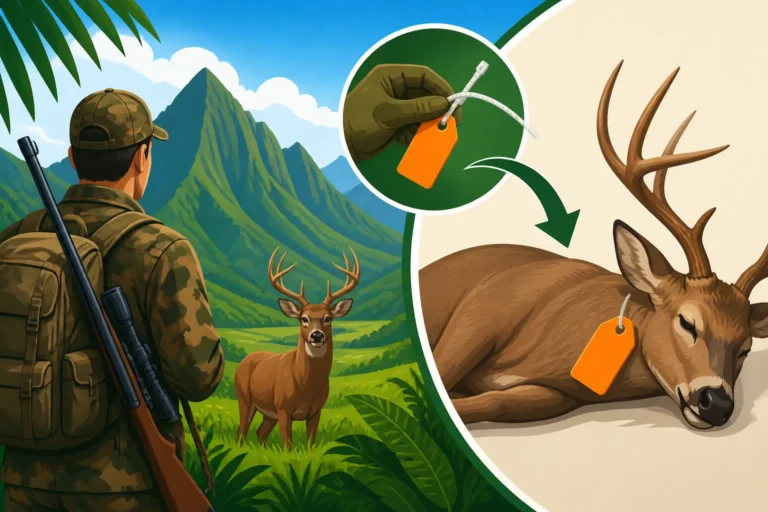
When it comes to pursuing Hawaii's big game animals like Axis deer, feral pigs, Mouflon sheep, or goats, rifles are often the weapon of choice for many hunters. However, just grabbing your favorite deer rifle from back home might not be enough. Hawaii has specific minimum caliber requirements and considerations you need to be aware of.
Minimum Caliber Requirements for Mammals
Hawaii's hunting regulations stipulate minimum calibers for taking game mammals to ensure a quick, ethical kill. Generally, for all big game species, you'll need to use a centerfire rifle of .22 caliber or larger, and it must fire an expanding bullet. While a .22 centerfire might be technically legal, most seasoned Hawaii hunters will tell you that for Axis deer, Mouflon, or larger feral pigs, you'll want to step up to something more substantial, typically a .243 Winchester or larger. The common sentiment is that a .243 Win, .270 Win, 6.5 Creedmoor, .308 Win, or .30-06 Springfield are excellent choices that provide ample knockdown power for these resilient animals, especially if you're making a longer shot across open country or trying to anchor a pig in thick guava. Using an undersized caliber not only risks wounding an animal, leading to unnecessary suffering and a lost game animal, but it can also be a safety concern if you need to follow a wounded animal into dense cover.
Rifle Season Specifics and Island Variations
Rifle seasons for game mammals vary significantly by island and even by specific hunting unit. For instance, Maui's public lands offer extensive opportunities for Hunting Maui's Year-Round Axis Deer Units with rifles, while the Big Island has designated rifle seasons for Mouflon sheep on Mauna Kea and feral pigs in various forest reserves. Lanai, famous for its Axis deer, primarily features drawn rifle hunts that are highly sought after, with specific When Lanai's Axis Deer Rifle Season Runs dates. Kauai's unique black-tailed deer also have their own rifle seasons. It's critical to note that public land rifle seasons often have specific open dates, unlike some of the more liberal year-round opportunities found on private lands. Always consult the current year's regulations for the specific island and unit you plan to hunt to confirm rifle legality and season dates.
Ammunition Rules and Restrictions
Beyond caliber, Hawaii also has rules regarding the type of ammunition you can use. As mentioned, only expanding bullets (soft point, hollow point, ballistic tip, etc.) are permitted for big game hunting. Full metal jacket (FMJ) ammunition is generally prohibited for hunting purposes as it tends to pencil through animals, reducing the likelihood of a humane kill. While there aren't typically explicit state-level magazine capacity restrictions for hunting rifles, federal and local county laws regarding firearms might still apply to semi-automatic rifles. It's always best practice to use standard capacity magazines, typically 5 or 10 rounds, and ensure you're familiar with all local ordinances, especially if traveling through different counties or staying in different areas.
Muzzleloader Regulations for Hawaii Hunts
Muzzleloader hunting offers a unique challenge and a step back in time, and it's a popular option for many hunters in Hawaii, particularly for specific drawn seasons. The rules for these traditional firearms are distinct from modern rifles, so pay close attention.
Approved Muzzleloader Types and Calibers
Hawaii's regulations for muzzleloaders typically define them as firearms that are loaded from the muzzle with black powder or a synthetic substitute and a single projectile. This generally includes both traditional flintlock and percussion cap rifles, as well as modern in-line muzzleloaders. The minimum bore diameter for hunting big game with a muzzleloader is usually .45 caliber. For species like Axis deer or Mouflon, a .50 caliber muzzleloader is a very popular choice, as it provides excellent energy with a well-placed shot. You can use saboted bullets, patched round balls, or conical projectiles, but similar to modern rifles, they must be designed to expand upon impact for an ethical harvest. It's vital to ensure your muzzleloader is in good working order and that you've practiced extensively with your chosen load.
Muzzleloader Seasons and Unique Challenges
Muzzleloader seasons often run for specific windows, providing an alternative or extended opportunity to hunt certain species. For instance, there are designated Hawaii Muzzleloader Season Windows for Axis deer and Mouflon, with some units like Lanai offering specific Hunting Lanai's Mouflon Muzzleloader Days. These seasons are less crowded than rifle seasons and can offer a more solitary hunting experience.
However, hunting with a muzzleloader in Hawaii comes with its own set of challenges, particularly related to the islands' often-humid climate. Muzzleloading in Hawaii's Humidity can be a real struggle, as moisture is the enemy of black powder and primers. Hunters frequently employ waterproof caps, sealed priming systems, and carefully protect their powder charges. If you're hunting in one of Hawaii's wet forest units, like those on the windward side of the Big Island, knowing how to adequately protect your setup and Keeping Powder Dry on a Wet Forest Hunt will be paramount to success and avoiding misfires. It requires meticulous attention to detail and preparation to ensure your muzzleloader performs reliably when that shot opportunity finally arises.
Archery Equipment: Bows, Arrows, and Crossbows
Archery hunting is deeply ingrained in Hawaii's hunting culture, offering a quiet, challenging, and often more intimate experience in the islands' diverse landscapes. Whether you prefer a compound, recurve, or traditional longbow, there are specific regulations you need to adhere to.
Minimum Draw Weight and Arrow Specifications
For archery hunting big game in Hawaii, there are minimum draw weight requirements to ensure sufficient kinetic energy for a humane kill. Generally, a minimum draw weight of 40 pounds is required for compound bows, recurves, and longbows when hunting game mammals. Your arrows must be equipped with broadheads that have at least two sharp, fixed cutting edges. Mechanical broadheads are generally permitted, provided they meet the minimum cutting diameter requirements (typically 7/8 inch when open). Carbon, aluminum, or wood arrows are all acceptable, but ensuring your arrow is appropriately spined for your bow's draw weight and length is crucial for accuracy. Many archers choose a heavier arrow setup for Choosing an Arrow Setup for Axis Deer to maximize penetration on these tough animals. Remember, shot placement is king with archery, so consistent practice is more important than ever.
Crossbow Legality in Hawaii
The question of crossbow legality for hunting in Hawaii often comes up. As of recent regulations, Are Crossbows Legal in Hawaii? for hunting game mammals, but only if you possess a valid hunting license and a permit from the Department of Health. This permit is typically issued to individuals who have a physical disability that prevents them from using a conventional bow. It's not a blanket approval for all hunters to use crossbows, so if you plan to use one, you must go through the proper channels and obtain the necessary documentation well in advance of your hunt. This policy aims to accommodate hunters with disabilities while maintaining traditional archery challenges for the general hunting population.
Archery Seasons and Strategic Considerations
Hawaii offers some incredibly generous Hawaii Archery Season Windows for many game species, often running longer than rifle or muzzleloader seasons. For instance, Axis deer and feral pigs can often be pursued with a bow for extended periods on public lands, providing ample opportunity for hunters. Bowhunting Hawaii's Long Archery Windows can be particularly appealing, as it allows hunters to spread out their trips or capitalize on less crowded periods.
Archery hunting in Hawaii demands a strategic approach. It requires close encounters, often involving extensive scouting, silent movement, and an intimate understanding of animal behavior. Whether you're spot-and-stalk hunting Axis deer in dry kiawe flats or still-hunting pigs in dense rainforest gulches, archery provides a rewarding challenge. The extended seasons also mean you have more flexibility to hunt during various weather patterns or rutting periods, increasing your chances of success if you put in the effort.
Shotguns and Specialty Weapons
While rifles and bows often dominate the conversation for big game, shotguns and other specialty weapons have their rightful place in Hawaii's hunting regulations, particularly for bird hunting and specific methods of pig hunting.
Shotgun Use for Game Mammals and Birds
Shotguns are primarily the weapon of choice for game bird hunting in Hawaii, which boasts species like francolin, pheasant, chukar, quail, and various doves. Legal gauges typically include 10, 12, 16, 20, and .410 bore. For bird hunting, rules often specify maximum shot sizes (e.g., no larger than #2 for most birds), and lead shot is generally permitted on most private and public lands, though some specific conservation areas might have steel shot requirements, so always verify. Hunters should always check the Hawaii Game Bird Seasons and Bag Limits for specific regulations.
For game mammals, Shotgun Rules for Game Mammals dictate that slugs are typically required. Shotguns loaded with buckshot are generally not permitted for big game hunting on public lands in Hawaii due to safety concerns in often-thick cover and the desire for more precise, ethical kills. However, some private landowners may have different rules, so always clarify if hunting on private property. When using slugs, ensure your shotgun is sighted in properly for accuracy, as range and precision are critical.
Dog Hunting Weapons (Knife, Spear, Archery)
Dog hunting for feral pigs is a deeply rooted tradition and a highly effective method for managing these destructive animals in Hawaii's dense terrain. When hunting pigs with dogs, the regulations allow for specific close-quarters weapons once the dogs have "bayed" or "caught" a pig. Legal Weapons When Hunting Pigs With Dogs often include a knife or a spear. Knives must be of a suitable length and sharpness for a humane kill, typically a fixed-blade hunting knife of at least 6-8 inches. Spears, often homemade and ranging from 4 to 8 feet long, are also permitted for quickly dispatching a pig in close quarters.
While less common, some hunters also use archery equipment in conjunction with dogs, though this requires extreme caution and skill to avoid hitting a dog. When Using a Knife or Spear on a Bayed Pig, safety is paramount. The situation is often chaotic and fast-paced, with dogs and pigs in close proximity. Hunters must be highly trained, physically capable, and have a clear shot to ensure a humane kill without injuring their dogs or themselves. This method is not for the faint of heart and requires significant experience.
Prohibited Weapons and Methods
Just as important as knowing what you can use is understanding what you cannot. Hawaii has a clear set of prohibited weapons and methods, designed to ensure ethical hunting, public safety, and fair chase. Ignoring these rules can lead to severe penalties, including fines, license revocation, and even criminal charges.
What You Cannot Use in Hawaii
Several types of weapons are strictly prohibited for hunting in Hawaii. Fully automatic firearms are illegal under federal and state law, and this extends to hunting. Silencers or suppressors, while legal in many mainland states, also fall under strict regulation in Hawaii, and their use for hunting is generally prohibited. Electronic calls, while sometimes allowed for predators on the mainland, are often restricted for most game species in Hawaii to maintain fair chase principles. Similarly, the use of artificial lights, spotlights, or night vision equipment for hunting game animals is illegal, reinforcing the Why Night Hunting Is Restricted policy for most species. Additionally, any form of poison, explosives, or traps (unless part of a regulated trapping program for pest control) is strictly forbidden for hunting.
Restricted Practices to Avoid
Beyond prohibited weapons, there are also restricted practices that hunters must absolutely avoid. Rules on Shooting From a Vehicle are very clear: you cannot shoot game from a vehicle, boat, or any motorized conveyance, whether it's moving or stationary, on public or private land. This includes shooting from or across public roads. It's also illegal to hunt within certain distances of dwellings, schools, or other occupied structures, a common safety measure in many states.
Baiting game animals, such as feral pigs or Axis deer, is generally illegal on public lands in Hawaii, falling under The Rules Against Baiting Game. This ensures fair chase and prevents concentrated animal populations that could lead to disease spread. Hunting in officially designated closed areas, wildlife sanctuaries, or protected natural area reserves without specific authorization is also strictly prohibited. Always respect posted signs and unit boundaries; ignorance of the law is not an excuse. Using tools like the OuterSpatial app, which DOFAW uses for check-in/check-out, often provides clear unit boundaries that can help prevent accidental trespass or hunting in closed zones.
Transporting Firearms to and Within Hawaii
For many hunters, a trip to Hawaii involves flying with their firearms. This process has specific federal and state requirements that you must follow to avoid serious legal issues and travel delays. It's a critical aspect that often causes anxiety for visiting hunters.
Flying to Hawaii with a Firearm
Bringing a firearm to Hawaii requires careful planning and adherence to both TSA regulations and Hawaii state law. TSA rules mandate that firearms must be unloaded, declared to the airline, and transported in a locked, hard-sided container as checked luggage. Ammunition must be in a separate, secure container. Upon arrival in Hawaii, state law requires that all firearms, even those brought in by non-residents for hunting, be registered with the Honolulu Police Department or the local county police department within 72 hours of arrival. This means if you land in Kona, you'll go to the Hawaii Police Department; if in Kahului, the Maui Police Department, and so on. Understanding Hawaii Rules on Bringing a Firearm to the Islands and Registering a Firearm After Arriving in Hawaii is non-negotiable. It's a good idea to complete any necessary permit applications online before your trip, if possible, to expedite the process upon arrival.
Inter-Island Travel and Transport on Island
If your hunt takes you to multiple islands, or even just from the airport to your hunting unit, you need to understand local transport rules. Inter-Island Flights With a Firearm require repeating the declaration process with the airline for each flight. It's crucial that firearms remain unloaded and secured in a hard case. When transporting firearms in a vehicle on any island, they must be unloaded, preferably in a case or scabbard, and out of immediate reach of the driver or passengers. Storing firearms safely and securely at your accommodation when not in use is also paramount. Many hunters opt to rent a rifle from a guide if on a guided hunt, or from a local gun store, to avoid the hassle of flying with their own. However, if you do bring your own, meticulous adherence to every rule is essential.
| Weapon Type | Species Typically Hunted | Minimum Caliber/Weight | Season Type | Notes |
|---|---|---|---|---|
| Rifle | Axis Deer, Mouflon, Pigs, Goats | .22 Centerfire (expanding bullet), but .243+ recommended | Rifle Seasons | Most common for big game; consult unit-specific "When Hawaii's Rifle Units Open." |
| Muzzleloader | Axis Deer, Mouflon, Pigs, Goats | .45 caliber minimum | Muzzleloader Seasons | Quieter, less crowded hunts; check "Hawaii Muzzleloader Season Windows." Humidity is a challenge. |
| Archery (Bow) | Axis Deer, Mouflon, Pigs, Goats | 40 lbs draw weight, fixed/mechanical broadhead | Archery Seasons | Longest seasons, quiet; see "Bowhunting Hawaii's Long Archery Windows." |
| Archery (Crossbow) | Axis Deer, Mouflon, Pigs, Goats | Disability permit required | Archery Seasons | "Are Crossbows Legal in Hawaii?" outlines strict conditions. |
| Shotgun (Slugs) | Pigs, Goats (limited use) | 10, 12, 16, 20 gauge | Rifle/Muzzleloader Seasons | "Shotgun Rules for Game Mammals" are restrictive; generally not for deer/sheep. |
| Shotgun (Shot) | Game Birds | 10, 12, 16, 20, .410 gauge | Game Bird Seasons | Required for bird hunting; check "Hawaii Game Bird Seasons and Bag Limits" for shot size. |
| Knife/Spear | Feral Pigs (with dogs) | Suitable for humane kill | Dog Hunting | Used in close quarters during "Legal Weapons When Hunting Pigs With Dogs." |
Safety, Blaze Orange, and Hunter Conduct
Beyond the specific weapon types, overall hunter safety and conduct are paramount in Hawaii's diverse and often rugged hunting environments. Adhering to safety regulations not only protects you and those around you but also ensures a positive hunting experience for everyone sharing the land.
Hawaii's Blaze Orange Requirements
Blaze orange requirements are a crucial safety measure designed to make hunters more visible to each other, especially in dense vegetation or during low light conditions. In Hawaii, Hawaii Blaze Orange Requirements typically mandate wearing at least one outer garment of solid blaze orange (such as a vest, jacket, shirt, or hat) when hunting game mammals during rifle or muzzleloader seasons on public lands. This applies to both the hunter and anyone accompanying them. The specific square inches of blaze orange required may vary, so always refer to the current regulations. While archery-only seasons or units often have exemptions from blaze orange requirements, it's never a bad idea to incorporate some into your gear for added visibility, especially if other hunting activities might be occurring in the same general area. For dog hunting, specialized vests for dogs, often in blaze orange or similar bright colors, are also common for their safety.
General Hunter Safety Guidelines
The fundamental rules of hunter safety apply universally, even in Hawaii. Always treat every firearm as if it were loaded. Keep the muzzle pointed in a safe direction, keep your finger off the trigger until ready to shoot, and be absolutely sure of your target and what is beyond it. These basic principles are even more critical in Hawaii, where dense vegetation can obscure targets, and uneven terrain can lead to falls.
Hunting in Hawaii often means navigating challenging landscapes, from steep gulches and slick rainforests to jagged lava fields. Always hunt with a partner or at least inform someone of your hunting plans, including your intended route and return time, especially if heading into remote areas where No Cell Signal on a Hawaii Hunt is a common reality. Staying hydrated, planning for rapidly changing weather conditions, and carrying a well-stocked first-aid kit are also essential. Respect other land users, including hikers, farmers, and other hunters. Being a responsible and safe hunter not only ensures your well-being but also fosters a positive image for hunting in the islands.
Disclaimer
The information provided in this guide is for general informational purposes only and is not a substitute for the official hunting regulations published by the Hawaii Department of Land and Natural Resources (DLNR) Division of Forestry and Wildlife (DOFAW). Hunting laws and regulations can change frequently. It is the responsibility of every hunter to consult the most current Hawaii Hunting Regulations booklet and any specific unit announcements before engaging in any hunting activity. Failure to do so may result in fines, penalties, or loss of hunting privileges.