Hunting Hawaii’s Feral Pigs
The pursuit of feral pigs in Hawaii is a true test of grit, patience, and adaptability, often pushing hunters to their physical and mental limits against a backdrop of breathtaking, yet brutal, terrain. It's a hunt that can feel incredibly frustrating when the pigs seem to vanish into thin air, or immensely rewarding when you finally connect with an animal that’s as cunning as it is resilient. This guide aims to prepare you for the unique challenges and deep satisfaction that comes with hunting Hawaii's feral pigs.
The Ubiquitous Challenge of Hawaii's Feral Pigs
If you've spent any time in Hawaii, you know that feral pigs are, shall we say, everywhere. They're a significant part of the island ecosystem, for better or worse, and their presence impacts everything from native forests to agricultural fields. For hunters, they represent an abundant, challenging, and year-round opportunity, but one that demands a deep understanding of their habits and the demanding environment they call home.
Why Feral Pigs Thrive Across the Islands
Hawaii’s feral pigs aren't native, but they've certainly made themselves at home. Their story begins centuries ago with the Polynesian settlers who brought the original pua‘a (pig) to these islands. These smaller, lean animals adapted to the lush valleys and coastal areas. Fast forward to European contact, and larger domestic pigs, often of European wild boar lineage, were introduced, leading to the robust, often tusked, and incredibly hardy animals we hunt today. This mix created a truly formidable quarry.
One of the primary reasons these pigs thrive is the almost complete absence of natural predators. Unlike mainland populations that face wolves, bears, and mountain lions, Hawaii's pigs largely exist at the top of their food chain, experiencing pressure only from human hunters. This lack of predation allows their populations to expand rapidly, especially in areas with abundant food and cover. They are incredibly adaptable, capable of living in the wet, dense rainforests of the windward sides, the dry, thorny kiawe forests of the leeward coasts, and even the higher elevation open grasslands. Their ability to switch diets and habitats means they can survive and reproduce successfully across the diverse Hawaiian landscape. This history, detailing How Feral Pigs Reached Hawaii, is crucial to understanding their current distribution and impact.
Understanding Pig Behavior and Habits
Feral pigs are creatures of opportunity and survival, and their behavior is largely dictated by food availability, water, and pressure from hunters. While they can be somewhat diurnal in truly remote, undisturbed areas, most pigs in hunted units are primarily nocturnal or crepuscular, meaning they're most active at dawn, dusk, and throughout the night. During the day, they'll retreat into the densest, most impenetrable cover they can find – think massive guava thickets, tangled fern beds, or deep, shadowed gulches where they feel safe.
Their diet is incredibly varied, making them excellent survivors. Pigs are omnivores, rooting extensively for tubers, roots, and invertebrates, but they'll also feast on fallen fruits like guava, mango, and avocado, consume carrion, and even prey on ground-nesting birds and their eggs. This rooting behavior, while essential for their sustenance, is also one of the most destructive aspects of their presence, turning vast tracts of forest floor into churned-up mud, which then contributes to erosion. You'll often find tell-tale signs of their rooting in damp, rich soil, resembling a tilled garden. Another key behavior is wallowing. Pigs will seek out muddy depressions to roll in, coating themselves in mud to cool down, protect their skin from insects and sun, and to remove parasites. These wallows are excellent indicators of pig presence and activity. Understanding What Feral Pigs Eat in the Islands is key to locating them.
The Environmental Impact and Hunter's Role
The destructive capabilities of feral pigs on Hawaii’s fragile native ecosystems cannot be overstated. Their constant rooting disturbs the soil, compacts it, and creates pathways for invasive plant species to colonize, outcompeting native flora. This, in turn, impacts native forest birds that rely on specific plants for food and nesting sites. Pigs also directly prey on the eggs and chicks of ground-nesting birds, and they act as vectors for invasive seeds and diseases, spreading them throughout the forest. Perhaps most critically, their rooting and wallowing near stream banks and in watersheds lead to increased erosion and sediment runoff, severely impacting water quality for both human communities and delicate marine ecosystems downstream.
This immense environmental impact is precisely why hunting feral pigs in Hawaii is not just a recreational activity but a vital, ongoing conservation effort. Hunters play a critical role in managing these populations, helping to mitigate the damage they inflict on native plants, endangered birds, and precious water resources. The Department of Land and Natural Resources (DLNR) acknowledges hunters as essential partners in controlling invasive species. By participating in pig hunting, you're not just enjoying the thrill of the chase; you're directly contributing to the health and future of Hawaii's unique natural heritage. It's a responsibility that every hunter should take seriously, recognizing the important work being done to counteract What Feral Pigs Do to Hawaii's Forests.
Legalities and Logistics: Getting Started in Hawaii Pig Hunting
Venturing out for feral pigs in Hawaii means understanding the rules and getting your ducks in a row. It’s not just about having the right gear; it’s about navigating the state’s specific licensing, permit, and unit access systems. Don't let the relaxed island vibe fool you – Hawaii has strict hunting regulations that need to be followed to the letter.
Licensing, Stamps, and Permit-Tags
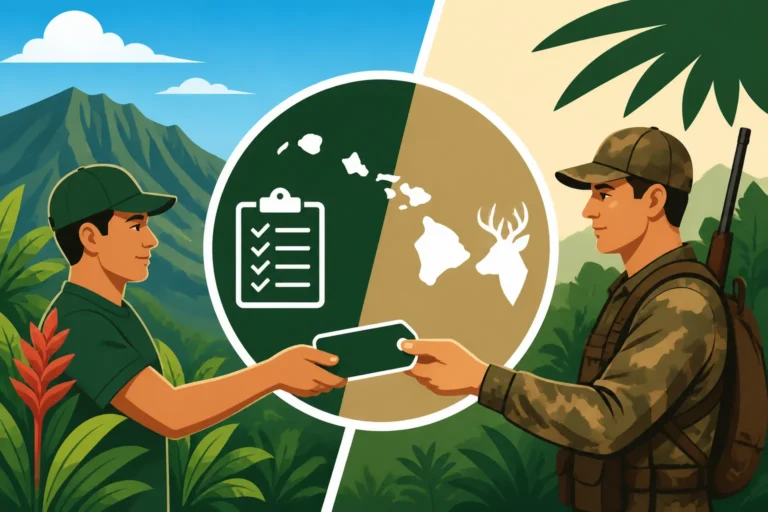
First things first: you need a valid Hawaii hunting license. Whether you're a resident or a non-resident, this is your entry ticket. Non-residents will naturally pay a higher fee, but the process is straightforward. Beyond the basic license, you'll also need to purchase a Hawaii Wildlife Conservation Stamp, which contributes to wildlife management programs across the state. The good news for most pig hunters is that, unlike Axis deer or Mouflon sheep, feral pigs typically do not require a separate permit-tag for public land hunts on most islands, including the Big Island (Hawaii Island), Oahu, Maui, and Kauai. This simplifies things considerably compared to drawn hunts for other species.
However, regulations can change, and specific units might have unique requirements, so always, always double-check the current hunting regulations booklet put out by the DLNR’s Division of Forestry and Wildlife (DOFAW). A fantastic resource for staying up-to-date and even purchasing your license and stamps online is the GoHunt Hawaii website. It’s designed to streamline the process, making it easier for both residents and visitors to comply with state requirements. Knowing the ins and outs of Hawaii Hunting Licenses and What They Cost is the first critical step.
Hunter Education and Safety First
If you’re a first-time hunter in Hawaii, or if you don't possess a valid hunter education certificate from another state that meets Hawaii's reciprocity standards, you’ll need to complete a Hawaii Hunter Education course. This course covers essential safety protocols, ethical hunting practices, wildlife identification, and an overview of Hawaii-specific regulations. Non-residents who have completed a hunter education course in their home state can usually obtain a Letter of Exemption from the Hawaii DLNR, but it's crucial to apply for this well in advance of your trip. The process for obtaining this exemption, or completing the course, is detailed under Hawaii Hunter Education Requirements.
Beyond the administrative requirements, safety in Hawaii’s hunting environments is paramount. The terrain is often steep, uneven, and covered in dense, thorny vegetation or sharp volcanic rock. Visibility can be extremely limited, especially in thick rainforests. Blaze orange is often required or highly recommended, even for pig hunting, to ensure you’re visible to other hunters. Always confirm local requirements. Carrying a loaded firearm in such conditions demands constant vigilance, ensuring positive identification of your target, and always being aware of what lies beyond. Many local pig hunters use dogs and knives, which introduces another set of safety considerations, particularly regarding accidental injury to dogs or hunters in the heat of a chase.
Unit Access and Check-In Procedures
Hawaii’s public hunting lands are organized into various "units" across the islands. Each unit has specific regulations regarding hunting days, legal methods, and species allowed. For pig hunting, many units on Hawaii Island, Oahu, Maui, and Kauai are open year-round on weekends and state holidays, with some even offering midweek access. Before heading out, you absolutely must confirm the operational status of your chosen unit. DOFAW sometimes closes units temporarily for management purposes or due to environmental conditions.
The check-in and check-out process is a mandatory part of hunting public land in Hawaii. This system helps DOFAW monitor hunter effort and harvest, contributing to better management decisions. Traditionally, this involved filling out paper cards at designated hunter check stations at the entrance of a unit. However, many units now utilize the OuterSpatial app, which allows you to check in and out digitally using your smartphone, even if you don't have cell service in the field (it caches the data and uploads when you regain signal). Always carry a backup paper card, just in case. Understanding the boundaries of your unit is also non-negotiable. Use detailed maps (like those found on GoHunt Hawaii, or apps like onX Hunt) and always be mindful of private land boundaries. Ignoring these procedures or trespassing can lead to severe penalties. Details on Checking In and Out of Hawaii Hunting Units are vital for every hunter.
Hunting Methods: From Dogs to Still-Hunting
Hawaii's unique terrain and the tenacious nature of feral pigs have given rise to distinct hunting traditions and methods. Whether you're drawn to the adrenaline-fueled chase with dogs or the quiet stealth of still-hunting, each approach requires skill, dedication, and an understanding of the environment.
Dog Hunting: The Traditional Hawaii Way
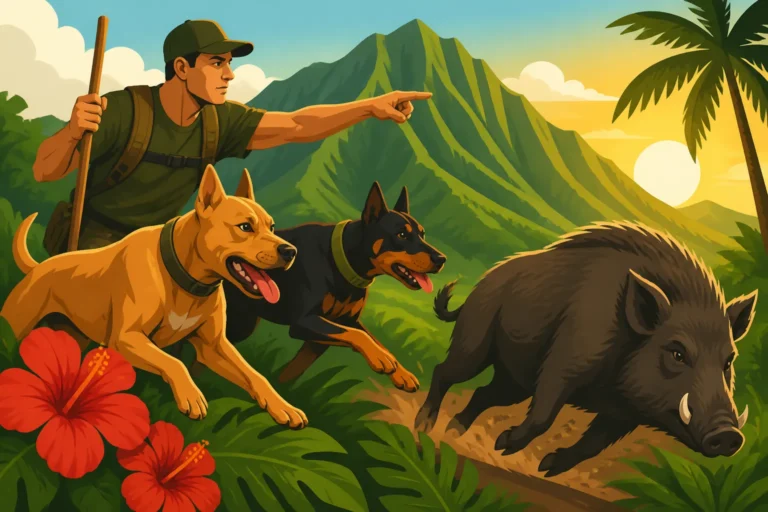
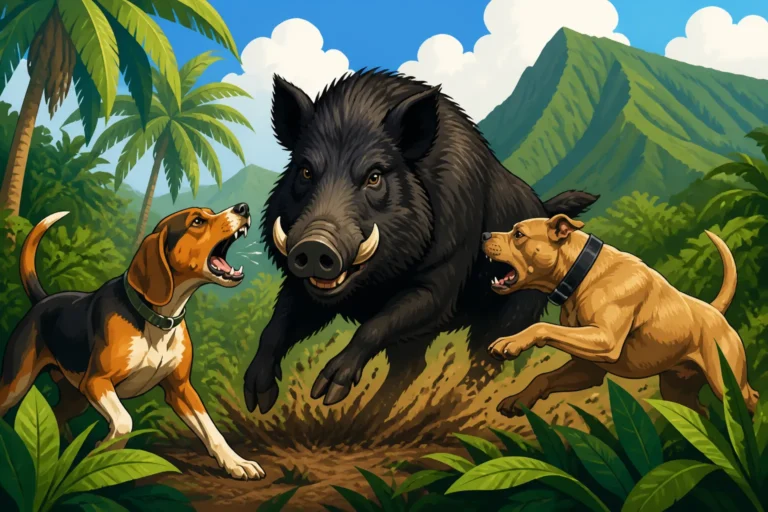
Without a doubt, the most iconic and culturally significant method for hunting feral pigs in Hawaii is with dogs. This isn't just a hunting technique; it's a deep-rooted tradition, often passed down through generations, and it's a testament to the close bond between hunter and hound. The typical setup involves two main types of dogs: "bay dogs" and "catch dogs." Bay dogs are trained to locate pigs by scent and sound, then corner and "bay" them (barking aggressively) to hold them in place. These dogs are usually smaller, faster, and more vocal. Once a pig is bayed, the hunter moves in, often accompanied by "catch dogs," which are larger, more powerful dogs, often pit bull mixes or similar breeds, trained to grab and hold the pig so the hunter can dispatch it with a knife or spear.
The intensity of a dog hunt is unparalleled. The sounds of the dogs working, the rustling in the dense undergrowth, and the final confrontation are experiences that will quicken any hunter's pulse. Due to the inherent dangers, proper equipment for the dogs is crucial. Cut vests, typically made of durable materials like ballistic nylon or Kevlar, protect the dogs from the pig's sharp tusks. GPS collars are also indispensable for tracking dogs in the incredibly thick and often steep terrain where they can easily disappear from sight. This method requires a deep understanding of dog handling, pig behavior, and the ability to move quickly and safely through challenging landscapes. The specifics of this thrilling pursuit are captured beautifully in Dog and Knife Pig Hunting in Hawaii.
Still-Hunting: Stealth in the Jungle
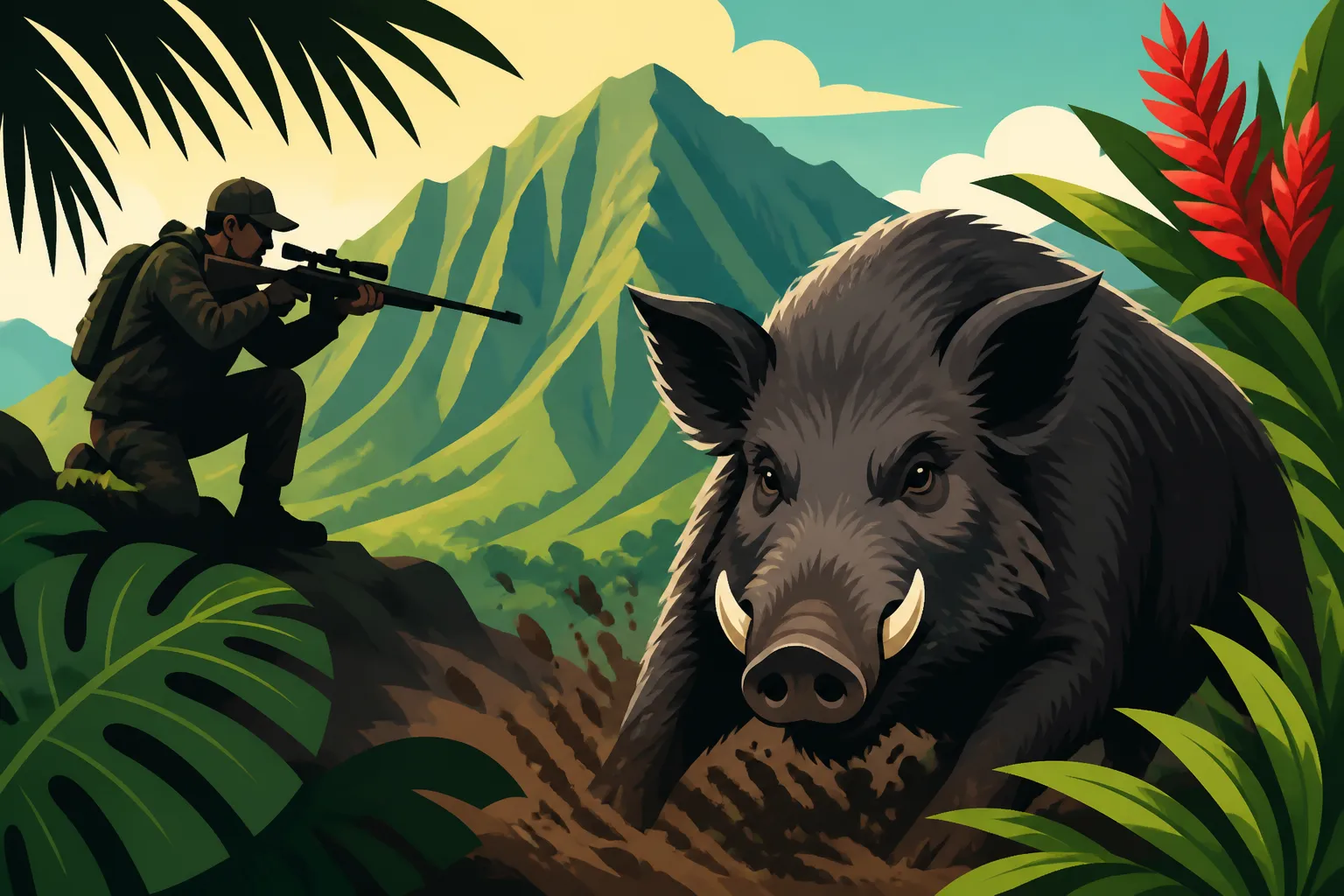
For those who prefer a quieter, more solitary approach, still-hunting offers its own profound challenges and rewards. This method involves moving slowly and deliberately through the forest, using your senses to detect signs of pigs, and then stalking within range for a shot. It demands immense patience, keen observation skills, and the ability to move silently over uneven, often noisy ground. In Hawaii’s dense rainforests, this means navigating through tangled vines, slick mud, fallen logs, and thick fern beds without making a sound that would alert a pig.
Success in still-hunting pigs hinges on reading the sign. Look for fresh rooting, distinct tracks in the mud, rubs on trees where pigs have scratched themselves, and well-worn trails leading to water sources or feeding areas. Pay close attention to the wind and thermals. In Hawaii, trade winds can be relatively consistent, but in deep gulches and valleys, thermals can shift dramatically throughout the day, making scent control a constant battle. Moving into the wind is paramount to prevent your scent from reaching the pigs. A truly successful still-hunt often feels like an ultimate game of chess against an incredibly wary opponent, culminating in a close-quarters encounter. For an in-depth look at moving through this challenging habitat, check out Still-Hunting Pigs in Hawaii's Wet Forest.
Stand Hunting and Ambushing
While less common for pigs in Hawaii compared to deer, stand hunting or ambushing can be an effective tactic, especially in specific scenarios. This method involves identifying key areas where pigs are likely to travel or feed and waiting patiently for them. Prime locations include natural funnels in the terrain, game trails leading into or out of dense bedding areas, or, most effectively, near reliable food sources. Pigs are habitual creatures, and if you can locate an area where they are regularly feeding on fallen fruit (like guava or mango), rooting in a specific taro patch, or visiting a waterhole in drier areas, setting up an ambush point can pay off.
This strategy requires extensive scouting to identify active areas and understand the pigs' movement patterns. Scent control becomes even more critical when you're stationary, as pigs have an incredibly acute sense of smell. Consider using ground blinds that blend into the natural vegetation, or find elevated positions that offer a good vantage point and help carry your scent away. Patience is the ultimate virtue here; you might sit for hours without seeing anything, but when a pig finally appears, you need to be ready to act quickly and decisively. Hunting a natural food source like Hunting Pigs Near a Taro Patch can often lead to success with this method. This approach works well on the edges of agricultural lands or in units that abut private property where pigs may feel more secure feeding after dark.
Gear and Preparation for Hawaii's Unique Terrain
Hunting in Hawaii is unlike hunting almost anywhere else. The islands throw unique challenges at you: oppressive humidity, sudden downpours, sharp lava rock, dense thorny thickets, and steep, often muddy, inclines. Your gear isn’t just about comfort; it's about survival and success. Proper preparation is paramount to ensure your hunt is not only productive but also safe and as enjoyable as possible given the strenuous conditions.
Essential Clothing and Footwear
Forget your heavy wool and insulated layers – Hawaii is all about lightweight, breathable, and quick-drying fabrics. Even on the "dry" sides of the islands, humidity is a constant companion. You’ll sweat, and if you're in the rainforest, you'll get soaked by rain, mist, or brushing against wet vegetation. Layering is still important, as temperatures can drop significantly in higher elevations or during an unexpected overnight stay, but focus on materials like synthetic blends or merino wool that wick moisture away and dry quickly. Avoid cotton at all costs; once wet, it stays wet and becomes heavy, cold, and uncomfortable.
Footwear is arguably the single most critical piece of gear for a Hawaiian pig hunt. The terrain is brutal on boots. You'll encounter slick, muddy trails, sharp volcanic rock that shreds soles, and uneven ground that tests ankle support. A sturdy pair of waterproof or highly water-resistant boots with excellent ankle support and aggressive traction is a must. Many local hunters opt for rubber boots for extreme wet conditions or lightweight hiking boots with reinforced toe caps and sturdy shanks. Expect your boots to get wet, muddy, and potentially damaged. Bringing a backup pair or waterproof gaiters can be a game-changer. For advice on navigating the treacherous footing, refer to Boots for Hawaii Lava and Wet Forest. Consider also wearing durable pants, perhaps with reinforced knees or built-in gaiters, to protect against thorny kiawe and abrasive lava.
Weapons and Ammunition Considerations
When it comes to weapons for feral pigs in Hawaii, you have several legal options depending on the unit and specific season. Rifles are popular, and common calibers range from the venerable .30-30 Winchester to more powerful options like .308 Winchester or .44 Magnum lever actions, which are excellent for thick cover. Shotguns, typically slug guns, are also legal and effective at close range. Archery equipment, including compound bows and traditional recurves, provides a silent challenge, especially in dense brush. Muzzleloaders are also permitted in some seasons. For those employing dog hunting, a sturdy knife or spear is the traditional and legal method for dispatching a bayed pig.
Regardless of your chosen weapon, ammunition choice is key. Feral pigs are tough animals, often equipped with a thick gristle plate ("shield") over their shoulders, especially mature boars. You need bullets or broadheads designed for deep penetration and reliable expansion to ensure a quick, ethical kill. Soft-point or bonded bullets for rifles, and stout, fixed-blade broadheads for archery are generally preferred. It’s also crucial to be aware of Hawaii's strict firearm laws, especially if you're traveling from the mainland. All firearms must be registered upon arrival, and inter-island transport requires adherence to specific procedures. Always confirm the current regulations with DOFAW or a local firearms dealer. You can find detailed information on the various options in Legal Weapons When Hunting Pigs With Dogs.
Navigation, Safety, and Communication
Getting lost in Hawaii’s dense forests and complex gulch systems is a real possibility, and a dangerous one. Reliable navigation tools are non-negotiable. While a traditional map and compass are always good backups, a modern GPS device or a smartphone with robust mapping applications like onX Hunt or Avenza Maps (which allows offline use of downloaded topo maps) is highly recommended. The OuterSpatial app, used for check-in, also has mapping capabilities. Mark your starting point, known trails, and any key terrain features.
Due to the remote nature of many hunting units, cell phone service is often non-existent. This is where a satellite communication device, such as a Garmin InReach or Spot device, becomes an invaluable safety tool. These devices allow you to send and receive text messages, track your location, and, most importantly, send an SOS signal in an emergency, even when far beyond cellular range. Understanding that No Cell Signal on a Hawaii Hunt is common will shape your safety planning. Beyond navigation and communication, always carry a comprehensive first-aid kit capable of handling cuts, scrapes, sprains, and potential animal encounters. Enough water, water purification tablets, high-energy snacks, a headlamp, and a lightweight emergency shelter are also vital, as an unexpected overnight stay in the jungle is always a possibility.
Field Care and Hauling Out Your Harvest
The hunt doesn't end when the pig goes down. In Hawaii's warm, humid climate, proper field care and the arduous task of packing out your meat are just as challenging, if not more so, than the hunt itself. Neglecting these steps can quickly lead to spoiled meat, a heartbreaking end to a hard-won trophy.
Rapid Field Dressing in the Heat
Hawaii’s tropical temperatures are an unforgiving enemy to fresh game meat. Unlike cooler climates where you might have hours, in Hawaii, every minute counts. The moment a pig is down, your priority shifts to cooling the carcass as rapidly as possible. This means immediate and thorough field dressing. Get the guts out quickly to remove the primary source of internal heat. If possible, skinning the animal in the field can further accelerate cooling, though this isn't always practical in all situations or for all hunters.
Once field-dressed, if you're not planning to pack the whole animal out (which is rare for larger pigs), break it down into manageable quarters or primals. This allows for better airflow around the meat. Wipe down any blood or debris, as these can harbor bacteria that lead to spoilage. Place the meat into breathable game bags immediately. Never use plastic bags, as they trap heat and moisture, accelerating bacterial growth. If you have ice accessible, even a small amount placed strategically in game bags can make a huge difference in slowing spoilage. For detailed instructions on managing game in warm conditions, consult Field Care in Hawaii's Heat and Humidity.
Packing Meat Out of Challenging Terrain
Packing a pig out of a Hawaiian gulch or a dense rainforest can be an epic undertaking. These animals are surprisingly heavy, and the terrain is often steep, slick, and choked with vegetation. A 100-pound pig can feel like 200 pounds when you're navigating a 45-degree slope covered in mud and tangling roots. This is where a sturdy frame pack, ideally one designed for packing out game, becomes indispensable. Shoulder slinging a quarter of a pig, while traditional for some, quickly wears you down and limits your ability to safely navigate the terrain.
Plan your exit route carefully before you even start the pack-out. Look for the path of least resistance, even if it adds a little distance. Consider breaking down the pig into smaller pieces if necessary to manage the weight and shape for your pack. If hunting with a partner, taking turns carrying heavy loads can make the arduous journey more manageable. Remember, rushing can lead to falls and injury, which is the last thing you want with a heavy pack on your back in remote country. The sheer physicality and strategic planning required for Getting a Pig Out of a Hawaii Gulch cannot be underestimated. It's often the hardest part of the entire hunt.
Processing and Transporting Your Meat
Once you’ve wrestled your pig out of the field, the next step is processing. Many hunters in Hawaii are adept at butchering their own game, often setting up temporary processing stations to break down the meat further. If you're not comfortable doing this yourself, there are local butchers on some islands that offer game processing services, though it's always wise to call ahead and confirm their availability and rates.
For transport, especially if you're moving meat between islands or flying back to the mainland, keeping it thoroughly chilled is crucial. High-quality coolers packed with ice are your best friend. Ensure the meat is kept cold and clean throughout its journey. If shipping inter-island, you’ll typically need to declare game meat to the airline or shipping company and adhere to their specific packaging requirements. Flying home with game meat requires careful planning; it usually needs to be frozen solid and packed in an airline-approved cooler or insulated box. Be aware of agricultural inspection rules as well, as some parts of the animal might not be allowed to leave the islands. On a serious note, remember that feral pigs can carry diseases like leptospirosis and rat lungworm. Always wear gloves when field dressing, practice good hygiene, and cook your pork thoroughly. For detailed rules on moving game meat, consult Shipping Game Meat Between Hawaii Islands.
Where to Find Hawaii's Feral Pigs
Feral pigs are truly island-wide, adapting to nearly every habitat Hawaii has to offer. However, certain islands and specific hunting units are renowned for their pig populations, offering different experiences based on their unique ecosystems. Knowing where to focus your efforts can significantly increase your chances of success.
Hawaii Island: The Big Game Island
The Big Island, or Hawaii Island, lives up to its name in every sense, including its vast hunting opportunities for feral pigs. Here, pigs roam across a diverse range of habitats, from the extremely wet, dense rainforests on the windward (Hilo) side to the drier, more open scrublands and kiawe forests on the leeward (Kona) side, and even up into the mamane-naio forests at higher elevations. The sheer size of the island and its varied terrain mean you can find pigs practically everywhere.
Some of the most popular and productive areas for pig hunting include the various Forest Reserves and Game Management Areas (GMAs) on the windward side, such as the Hilo Forest Reserve, Waiakea Forest Reserve, and the extensive Kau Forest Reserve. These areas are characterized by incredibly thick vegetation, deep gulches, and often constant rainfall, which means abundant food and cover for pigs. On the drier leeward side, areas like Puu Waawaa or the upper slopes of Mauna Loa can also hold pigs, often concentrating around limited water sources or patches of lush vegetation in the gulches. Always check the specific regulations for Hawaii Island Hunting Unit Seasons, as these can vary even within the same general region. The challenge here is less about finding pigs, and more about navigating the immense, rugged landscape to get to them.
Oahu, Maui, and Kauai: Island-Specific Hotspots
While the Big Island offers expansive hunting, the other main islands also provide excellent pig hunting opportunities, each with its own character and challenges. On Oahu, despite its urban development, there are significant public hunting areas on the leeward (Waianae) and windward (Kahuku, Mokuleia) mountain ranges. Areas like the Ewa Forest Reserve or the Waianae Kai Forest Reserve offer steep, rugged terrain and dense vegetation where pigs thrive away from human activity. Oahu's pig hunting is often a strenuous affair, involving long hikes up and down ridges and into deep valleys.
Maui, home to a large Axis deer population, also boasts healthy numbers of feral pigs, particularly in its upcountry areas and the extensive slopes of Haleakala. The Makawao Forest Reserve, Polipoli Spring State Recreation Area (within Kula Forest Reserve), and the vast Kahikinui region are well-known pig hotspots. These areas range from dense eucalyptus forests to drier, rocky slopes and deep gulches. Kauai, often called the "Garden Isle" for its lush landscapes, offers pig hunting in its dramatic canyon country and wet forests, such as the Na Pali-Kona Forest Reserve and the Puu Ka Pele Forest Reserve. The deep, inaccessible valleys and steep cliffs here create ideal refuges for pigs. For a broad overview of where these animals are found across the archipelago, Hawaii's Feral Pigs, Island by Island provides crucial insights.
Reading the Landscape for Pig Sign
Regardless of which island or unit you choose, understanding how to read the landscape for pig sign is paramount to success. Pigs are creatures of habit, and they leave abundant clues if you know what to look for. Focus your efforts on areas that provide the three essentials: food, water, and cover. Lush, wet gulches and stream beds are often prime locations, as they offer both water and a constant supply of roots and vegetation for pigs to forage. Similarly, areas with abundant fruit-bearing trees (guava, mango, avocado, wild coffee) will attract pigs when those fruits are in season.
Look for areas of churned-up earth and distinct tracks, especially in muddy patches near water. Pig wallows, which are muddy depressions where they roll, are unmistakable signs of recent activity. Also, keep an eye out for rubs on trees or rocks where pigs have scratched themselves. Pay attention to well-worn game trails, particularly those that funnel into or out of dense thickets. Pigs prefer the security of thick cover, so concentrate your efforts on the edges of these impenetrable areas, or be prepared to push through them. Hunting specifically in areas like Hunting Pigs in Hawaii's Rainforest Gulches or along agricultural boundaries where crops provide easy food sources often yields the best results. The more you learn to interpret these subtle signs, the more successful you'll be.
Challenges and Rewards of the Hunt
Hunting feral pigs in Hawaii is a deeply immersive experience that tests every fiber of your being. It’s a pursuit fraught with unique difficulties, but the satisfaction derived from a successful hunt in such a challenging environment is unlike any other. It connects you to a primal landscape and a vibrant local culture in a profound way.
Overcoming the Elements and Terrain
Let's be brutally honest: Hawaii will try to break you. The elements are a constant adversary. The heat and humidity are relentless, turning even a short walk into a sweat-drenched marathon. Then there's the rain, which can come down in sudden, torrential downpours, turning trails into slick mudslides and soaking everything to the bone. The terrain itself is incredibly rugged. You'll encounter steep, slippery slopes, dense tangles of thorny vegetation (like kiawe on the dry side or uala vines in wet areas), and jagged, ankle-twisting lava flows. These are not manicured wilderness trails; they are raw, untamed landscapes.
The sheer physical and mental toughness required is immense. You'll need stamina to hike for miles, often uphill, with a heavy pack. You'll need balance to navigate treacherous footing and agility to push through dense brush. And you'll need mental fortitude to persevere when you're tired, wet, and frustrated, when the pigs seem to disappear into thin air, or when you feel completely lost in a sea of green. Every step is a challenge, every climb an exertion. This is truly a hunt where the land itself is as much a part of the chase as the animal. An in-depth understanding of Hunting Hawaii's Volcanic Terrain or its dense forests is crucial for self-preservation and success.
The Satisfaction of a Hard-Earned Harvest
Despite all the difficulties, or perhaps because of them, the satisfaction of harvesting a feral pig in Hawaii is incredibly profound. It's a testament to your perseverance, your skill, and your ability to adapt to one of the toughest hunting environments on Earth. When you finally track down that elusive boar, navigate the treacherous terrain, and make a clean, ethical shot, the feeling of accomplishment is immense. You haven't just taken an animal; you've earned it, every step of the way.
Beyond the personal achievement, there's the tangible reward: delicious wild pork. Hawaiian feral pigs, particularly those that feed on wild fruits like guava and mango, can have exceptionally flavorful meat. Unlike commercially raised pork, it's leaner, richer, and carries a distinctive taste that's often described as clean and earthy. It's a taste that speaks of the land, a direct culinary connection to the wildness you've just experienced. While the famous mild flavor is often attributed to Why Axis Venison Tastes Mild, the unique diet of Hawaii's pigs gives their meat a similarly distinctive and highly prized taste. Sharing that meat with family and friends, knowing the effort that went into acquiring it, adds another layer of joy to the experience.
Respecting the Culture and the Land
Hunting in Hawaii is not just a sport; it's interwoven with the islands' history, culture, and conservation efforts. It's an opportunity to connect with the concept of mālama 'āina, which translates to "care for the land." By participating in feral pig hunting, you're actively helping to manage an invasive species that poses a significant threat to Hawaii's unique and fragile native ecosystems. This gives the hunt a deeper purpose, aligning your outdoor passion with a vital conservation responsibility.
It's also important to approach hunting in Hawaii with respect for local traditions and the community. This means understanding and adhering to all regulations, practicing ethical hunting methods, and leaving no trace behind. It means being courteous to other land users, whether they are hikers, farmers, or other hunters. Many local hunters are incredibly knowledgeable and passionate; engaging with them respectfully can provide invaluable insights into the land and its animals. Ultimately, hunting Hawaii's feral pigs offers a chance to not only test your skills but also to contribute positively to the health of these precious islands and to experience a deep connection to their wild heart.
Common Hawaii Pig Hunting Units by Island and Method
| Island | Primary Habitat | Common Hunting Method | Example Public Units | Notes |
|---|---|---|---|---|
| Hawaii | Wet Rainforest, Dry Kiawe, High Mamane | Dog Hunting, Still-Hunting | Hilo Forest Reserve, Kau Forest Reserve, Waiakea Forest Reserve, Puu Anahulu GMA | Large areas, varied terrain, year-round seasons. |
| Maui | Upcountry Forest Reserves, Dry Slopes | Dog Hunting, Still-Hunting | Makawao Forest Reserve, Kula Forest Reserve (Polipoli), Kahikinui | Pigs often concentrate in gulches and dense forests. |
| Oahu | Steep Ridges, Dense Valleys | Dog Hunting, Still-Hunting | Waianae Kai Forest Reserve, Ewa Forest Reserve, Mokuleia | Challenging terrain, close to urban areas. |
| Kauai | Wet Forests, Deep Canyons | Dog Hunting, Still-Hunting | Na Pali-Kona Forest Reserve, Puu Ka Pele Forest Reserve | Rugged and remote, excellent cover. |
| Molokai | Dry Kiawe, Forested Valleys | Dog Hunting, Still-Hunting | Molokai Forest Reserve | Known for large pigs in remote areas. |
Disclaimer
Please remember that hunting regulations in Hawaii can change. Always consult the most current Hawaii Department of Land and Natural Resources (DLNR) Division of Forestry and Wildlife (DOFAW) hunting regulations pamphlet or visit their official website before planning any hunt. This guide is for informational purposes only and does not supersede state law or official regulations.