What a Hawaii Hunt Day Actually Looks Like
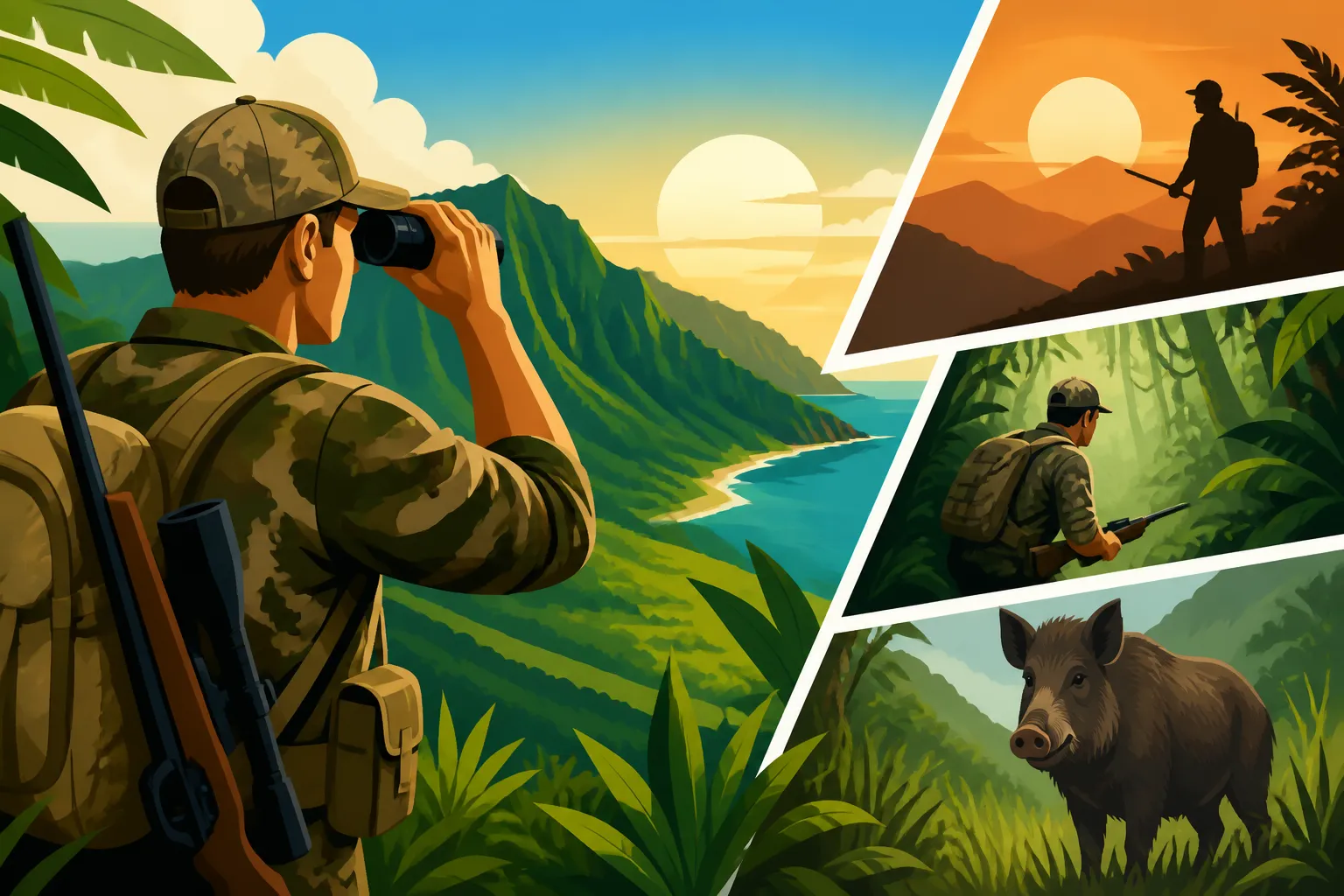
So, you've decided to experience hunting in Hawaii, or maybe you're just dreaming about it. You might picture sun-drenched beaches and mai tais, but let me tell you, a Hawaii hunt day is a world apart from a typical island vacation. It's a raw, physically demanding, and incredibly rewarding experience that will challenge your expectations of what "paradise" really means. This guide will walk you through what a real hunt day looks like, from the pre-dawn dark to the tired, satisfied twilight.
The Dawn Before the Hunt: Preparation and Approach
A successful hunt day in Hawaii begins long before the sun even thinks about peeking over the horizon. It's a time of quiet anticipation, meticulous preparation, and often, a lot of driving in the dark.
The Early Morning Start
Forget sleeping in; your alarm will be going off well before first light, often around 3 or 4 AM. This isn't a leisure trip where you wake up to the sound of waves. Instead, it's the rustle of your gear, the clinking of coffee mugs, and the quiet murmurs of your hunting partners. Breakfast is usually quick and substantial – something that will stick with you for hours. You're checking your pack for water, snacks, first-aid, headlamps, and communication devices. The air might be cool and damp on the windward side, or surprisingly chilly in the higher elevations, even on a tropical island. You're mentally running through your plan for the day, remembering the intel gathered from scouting or from your guide. It's a world away from the postcard image, setting a serious tone for the rugged day ahead.
Getting to the Hunting Unit
Once fed and geared up, the journey to your chosen hunting unit begins. This often involves navigating dark, winding roads, sometimes paved, sometimes just rough tracks that require a 4×4. Depending on the island and unit, this drive could be anywhere from a quick 15 minutes to over an hour, taking you far from any signs of civilization. For instance, on the Big Island, you might be heading up the slopes of Mauna Kea or Mauna Loa, while on Maui, you could be aiming for the remote Kahikinui slopes. Many units require you to check in before entering, which could mean stopping at a physical hunter check station or, increasingly, using digital systems like the OuterSpatial app right from your phone or vehicle. This process is crucial for safety and for the state to manage hunter numbers and harvest data. It’s a mandatory step that sets the legal parameters for your day, ensuring everyone knows where you are and what you're hunting. Remember, always follow the rules for Checking In and Out of Hawaii Hunting Units and consider Using the OuterSpatial App to Check In for convenience.
Navigating the Diverse Hawaiian Terrain
One of the most remarkable aspects of hunting in Hawaii is the sheer variety of terrain you'll encounter, often within a single hunt day. You might start in dry, dusty plains and end up in a misty, dense forest.
From Dry Kiawe Flats to Wet Rainforest Gulches
Hawaii is a land of incredible microclimates, and this directly impacts your hunting experience. On the leeward (dry) sides of the islands, you might find yourself walking through endless kiawe flats, thorny haole koa thickets, and rough, ancient lava flows. The ground can be uneven, sharp, and unforgiving, demanding sturdy boots and careful footing. Animals here, like axis deer, are often wary and spread out, making spot-and-stalk a primary tactic. Hunting Hawaii's Volcanic Terrain truly is a unique challenge.
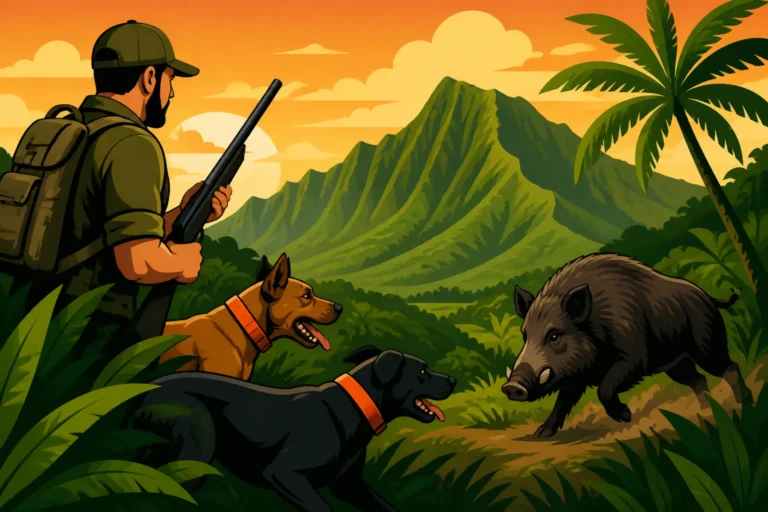
Conversely, on the windward (wet) sides, or even just over a ridge from the dry country, you can plunge into dense rainforests choked with strawberry guava, uluhe fern, and towering ohia trees. Here, visibility drops dramatically, and the ground is often muddy, slippery, and riddled with hidden holes. This is prime pig country, where still-hunting or dog hunting are common. Getting through these jungles is a physical ordeal, requiring constant vigilance and a willingness to get wet and muddy. Hunting Pigs in Hawaii's Rainforest Gulches is a completely different ballgame, where every step can be a struggle. The contrast can be jarring, from wide-open glassing opportunities to tunneling through vegetation where you can barely see your hand in front of your face.
Reading the Land and Animal Sign
Regardless of the terrain, a significant part of your Hawaii hunt day is spent interpreting the subtle language of the land. Animals leave clues everywhere, if you know what to look for. For axis deer in dry country, this might mean finding fresh tracks around a sparse water source, rubbed trees where bucks have polished their antlers, or fresh droppings indicating recent presence. Knowing Reading Axis Deer Sign in Dry Country can tell you if you're in the right area.
In pig country, you're constantly looking for rooted-up earth, fresh tracks in the mud, wallows, or rubs on trees where they scratch themselves. Reading Pig Sign Along a Muddy Trail can be crucial to understanding their movements. You're also paying close attention to the wind – Hawaii's trade winds can be famously consistent, but local thermals in gulches and valleys will shift, especially as the sun rises and sets. Understanding Hunting Downwind in Hawaii's Shifting Thermals is paramount, as an animal's nose is often its best defense. A slight change in breeze can carry your scent right to your quarry, ending your hunt before it even truly begins.
| Terrain Type | Typical Game | Primary Hunting Style | Key Challenges | Footing |
|---|---|---|---|---|
| Dry Kiawe/Lava Flats | Axis Deer, Goats | Spot-and-Stalk, Glassing | Heat, lack of cover, sharp lava, wary animals | Uneven, rocky, dusty, sharp |
| Wet Rainforest/Gulches | Feral Pigs, Goats | Still-hunting, Dog hunting | Dense vegetation, mud, humidity, limited visibility | Slippery, muddy, roots, hidden holes |
| High Elevation/Open | Mouflon, Goats | Spot-and-Stalk, Glassing | Thin air, cold, wind, wide-open spaces, steep climbs | Rocky, loose scree, rough lava, uneven |
| Pasture/Ranch Edge | Axis Deer, Game Birds | Stalking, Driven (birds) | Private land access, cattle, open visibility | Grassy, uneven, muddy after rain |
The Core of the Hunt: Stalking, Calling, and Patience
This is where the rubber meets the road – the actual pursuit. It’s a blend of skill, endurance, and often, sheer stubbornness.
Stalking and Spot-and-Stalk Tactics
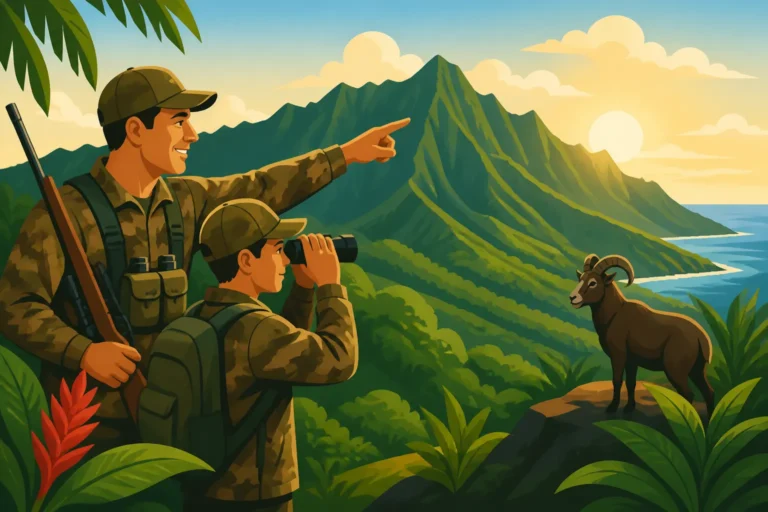
Once you've located game or found promising sign, the real work begins. In open country, like the vast expanses of Lanai or the upper slopes of Mauna Kea, Spot-and-Stalk Axis Deer in Hawaii is the name of the game. You'll spend hours behind binoculars or a spotting scope, meticulously scanning every ridge, gulch, and patch of shade. Glassing Lanai's Open Ridgelines can reveal animals miles away. Once an animal is spotted, the stalking process can be agonizingly slow and deliberate. You're using every fold in the terrain, every bush, every shadow to mask your approach. It might involve crawling on hands and knees over sharp lava, navigating treacherous slopes, or waiting for hours for an animal to move into a better position.
Sometimes, calling can bring an animal closer. A soft fawn bleat can sometimes pique the curiosity of an axis deer, especially a buck, drawing them into range. Calling Axis Deer With a Fawn Bleat can be effective, but it requires practice and a keen understanding of deer behavior. For pigs, a distress call or even a grunt can sometimes draw them out of thick cover, but it's a risky gambit that can also alert them to your presence.
Encounters and Ethical Shots
The moment an animal appears within range, after all that effort, is a rush unlike any other. Your heart pounds, adrenaline floods your system, and every sense becomes hyper-aware. This is where your practice at the shooting range pays off. You're focused on making an ethical shot, aiming for the vitals to ensure a quick, clean kill. The wind, the distance, the angle – everything factors into that split second.
Sometimes, despite a good shot, an animal might run into dense cover. Tracking can be incredibly challenging in Hawaii's thick vegetation, often requiring patience and careful searching. It's a sobering reminder of the responsibility we carry as hunters to recover every animal we shoot. It's not always easy, but it's part of the commitment we make.
The Waiting Game and Mid-Day Strategies
Not every moment of a hunt day is action-packed. There are long stretches of quiet, where patience is your most valuable tool. You might be set up overlooking a pig trail, waiting for movement in the thick vegetation, or glassing a distant hillside for a glimpse of an axis buck. Mid-day in Hawaii can bring intense heat and humidity, especially in the lower elevations. Animals often bed down during the hottest hours, seeking shade and rest. This might be your cue to do the same – find a comfortable spot in the shade, rehydrate, and refuel.
During these mid-day lulls, you might focus on different species. For example, Why Hawaii Goats Move at First Light but also move throughout the day, often using steep cliffs and canyons for escape and feeding. Pigs, on the other hand, are often most active during cooler parts of the day, early morning and late evening, but also Why Feral Pigs Move Mostly at Night, making daytime encounters unpredictable. It's a chess match, constantly adjusting your strategy to the conditions and animal behavior. Water and Heat Planning for a Hawaii Hunt becomes critical during these warmer hours, as dehydration can quickly ruin your hunt.
Post-Harvest: Field Care and Extraction
Once an animal is down, the clock starts ticking, and the real physical labor begins. Hawaii's warm climate means you need to work quickly and efficiently to preserve your harvest.
Immediate Field Care and Tagging
The moment you walk up to your animal, especially if it's big game like an axis deer or a large boar, you'll feel a mix of respect, gratitude, and immediate urgency. The tropical heat is unforgiving, and meat can spoil rapidly if not handled properly. Field dressing, which involves carefully removing the internal organs, needs to happen as quickly as possible to allow the carcass to cool. This is often done right where the animal fell, no matter how inconvenient the spot.
Once field dressed, the animal must be legally tagged. In Hawaii, this means attaching your permit-tag securely to the carcass in a visible location. Understanding Tagging an Animal Correctly in Hawaii is crucial to avoid any violations. After tagging, the focus shifts to getting that meat cooled. This might involve quartering the animal on the spot, bagging the meat in game bags, and getting it into a cooler packed with ice as soon as humanly possible. Cooling Meat Fast on a Hawaii Hunt is not just a preference; it's a necessity to ensure the quality of your venison.
Packing Out the Harvest
This is often the most grueling part of a Hawaii hunt day, especially if you're deep in a gulch or far from a vehicle. Packing Meat Out of a Hawaii Gulch can be an epic undertaking. Imagine climbing out of a steep, slippery ravine with 50-70 pounds of meat on your back, navigating dense vegetation, loose rock, or slick mud. If you've hunted in other places, you know packing meat out is tough, but Hawaii's humidity and uneven terrain add an extra layer of difficulty.
Many hunters use sturdy pack frames, quartering their animals into manageable loads. It’s a slow, deliberate process, often requiring multiple trips if you’re hunting larger game or multiple animals. Your physical fitness will be truly tested here, and having a hunting partner to share the load makes a world of difference. Sometimes, if the terrain allows, you might use game carts, but more often than not, it's brute force and determination that get the job done. The satisfaction of finally getting that hard-earned meat back to your truck, albeit exhausted and drenched in sweat, is immense.
The End of the Day: Reflection and Planning Ahead
As the sun dips below the horizon, casting long shadows across the landscape, the hunt day slowly draws to a close. But the work isn't quite over yet.
Checking Out and Post-Hunt Logistics
Just as you checked in, you'll need to check out from your hunting unit, reporting your harvest if you were successful. This helps the state wildlife agency, DOFAW, monitor game populations. The drive back in the dark, often on those same rough roads, feels longer than the drive in. Once you're back at camp or your lodging, the real work of meat processing might begin, depending on your setup. If you quartered the animal in the field, you'll transfer the meat to larger coolers, perhaps adding more ice. Some hunters head directly to a local game processor, if one is available nearby, to get their meat cut and wrapped professionally. Getting Meat Processed on a Hawaii Hunt can save a lot of time and effort, especially after a physically draining day. Regardless of whether you process it yourself or use a professional, proper Field Care in Hawaii's Heat and Humidity is paramount to preventing spoilage.
The Satisfaction and Lessons Learned
As you clean your gear, rehydrate, and finally sit down, there's a profound sense of accomplishment. Whether you harvested an animal or not, a Hawaii hunt day is an experience that leaves a lasting impression. You've battled challenging terrain, outsmarted wild animals (or at least tried to), and pushed your physical and mental limits. You'll recount the day's events, discussing missed opportunities, close calls, and the breathtaking beauty of the island. You'll analyze what worked and what didn't, already formulating plans for the next outing. Perhaps you realized you need different boots for the lava, or a lighter pack for those steep gulches.
A Hawaii hunt day is rarely easy, but it’s always an adventure. It's a reminder that true beauty often comes with a gritty, wild edge. It strips away the easy comforts and connects you to the raw, untamed spirit of these islands. It’s a day filled with quiet observation, intense bursts of action, and deep respect for the animals and the incredible landscape they call home. When you book a hunt, whether through a platform like BookYourHunt or by researching on GoHunt for public land information, remember that what awaits you is far more than just a hunt; it's an immersion into a truly unique hunting environment.
Disclaimer
This article is for general informational purposes only and does not constitute professional advice. Laws, prices and regulations vary by location and change over time. Consult a qualified professional for guidance on your specific situation.